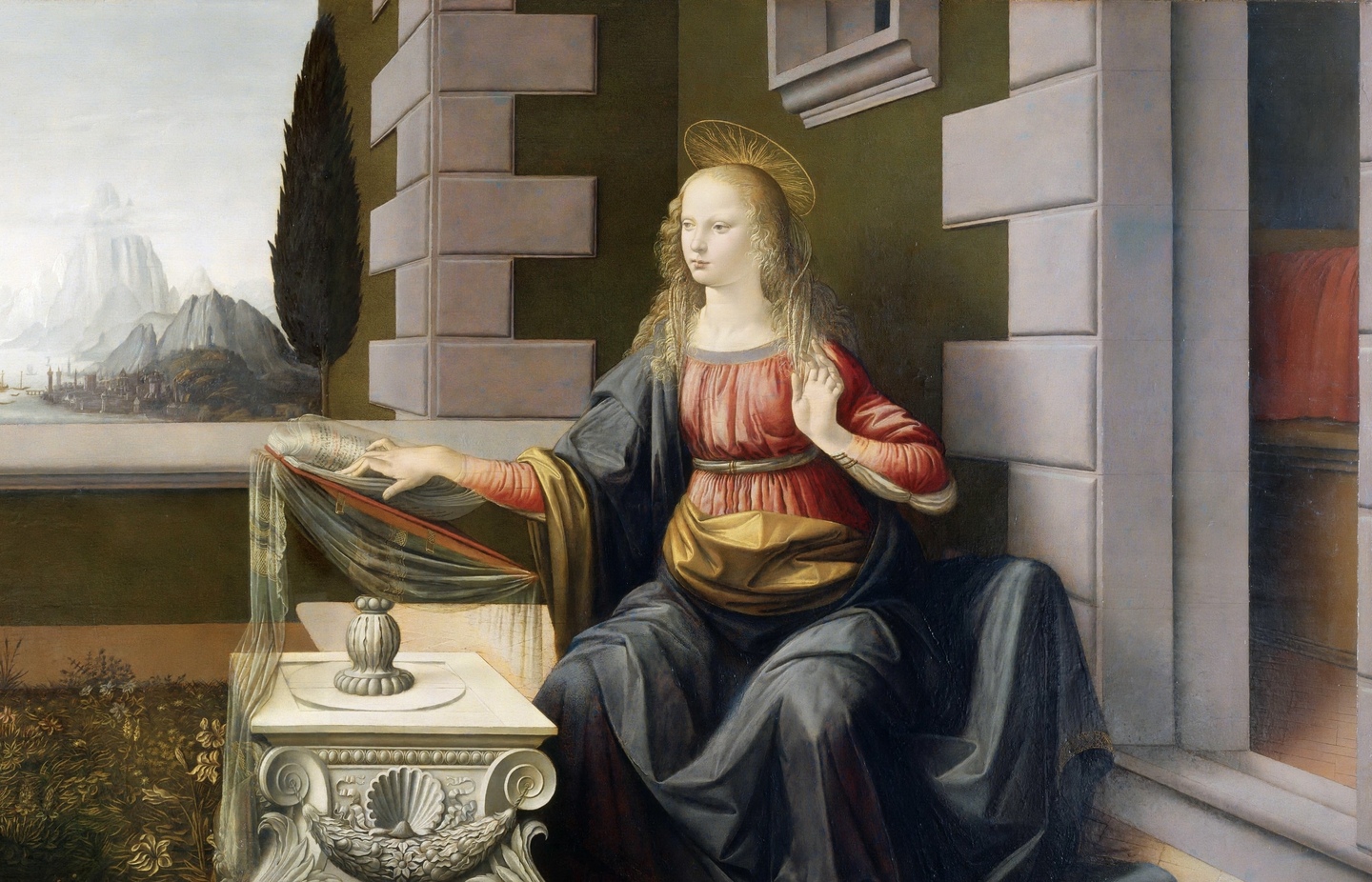
A research project examining the evolution of the Virgin Mary’s image in Renaissance masterpieces. Artists conveyed not only the ideals of past beauty but also paid attention to reflecting the spirituality of their era. The main goal of this presentation is to demonstrate exactly how the heroine of the Annunciation changed and what indicates these transformations.
Categories
1. Thematic Concept of the Annunciation: The image of the Virgin Mary;
2. Scope of Research: Geography and Chronology;
3. The Italian Approach to Depicting the Virgin Mary;
4. The Northern Approach to Depicting the Virgin Mary;
5. Symbolism in the Annunciation;
6. Conclusion;
7. Bibliography
Annunciation Plot Idea
The Annunciation illustrates how the Divine plan for salvation intertwines with human will. The Virgin Mary is portrayed not as passive, but rather: her free consent to assume the role of Mother of the Savior, Jesus Christ, was a necessary condition. The heroine’s agreement unites human nature and the Divine. This is a fateful moment, yet it reveals not only the story of the world’s salvation but also the role of the one without whom it would not exist.
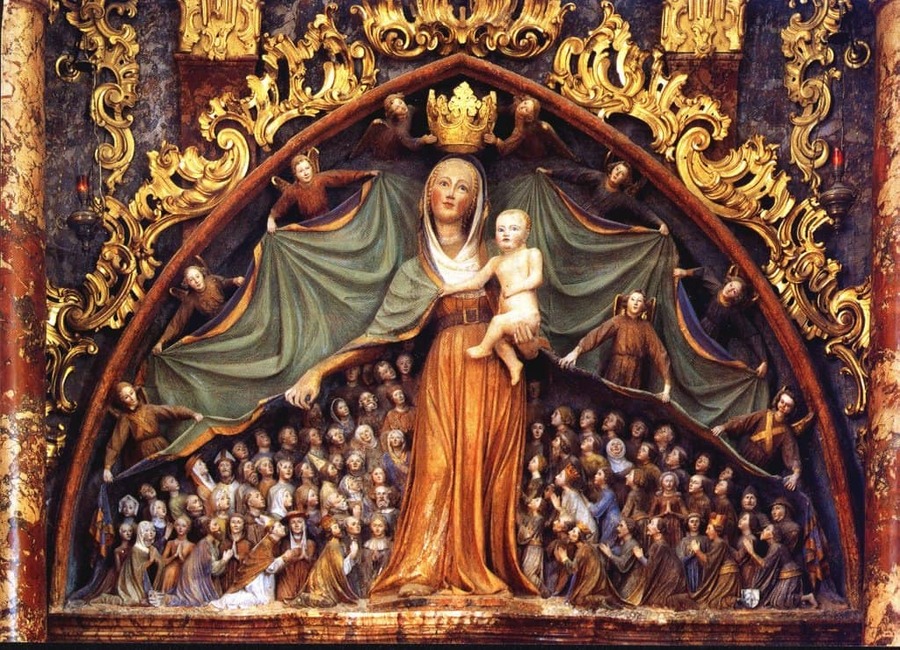
The Blessed Virgin Mary, Mother of the Church
Research Framework: Geography and Chronology
The study covers the period of the Dutch «Ars nova» school (an initial and pivotal stage in 15th-century Dutch painting during the Northern Renaissance, approximately 1420–1470), where masters accurately copied nature, making biblical narratives understandable and accessible to viewers. It also covers the High and Late Quattrocento period in Italy (approximately 1430–1500). This selection is deliberate because, during this time, Fra Angelico and Sandro Botticelli mastered the language of religious painting, just as Robert Campin and Rogier van der Weyden embodied the «optical revolution"—placing sacred events within familiar, recognizable earthly interiors.
The Italian Path of Depicting the Virgin Mary
In Italian Quattrocento painting, the depiction of the Virgin Mary is structured according to the principles of linear perspective and the ancient canons of human proportion. The Mother of God is an intrinsic component of the ordered and complete harmony of the cosmos. Her meekness is interpreted not as weakness or passivity, but as a conscious spiritual choice aligned with the Creator’s design. The figure gains bodily tangibility and mass, yet the silhouette of the heroine remains sharp and idealized.
Fra Angelico, «The Annunciation» from St. Mark’s (c. 1440)
Fra Angelico stands at the boundary of two eras. In his fresco at the San Marco Monastery in Florence, the images of the Virgin Mary and the Archangel Gabriel are «almost incorporeal.» The artist skillfully employs the laws of perspective, but does not flaunt his mastery. He is not drawn to the material beauty of the world—the spiritual component is paramount.
Sandro Botticelli, «The Annunciation, ” collection of the Léman Museum (c. 1489)
Botticelli, unlike Angelico, constructs the image of Mary with an exquisite line and complex spatial drama. In this composition, «The Annunciation, ” from the New York Lehman Collection, he subordinates the illusory three-dimensional space to the articulation of architectural verticals and horizontals.
Filippo Lippi, «The Annunciation, ” National Gallery, London (c. 1450–1453)
Filippo Lippi takes the next step. In his interpretation, the face of the Virgin Mary is «always beautiful, serene, and imbued with spirit.» However, in many of the artist’s Annunciations, her posture can vary: «either submissive or slightly frightened when Mary leans toward Gabriel, as if trying to halt him.» In this image of the Virgin Mary, a shade of psychological turmoil appears for the first time.
The Italian measurement thus becomes a method. In Italy, Mary’s body adheres to strict proportion and perspective. Her image gains a classical clarity, yet within it, religious meaning is preserved. The Virgin Mary is not merely a woman, but a part of a harmonious and mathematically precise world, lending her a new dignity.
Northern Route Depiction of the Virgin Mary
The Northern Renaissance took a different path because the Dutch masters did not strive for an absolutely perfect classical form. Instead, with incredible precision, they rendered ordinary domestic objects, each of which became a symbol—a crucial detail in the analysis. The Virgin Mary appears to the viewer as a mistress of the household, engrossed in reading, and the sacred event takes place in the familiar setting of a bourgeois interior.
Robert Campin, «The Annunciation» (Moretus Altarpiece), Metropolitan Museum of Art (c. 1438)
Kampen makes a bold iconographic choice—he replaces the traditional blue maphorion of the Virgin Mary with red. In Western iconography, the color red was rarely used in the Annunciation narrative to symbolize the Holy Spirit. This choice of color radically changes the perception of the heroine of the scene. Mary becomes not only «heavenly» but also imbued with the Spirit’s action.
The image of the Virgin Mary by Campen—primarily a reader
The open book contains chapters from the prophet Isaiah, which, according to tradition, she read at the moment of the Annunciation. This implies that the heroine’s image is built not around external beauty or majesty, but rather as an intellectual and contemplative Virgin Mary of the Northern Renaissance era.
A candle lies unlit on the table before the Virgin Mary.
This symbol carries a clear theological meaning: «the radiance of the Divine eclipses all other light.» The presence of Mary and the action of the Spirit fill the space so completely that earthly fire becomes entirely unnecessary. The image of the Virgin Mary is thus elevated through the material world, rather than through the idealization of the figure or the external appearance of the Annunciation’s heroine.
Rogier van der Weyden, «The Annunciation, ” Louvre (c. 1464)
In Rogier van der Weyden’s work, unlike Campin, the figure of the Virgin Mary returns to a greater sense of hierarchy. In three versions of this subject, the «figure of the Archangel Gabriel rises above the seated or kneeling heroine of the Annunciation. Clad in deep blue, kneeling, — 'The Humble' (die Demütige)»
Materialization of the Angel
It is worth noting the unique way Gabriel appears in the composition. The archangel does not seem to enter the confined space of the Virgin Mary, but rather emerges abruptly before the viewer, much like a cloud taking on human form. The Virgin Mary reacts not to his movement, but to his sudden presence. Her figure becomes more introspective and contemplative, and the contrast between the pure white of the lily and the somber blue of the heroine’s robes intensifies the drama of the composition.