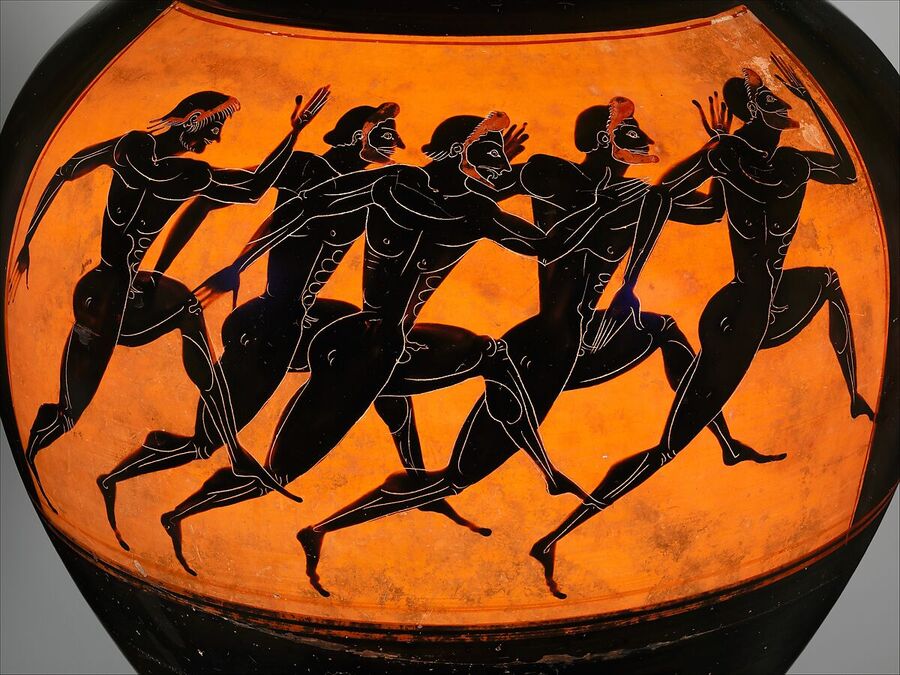
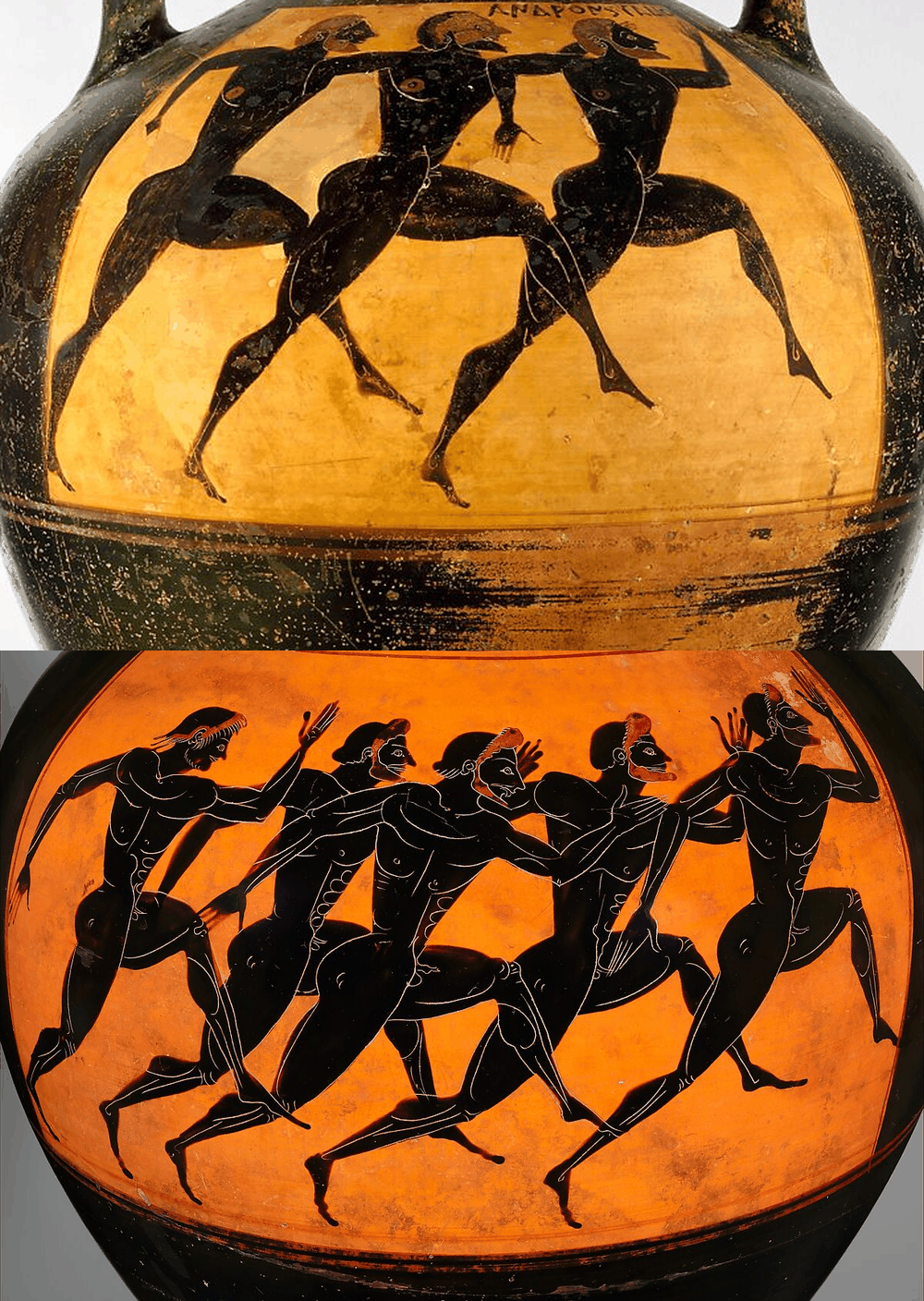
How did Attic vase painters convey the speed of a run?
On one amphora, three figures are running; on another, five. In both scenes, the act of running is easily recognizable, but the visual flow differs. In some areas, you can observe the stride of each athlete; in others, one runner’s arm crosses another’s silhouette, immediately drawing your eye to their neighbor. I will compare the poses, the spacing between the figures, and how the scene is arranged on the curved surface of the amphora. This allows us to understand which details help convey the run and which create a sense of speed.1 Nikias (potter), decoration attributed to Sicelus. A prize amphora, circa 560–550 BCE. 2. A prize amphora attributed to the master Eupheletus, circa 530 BCE. Fragments.What causes the gaze to quicken?
Frame your question precisely and set clear boundaries: define what is included and what is excluded. Illustrate why the answer is not obvious—due to contradictions, misconceptions, or divergent interpretations. The clearer the question, the more attainable the path to a solution becomes.








Step 3. Clarification
Провести аудиторию по логике, которая снимает неопределённость
Approach the answer step-by-step, with each step clarifying and reducing uncertainty. Show what facts, definitions, or models are needed to move forward. It is useful to record intermediate conclusions—this makes the logic reproducible and reduces cognitive load.








Step 4. Answer
Дать ясный ответ и показать, из чего он следует
Formulate a concise and definitive answer, then expand it into an understandable model or formula. Demonstrate how the answer flows from the clarification steps—this maintains trust and enhances the learning experience. Be sure to define the limits of applicability so that the answer does not sound like universal «magic.»








Step 5. Finale
Закрепить логику решения и помочь перенести её на новые задачи
Document not only the answer but also the path to it, presented as a brief diagram or checklist. Give the class an opportunity to check their understanding: pose a question, a mini-task, or an application to a different example. The conclusion must enable students to replicate the logic without your charisma or the original slides.