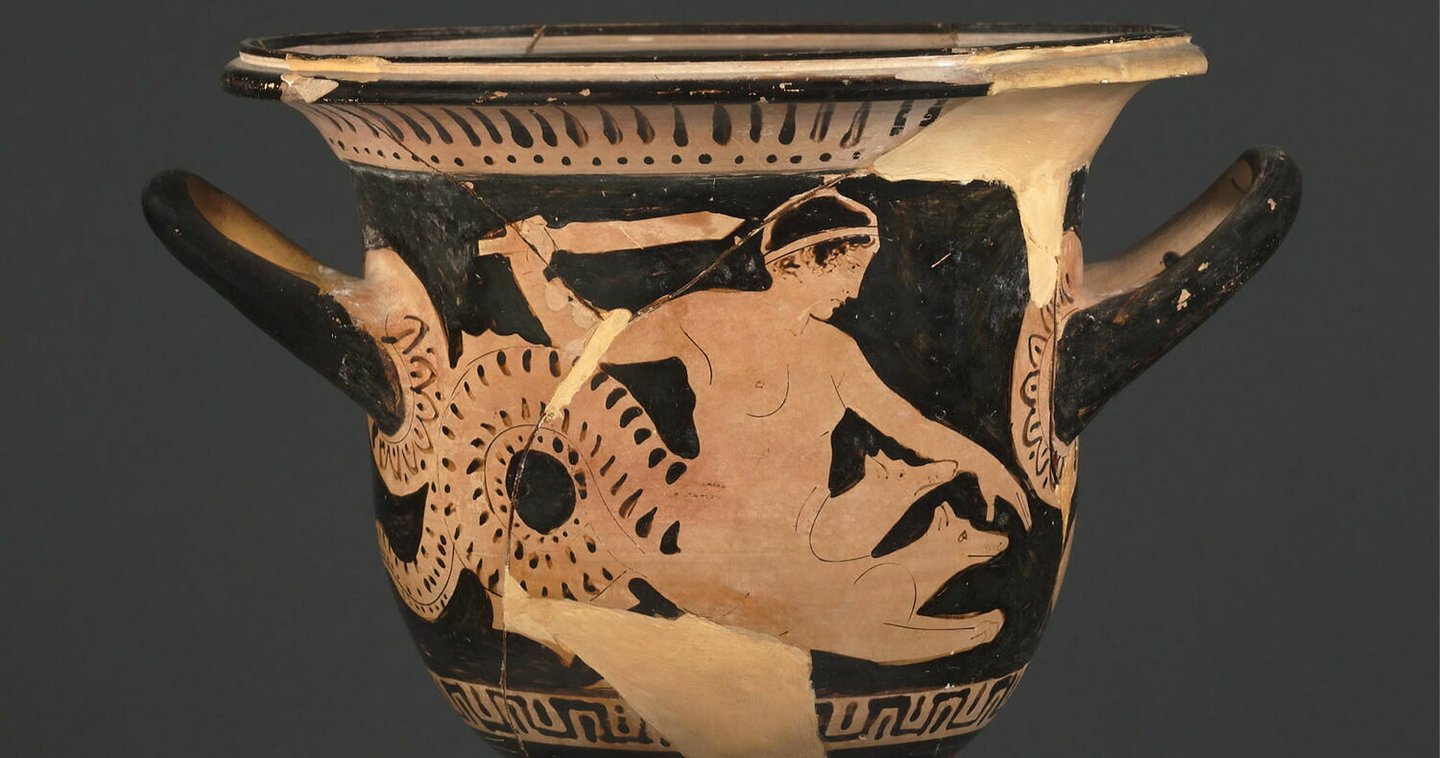
Concept
The marine element played a significant role in the lives of the ancient Greeks. It represented a symbiosis of two opposing forces. On one hand, the Greeks could not imagine their lives without the sea. It was an integral part of many aspects of society, particularly trade, colonization, distant travel, and voyages. On the other hand, the sea was a realm of chaos, unpredictability, and death. People could not influence its power, so the marine element intimidated them with its destructive force. It was precisely this ambivalence of the sea that influenced the formation of hybrid sea monsters, as they reflect both the dualities of the marine space. This collision of opposites intrigued me when choosing my topic. I wanted to study how artists and sculptors depicted the underwater world through the prism of mythology.
Delving into the topic, I began to ask myself more and more: how radically did the depiction of creatures change across different periods? What principles underpin the creation of monsters in ancient Greek visual culture? Is there a consistent iconography for every sea monster?
How did the visual depiction of mythological sea creatures transform throughout different periods in Ancient Greek art, and what role did the cultural code play in this evolution?
My hypothesis is that the iconography of mythological sea creatures evolved across different periods of Ancient Greek history. Their representations transformed from terrifying chthonic monsters to harmonious, humanized, and dramatic figures. This process reflects a shift in the Greek consciousness itself—from fear of primal natural chaos to the triumph of human reason. This subject allows one to trace the dynamics of artistic language over an extended period.
When selecting materials, I adhered to strict criteria. Only works containing direct visual representations of mythical sea monsters were included in the study: Cetus, hippocampus, siren, Scylla (Charybdis), cyclops, Triton, Nereus, Nereid, Proteus, and Poseidon. Art objects such as vases, sculptures, paintings, were examined first. I deliberately excluded depictions of ordinary marine animals and seascapes not connected to ancient mythology. The genres ultimately chosen included vase painting, sculpture, relief, mosaic, fresco painting, as well as imagery on decorative and applied arts objects.
A hallmark of my approach is the parallel depiction of several stages in the development of these figures: from early, archaic representations of marine creatures to their more realistic and detailed depiction in subsequent periods. For the Homeric period, these are early mythological figures connected to epic poetry and the ancient Greeks' conceptions of the marine world. For the Archaic period, I used works where the creatures acquire stable visual characteristics and become integrated into ornamental and narrative compositions. For the Classical period, I utilized images that emphasize anatomy, plasticity, and character interaction. For the Hellenistic period—works where marine creatures are depicted more dynamically, expressively, and realistically, and whose forms become integral parts of complex artistic compositions.
Categorization:
Chapter 1. The Genesis of Mythological Creature Archetypes (Homeric Period)
Chapter 2. Formation of the Canon (Archaic Period)
Chapter 3. Anthropomorphism (Classical Period)
Chapter 4. Dynamics and Expression (Hellenistic Period)
The navigation is based on a chronological method combined with an analysis of the characteristics specific to each period. The study traces the journey from simple and understandable mythological images of sea monsters through their transformation into dynamic and expressive forms.
Chapter 1. The Genesis of Forms
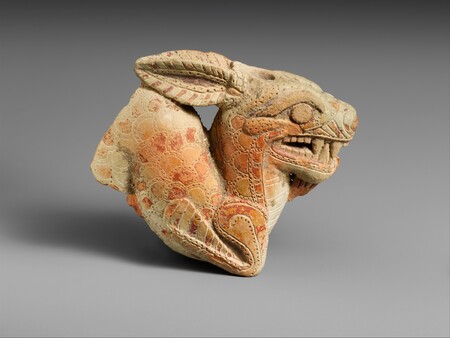
The sea held a special place in the lives of the Ancient Greeks. It was a vital part of daily life, fostering trade and cultural exchange between peoples, yet it was simultaneously viewed as a dangerous and unpredictable expanse. Storms, shipwrecks, and the mystery of the deep waters contributed to the formation of beliefs about supernatural sea creatures.
In ancient Greek mythology, the sea was inhabited by deities and fantastic creatures that could either aid humanity or pose a deadly threat. These figures gradually became part of epic narratives and artistic culture.
Homer’s works—the Iliad and the Odyssey—played a distinctive role in disseminating maritime mythological imagery. In these epics, the sea functions not merely as a setting but as an autonomous force shaping the heroes’ destinies. The Odyssey introduces Sirens, Scylla, and Charybdis—creatures that personify the dangers of a sea voyage.
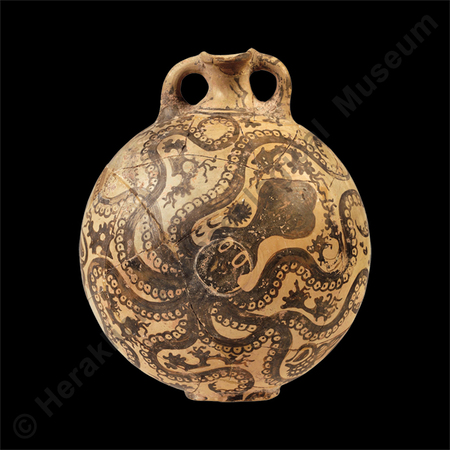
In Minoan and Mycenaean art, sea creatures captivated people and became significant decorative motifs. Octopuses, fish, and other marine life appeared particularly often. For instance, on Mycenaean vessels from the 12th century BCE, octopuses were depicted with long, winding tentacles enveloping the surface of the object. Such depictions demonstrated an interest in the plasticity of marine forms and a desire to convey the movement of a living being. Interestingly, canonical representations of mythical monsters had not yet been formed at that time. It is this distinction between actual sea inhabitants and the fantastical creatures that developed later that allows us to trace how natural observation gradually intertwined with mythological imagination.
First Concepts of Fantastic Creatures
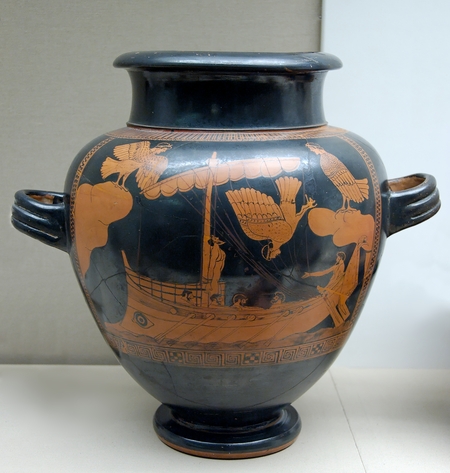
The Sirens are among the most fascinating figures in early Greek mythology. Unlike the modern conception of them as beautiful women with fish tails, in ancient Greek art, they were initially depicted as hybrid creatures with a human head and the body of a bird. Their image is closely tied to the myth of Odysseus. According to the myth, the Sirens possessed an enchanting voice and lured sailors to their doom with their songs. Thus, they embodied the danger hidden beneath attraction and beauty. The visual representation of the Sirens combined human and animal features into a single character. The feminine face conveyed human allure, while the avian body emphasized the creature’s fantastic and supernatural nature.