Second Skin
Topic: «Second Skin: The Transformation of Linen Funerary Cloth into a Sacred Encasement.»Problem Statement: A material appearing commonplace—linen—acquired a special status within funerary rituals. It was used to wrap the body. At various stages, it was treated with aromatic compounds and resins; it was combined with amulets, texts, and imagery. This study investigates the material and visual processes that transformed this cloth into a sacred sheath.Research Question: How did linen cloth transition from a material of everyday production to a ritualistic «second skin, ” through which the deceased connected with the image of Osiris and the concept of rebirth?Object: Linen bandages, shrouds, burial cloths, and textile elements from Ancient Egyptian funerary assemblages.Subject: The material alterations to the cloth, the application of resins and aromatic substances, multi-layered wrapping, protective inscriptions, and images of Osiris.Chronological Framework: Primarily the New Kingdom (Ptolemaic Period); earlier examples are used to illustrate the evolution of these practices.Methodology: Visual analysis of museum artifacts, comparison of archaeological data and museum descriptions, examination of texture, color, signs of impregnation, stitching, inscriptions, and the placement of the fabric on the mummy.Main Thesis: The sacred status of funerary linen was constructed during the ritual. The material acquired a new function through contact with the body, resins, and aromatics, through multi-layered wrapping, and by being incorporated into a system of images and texts that linked the deceased to Osiris.
Research Concept
«Second Skin» explores the transformation of linen fabric into the sacred shroud of the deceased in Ancient Egypt. At the heart of the project is the journey of a simple sheet—from fiber and thread to the funerary wrapping that contacts the body, absorbs resinous compounds, holds amulets, and can bear protective texts and imagery. Primarily, the study focuses on the fabric, which gradually changes its status within the funerary rite. Its surface becomes part of the mysterious space surrounding the deceased.
Linen begins as a natural fiber and the result of human labor. The plant undergoes processing, the fibers turn into threads, and the threads are woven into a textile. At this stage, the fabric belongs to the world of everyday objects: clothing, household textiles, utilitarian, and ceremonial items. The sheet takes on a special function in the burial ritual. It is chosen to wrap the body, layered, secured with strips, and amulets are placed between the layers. In some practices, the body and individual layers of the wrapping were treated with oils, incense, and resinous substances. Previously, these substances held practical significance for preserving the remains while simultaneously participating in the ritual purification and the bestowal of a sacred status upon the deceased. The degree of impregnation, the compounds used, and the sequence of operations varied depending on the period and the specific burial.
Resin holds a special significance. On fabric, it leaves behind dark, glossy patches, altering the material’s flexibility and tactile sensation. Linen becomes part of a complex material envelope connecting the body, incense, protection, and preservation. The visual study examines the resinous traces as evidence of ritual action. These should be analyzed through museum descriptions and scientific studies of specific mummies, as the dark color alone does not prove the presence of resin.The project references Osiris, the god of the dead and ruler of the underworld. In Egyptian funerary beliefs, the deceased could identify with Osiris, gaining through his image hope for rebirth and the continuation of existence. The fabric covering the mummy acquired the meaning of a boundary between the human body and its posthumous divine state. The Osiris shroud of the priestess Djedmetesankh from the Metropolitan Museum collection is particularly striking: after the mummy was wrapped, a linen shroud depicting Osiris in full length was placed over the bandages. The fabric was specifically equipped with cords for securing it. The museum description explicitly states that the shroud served as a sign identifying the deceased with the great god. This object becomes the primary visual proof of the concept.
The research focuses on several interconnected transformations. The material transformation is revealed through the fiber, weave, impregnation, and surface alteration. The structural transformation is shown through the sequence of layers and the wrapping of limbs and torso. The symbolic transformation involves amulets, symbols, inscriptions, and images that were placed directly on the fabric or between its layers. The religious transformation relates to the connection of the deceased with Osiris and concepts of rebirth. Thus, these levels allow us to trace how a single material became an active participant in the funerary ritual.The core problem of the project is that the museum perspective often fixes the mummy as a finished image—simply a human body covered in strips of fabric. This study, however, proposes to examine the process of creating that form itself. Each layer has a specific placement and function; every fold, seam, or inscription can tell a story. This focus on the textile restores the material specificity to the funerary ritual: the craftsmanship of the artisans, the properties of the textures, and the meaning embedded in the symbols.
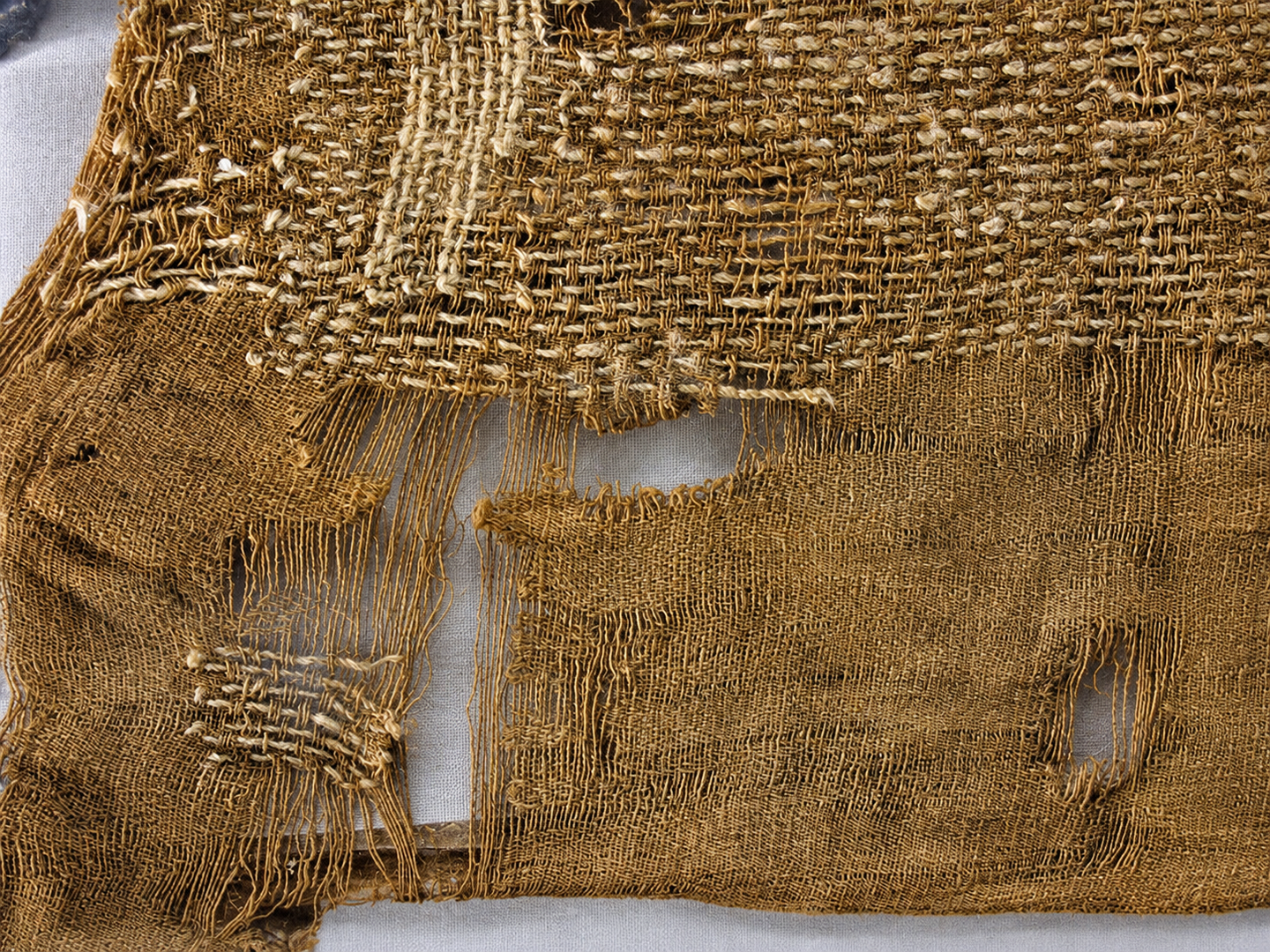
The title, «Second Skin, ” denotes the fabric as an artificially created film material that conforms to the body’s contours and forms its posthumous appearance. The image of the „Skin of Osiris“ is used in the research as an authorial metaphor for ritual transformation. It describes the moment when the human body, encased in linen layers and incorporated into Osirian symbolism, acquires an identity. This conclusion was based on the historically documented practice of identifying the deceased with Osiris and the existence of shrouds depicting the god.The visual dramaturgy is built as a successive transformation of the material. Initially, the viewer encounters raw, soiled, torn linen—its fibers and weave. Attention then shifts to the preparation of the fabric, the traces of resinous compounds, and the multilayered wrapping. The next stage reveals the appearance of amulets, inscriptions, and imagery. The climax is the shroud of Dendemutesankh Osiris: the fabric becomes a carrier of the divine image and a sign of postmortem identity. The finale returns the viewer to the original fiber, inviting them to see within it a material that has journeyed from an everyday object to a sacred artifact.
The sacred status of burial linen was established through a sequence of material and ritual operations. Patina, incense, amulets, layering, written formulas, and the image of Osiris created a humble, seemingly inadequate «sheath» that ultimately preserved the body and participated in its symbolic rebirth. The linen became a «second skin”—a visible boundary between earthly life and posthumous existence.
Leon
Linen is a genus of herbaceous plants belonging to the Linaceae family.
Linen image
Linen fabric played a vital role in the daily lives of ancient Egyptians. It was used to make clothing, bedsheets, shrouds, and cloth intended for funerary rites. Surviving textiles show that the quality of the linen could vary greatly—from coarse canvas to extremely fine fabric.
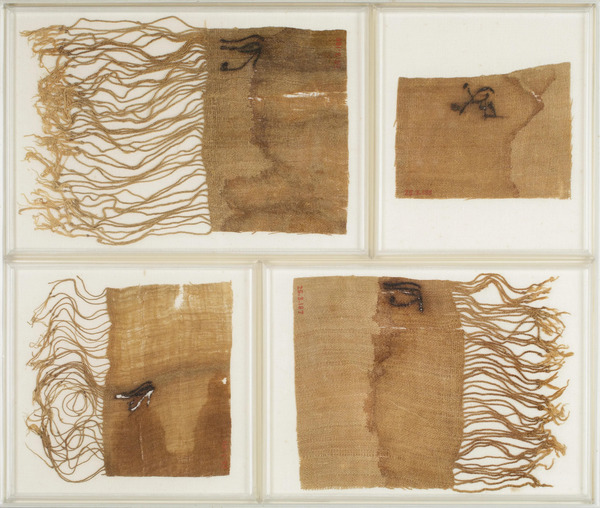
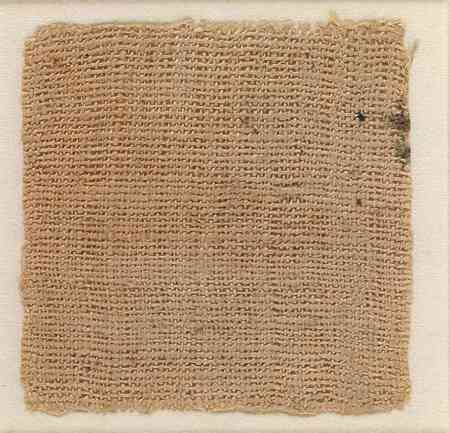
Ancient historians claimed that Egyptians could spin linen so finely that a person’s body could be seen through five layers of fabric.
Linen image https://i.pinimg.com/1200x/35/d0/fb/35d0fbeecc35d21537a1d74f92b3dc10.jpghttps://naked-science.ru/wp-content/uploads/2021/12/linen3.jpghttps://preview.redd.it/flax-and-clothing-in-ancient-egypt-v0-9pfiqx92c9891.png?width=3781&format=png&auto=webp&s=0ac270fa0058096bcbb801cbccb811ec7a106fbdFlax https://ru.wikipedia.org/wiki/%D0%9B%D1%91%D0%BDSource: UCL Digital Egypt — https://www.ucl.ac.uk/museums-static/digitalegypt/textil/plant2.htmlhttps://naked-science.ru/article/history/ancient_linen
width=3781&format=png&auto=webp&s=0ac270fa0058096bcbb801cbccb811ec7a106fbd