Concept
In Ancient Egypt, a person was perceived as more than just a physical body. Existence was composed of several interconnected elements, among which Ka—a person’s life energy—held a special place. Death did not simply mean the cessation of existence, but a transformed state of this component. However, for this transformation to be successful, the connection between the physical and spiritual aspects of a person had to be maintained. This is why funerary practices existed, which included the creation of statues.
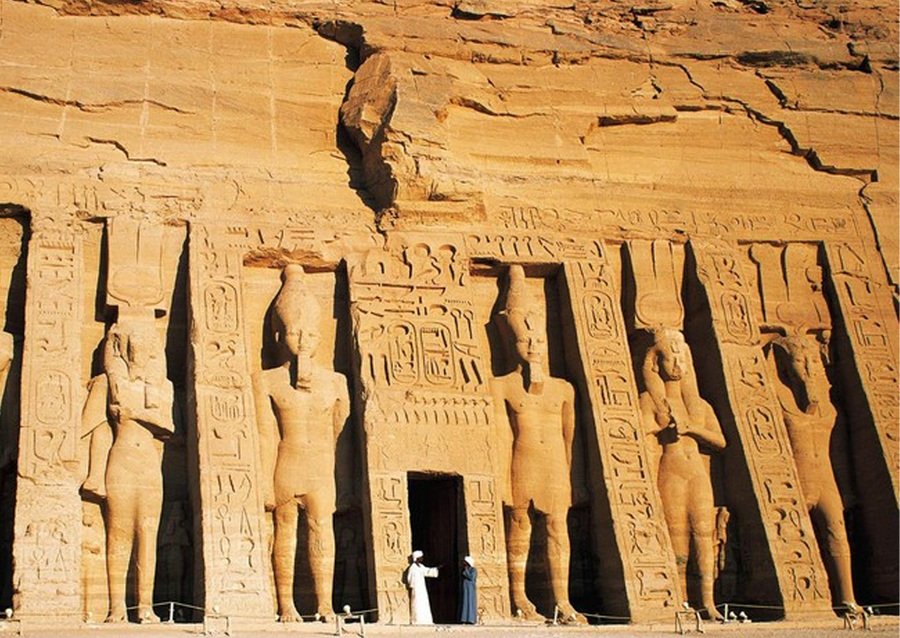
Abu Simbel Temple, 13th Century BCE
In Ancient Egypt, sculpture existed not merely as a work of art in our modern sense; it was a material vessel for the Ka. Thus, sculpture ensured the continued existence of the individual after the physical body died. The Egyptian sculptor was called a «senh» («life-maker»). Their task was not to decorate space, but to prevent the Ka from dissipating. The statue functioned as a «duplicate mummy,» possessing an outward resemblance to the tomb’s owner. The Egyptians understood that mummification did not guarantee the preservation of the flesh. If the casing deteriorated, the Ka risked becoming homeless, which signified the death of both the physical body and the spirit—a complete cessation of existence. The stone double became a reliable sanctuary for the Ka of the ancient Egyptian.
From this function emerged a strict artistic canon. Religious utilitarianism completely subordinated the artistic language of the masters of the Nile Valley. The creation of funerary sculpture soothed the ancient Egyptians because it was less susceptible to decay than the mummy’s wrappings—meaning the Ka had a lower chance of losing its vessel. To ensure the statue would survive millennia, it was given maximum durability. Sculptors eschewed the representation of dynamism, emotion, or complex perspectives. Funerary human figures are presented in strictly frontal, symmetrical poses: they either sit with their hands held to their knees or stand with their left leg extended forward in a symbolic stride. Their feet do not lift from the ground, and their backs merge with the plinth. The figures contain no gaps or fragile details—all elements are integrated into the shape of the original block. For the Ka to recognize its new body, the funerary sculpture required the presence of a name, unequivocal portrait likeness, and recognizable attributes indicating the deceased’s social status. This created a paradox: the individuality of facial features was combined with the idealization of body proportions. The intense, eternal gaze, conveyed by inlays of mountain crystal for the eyes, created the effect of a living spirit within the stone.
Ka—the life force of humanity
Wooden statue of Pharaoh Khore of the XVIII Dynasty B.C.
Ka, in the Egyptian worldview, represented a certain force—essentially, what distinguishes a living person from the dead. It was their life energy, a doppelgänger that was born with them but could continue to exist after the physical shell perished, provided it had a container.
Sculpture as a material body
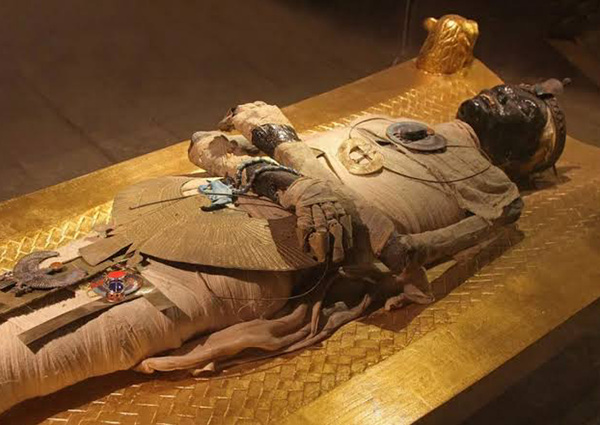
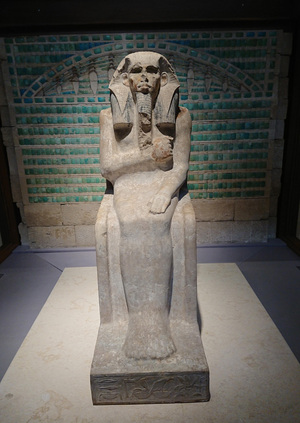
Mummy of Pharaoh Tutankhamun XIV BCE // Seated statue of Pharaoh Djoser 27th Century BCE
At some point, the ancient Egyptians realized that all their methods of preserving the dead were imperfect. Consequently, they began placing statues in tombs, as these were more durable and long-lasting and could contain the Ka in case the body was damaged. Sculptures were not necessarily made of stone; they could be carved from limestone or wood, or, in rare cases, made from metal.
Hard stone varieties were used to create statues of pharaohs and the high nobility. The hardness of the stone complicates—and thus increases—the cost of quarrying. Egyptians who could afford such an expensive statue invested in it because it provided the most reliable sanctuary for their Ka.
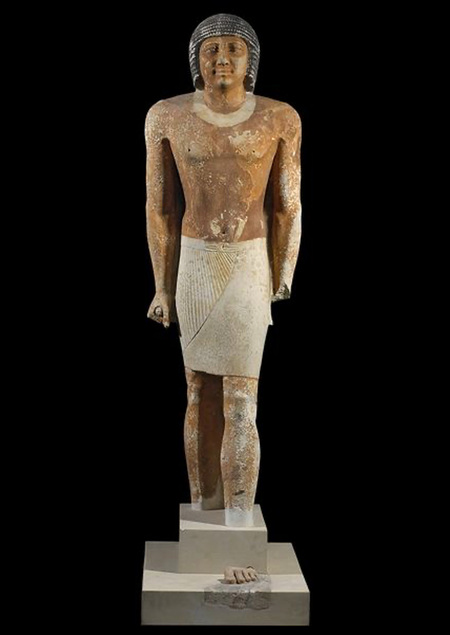
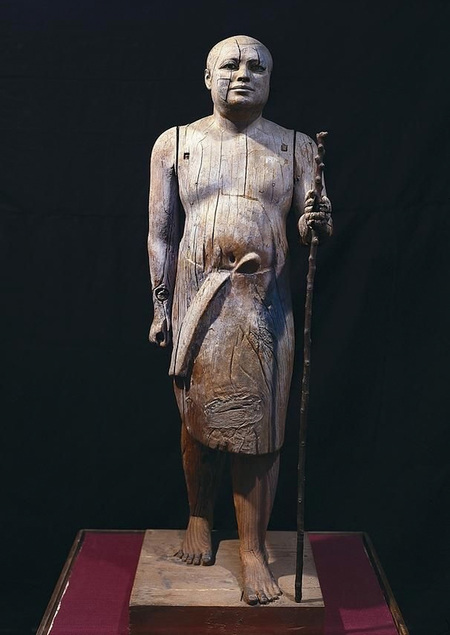
Statue of Nenkheftjes, 25th–24th century BCE // Statue of Kaaper, 25th century BCE
Limestone and other soft varieties of stone were used for statues of artisans and officials. The softness of the stone allowed for easy carving, enabling the sculptor to bring the work as closely as possible to the client’s likeness. Wood was almost as prevalent in funerary statues as stone, but it held a different significance—a connection to nature, growth, and renewal. Such a sculpture ensured the owner’s constant support through the goddess Hathor.
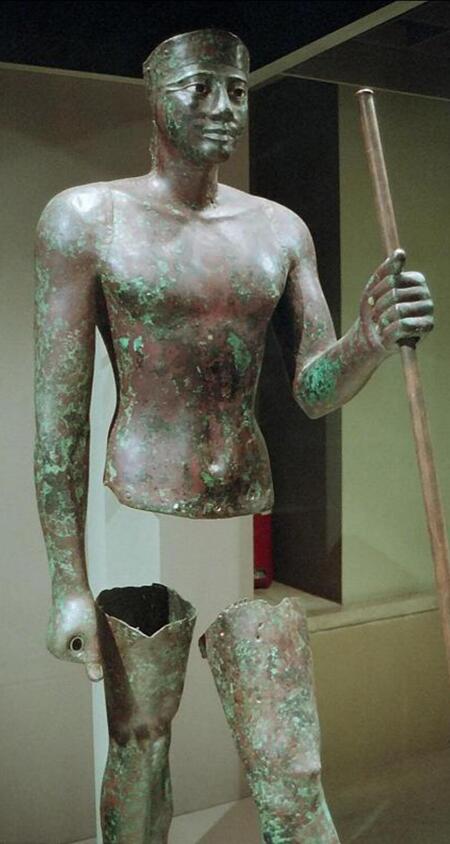
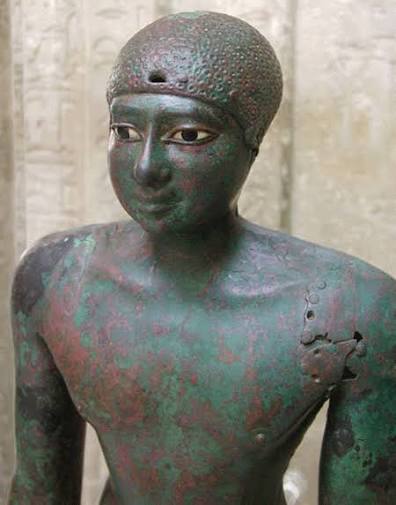
Statue of Pharaoh Pepy I XXIII BCE // Statue of Pharaoh Merenre I XXIII BCE
Metals were more of an exception to the rule when creating full-figure funerary sculpture. The exception is the statues of Pharaohs Pepy I and Merenre I: they are cast in bronze.
This material signified strength, divine protection, and power.
Canon. The Image of Eternity
Fragment of the statue of Pharaoh Khafre from the 26th century BCE.
Symmetry was the primary canon in ancient Greek sculpture, creating a sense of tranquility and timeless acceptance. The faces of the statues lacked emotion, symbolizing serenity. The sculptures depicted their owner at the height of youth and strength, physically robust.
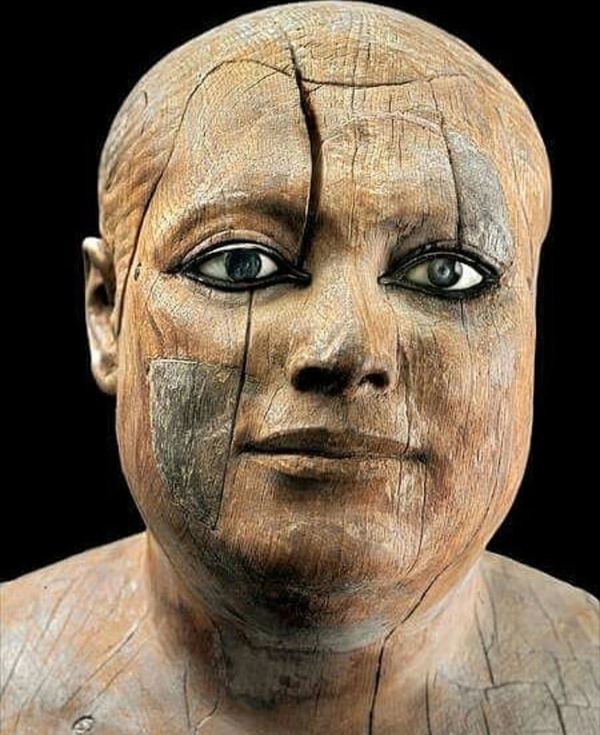
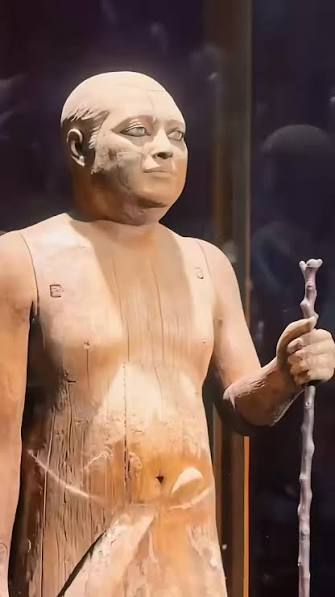
Kaper XXV Sculpture, BCE
An exception to the canon of eternal youth and exceptional physical qualities were the sculptures of officials, which were created to demonstrate their wisdom and status. One such example is the sculpture of Kaaper («Village Elder»). He is depicted with full cheeks and a belly—a direct symbol of high standing in ancient Egypt.
The statue’s posture constituted a distinct part of the canon. Each possessed its own meaning, yet they shared technical similarities that ensured the sculpture’s stability: tight adherence of the arms to the torso, a bar between the legs, and stone slabs behind the back. A common feature was also the positioning of the head—they all faced straight ahead. This was necessary to maintain visual contact with the living world and to accept offerings.
The significance of a seated sculpture
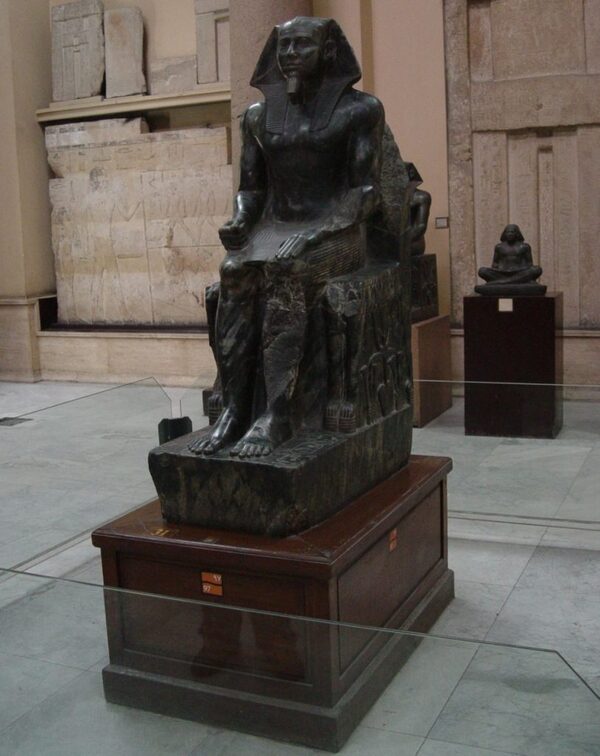
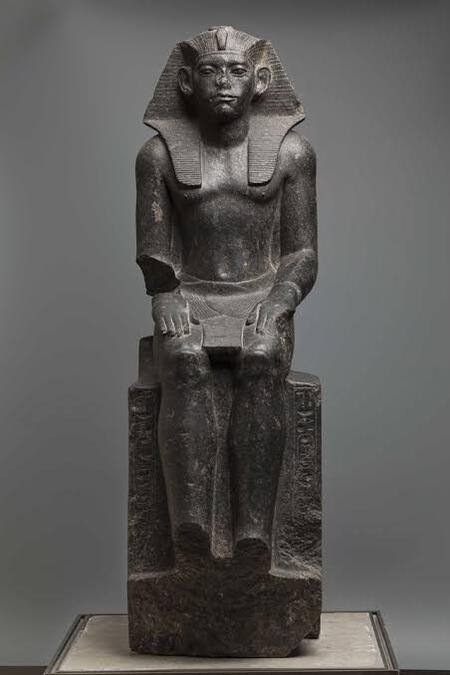
Diorite statue of Pharaoh Hefren XXVI BCE // Statue of Amenemhat III XIX BCE
This posture is characteristic of rulers, high officials, and nobility. Its significance conveys grandeur and power, as well as a readiness to accept sacrificial offerings.
The Significance of Sculpture’s Standing Position
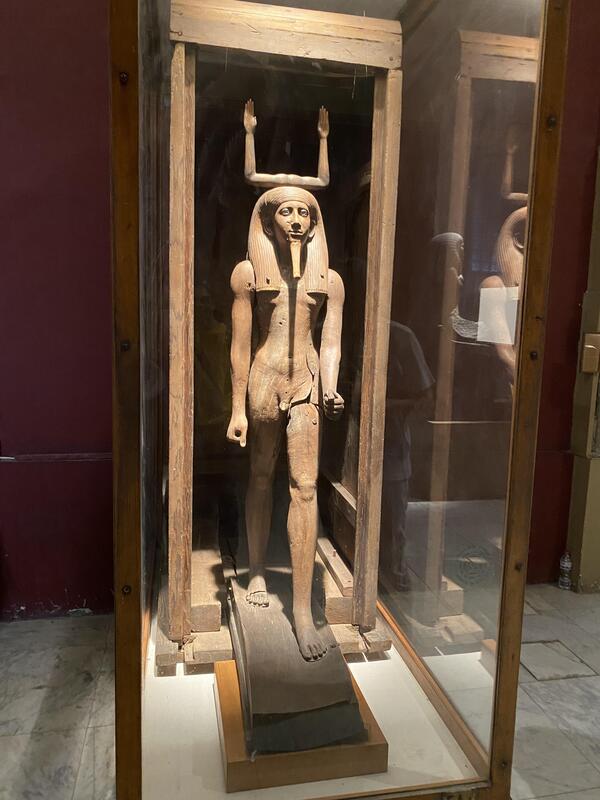
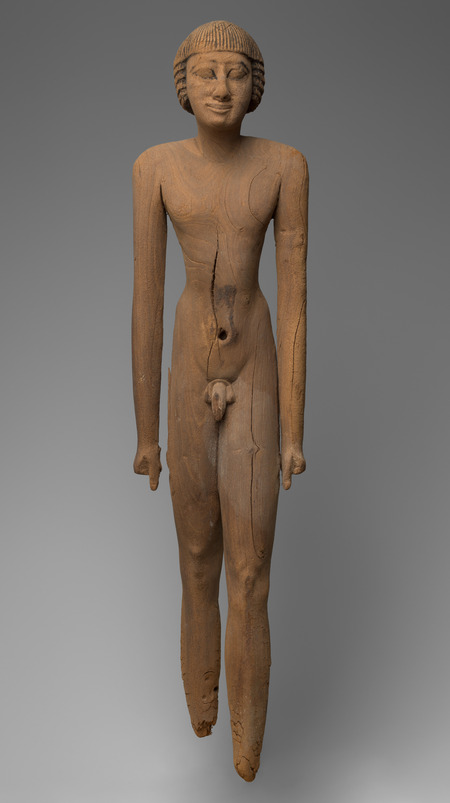
Statue of the King of Chorus, 18th Century BCE // Walking Man, 23rd–22nd Centuries BCE
A step into eternity—a transition from the earthly world to the afterlife. The figure takes a step forward with its left leg, but the rest of its torso remains stationary.