Contents
Introduction
1. The Egyptian Concept of Hair
2. Male and Kids' Hairstyles
2.1 The Monk’s Hairstyle
2.3 The Youth Strand
2.2 Hairstyles of Pharaohs, Nobles, and Peasants
3. Female Hairstyles
Conclusion.
Introduction
People of the past held hair in great reverence. In many cultures, hair was seen as a source of power. The ancient Egyptians also believed that hair possessed a magical nature, treating hair care as a serious ritual—a concept reflected in their art.
Sculptures and frescoes from Ancient Egypt depict a wide variety of hairstyles and hair ornaments. Ancient masters paid great attention to the intricate rendering of the hairdos of both people and gods. This observation inspired the choice of theme for this visual study. Through these artworks, we can learn what hairstyles signified to the ancient Egyptians.
As visual materials, photographs from open and authoritative sources related to the research topic were selected to form a cohesive visual set. For this project, various art objects—frescoes, sculptures, and statuettes—were studied to draw conclusions about the symbolism of hairstyles in Ancient Egypt.
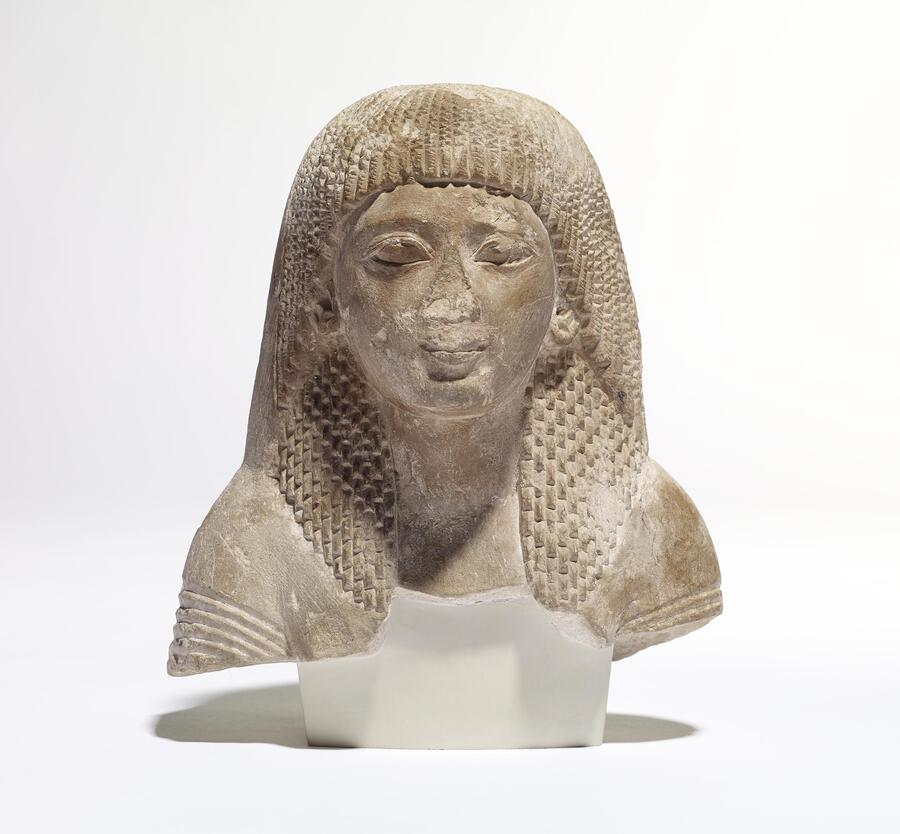
Fragment of a male sculpture, circa 1300–1350 BCE.
The research structure is organized into the following categories: the general Egyptian perception of hair, men’s and children’s hairstyles, and women’s hairstyles. Artworks are presented under specific rubrics to better illustrate the significance of hairstyles for the people of Ancient Egypt. Each piece was analyzed based on the following criteria: overall appearance, historical period, the wearer’s social status, and the work’s symbolism. For example, common peasants were depicted with similar, simple, and functional hairstyles, as they needed to work under the scorching sun, whereas affluent noblemen and their wives could afford richly adorned, expensive wigs. This visually demonstrated the societal differences among the people.
The sources for this visual research include museum collection catalogs, art history articles from museums, and related thematic articles.
The research question is: what meanings do the hairstyles of ancient Egyptians carry, and why was such attention given to them?
Hypothesis: Hair in ancient Egypt reflected a person’s social status. Hairstyles were a means of communicating with the world of gods and people, thus holding such profound significance.
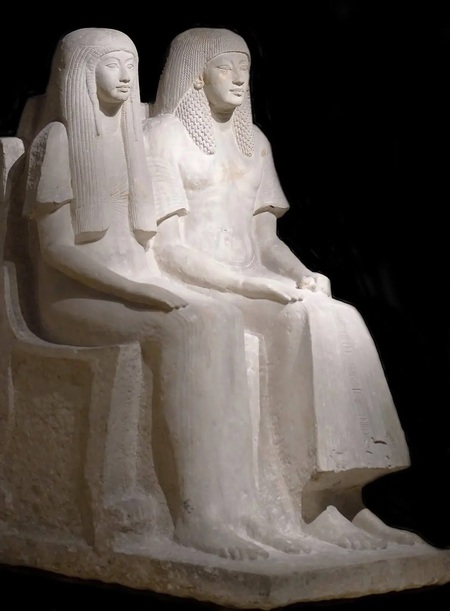
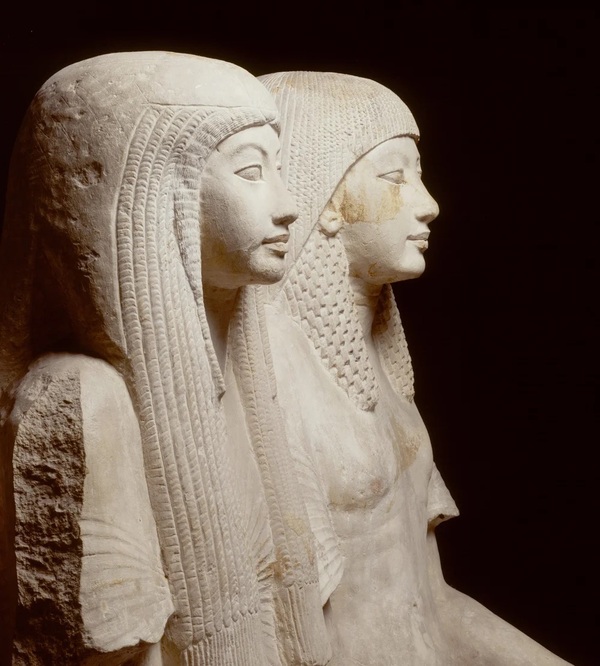
Statue of Maya and his wife Meret, c. 1320 BCE.
The objective of this study is to examine the history of Egyptian hairstyles as a visual phenomenon and to analyze how their styles and meanings evolved across different periods of Ancient Egyptian history.
1. The ancient Egyptian perspective on hair.
1.1 Hair as a Source of Power
In many cultures, hair is considered a source of strength and vital energy. This is true, for instance, in ancient Japan, among Scandinavian peoples, and among ancient Egyptians. Hair was an attribute of status and honor; consequently, depriving someone of their hair was seen as a great disgrace.
This can be observed in a bas-relief where Ramesses III prepares to cut the hair of his enemies as a mark of their humiliation. This proves that hair was not merely an indicator of status, but something much more important and sacred.
Mortuary Temple of Ramesses III (Medinet Habu Complex), circa 1156 BCE.
2. Men’s and Kids' Hairstyles.
2.1 The Monk’s Haircut
Baldness did not always signify dishonor. Because hair was associated with life and physicality, a hairless person was considered spiritually pure. Priests in Ancient Egypt shaved their heads as a sign of their honesty and openness in serving the gods. For example, this can be seen in the statue of the monk Knosirdis. He has a shaved head, and in his hands, he holds the sacred symbol of Osiris, indicating his status.
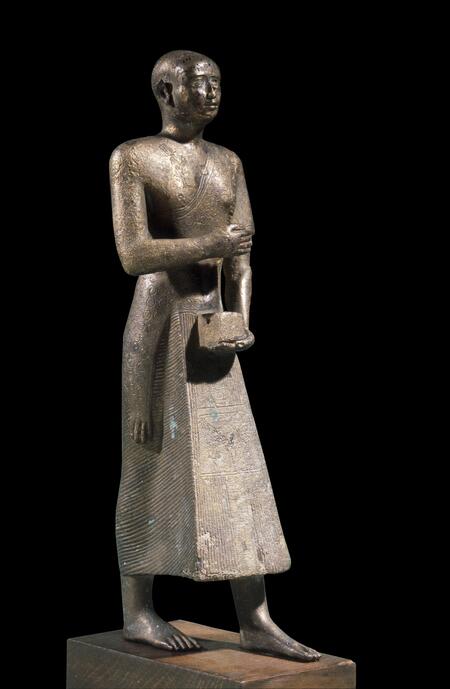
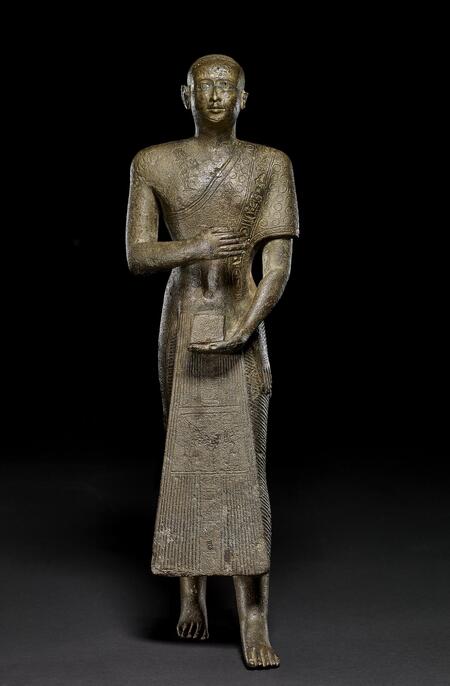
Bronze statue of Knissordis, 664–610 BCE
2.2 Hairstyles of Pharaohs, Nobles, and Peasants
All men in ancient Egypt wore short haircuts, but wealthy individuals from the upper class could afford wigs—a clear symbol of status. Furthermore, hair quality, such as the absence of graying, indicated strength; thus, access to wigs and other cosmetic products served as a marker of power.
The statue of Rahotep from his tomb, 2575–2551 BCE.
Nobles and Pharaohs were always depicted with neat hairstyles, beards, and mustaches, whereas peasants or enemies might be shown with baldness and messy hair.
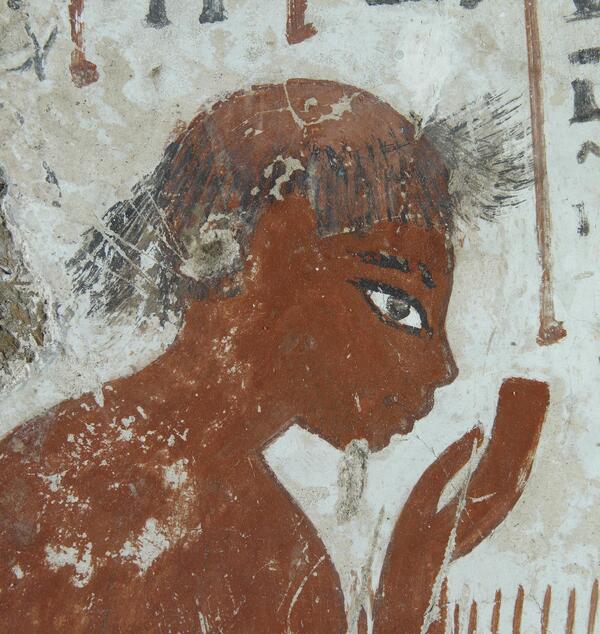
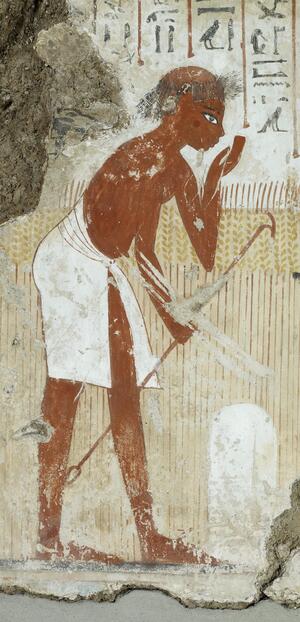
Fragment of a wall painting from the tomb of Nebam, 1350 BCE.
2.3 Tresses of Youth
«Tress of Youth» or «Tresses of Childhood» is a hairstyle for children and adolescents in ancient Egypt during the New Kingdom. Children and boys were shaved bald, leaving only one large lock of hair on one side of the head.
This was just one of several styles; children of that era wore other hairstyles as well. However, regarding the «tress of youth,» researchers have several theories about its origin. The first is practical: people shaved the heads of children and adolescents for comfortable wig-wearing and as a way to combat parasites. In addition to the practical meaning, it is suggested that such a hairstyle served to protect the child from the troubles of both the earthly and afterlife worlds.
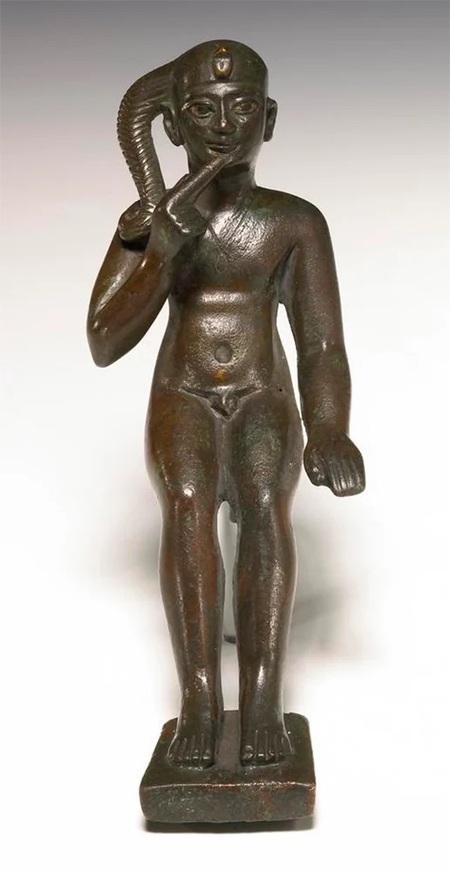
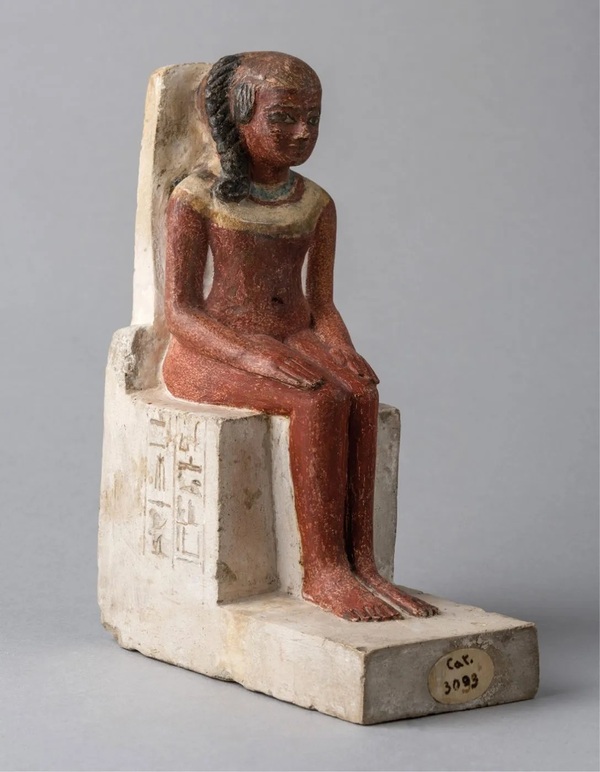
The Harpocrates statuette, 664–30 BCE, and the child statuette named Amenemhat, 1480–1390 BCE.
3. Women’s Hairstyles
Hairstyles for women in ancient Egypt were more varied. Wealthy women from the upper class could add hair using natural strands, wear long wigs, and decorate them with various ornaments. Most often, women wore long hair. One of the most common hairstyles depicted in ancient Egyptian art is the so-called «triplet.» The hair was divided into three sections—one at the back, and the other two resting on the shoulders.
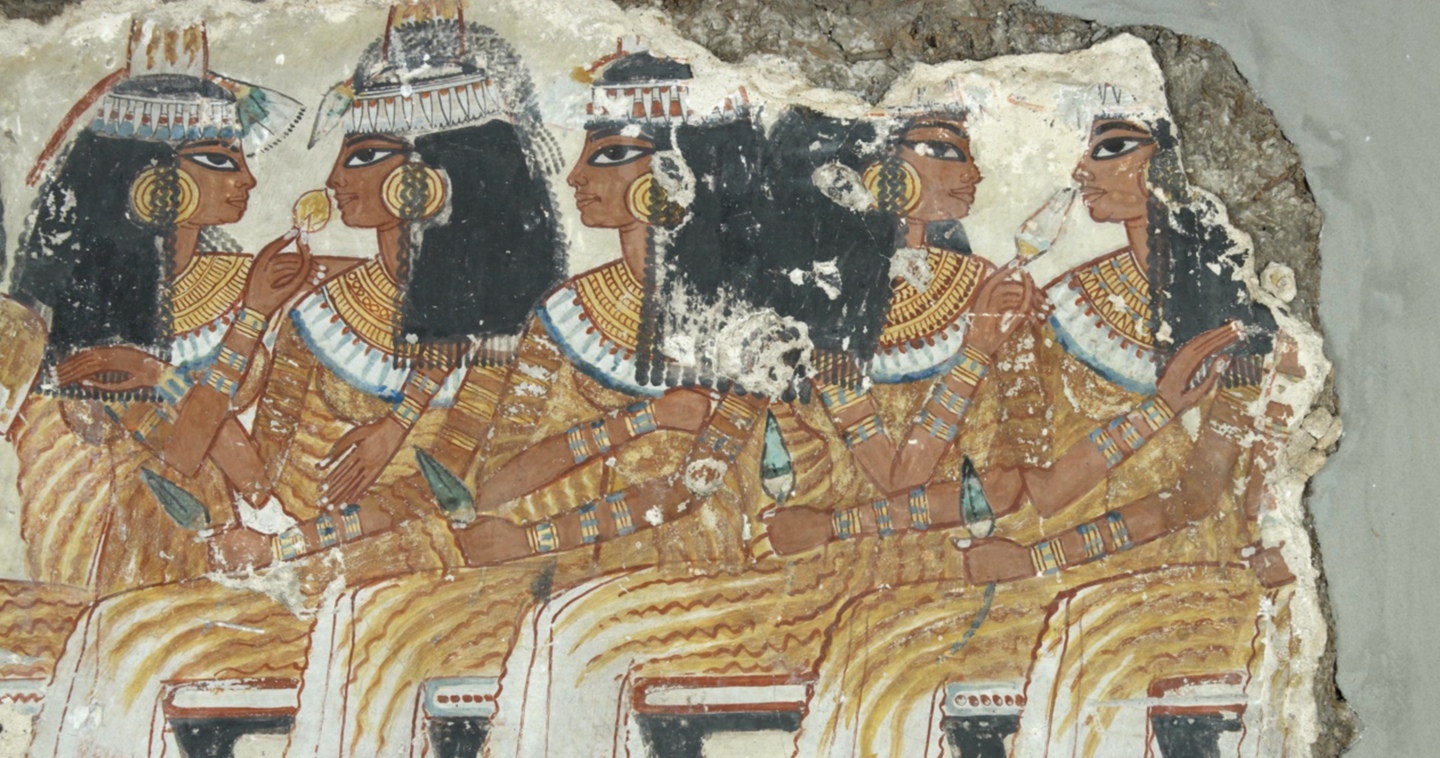
In ancient Egypt, hair was associated with life and fertility, especially for women. Consequently, great attention was paid to women’s hairstyles in artwork. For instance, in the mural in the tomb of Nebu. The hairstyles of dancers, flautists, and guests are depicted in detail; each young woman has a slightly different style. Hair was an integral part of the celebration of life shown in the fresco.
Fragment of the painting from the Nebu Tomb, 1350 BCE.
Conclusions: