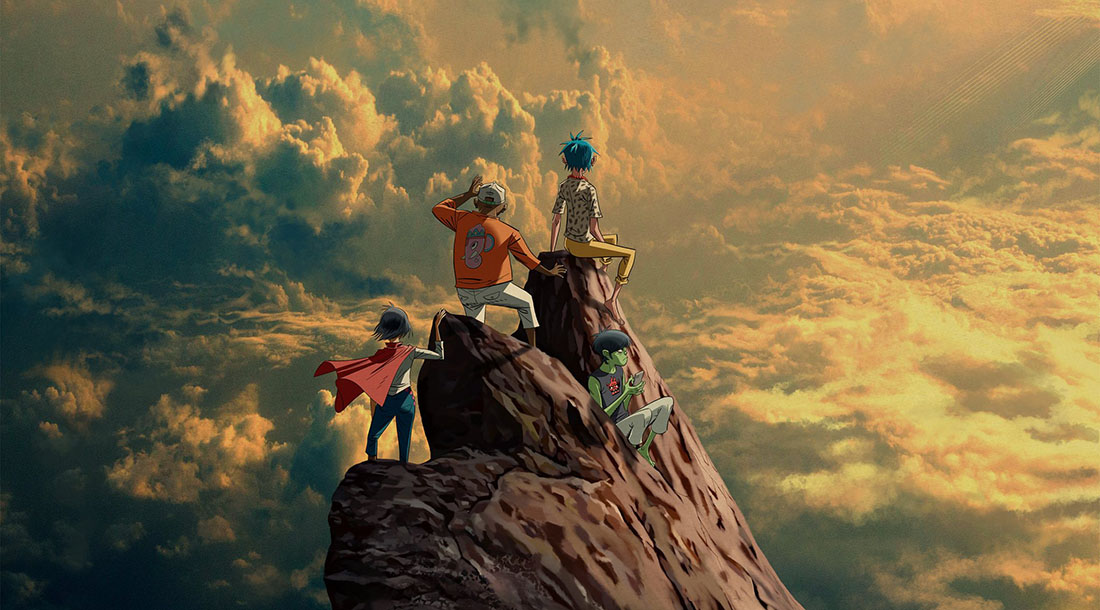
Concept
On February 27, 2026, the ninth studio album by the virtual group Gorillaz, titled «The Mountain,» was released. The album was inspired by the project members' joint trip to India. Jamie Hewlett (the band’s visual artist) became immersed in the country’s culture as early as 2022 when he stayed in Jaipur for an extended period because his mother-in-law was hospitalized there. Despite a difficult time, he fell in love with the city’s history and atmosphere. Upon returning to Britain, he suggested that the band’s musician, Damon Albarn, join him in India.In 2025, they planned a trip to Rishikesh to visit an ashram. During the preparation for this trip, Albarn’s father passed away, followed by Hewlett’s father ten days later. These tragic events were reflected in the album’s theme, which addresses ancient Indian philosophy of the soul’s eternal rebirth. The journey became not only a creative endeavor but also a way to process loss.
I told Damon that if we could make an album about death that made people less afraid of the subject, wouldn’t that be an incredible gift?
A nearly nine-minute animated clip was created for the main composition, referencing the origins of ancient Indian religious symbolism.
The animation is executed in traditional 2D technique. In this age of artificial intelligence, many artists utilize it, to one degree or another, as a supporting tool in their work. Jamie deliberately returns to the origins of animation from the 1960s. The entire film is permeated with parallels between the past and the present, making it highly appropriate to pay homage to traditional hand-drawn animation here. The feature short film, «The Mountain, The Moon Cave and The Sad God, ” tells the story of the group’s internal journey up a mountain—a metaphor for spiritual rebirth and the search for truth.
The clip incorporates elements of Indian philosophy and iconography, ideas that originated as far back as the 1st millennium BCE and have found expression in contemporary art.
In my work, I want to show how creators use ancient heritage in their art to discuss the issues of our modern day.
The goal of this study is to compare the monuments and philosophy of Ancient India with fragments of the presented animated film, to determine the symbolism, and thereby understand the meaning embedded by the creators.
For a comparative analysis, artworks from Ancient India and neighboring regions (Maharashtra, South India, Cambodia) created between the 3rd millennium BCE and the 13th–14th centuries CE were selected. Textual materials were gathered using various types of sources. The core consisted of interviews with creators (Vogue India, Rolling Stone India), descriptions of museum collections (Smithsonian Institution, V&A), and academic articles (BRE on mudras). Additionally, song lyrics from Gorillaz were analyzed.
I will divide the visual research into chapters, in which I will analyze the symbols and references to Indian mythology as the narrative develops and the meaning they reflect in the animation’s storytelling.The work includes the following sections:1. The Image of the Sadhu 2. Multiplicity in Hindu Symbolism 3. The Image of the «Sad God» 4. The Final Journey: Crossing Over (Moksha)
(1) The image of the sadhu as a path of self-sacrifice for enlightenment
Still from the music video «The Mountain, The Moon Cave and The Sad God»
Climbing the mountain of enlightenment, the Gorillaz characters encounter a figure on their path—a person sitting with one raised arm, entangled in tree roots. This is the image of a Sadhu—a term in Hinduism used to describe saints and yogis who devote themselves entirely to achieving liberation (moksha) through meditation and knowing God. Sadhus usually wear ochre-colored robes, which symbolize detachment from worldly life. They endure severe ordeals (long fasting, standing meditation, prolonged holding of limbs in one position) for spiritual growth and union with the divine.In the art of Gandhara (1st–3rd centuries CE), there are famous reliefs depicting the Buddha before enlightenment—extremely emaciated, with ribs visible beneath the skin. A group of people is shown below the sculpture. Two figures kneeling are donors, offering incense to the Buddha. The others standing on the sides are monks. They demonstrate that even when the Buddha was severely depleted by rigorous asceticism, his spiritual power still inspired awe and offerings from the faithful.
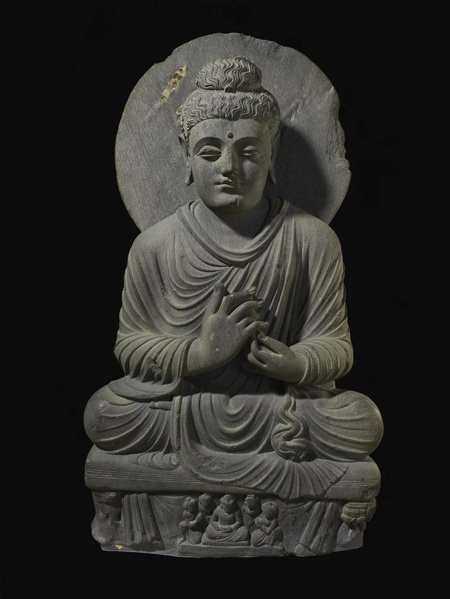
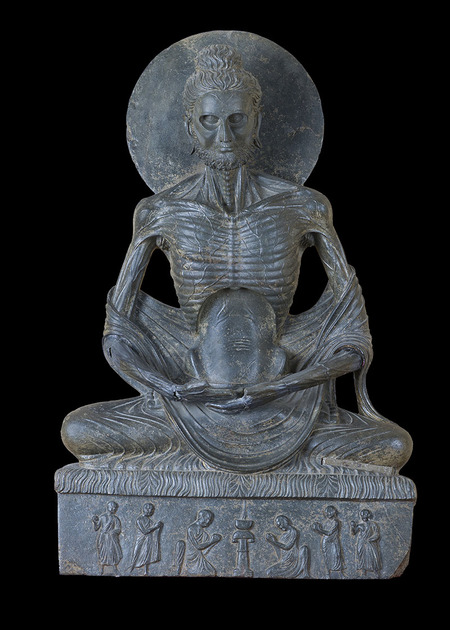
1. Anonymous, 2nd–3rd centuries CE, Seated Buddha 2. Anonymous, 1st–3rd centuries CE, Siddhartha Gautama (original name)
The music video features a sadhu with a raised hand above his head. This gesture references the real practice of Amara Bharati, who has kept his right hand raised for over 50 years as a sign of spiritual asceticism. Followers of Shaivism subjected themselves to similar disciplines.
Anonymous, 12th Century, Shiva Nataraja
The Hindu deity Shiva is known as the destroyer, but this in no way characterizes him as evil or merciless. He is essential for maintaining balance in the world. His most recognizable form is Nataraja (the cosmic dance), which symbolizes the continuous cycle of creation, preservation, and destruction of the universe.
Anonymous, 12th Century, Somaskanda (Shiva and Uma)
Shiva is also revered as Adiyogi—the «first yogi, ” patron of meditation and asceticism. According to mythology, he was the one who passed the knowledge of yoga to humanity. For this reason, real sadhus strive to emulate Shiva: they wear matted hair (jata), smear their bodies with ash, and use a trident and rudraksha beads. Shiva is the foundational sage whose image serves as the standard for all subsequent ascetics.
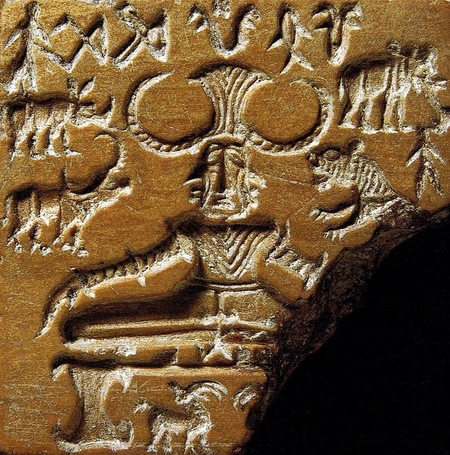
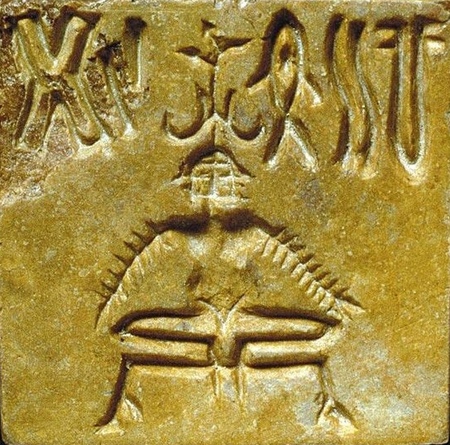
Anonymous, Pashupati Seal («Proto-Shiva»), 2600–1900 BCE (fragments)
The origins of this imagery can be traced back to the Indus Valley Civilization (c. 3300–1300 BCE). Archaeological seals—such as the famous Pashupati seal from Mohenjo-Daro—feature figures in meditative postures reminiscent of the lotus pose. Visually, these figures already align with the canon that would later be established in sculptures of Shiva and images of ascetics.
Thus, the sadhu seated in the Gorillaz music video, encountered on the path up the mountain, personifies enlightenment through self-sacrifice. This image connects ancient ascetic traditions with contemporary visual language.
(2) Multiplicity in Hindu Symbolism
Still from the music video «The Mountain, The Moon Cave and The Sad God» (the serpent god Naga)
Deities with four or more arms or heads were frequently depicted in Indian art. For example, the canonical depiction of Shiva shows him holding a trident (trishula) in one hand and a small drum (damaru) in another, while the remaining hands may be posed in mudras (gestures).
The theme of multi-limbed figures also appears several times in the Gorillaz music video. At the very beginning of the animation, there is an image of the serpent god Naga emerging from the water.
Anonymous, 2nd century CE, Buddha under the protection of Muchalinda
In Buddhism (which is closely connected to Hinduism), snakes are often perceived as protectors. This relates to the episode where Naga Mucalinda shielded the Buddha from the rain for seven days during his meditation under the Bodhi tree.The Gorillaz clip opens with a stroll by the young Noodle through the jungle. She then dives into the water and swims to the other bank, accompanied by the gaze of a six-headed serpent. Noodle emerges from the water already in a reborn, adult form. Thus, this snake acts as a guardian of the threshold—it protects her path and keeps her on course.
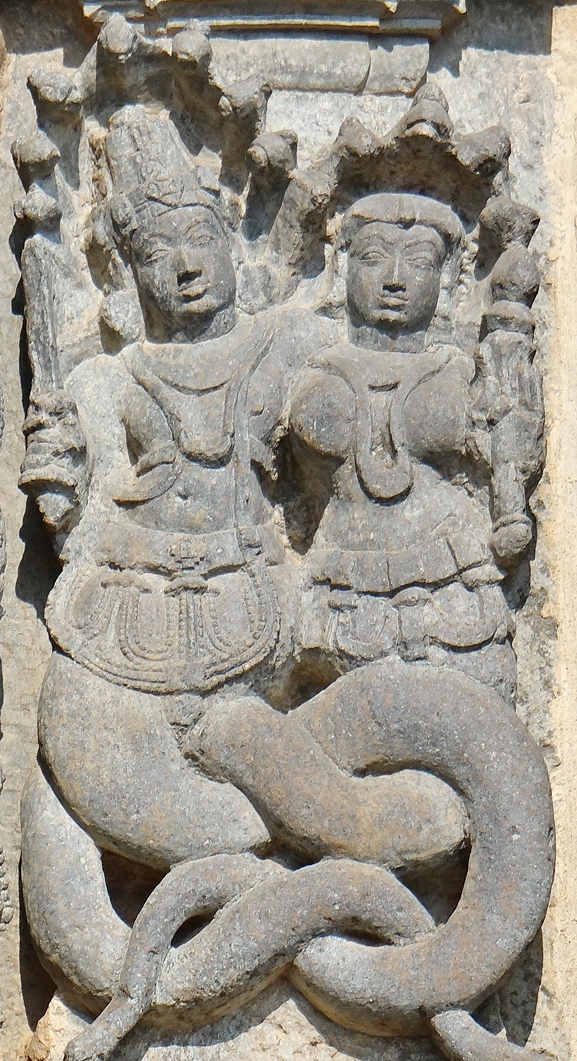
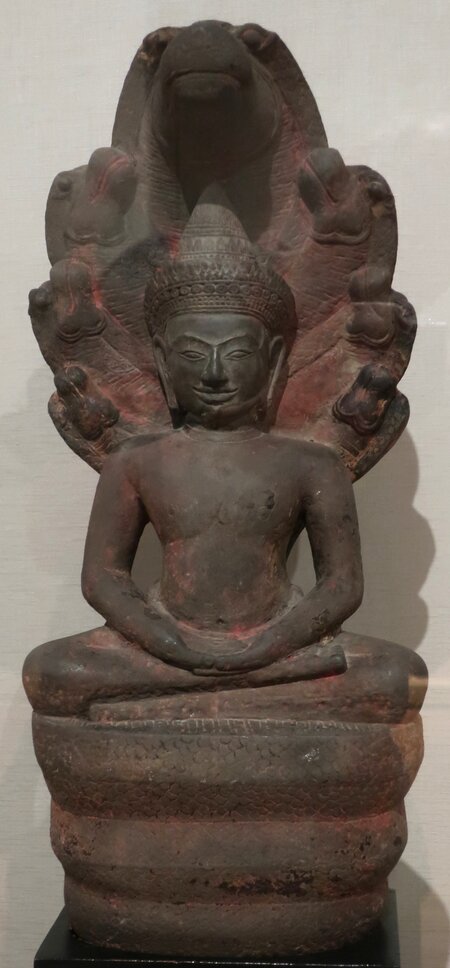
1. Anonymous, Chennakeshava Temple, Bellur, Karnataka, India, 1117 CE, Naga and Nagini 2. Anonymous, 12th–13th Century, «Buddha under Mucalinda’s Protection»
Continuing the story of the cartoon, the group members climb to the mountain’s summit, where they enter the Moon Cave. Primitive cave paintings greet them there. Among the drawings, the depiction of a six-armed deity stands out in particular.
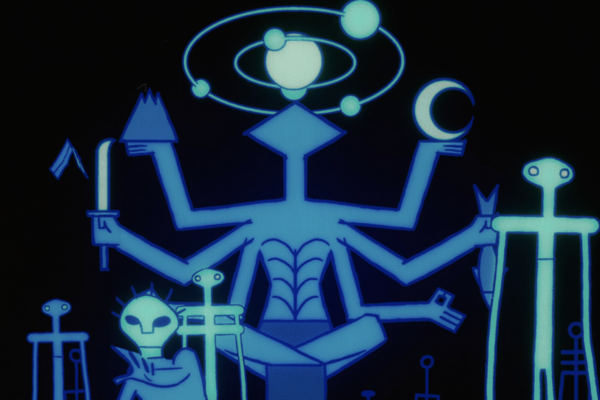
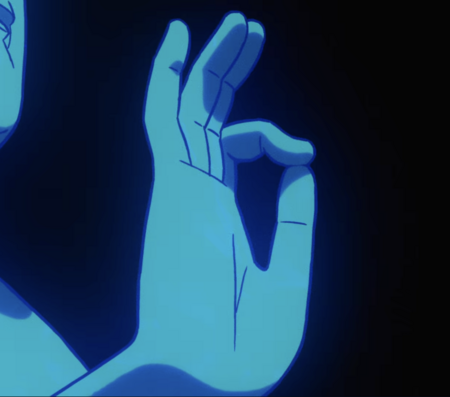
Stills from the music video «The Mountain, The Moon Cave and The Sad God» 1. The multi-limbed deity 2. Mudra gesture
This is a symbol of power and omniscience. Each hand holds its own attribute, meaning it can act simultaneously in different domains and govern various forces. As mentioned before, free hands are typically arranged in a mudra gesture. The thumb symbolizes the knowledge of all earthly things, while the index finger denotes humanity itself. Thus, by forming a kind of circle, the gesture communicates that the person comprehends the wisdom of the entire world and merges with it into one whole.
Gorillaz do not assign individual characteristics to the multi-armed creature; they distill this image into a cave painting pictogram, endowing it with a new, cosmological meaning (the planet above the head as a sign of omniscience).