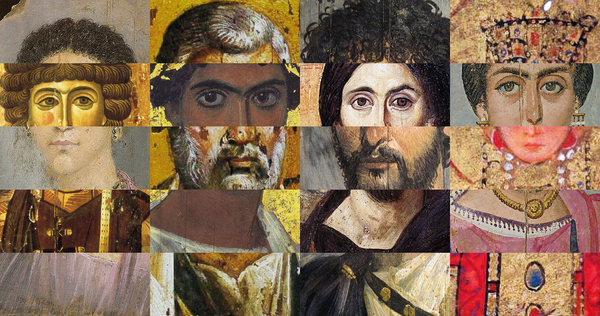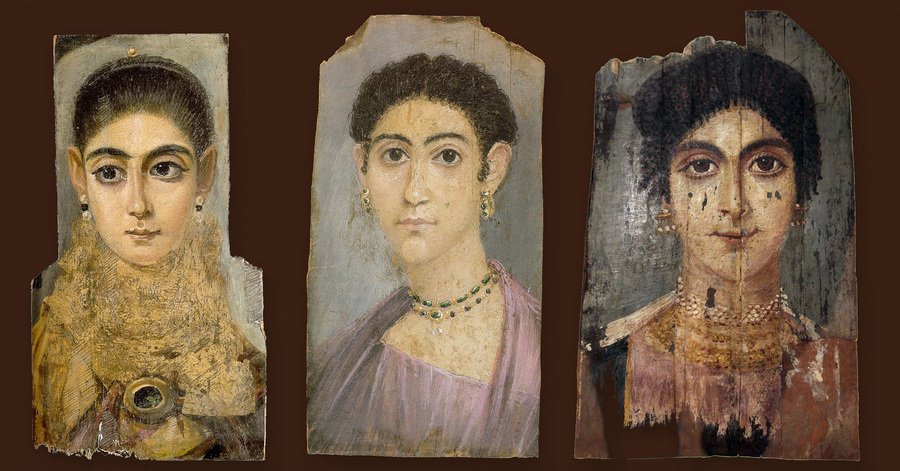
Влияние греко-римской живописи на египетские погребальные традиции
Sections
1. Origins: The sarcophagus as body protection
2. Imagery as part of the funerary rite
3. The sarcophagus takes on a human form
4. Variety of decorative painting
5. Pre-Roman period: the intersection of Egyptian and Greek traditions
6. Egypt under Roman rule: a new image of the deceased
7. The Fayum portrait: individuality over conventional representation?
8. Two traditions in one object
9. Conclusion
Concept
Egyptian funerary art, over millennia, maintained the concept of needing to protect the body and ensure the deceased’s afterlife. Concurrently, the artistic decoration of sarcophagi, masks, and burial wrappings evolved. Geometric shapes were supplemented with depictions of gods, protective symbols, and texts, while the human face assumed varying degrees of stylization and individuality.
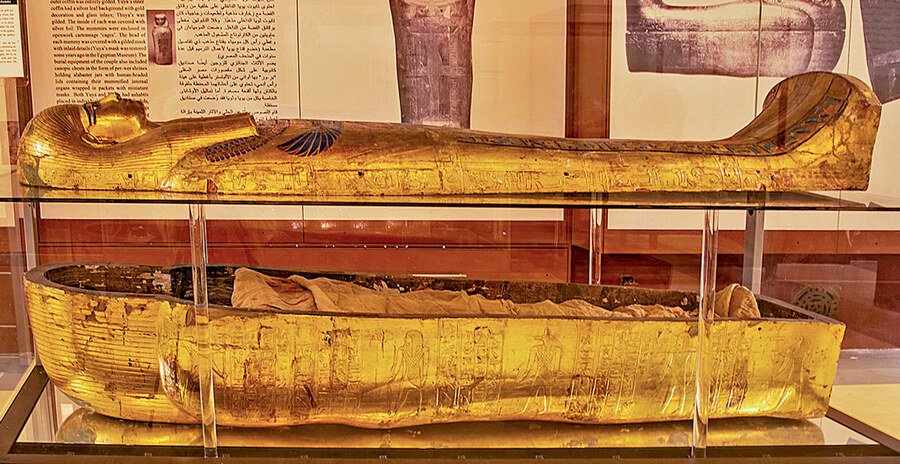
Gilded sarcophagus and mummy of Yu Yi (14th century BCE)
Core Research Question: How did the influence of Greco-Roman art culture alter Egyptian funerary imagery, and which elements of local tradition remained preserved? My hypothesis is that changes are particularly noticeable in the rendering of the face, the depiction of volume, and the representation of social status, while religious themes and the function of the funerary image demonstrate the persistence of Egyptian concepts.
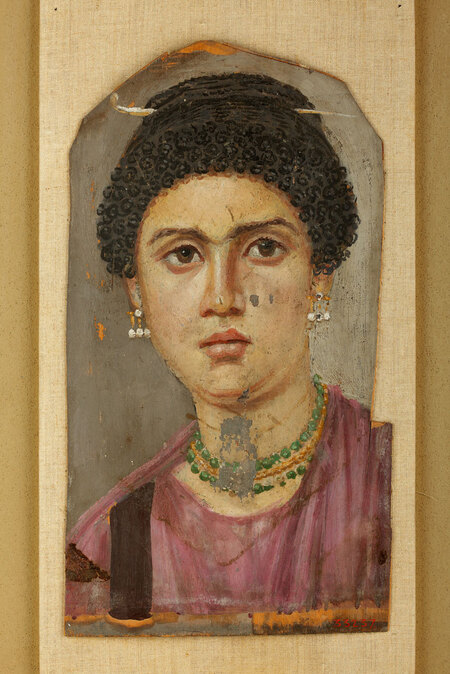
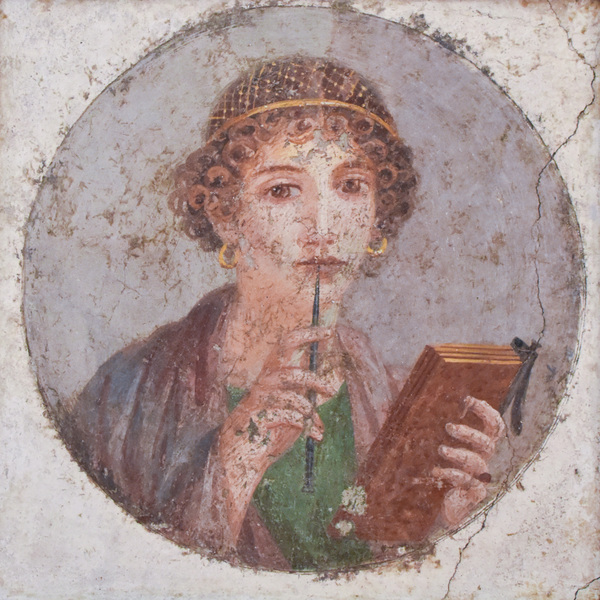
«Portrait of a Woman from Hawara» (Egypt, early 2nd century CE) / «So-Called Sappho» (Roman Empire, 1st century CE)
The goal of this research is to trace the changes in the artistic ornamentation of Egyptian sarcophagi and funerary imagery, and to determine how the influence of Greek and Roman culture was reflected in the depiction of the deceased while preserving Egyptian religious traditions.
Origins: The sarcophagus as bodily protection
The preservation of the deceased body held a vital place in Ancient Egyptian culture and was linked to beliefs about continued existence after death. The burial container was intended to protect the remains from damage, creating a secure space within the tomb.
Sarcophagus of Werehnesfer. Saqqara, Egypt (380–300 BCE)
Various burial methods coexisted, reflecting differences in wealth and social status. Stone sarcophagi required significant resources and technical skill. Their artistic expression was defined by proportions, texture, and material treatment.
Vennefer’s Sarcophagus, interior view. Granite or granodiorite. 380–332 BCE.
A striking example is the sarcophagus of Pharaoh Sekhemkhet from the unfinished pyramid in Saqqara. Visually, the monument is characterized by its strict geometry, smooth surfaces, and lack of elaborate painting. The enclosed stone volume can be interpreted as an expression of security. This is confirmed by the images and inscriptions on the sarcophagus.
The Sarcophagus of Sekhemkhet in the Burial Chamber (Saqqara. Archival photograph of excavations, 1956).
Image as part of a funerary rite
The placement of images corresponded to the body’s position and the intended function of individual elements. The painting became part of the ritual, creating a symbolic environment for continued existence after death. Its composition integrated protective symbols, texts, and objects into a deliberate system addressed to the deceased and connected to their needs in the afterlife.
Khnumhotep’s Sarcophagus, side view
In other words, the decoration of Egyptian tombs reflected beliefs about the afterlife. The images and inscriptions complemented the physical protection of the body with magical elements: they preserved the deceased’s name, ensured offerings for them, and helped them overcome the dangers of the journey after death.
Tutankhamun’s Sarcophagus, interior view
Rectangular coffins featured architectural facades, food, and essential items. A pair of eyes on the side allowed the deceased a symbolic view of the outside world. The interior surfaces were also covered with funerary texts and illustrations.
Ukhhotep’s Sarcophagus, Close-up
The Sarcophagus Takes Human Form
Alongside rectangular coffins, anthropoid coffins emerged, mirroring the contours of a swaddled body. Their development is linked to the evolution of burial masks that covered the deceased’s face, head, and shoulders. Gradually, the human silhouette dictated the shape of the coffin itself.
Coffin of Ansemmes, Egypt (c. 1200–945 BCE)
The lid integrated volumetric modeling with painting. On it, the face, wig, wide collar, and sometimes hands and beard were highlighted. Symmetry and frontality created a solemn image. The face often remained idealized, and the coffin’s identity was indicated by a name and inscriptions.
Mummy of Khnumhotep with mask and broad collar
The human form connected the burial shroud to the image of the transformed deceased. It can be viewed as a symbolic body. The face became the main visual focus, around which ornaments, color fields, and religious imagery were organized, expressing the hope for protection and resurrection after earthly death.
Variety of Painting Styles