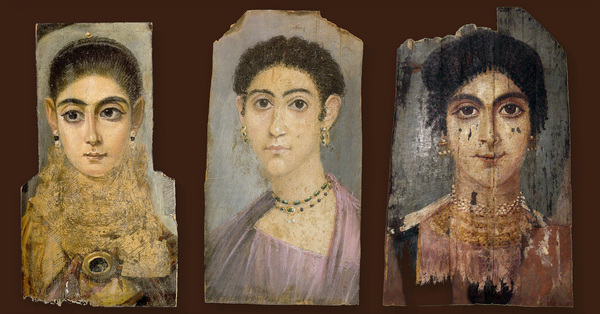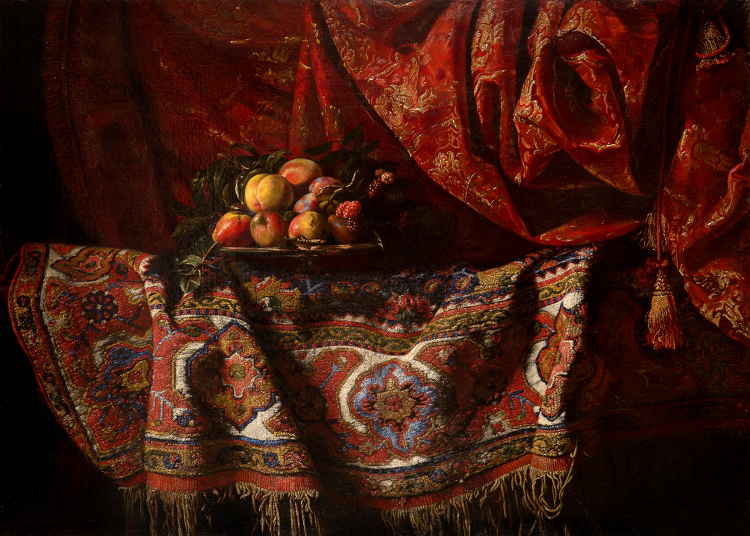
Concept
The art of the Roman Empire is famed for its beauty and diversity, and fruits and berries add an extra layer of visual interest. However, it is not as straightforward as it seems at first glance. Hidden beneath these simple, sweet fruits is an entire message. Each combination carries a hidden meaning, capable of guiding the viewer to look at the depicted work from a completely different perspective. It is also worth noting that the symbolism of fruits and berries in Roman art was not arbitrary or purely decorative—it is deeply rooted in religious cults, mythology, and the daily lives of the Romans. Furthermore, the context is crucial: the fruits could serve as a symbol of deities or as an allusion to the afterlife in funerary art. The way this art was perceived also warrants special attention: Roman viewers, unlike modern ones, grasped these symbols almost immediately because the iconography was integral to the culture in which they lived. Undeniably, such images also served as indicators of wealth and status, while simultaneously fulfilling purely decorative functions.
What is the theme?
The research topic involves examining frequently depicted fruits and berries, such as grapes, pomegranates, and olives, in the art of the Roman Empire to understand their hidden symbolism and the artist’s motif for their inclusion. Since ancient times, certain objects in visual art have been imbued with concealed meaning. Some artists continue to employ this technique today. Therefore, studying fruit and berry motifs allows us not only to decipher individual works but also to gain a deeper understanding of the worldview of the era as a whole.
The objective of this research is to form a clear understanding of the meaning and significance of fruits, as well as berries, in the art of the Roman Empire. It aims to understand the rationale behind the combination of specific objects.
To understand this topic, one must trace how the fruits in question appear within mythological narratives, scenes of daily life, and symbolism as a whole. It is important to determine whether their meaning shifts when combined with other fruits or berries, or if it remains consistent.
The visuals feature works from the Roman Empire, on which the fruit can be clearly identified. The material is selected to ensure that each chapter presents diverse examples. The research includes works where the fruit or berry serves both as the primary subject and a compositional element.
Summary
Therefore, the foundation of this visual study is the analysis of works from the Roman Empire. Each chapter is dedicated to a specific fruit or berry and a comparison of its symbolic meanings. Attention is also paid to how the same fruit could serve completely different roles—as a decorative motif or as a carrier of religious or philosophical meaning. The work must demonstrate that the fruit was not merely an attempt to embellish an artwork, but a means to convey hidden significance.
Pomegranate: An Icon of Fertility, Rebirth, and Matrimony
In ancient culture, the pomegranate symbolizes rebirth. The fruit frequently appears on Roman sarcophagi and frescoes. The explanation for this symbolism lies in the myth of Persephone, which recounts that after eating pomegranate seeds (the food of the underworld), she condemned herself to live in Pluto’s realm (the kingdom of the dead). She spent winter and autumn with her husband while nature was dormant. Conversely, she spent the summer and spring in the realm of the living, with her mother Ceres (goddess of fertility, motherhood, and agriculture), when nature was awakening. For the Romans, this myth spoke not of death, but of the cycle of life, which is precisely why the pomegranate is associated with rebirth.
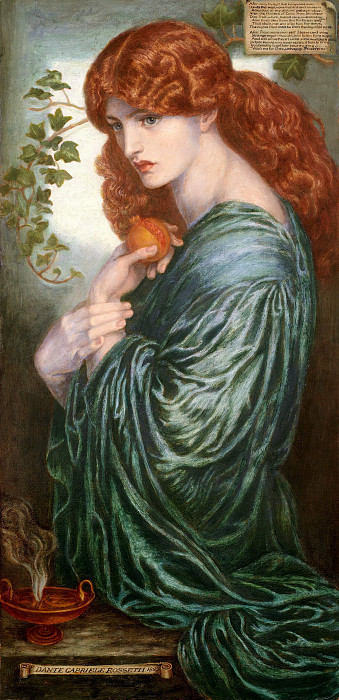
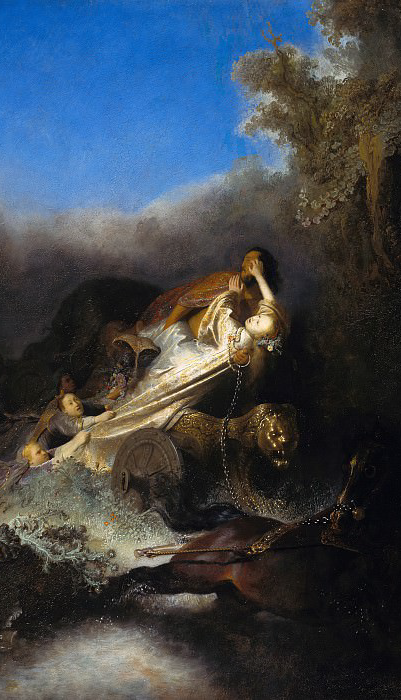
This fruit also symbolizes marriage and fertility. Based on the myth mentioned above, the pomegranate served as a symbol of the unbreakable nature of marriage. It is also considered a symbol of fertility because the goddess Juno (patron of marriage and childbirth) was frequently depicted with this fruit. The Romans interpreted the numerous seeds as representing prolific offspring, and the dense rind symbolized protection and impenetrability.
The context could significantly influence the meaning of the pomegranate: its significance shifted depending on the scene. In the scene with Persephone, the fruit spoke of her time in Pluto’s underworld and her eventual return. In family scenes or sacrificial contexts, the pomegranate expressed wishes for fertility and well-being. In still lifes or alongside other fruits, it conveyed a sense of abundance.
In Roman art, fruits were depicted in various ways and using different materials. They were painted onto the plastered walls adorning homes and villas. Fruits were arranged in mosaics made from small stone, glass, or ceramic elements. In relief sculpture, they were carved from stone, such as marble. The symbolic meaning depended on the narrative and adjacent imagery.
Based on the above, we understand that the symbolism of the pomegranate held significant meanings, such as fertility, matrimony, and renewal. These meanings are particularly vividly reflected in the myth of Persephone, as the same fruit symbolizes death, life, and the cyclical nature of the world.
Olive: a symbol of peace, abundance, and agriculture
The olive symbolizes victory and peace; a myth is even dedicated to this berry. Athena and Poseidon argued over who would claim the city. According to Greek mythology, Athena gifted the olive tree to the city’s inhabitants, and because of this, she became their patron goddess. That is why, for the Romans, this berry symbolizes victory and peace. It is worth noting that the Romans adopted many things from the Greeks, including their gods. In this case, Athena corresponds to Minerva, and Poseidon to Neptune. Moreover, the olive branches were used to crown the victor at the Olympic Games.
The meaning of abundance stems from the fact that this tree fruits almost every year, which also signified stability. The olive yield constantly increases, and fruit continues to grow on trees that appear to be dead. Olives were eaten, pressed into oil, and simply used in daily life. It is important to note that Minerva, who gifted the olive to the Romans, was the goddess of wisdom, war, crafts, and arts. This is why, in the art of the Roman Empire, the olive symbolized stability, abundance, cyclicity, and generosity.
Olives were depicted almost everywhere in Roman art. This is particularly noticeable in frescoes, mosaics, and reliefs. However, the olive did not always carry a hidden meaning. For instance, the branches and leaves could simply be part of a rural landscape or function as a decorative element. It is also worth noting that the medium significantly influenced the appearance of this fruit: painting allowed for subtle tonal gradations, while mosaics rendered the image more sharp and patterned. The depiction of the olive is very common in Roman art because it was a fundamental part of their lives.
Thus, for the Romans, the olive was both part of the motif and a powerful symbol. It was associated with peace, victory, prosperity, and fertility, and olive oil held a significant place in daily life. Therefore, images of olive branches in ancient art conveyed both mythological beliefs and the vital role this fruit played in everyday existence.
Grape: a symbol of joy, abundance, and life after death
The first and most obvious meaning is joy and abundance. The grapevine is, above all, a symbol of joy and prosperity gained not easily, but through diligent labor. A rich harvest was the result of continuous work: the vine needed to be grown, pruned, the fruit harvested on time, and crushed. It is closely linked to Bacchus, the god not just of winemaking, but of creative ecstasy, festivity, and renewal. Wine was an inseparable part of Roman feasts and rituals, uniting the people.
In funerary art, the image of the grapevine grew deeper. Scenes on sarcophagi where putti gathered or pressed grapes were not merely decoration; they were metaphors. They spoke of fertility, abundance, and the renewal of life. The transformation of grapes into wine was perceived as the soul’s transition to another world. The depiction of the grapevine, associated with the cult of Bacchus, promised the deceased not suffering in Pluto’s realm, but merriment, peace, and feasting. Furthermore, the putti on the sarcophagi—as if they were moving, gathering, flying, or pressing grapes—symbolize not just death, but the cycle and renewal of life.
The third meaning was home ornamentation and a symbol of affluence. Grapes appeared not only in narratives about gods or on sarcophagi. They were also depicted on the walls and mosaics of Roman houses. Such decorations served as a reminder of fertility and abundance, while simultaneously demonstrating that the homeowner could afford to decorate their dwelling exquisitely. In mosaics, grape imagery was fashioned from small pieces of stone, marble, ceramic, or glass.
Thus, in the art of the Roman Empire, the grape vine encompassed multiple meanings. This fruit symbolized abundance, joy, and diligent labor. The connection to the god Bacchus conveyed the significance of festivity, creativity, and renewal, while in funerary art, it represented rebirth. Images on houses spoke to the owners' wealth and hospitality. This sweet fruit was not merely decoration—it told an entire story.
Conclusion
During the work, it becomes clear that such fruits—such as pomegranate, olive, and grape—do not merely serve a decorative function; they also convey mythological motifs, hidden symbolism, and aspects of simple daily life. Thus, fruits and berries in the art of the Roman Empire acted as a message to those who understood them. Based on the imagery, one could decipher a person’s status, the meaning imbued in the painting, and the intention behind depicting a particular fruit or berry. Studying this topic helps broaden our understanding of Roman life and culture, revealing how apparently simple objects can become the source of an entire story.
Symbols [Electronic Resource] // Artworker School. — URL: https://artworker.school/teach/symbols#s1 (Accessed: 10.11.2026)
The History of Wine [Electronic Resource] // VINUM. — URL: https://vinum.red/detail_pages/wine-story/6775e91f-d026-11ef-a621-0242ac190003/ (Accessed: 10.11.2026)
Zubov, A. B. Dionysus and Death: Lecture 81, Item 8 [Electronic Resource]. — URL: https://abzubov.com/new_course/lecture₀81 (Accessed: 10.11.2026)
Terskaya, E. The Myth of Persephone: Prologue [Electronic Resource] // LitRes. — URL: https://www.litres.ru/book/evgeniya-terskaya/mif-o-prozerpine-74393528/chitat-onlayn/ (Accessed: 10.11.2026)
The Symbolism of the Dove of Peace: From Antiquity to the Modern Era [Electronic Resource] // CyberLeninka. — pp. 29–30. — URL: https://cyberleninka.ru/article/n/simvolika-golubya-mira-ot-antichnosti-do-novogo-vremeni/viewer (Accessed: 10.11.2026).