
Navigator
• Concept
• Mastaba: Foundation and Volume Logic
• Breakthrough: The Step Pyramid of Djoser
• Experiments: From Snofru’s Pyramids to the Ideal
• Classicism: The Great Pyramids of Giza
• Conclusion
• Sources

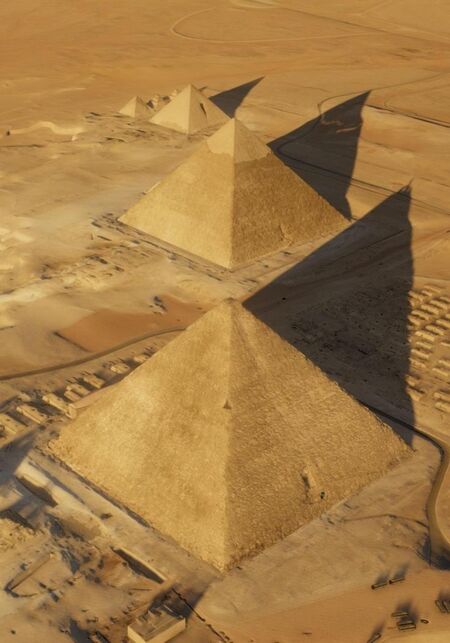
The Great Pyramids of Giza. Egypt. Photo by Albertino
Concept
The civilization of Ancient Egypt existed for approximately three millennia, spanning a significant time range. The surviving monuments of Egyptian architecture stand as a unique testament to the evolution of construction technologies and the cultural views of the ancient Egyptians.
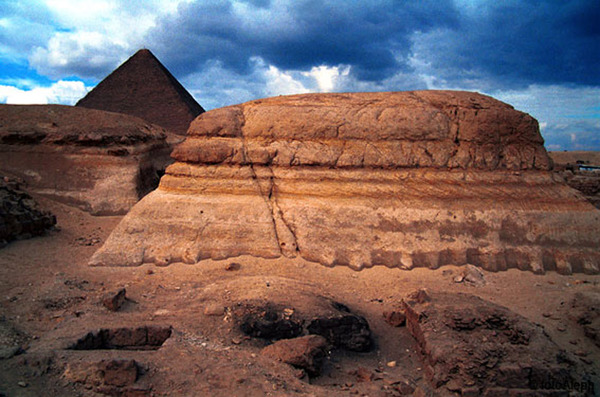
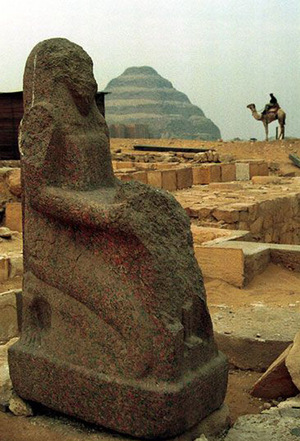
1. Giza, Egypt. The Great Pyramid of Khufu (4th Dynasty). One of the mastabas in the necropolis of royal relatives and prominent figures southeast of the pyramid. Copyright © 2013 fotoAleph 2. Saqqara, Egypt. Recently excavated ruins and archaeological finds in the area south of the Djoser burial complex. Copyright © 2013 fotoAleph
«The Evolution of the Pyramid: From Mastaba to Monumental Silhouette”—a longread that unravels the staged development of ancient Egyptian funerary architecture. We will trace how the simple mastaba—a rectangular tomb with a flat roof—became the foundation for a revolutionary breakthrough: the stepped pyramid of Djoser, designed by Imhotep. Next, we will examine the experiments of the Fourth Dynasty: the „broken“ and „pink“ pyramids of Sneferu, where architects sought the optimal slope angle and structural stability. The route culminates with the Great Pyramids of Giza: we will analyze how accumulated experience allowed them to achieve flawless geometry and colossal scale. The visual elements—reconstructions, plans, cross-sections, and detail photographs—will help one see not only the final silhouette but also the logic behind every change in form. The oldest surviving monuments of Egyptian literature complement the visual analysis of the pyramids. The „Pyramid Texts“ reveal the sacred meaning of these monuments, and Merer’s diary (the papyri from Wadi el-Jarf) details the delivery of limestone blocks for the casing of the Pyramid of Khufu. This dual perspective—textual and visual—helps readers interpret the appearance of these monuments with greater accuracy.
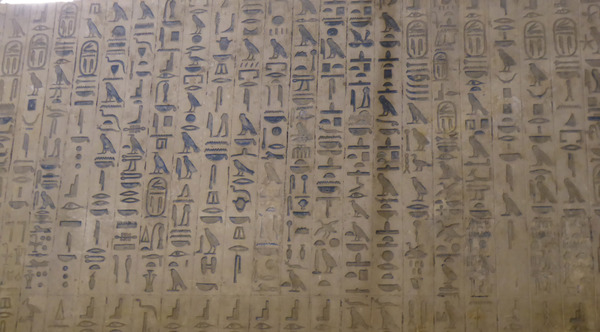
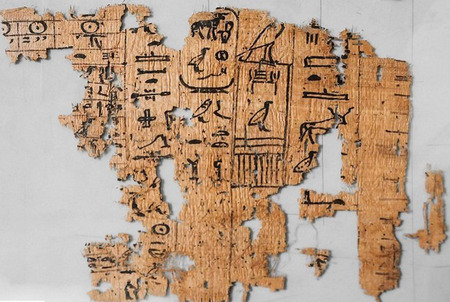
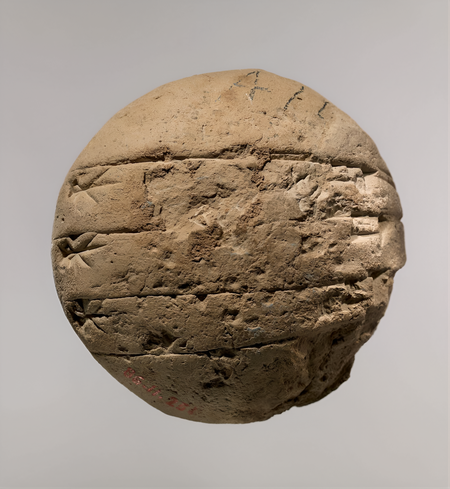
1. «Pyramid Texts.» The Pyramid of Unas at Saqqara, V Dynasty (24th century BCE). Photo: Aidan MacRae Thomson, 2017 2. «The Merer Diary» (Jerah Papyrus), the oldest known papyri with text, dated to the 27th year of the reign of the Pharaoh of the IV Dynasty, Khufu. A fragment that specifies the exact year these records were compiled. Photo — Tiziana Giuliani
The relevance of the project stems from the fact that ancient Egyptian architecture serves as a material carrier of meaning: concepts of the afterlife, power, and the cosmos are embedded in the outlines of the mastaba and the silhouette of the classical pyramid. The history of this type of structure is most clearly discernible through its form, proportions, and details.
Hypothesis
The evolution of pyramidal architecture, from the mastaba to
magnificent monuments, reveals how
technical capabilities and aesthetic preferences
incrementally shaped the canonical image
of the pyramid—an image that defined its appearance for centuries to come.
The research structure is organized chronologically. This approach allows us to connect visual changes with technological advancements, historical events, and shifts in societal worldview across different eras. The monuments of ancient Egyptian culture, which have survived through the ages, provide rich material for analysis. They allow us not only to trace the development of architecture but also to understand the foundations of the movement from simple to complex.
Scale: The Basis and Logic of Volume
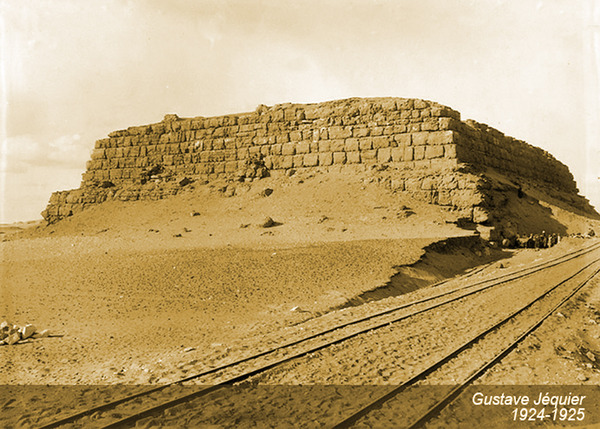
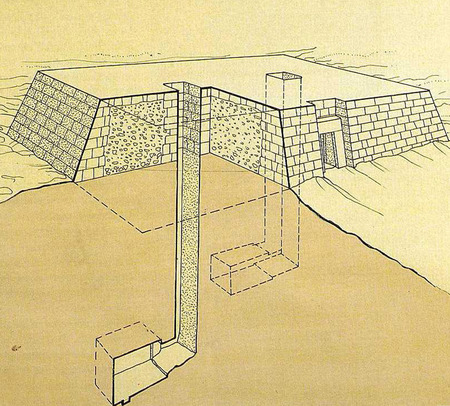
1. The study of the Shepseskaf mastaba in the early last century began by a certain G. Jequie, who published a corresponding report in 1928. 2. Mastaba (plan)
Mastaba—a type of ancient Egyptian tomb—is a structure shaped like a truncated pyramid with a rectangular base and sloped walls. The name derives from the Arabic word meaning «stone bench.» It is the earliest type of monumental stone building in Ancient Egypt, constructed during the Early and Old Kingdoms periods (circa 3200–2100 BCE).
During the First Dynasty era, mastabas were constructed from mudbrick. The structure comprised underground and above-ground sections. The underground area housed the burial chamber, from which vertical shafts led upward—these shafts were filled in after the burial. The above-ground section featured chambers for rituals: a serdab (a sealed prayer room with a statue), a hall for conducting rites, and a false door (a stone or brick representation of a doorway). The walls were decorated with bas-reliefs, paintings, and symbolic ornaments. The robust and foundational form of the mastaba embodied the concepts of permanence and eternity.
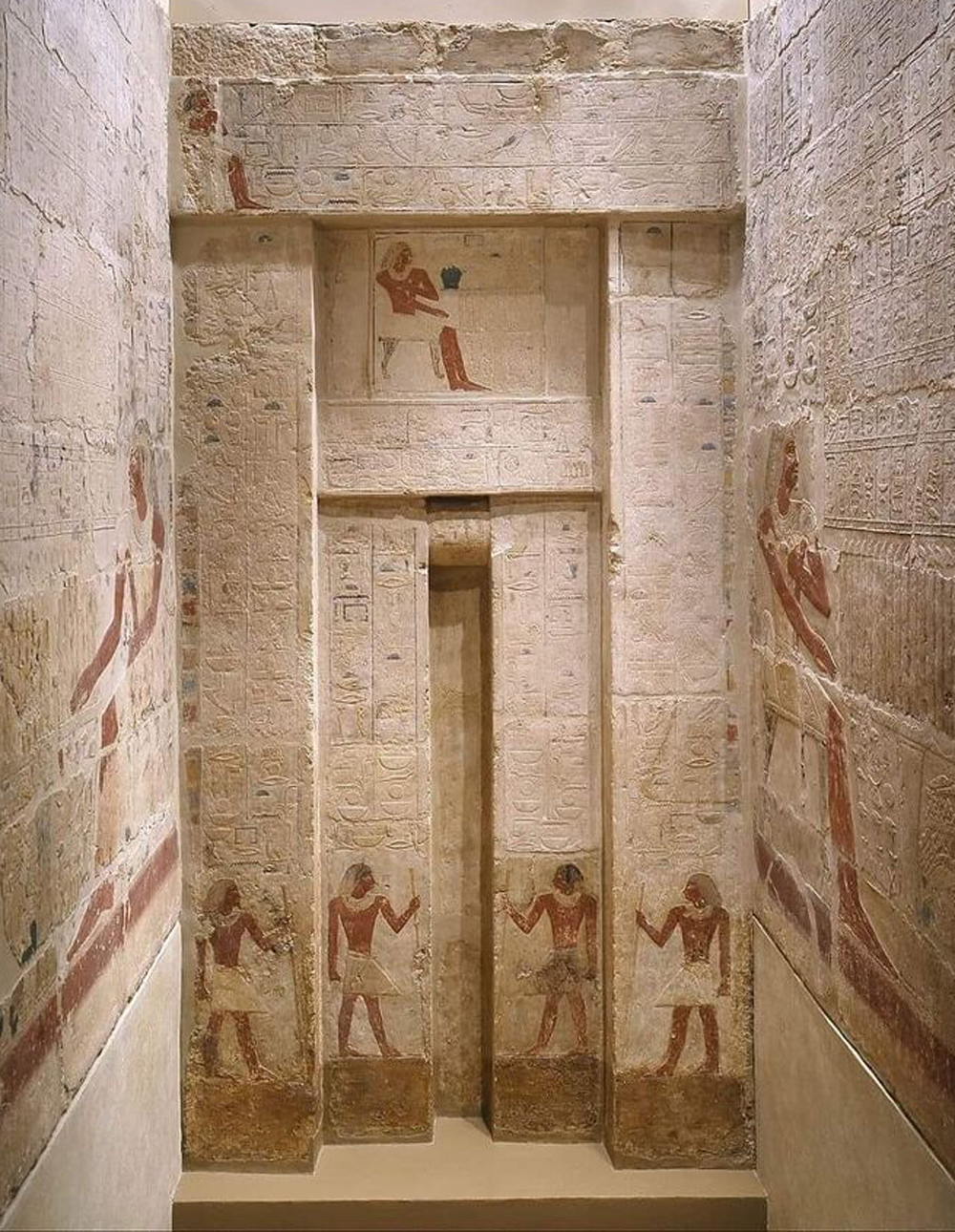
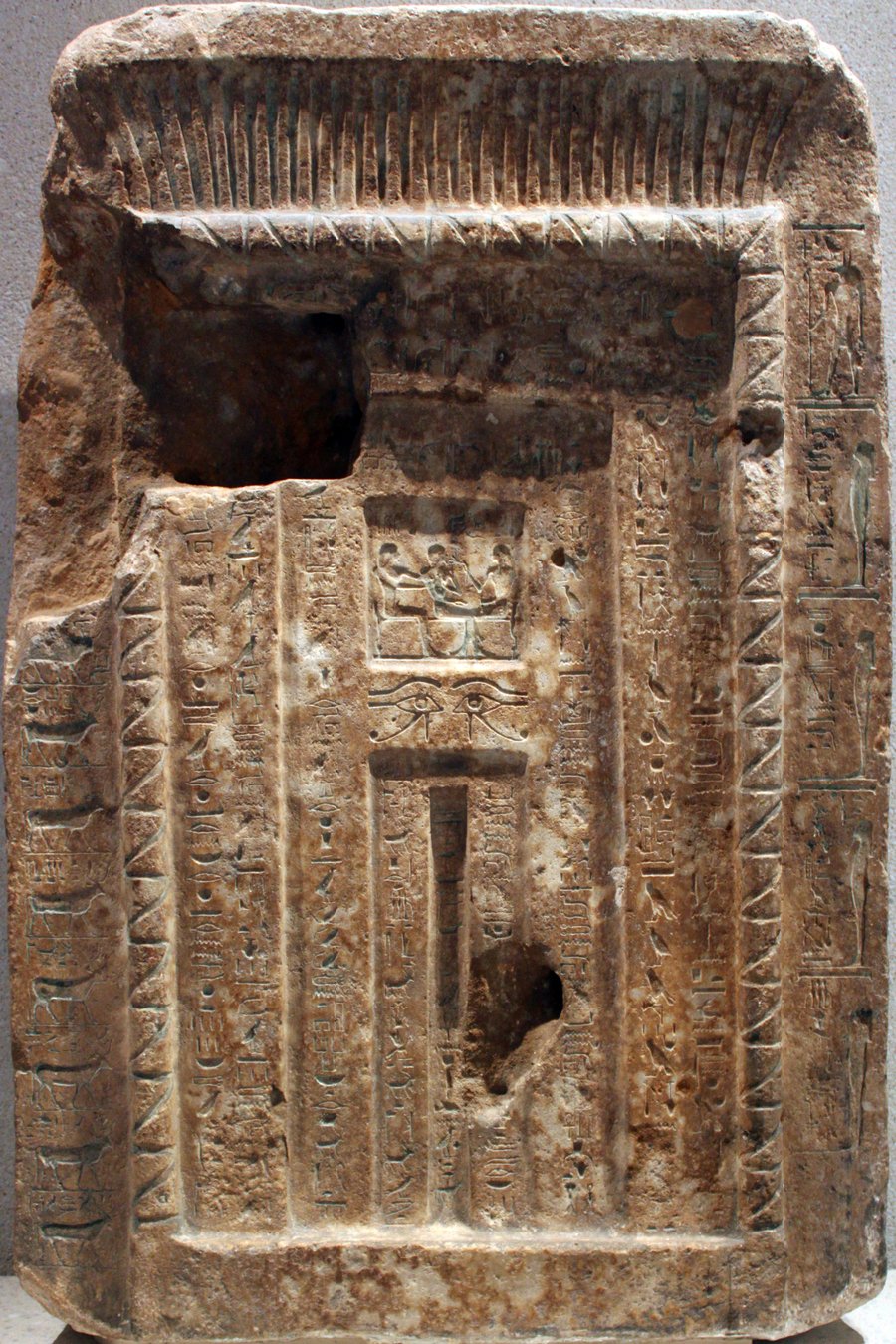
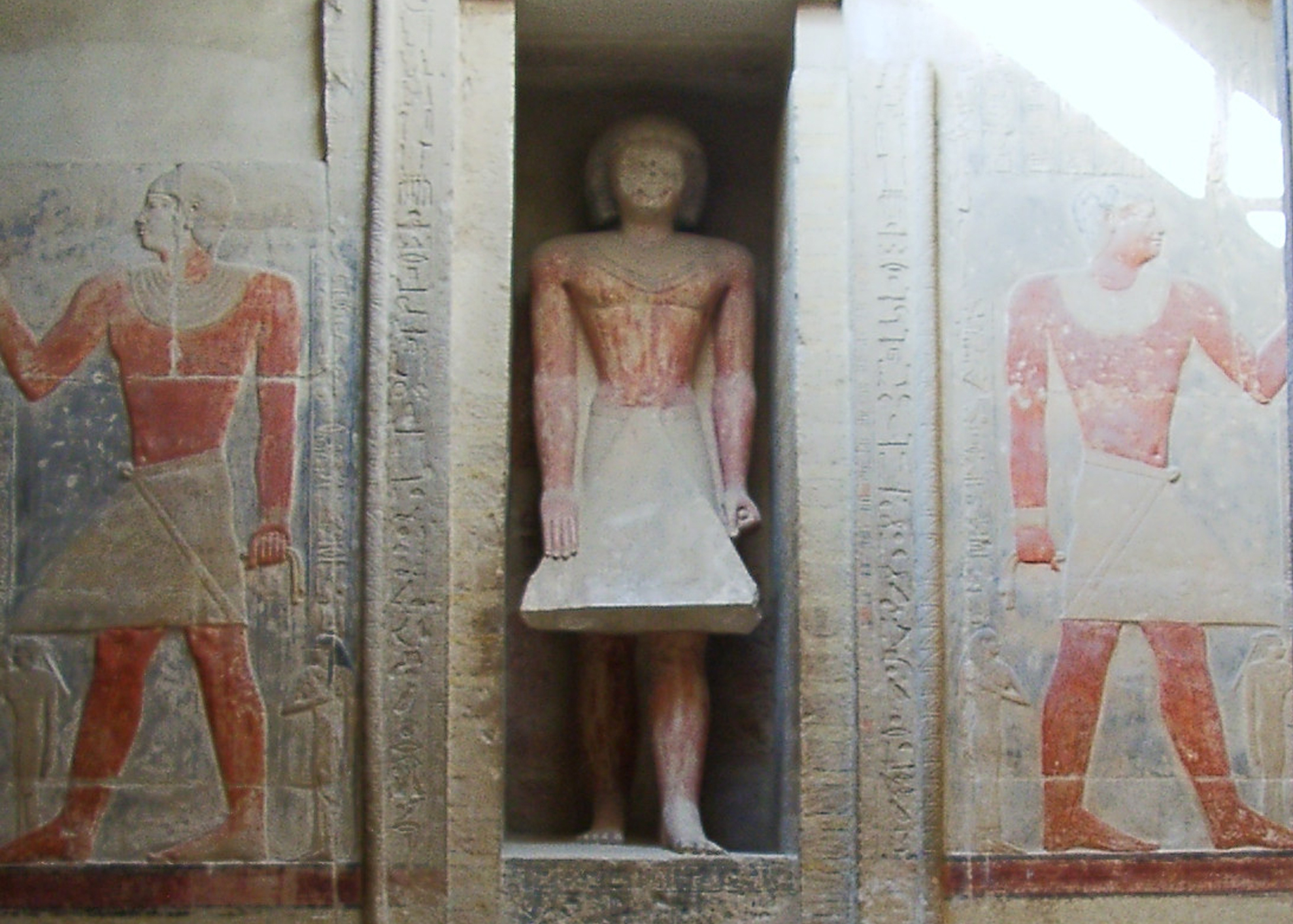
1. False Door of Senmut, the Vizier to Queen Hatshepsut; 18th Dynasty (c. 1470 BCE); Neues Museum, Berlin, Germany. Photo: Anagoria, 2012 2. Statue of Vizier Mereruka before the false door in his tomb at Saqqara 3. False door in the Mastaba of Purneb. Palace Administrator. 5th Dynasty, Old Kingdom. Saqqara Necropolis
Tomb of Kagemni, vizier to King Tut, 6th Dynasty, circa 2330 BCE. Saqqara. Photo: Professor Mortel, 2022.
With the advancement of construction technologies, the design of mastabas became more complex, and their dimensions grew larger. By the III Dynasty period (around 2700–2600 BCE), limestone blocks began to be actively used, which allowed for the construction of larger and more durable structures. The largest mastaba, the Step Pyramid of Shepseskaf, serves as an example—it is shaped like a giant sarcophagus (base: 100×70 m, height: about 18 m). The structure dates to the Old Kingdom era and belongs to Pharaoh Shepseskaf (IV Dynasty), who reigned approximately from 2486–2479 BCE. It is located in Saqqara. The construction includes 10 courses of reddish limestone masonry and granite cladding. The interior chambers are made of granite.
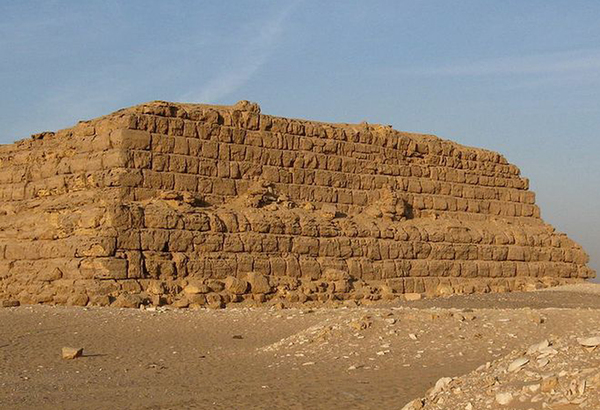
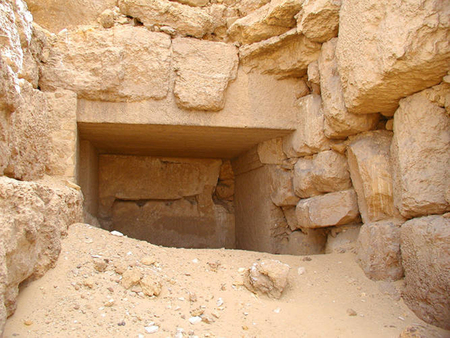
1. The Mastaba of Shepseskaf at Saqqara. 2. Entrance to the tomb of Shepseskaf. Photo: John Bodsworth, 2007.
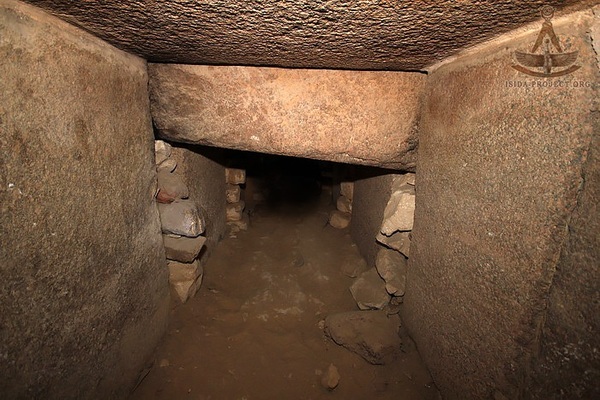
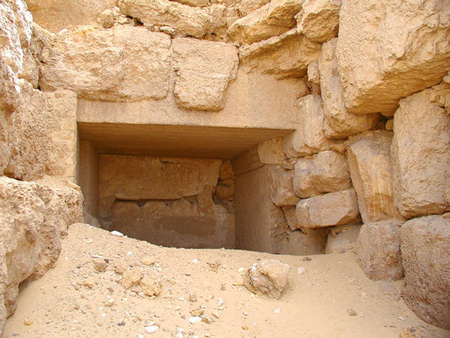
1. Horizontal corridor with porticos in the Shepseskaf mastaba scale. Photo: © Copyright 2013. «ISISDA Project» 2. Burial chamber of the Shepseskaf mastaba. Photo: © Copyright 2013. «ISISDA Project»
The mastaba serves as a direct predecessor to the pyramids: it embodies the key principles of monumental Egyptian architecture—geometric structure, symmetry, formal restraint, and the large-scale use of inclined planes. The technological techniques mastered during the construction of mastabas (masonry, stone carving, subterranean chamber design) were subsequently adapted and developed in the practice of erecting pyramids. Thus, the mastaba represents a crucial stage in the evolution of ancient Egyptian architecture and culture.
Breakthrough: The Step Pyramid of Djoser
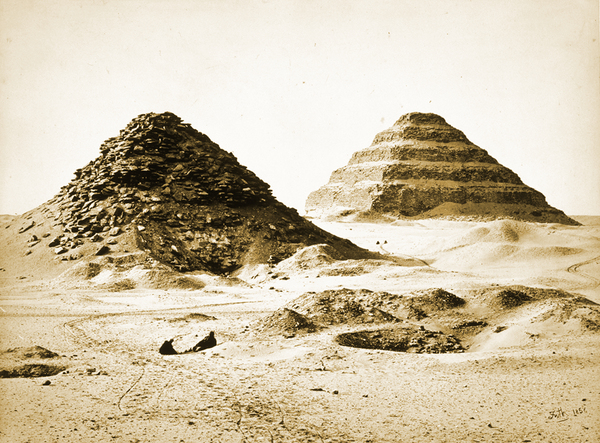
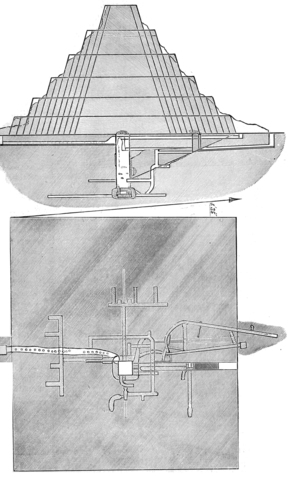
1. Saqqara Pyramids from the Northeast. Photo by Francis Frith, 1858. 2. Diagram of the Step Pyramid of Djoser. Illustrations from the book «History of Architecture in All Countries, ” Vol. I (1887). Author and illustrator: James Fergusson.
The first stone pyramid, built for Pharaoh Djoser around 2670 BCE under the direction of the architect Imhotep, marked a key transition from mastabas to large-scale stone complexes. Imhotep was Djoser’s vizier and a true genius of his time. He was an astronomer, a physician, a sage, and an architect. His genius was so profound that in later eras, he was deified.
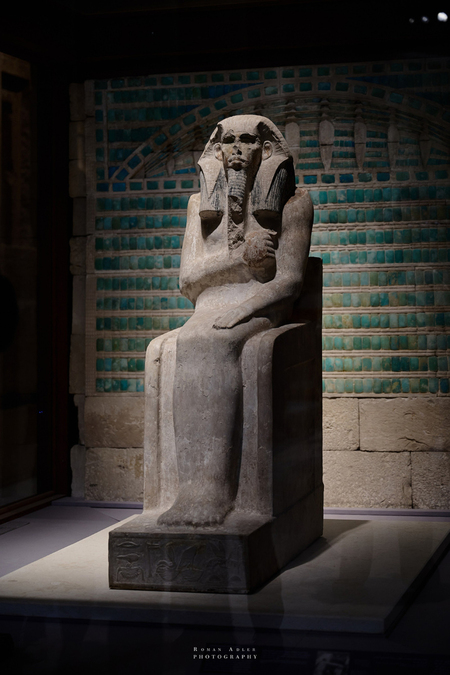
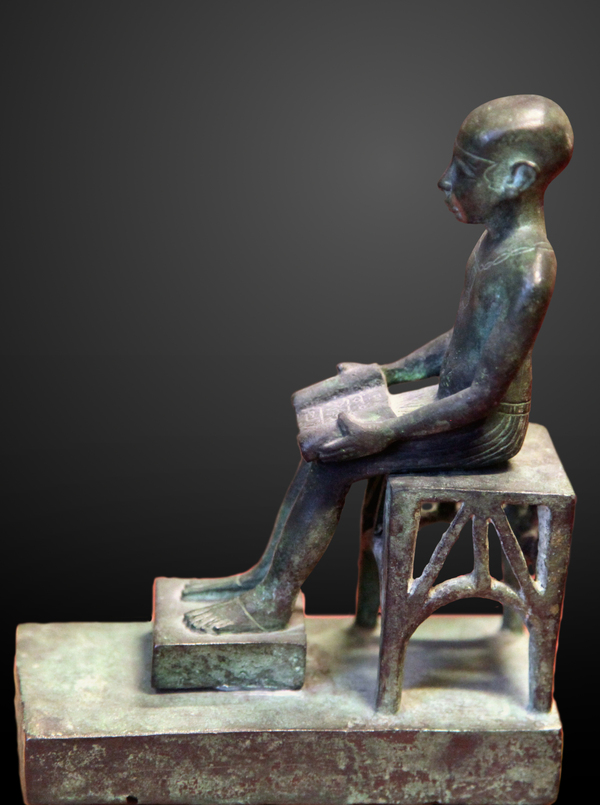
1. Full-scale statue of Джоser from the Serdab (the oldest royal sculpture of this size). 2. Bronze statue of Imhotep. Holding a scroll on his lap, he entered history as the greatest sage of antiquity. Photo: Rama, 2018.
The first Egyptian pyramid evolved from a flat mastaba to a six-tiered structure: the sequential stacking of progressively smaller mastabas allowed for the formation of a stepped structure. The Pyramid of Djoser, which featured a rectangular base, six tiers, and a height of 62 m, became the first stone monumental structure in history and the oldest surviving monument of its kind. Under the pyramid’s base, underground chambers and a deep vertical shaft were excavated into the rocky soil, at the bottom of which lay the burial chamber containing the pharaoh’s mummy.
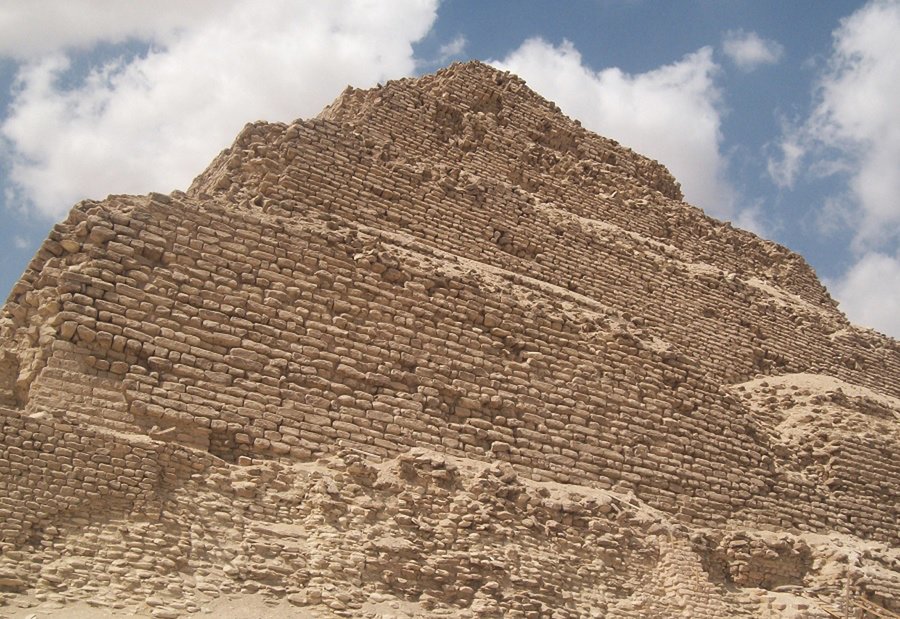
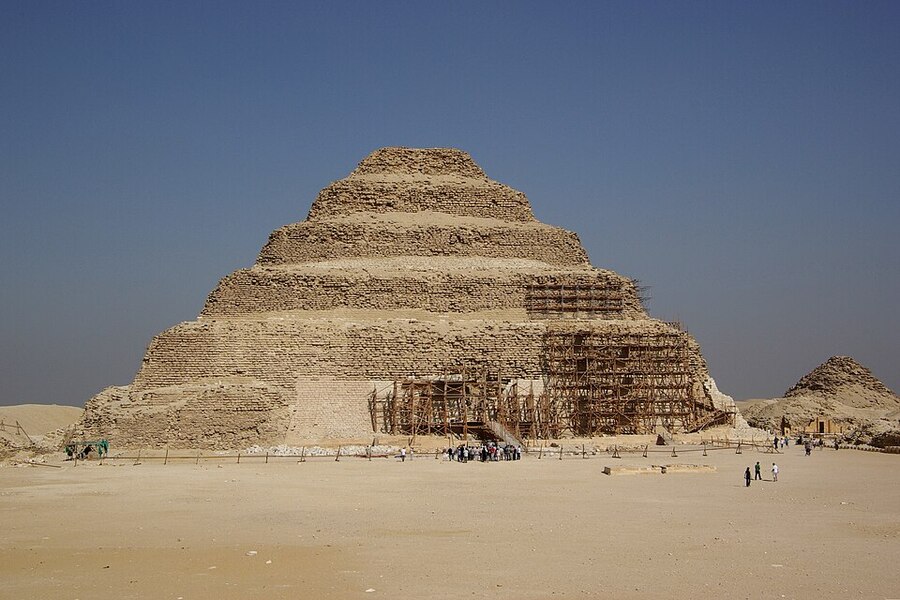
Step Pyramid of Djoser, Old Kingdom, 28th century BCE, 3rd Dynasty, Saqqara. Photo: Berthold Werner, 2010.
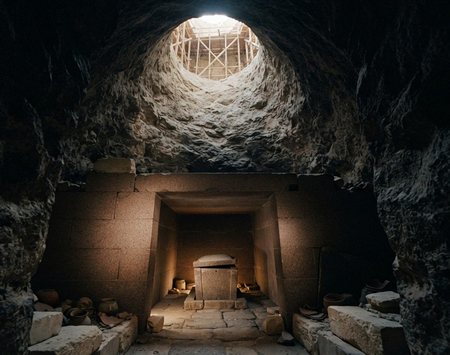
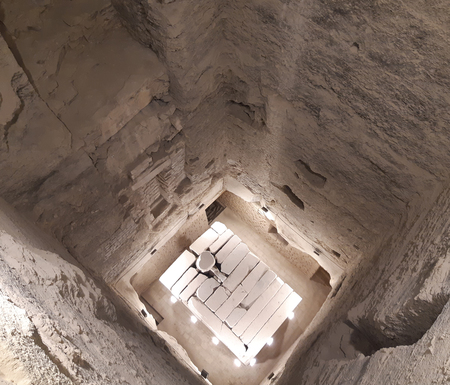
1. The Pyramid of Djoser in Saqqara. Burial chamber utilizing granite 2. Underground chamber. Pyramid of Djoser. Photo: Leon Petrosyan, 2021.
In the religious and mythological context, the pyramid was conceived as a celestial ladder, through which the pharaoh’s soul was meant to ascend to the heavens after death. The pyramid itself was merely one component of a larger design. Surrounding it were courtyards, sanctuaries, passageways, and other structures, all unified by a high stone enclosure. The entire complex reproduced the spatial dynamics of royal authority. They employed forms familiar from structures built of wood, reeds, and mud-brick, but translated them into stone. The stone columns resembled bundled vegetation, and the architectural details retained the appearance of lighter constructions.