Navigation
Concept 1. From Egyptian funerary masks to portraits: similarities and differences 2. The influence of Ancient Greece. The Hellenistic School 3. Features of Roman culture: the pursuit of individuality Conclusion Bibliography Image Sources
Concept
The portrait, as a genre of art, emerged from the human need to know oneself and one’s nature, and to comprehend one’s role in society. The earliest examples of portrait painting in world cultural history are considered to be the Fayum portraits—funerary images placed over the face of the deceased.
They strike the viewer with the freshness of their colors and the surprisingly precise capture of the features of the depicted figures—Egyptians, Romans, and Greeks.
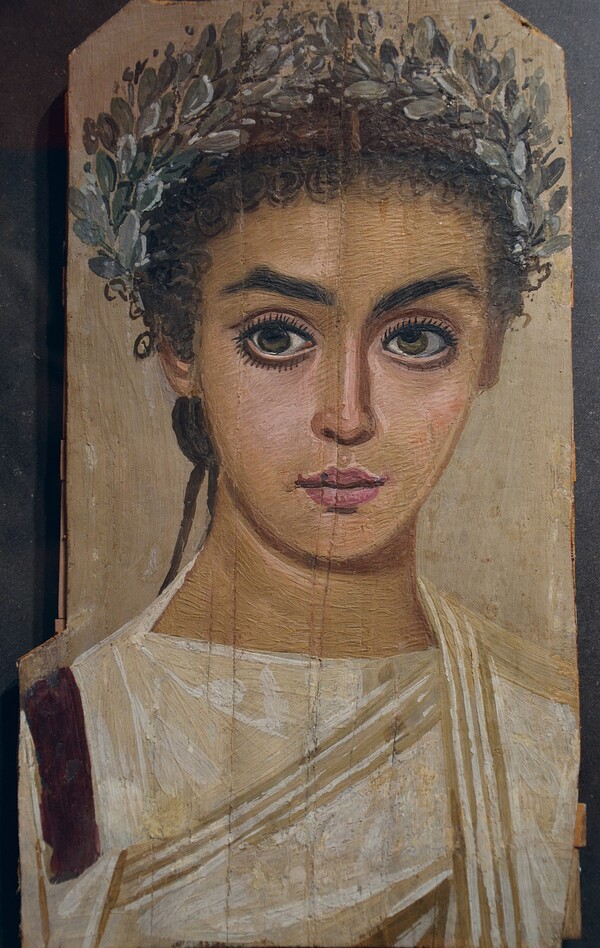
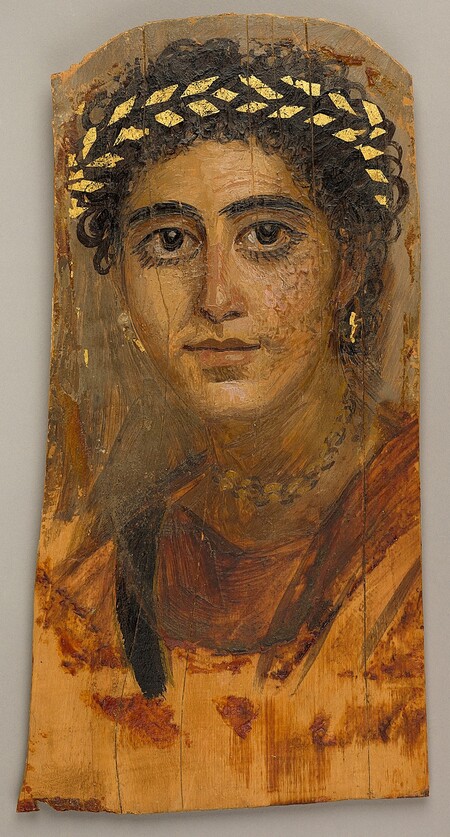
1. Portrait of a Young Woman. Roman Period. 120–150 AD. 2. Portrait of a Young Woman in Red. Roman Period. 90–120 AD.
The creation period for Fayum portraits spanned the 1st–3rd centuries CE, a time when Egypt was under Greco-Roman influence. In 332 BCE, Egypt was conquered by Alexander the Great, and later, in 30 CE, it entered the Roman Empire. This led to a blending of cultural traditions and interaction between Greco-Roman and Egyptian civilizations. Although Egypt was a conquered nation, both the Greeks and the Romans adopted many aspects of Egyptian culture, including elements of the Egyptian funerary cult.
Research Objective: To examine the influence of Ancient Egyptian, Ancient Greek, and Roman cultures on the formation of the Fayum portrait.
Research Hypothesis: The emergence of Fayum portraits was possible due to the confluence of three cultures—Ancient Egyptian, Greek, and Roman—each contributing to the artistic language and semantic content of funerary imagery.
This topic is interesting because it clearly demonstrates how unique artistic forms emerge within the context of cultural exchange. Scholars are still debating which cultural traits of ancient states influenced the formation of the Fayum portrait. By studying the issues surrounding Fayum portraits, I relied on diverse literary sources that deeply explore the phenomenon of the Fayum portrait as a cultural event and provide insight into the history of Ancient Egypt, allowing for a better tracing of its evolution under the influence of conquering empires.
1. From Egyptian funerary masks to portraits: similarities and differences
The Fayum portrait serves a religious and ritualistic purpose, which is defined by the beliefs of the ancient Egyptians. After death, the soul was required to recognize its body for the afterlife, leading to the idea of duplicating the deceased’s likeness and recreating their portrait resemblance. Initially, burial masks were used, existing for 2,5 millennia; by the 1st century CE, a gradual transition occurred from three-dimensional imagery to two-dimensional space, and the masks began to be replaced by funerary portraits.
What is common to the funerary mask and the Fayum portrait is their purpose—to help the soul attain eternal existence in the afterlife after death. In both funerary masks and portraits, the emphasis is placed on the eyes as the «gates of the soul.» The Egyptians believed that the soul leaves the body through the mouth but returns through the eyes. Therefore, the eyes are always large, and the gaze is intense, «absorbing.»
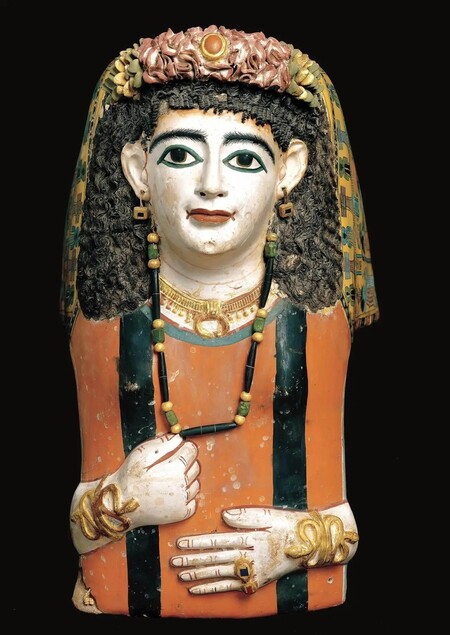
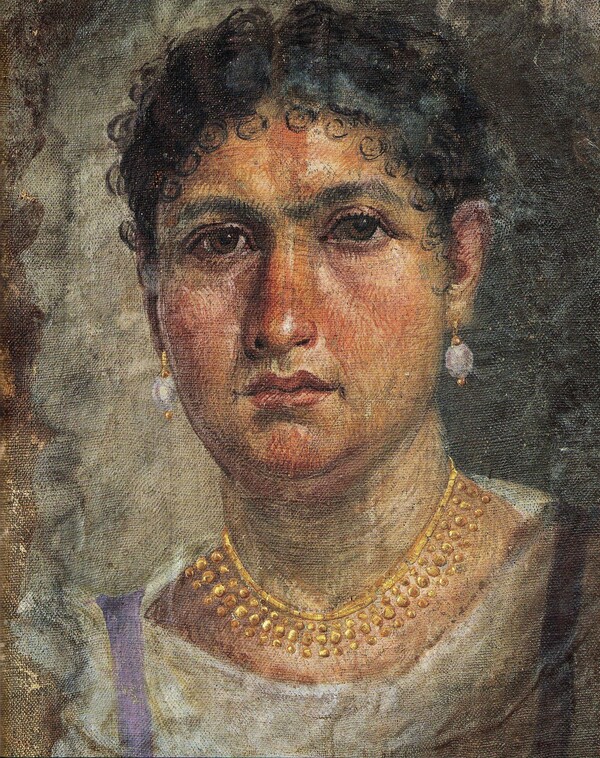
1. Mummy mask of a woman. Roman period. 60–70 CE. 2. Portrait of Alina. Roman period. Early 1st century CE.
Funerary masks were crafted according to a template; only if the client requested it could the mask be adapted to the deceased’s face. Fayum portraits, on the other hand, were painted while the person was still alive, always from life. If a funerary mask presents an idealized, canonical image of the deceased, the portrait aims for maximum resemblance, striving to convey the individual features of the face, age, and ethnic characteristics. The mask idealizes the deceased’s features, presenting an image that is eternally youthful and serene, bearing a slight, near-perfect smile. The Fayum portrait captures every facial wrinkle and sign of aging, making the depiction highly naturalistic.
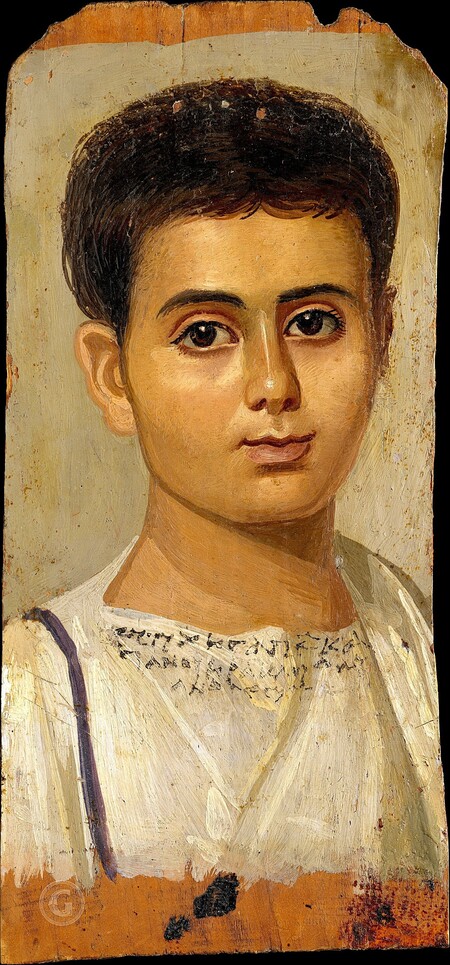
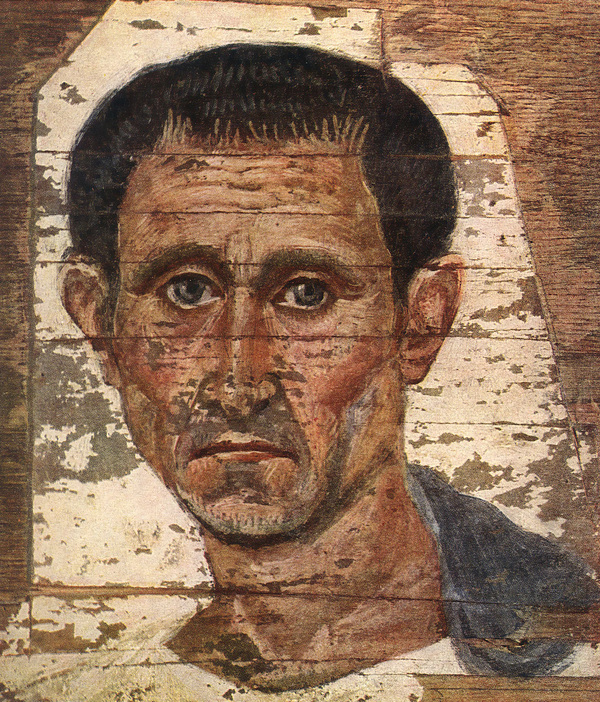
1. Portrait of the boy Evtichius. Roman Period. 100–150 AD. 2. Portrait of a man in a blue cloak. Roman Period. Second half of the 1st century AD.
Examining Fayum portraits reveals their profound diversity. Through these portraits, one can roughly determine the age, ethnic background of the deceased, and observe their individual characteristics. Fayum portraits serve as a vibrant testament to the range of ethnicities inhabiting Ancient Egypt at that time—beyond the Egyptians, there lived Greeks, Romans, Jews, Syrians, and others.
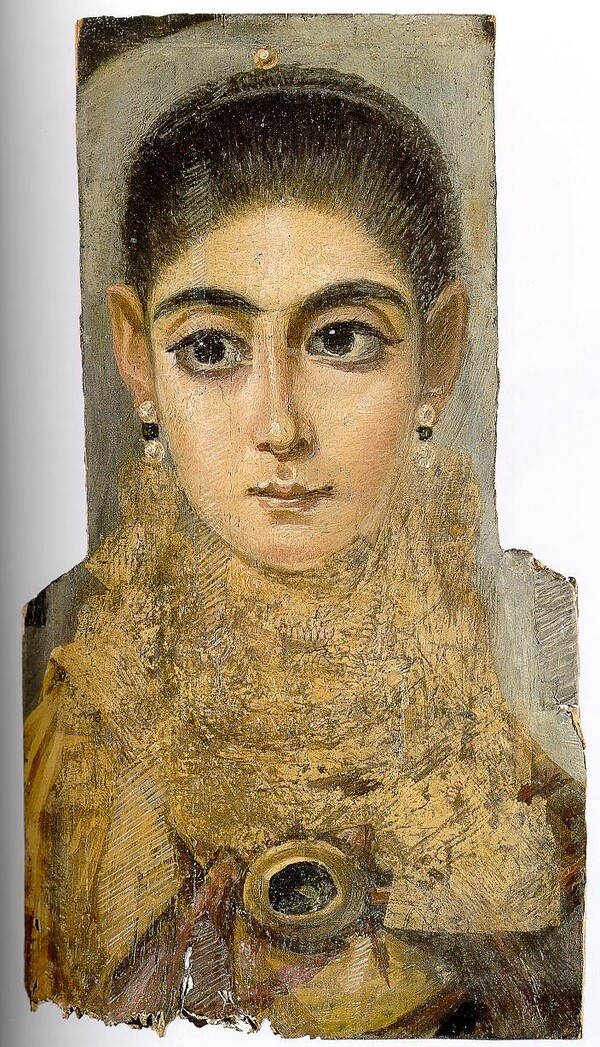
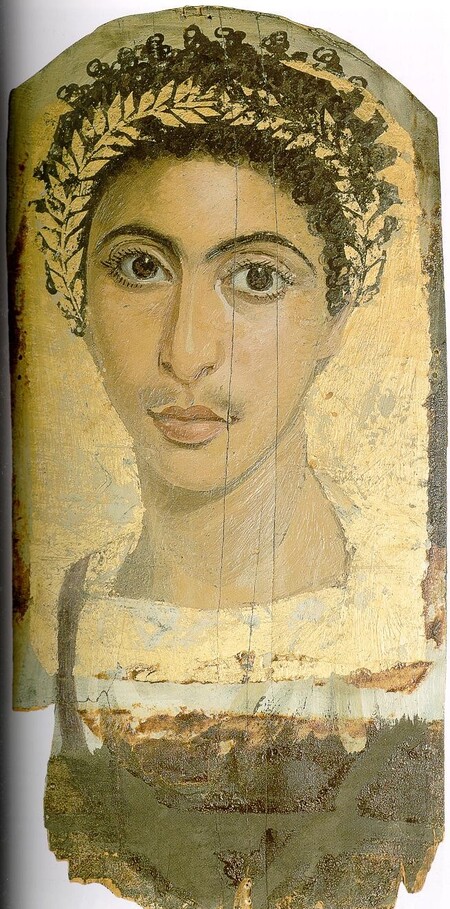
1. Portrait of a young woman. Roman period. 2nd century AD. 2. Portrait. Roman period. 2nd–3rd centuries AD.
Funerary portraits were often adorned with thin sheets of gold leaf. For the Egyptians, gold symbolized immortality because it resembled sunlight. Gold flakes or inlays covered the background around the head, parts of the garments, or the frame around the portrait. The gold frames the face of the deceased like a shimmering halo, lending the portrait a solemnity characteristic of Ancient Egyptian culture, where death was not accompanied by mourning. The Egyptians viewed death not as a tragedy, but as a chance for eternal life. A. Strelkov [9] noted that the gilding was applied during the funeral rite itself, while the portrait itself was painted long before death. Modern research, utilizing specialized equipment, has allowed this fact to be proven.
Thus, the Fayum portrait represents a unique reinterpretation of the ancient Egyptian funerary mask; while retaining its ritual function, it introduces a realistic depiction of the human figure, a development influenced by the Greek and Roman cultural traditions that arrived in Egypt.
2. The Influence of Ancient Greece. The Hellenistic School
The Greeks arrived in Ancient Egypt following its conquest by Alexander the Great, bringing with them a sophisticated artistic culture that influenced local traditions. During the Hellenistic period, there emerged an interest in the individuality and spiritual world of a specific person; while masters continued to create the ideal human form, they began striving for portrait likeness. Ancient Greek art differed from Egyptian art in that it favored fluid lines and silhouette, whereas imagery in Ancient Egypt was characterized by symmetry and rigor.
Encaustic painting, which originated in Ancient Greece, is a technique that uses molten wax pigments on wooden panels or marble to create dimensional, «living» brushstrokes. The Fayum portraits from the 1st–2nd centuries CE were executed using this technique. Original Greek works in this medium have almost entirely been lost to time because the wooden support is perishable—the wood deteriorates over time, causing the paint layers to vanish. We have inherited a portrait of a young man painted in the encaustic technique on a tomb slab bearing the inscription «Farewell to Theodorus.» The Fayum portraits have survived well due to Egypt’s arid climate, serving as evidence of the application of encaustic technique in ancient art.
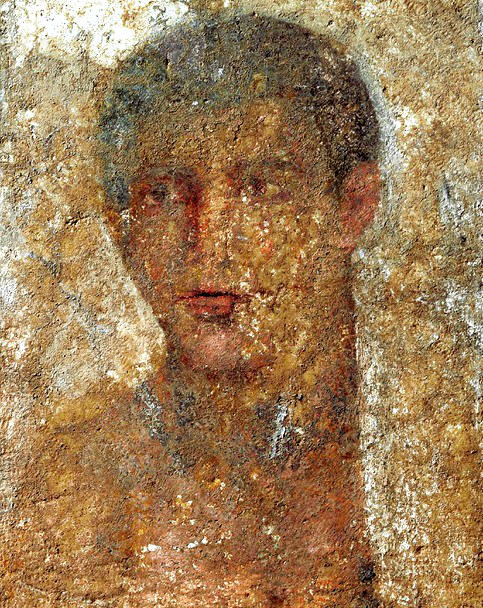
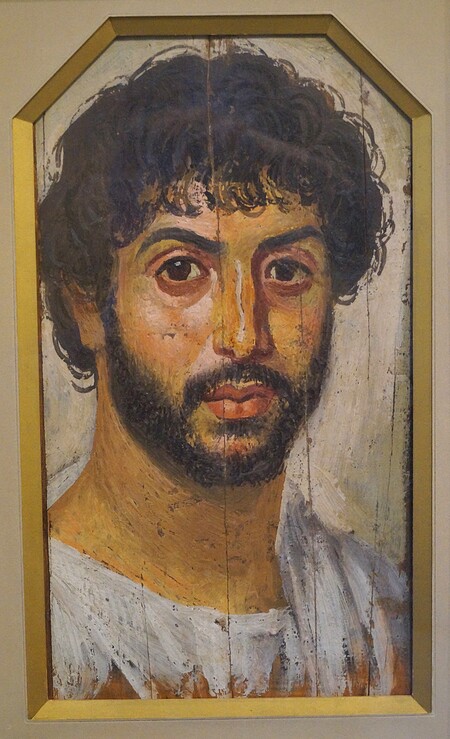
Encaustic Technique 1. «Farewell to Theodorus.» Ancient Greece. 1st century BCE. 2. Portrait of a Man. Egypt. Roman Period. Mid-2nd century CE.
Greek artists expertly conveyed volume and chiaroscuro, creating the illusion of three-dimensionality, a trait that later became vividly apparent in Fayum portraits. This was further aided by the encaustic technique—dense, textured brushstrokes create deep transitions from light to shadow, giving the texture a sense of volume. Thick applications of paint were used on the main lines (eyes, nose, lips), while the contours of the face and hair were executed with thinner paints.
The portraits utilized a compositional technique—the three-quarter head turn—which allowed the image to appear more dynamic. This technique was novel to ancient Egyptian art, as the canon dictated that the head and legs be depicted in profile, the eyes in frontal view, and only the torso could be represented in a three-quarter turn.
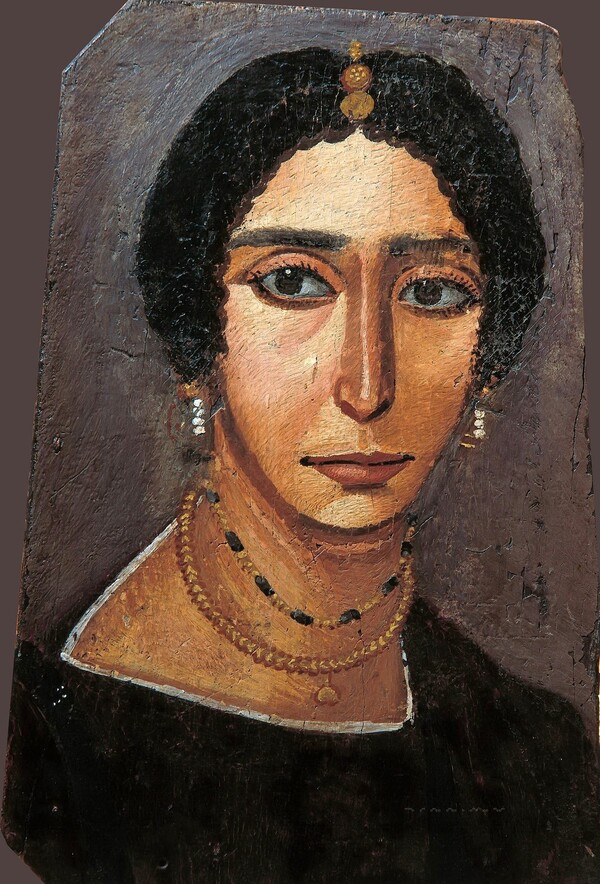
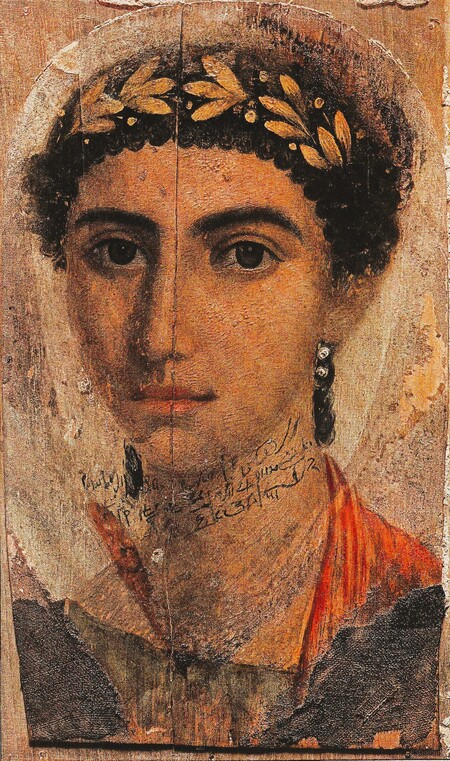
1. Portrait of a Woman. Roman Period. 150–350 CE. 2. Portrait of Aerene. 40–50 CE.
Ancient Egyptian art is stylized art. The emergence of shadows in the Fayum portrait indicates the influence of Hellenistic techniques. The light source was important, providing the necessary highlights and being positioned outside the frame. The light source was usually located on the left, with the right side of the face in shadow in the portrait. The nose, cheekbones, and folds of clothing—everything is rendered with volume, highlights, shadows, and half-tones; jewelry casts reflections onto the skin. The women in the portraits appear very lifelike, as if existing in three-dimensional space rather than being painted on flat panels.
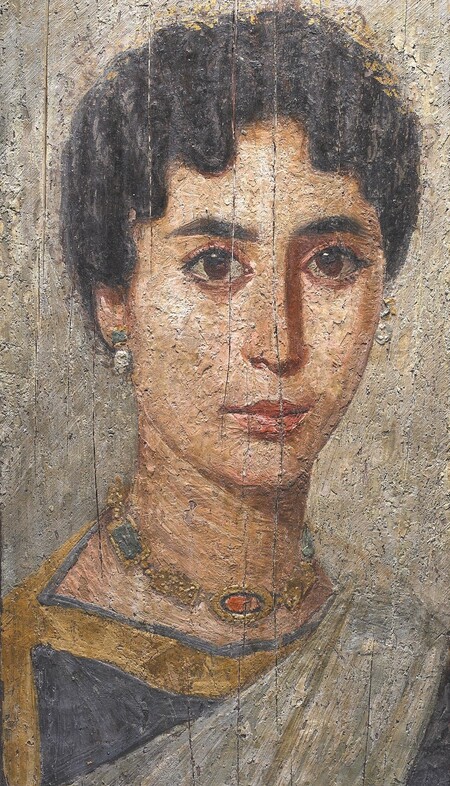
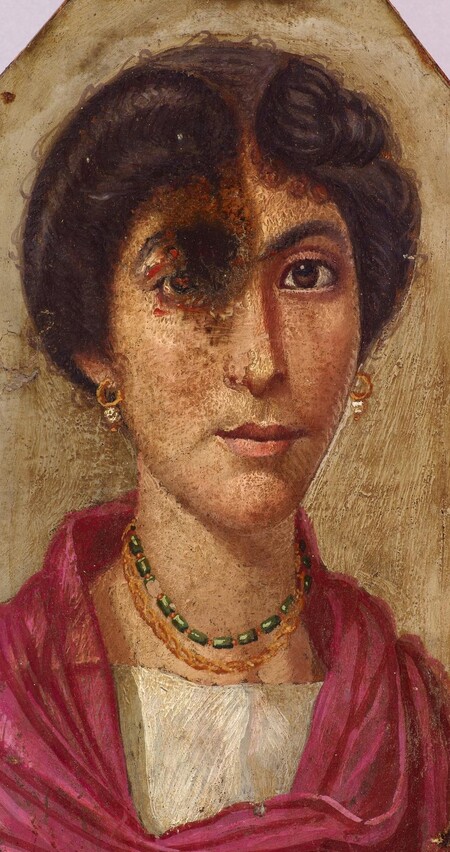
1. Portrait of a Woman. Roman Period. 160–170 CE. 2. Portrait of a Woman. Roman Period. 160–180 CE.
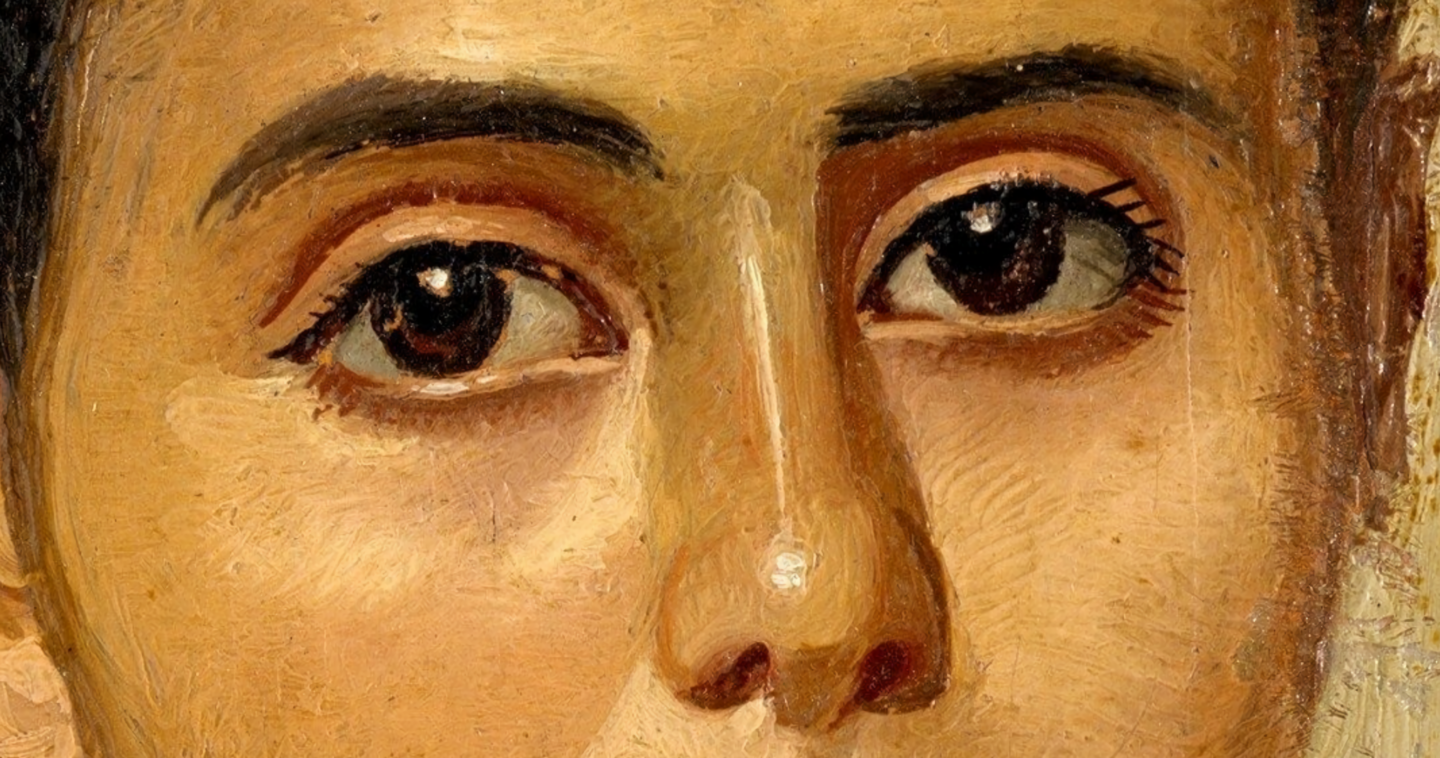
The artists sought to convey the character of the subject through facial asymmetry. The wings of the nose or the eyes might differ. The artist deliberately highlighted the facial asymmetry, transferring human characteristics onto the portrait, thereby making the face more alive and voluminous.
Portrait of a woman. Roman period. 300–325 AD.