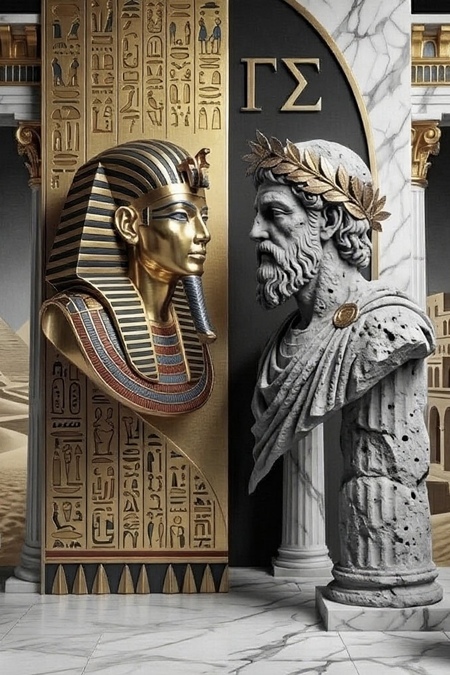
Power in both civilizations manifested itself through the image of the ruler, but they approached this differently. Egypt portrayed the pharaoh as eternal and immutable—a divine intermediary between humanity and the gods. Rome depicted the ruler as a living individual who had earned his authority.
Ancient Egypt: Power as Divine Eternity.
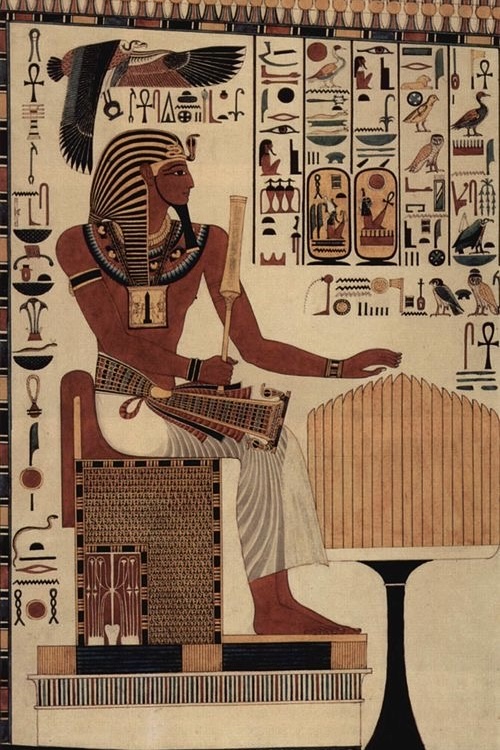
For the Egyptian consciousness, the Pharaoh was not merely a ruler, but the living embodiment of divine order. Hence, the primary function of art was not to convey individual characteristics, but to affirm the immutable and sacred nature of power.
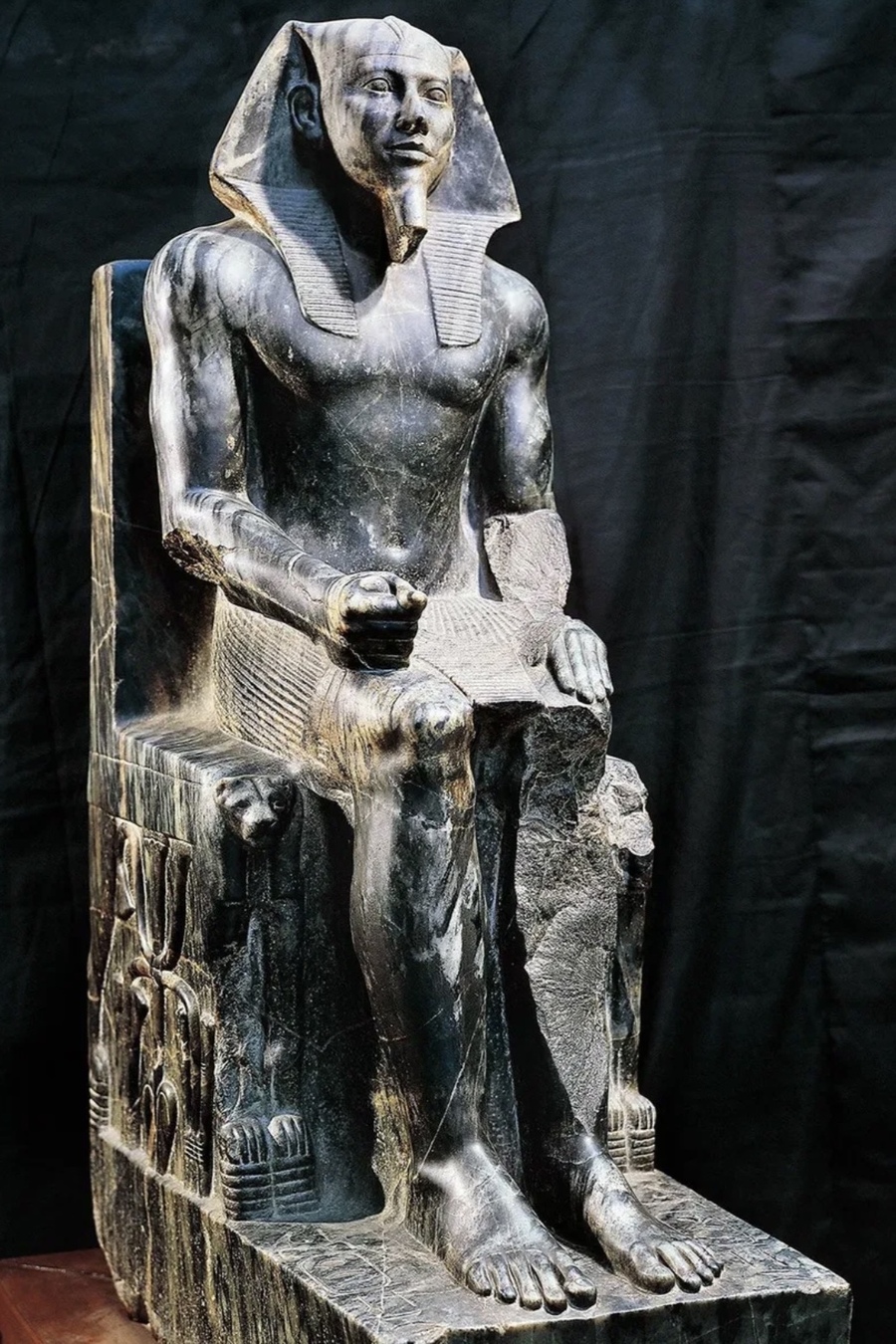
This is where the primary function of art lies: not to convey individual characteristics, but to affirm the immutability and sacredness of power. The canon was strict: the profile of the face, the frontal rotation of the shoulders, the pose with a forward leg, the attributes—all these were signs understandable to every subject.
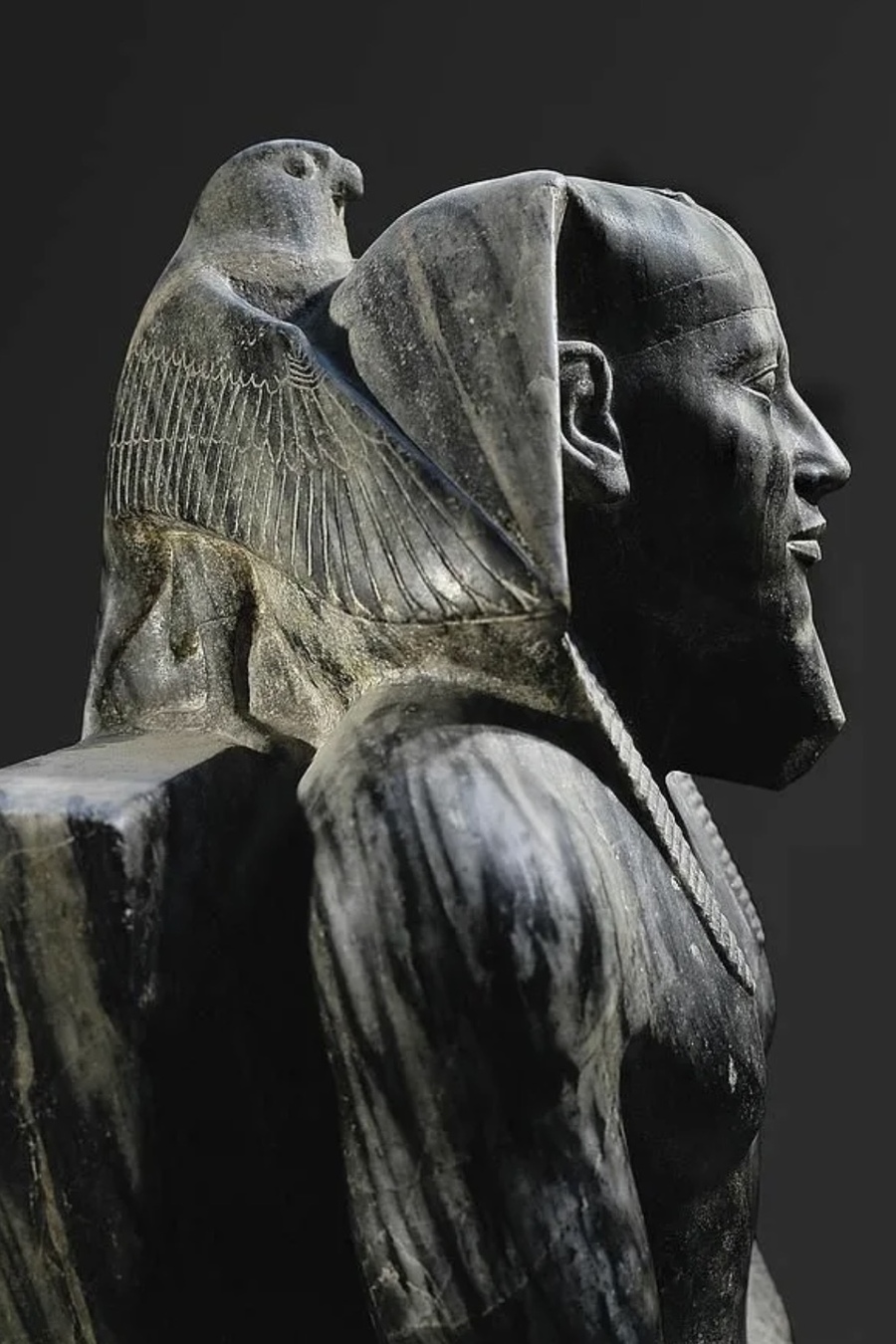
Sculpture and relief functioned as a formula: the statue of Khafre with the falcon of Horus behind his head, or the mask of Tutankhamun—these were not portraits in the modern sense, but «signs of eternity, ” engineered to last millennia. Even scale held significance: the colossal statues of Abu Simbel, facing the rising sun, literally „embedded“ the pharaoh’s power within the natural cycle.