Образ солнца и света в искусстве Древнего Египта
1. Concept
I became interested in how the sun was depicted in ancient Egyptian art. We often represent it simply as a circle with rays, but the ancient Egyptians had much more diverse solar imagery. The sun could take the form of a deity, a falcon, or a scarab; it could be shown with wings or rays ending in human hands. Behind these images lay concepts of life, rebirth, and the connection between humans and the gods. I want to understand why one natural phenomenon took on so many different forms and how those forms evolved over time. Therefore, I will look not only at depictions of solar gods but also at works where the sun serves as a symbol or part of the composition.
For the visual display, I plan to select works from different periods and art forms: temple and funerary reliefs, paintings, sculpture, stelae, amulets, and objects of daily or ritual use. It is important to me that every example helps illuminate the theme and that they can be compared with others. I will pay attention to the depiction of the disk and rays, the animals and attributes associated with them, the placement of the solar symbol, and its relationship to the figures of humans and gods. This will allow me to observe recurring visual techniques and trace how their meaning changed.
The research will be divided into chapters. First, I will examine the solar gods and the animal imagery associated with them, then the solar disk, the winged sun, and other symbols. I will also dedicate a section to the concept of light as a source of life and a sign of divine presence. A crucial part will be the Amarna period: under Akhenaten, the image of the Aten gained special significance, and the rays of the solar disk began to be depicted with hands extended toward the royal family. In conclusion, I will compare the works and note which features of the solar image were preserved and which were altered.
To study the artifacts, I will use literature on the art and religion of Ancient Egypt and museum catalogs. These resources will help refine dating, the function of the works, and the meaning of the symbols. When examining the images, I will consider composition, form, color, scale, and material, compare details, and pay attention to how the solar motif interacts with other elements. My central question is: how did the image of the sun and light in Ancient Egyptian art convey concepts of life, divine power, and the structure of the world? My hypothesis is that, despite the variety of representations, the sun maintained its significance as a source of life, renewal, and divine presence. Furthermore, its visual depiction was contingent upon time and context—it might appear as a deity, an animal symbol, a disk, or rays directed toward a person. Comparing works from different periods will allow me to test how these variations correlate with the religious beliefs and artistic language of the Egyptians.
Ключевой вопрос моего исследования:
«How did the image of the sun and light evolve in the art of Ancient Egypt, and what do these changes reveal about the Egyptians' conceptions of life, divinity, and the structure of the world?»
2. The Sun in the Worldview of Ancient Egyptians
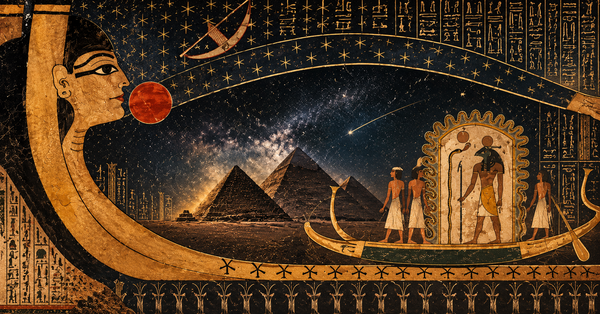
The sun was one of the most vital elements of ancient Egyptian life. It provided light and warmth, helped crops grow, and governed the transition between day and night. Every day, people observed the sun rising above the horizon, traversing the sky, and setting beyond it. The Egyptians perceived the sun not merely as a celestial body, but as a potent force upon which the entire world depended. Consequently, its imagery appeared constantly in their art: on temple walls, funerary objects, statues, jewelry, and amulets.
Karnak Temple Complex, Egypt. Middle and New Kingdom periods.
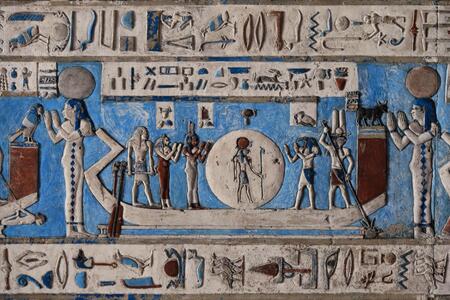
The sun’s daily path was conceived as a recurring cycle. The morning sun was associated with birth and the emergence of new life, the daytime sun with full power and something mighty, and the evening sun with the conclusion of the day and the transition to the night journey. This cycle was often conveyed through various representations of a single solar deity. Therefore, in Egyptian art, the sun could appear differently depending on the time of day and the meaning of the scene.
The Abydos necropolis on the west bank of the Nile formed over various epochs.
Cardinal directions played a vital role in solar symbolism. The East was associated with the sunrise and the birth of the sun, while the West related to its setting and the world of the deceased. This was even reflected in the layout of funerary spaces: many necropoleis were situated on the western bank of the Nile. Night was perceived as part of a grand cycle, after which the sun would reappear in the sky. This is precisely why solar imagery is frequently found in funerary art—it expressed hope for continuation and rebirth.
Ra—the god of sunlight
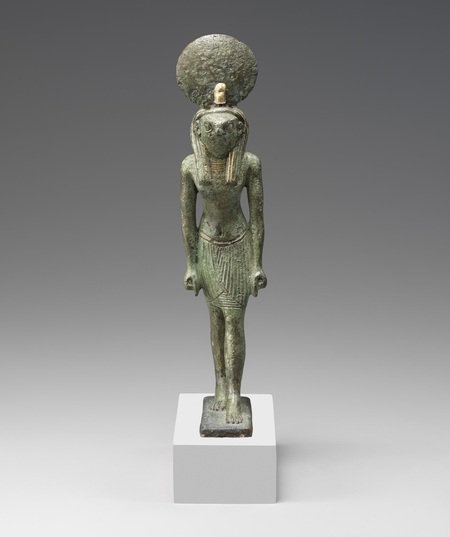
Ra was one of the most important sun gods of Egypt. He was depicted as a force that traversed the sky each day, upholding the order of the world. In art, Ra was often shown with the head of a falcon and a solar disk above it. This combination allowed for immediate identification of the deity and illustrated its connection to the heavens. The falcon was associated with the sky and divine power. When depicted with a solar disk, it became the recognizable image of the sun god. It is important to note that the disk does not replace the figure but complements it—it helps one understand the specific power to which the character is connected.
Ra-Horakhty — the Sun of Two Horizons
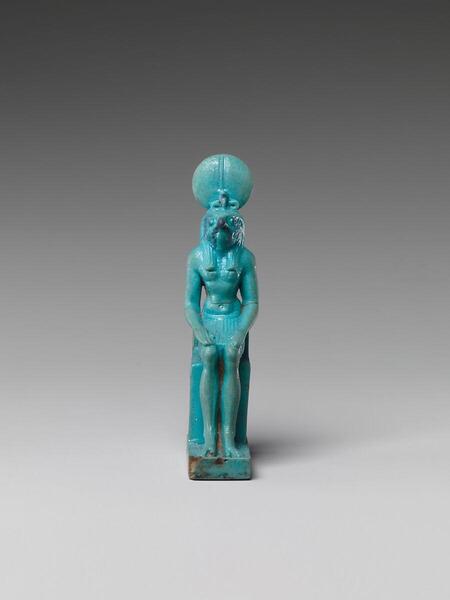
The image of Ra merged with the image of the god Horus. Thus, Ra-Horakhty was born—a deity associated with the sun and two horizons. This union demonstrates that Egyptian deities could possess multiple forms and names. In depictions of Ra-Horakhty, the falcon head is usually retained, while the solar disk becomes the primary distinguishing feature. This image conveys the idea of the sun’s movement across the sky: the horizon serves as the boundary between the celestial body’s appearance and its disappearance.
HePri — the rising sun
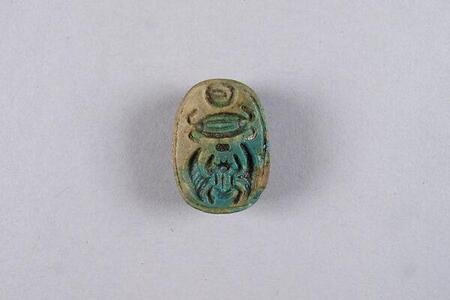
Khepri is associated with the rising sun and the idea of a new day being born. He was depicted as a scarab beetle or a human with a beetle’s head. This imagery did not arise by chance: the Egyptians observed the scarab rolling a ball before it, and they connected this motion to the movement of the sun disk across the sky. The scarab became a symbol of renewal and rebirth. It was featured on jewelry, seals, and amulets that could accompany a person in life and after death.
Atom — evening sun
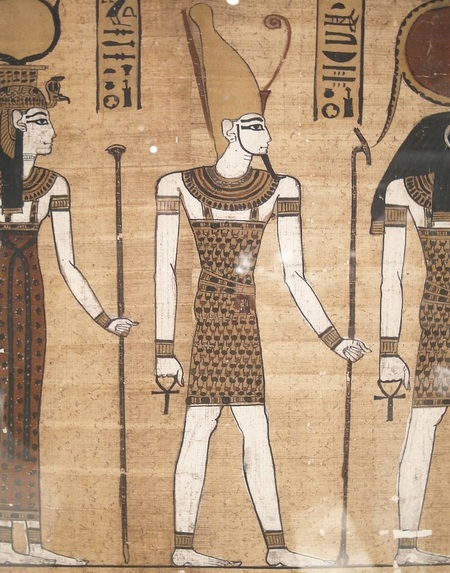
Atum is connected to the completion of the solar cycle and the concept of primordial creation. In some religious traditions, he functions as an ancient form of a solar deity associated with the evening sun. He could be depicted in human form, often wearing a royal crown.
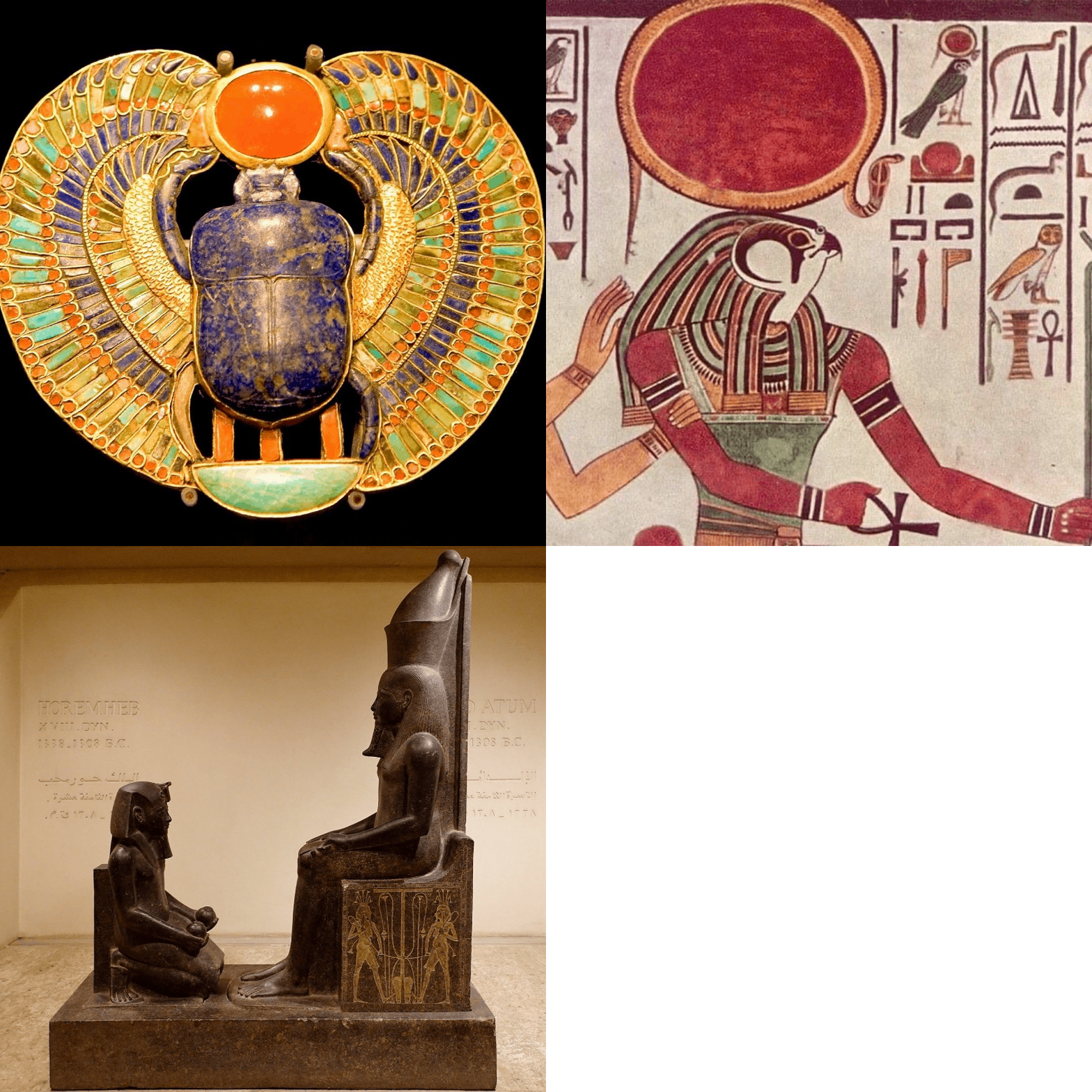
In Egyptian religious tradition, there was a concept of three states of the sun: Kheper was associated with the morning, Ra with the daytime power, and Atum with the evening. He was linked to the setting sun and was simultaneously considered the creator god. His imagery suggests that, in the Egyptian worldview, the end of the day was not an absolute disappearance. The sun would set below the horizon, but it was destined to return the next morning. This was not simply three separate gods, but a method to explain the sun’s daily movement through different personifications.
3. The Sun as a Sign
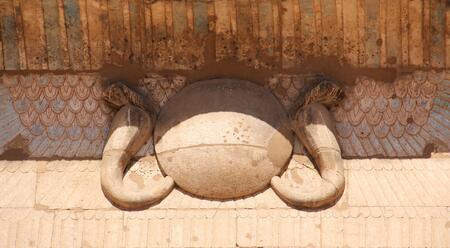
The solar disk is one of the simplest and most recognizable symbols of Ancient Egypt. It represented a circle easily identified by the sun’s shape. But for the Egyptians, it was more than just a sign of the celestial body. The sun was associated with life, warmth, and the power of the gods. The disk was often depicted above the heads of deities and rulers. I find it fascinating that Egyptian artists could convey the presence of a powerful god using just one simple symbol.
Urey — a symbol of protection and power
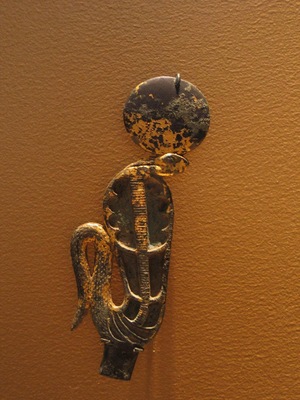
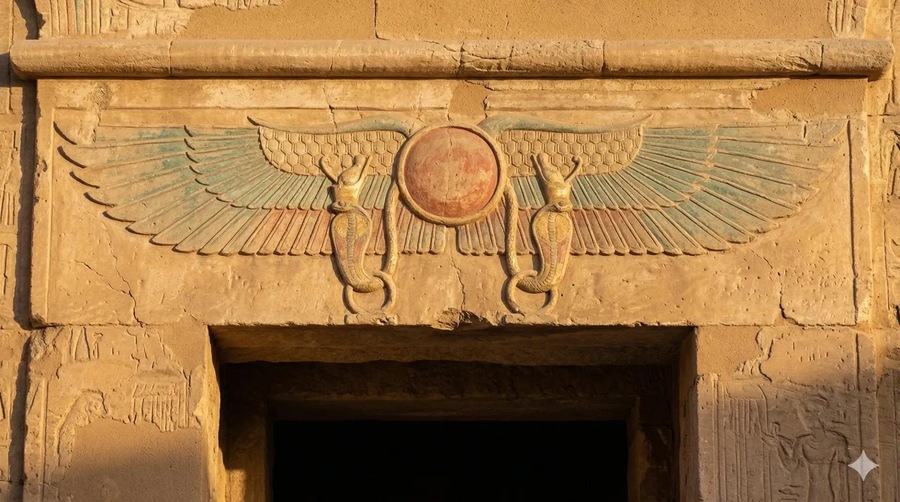
1. Ur Eye with a Solar Disk, 305–30 BCE. Unknown artist. 2. Winged Solar Disk, 1185–1153 BCE. Unknown artist.
The cobra, which the Egyptians called the Uraeus, was a symbol of protection and royal power. It was depicted on the crowns of pharaohs, as well as next to the sun disk. This combination demonstrated that the solar power not only gave life but also protected against danger.
Winged disk—the sun under protection
Relief depicting a procession of deities and a winged solar disk, circa 1961–1917 BCE. Author unknown.
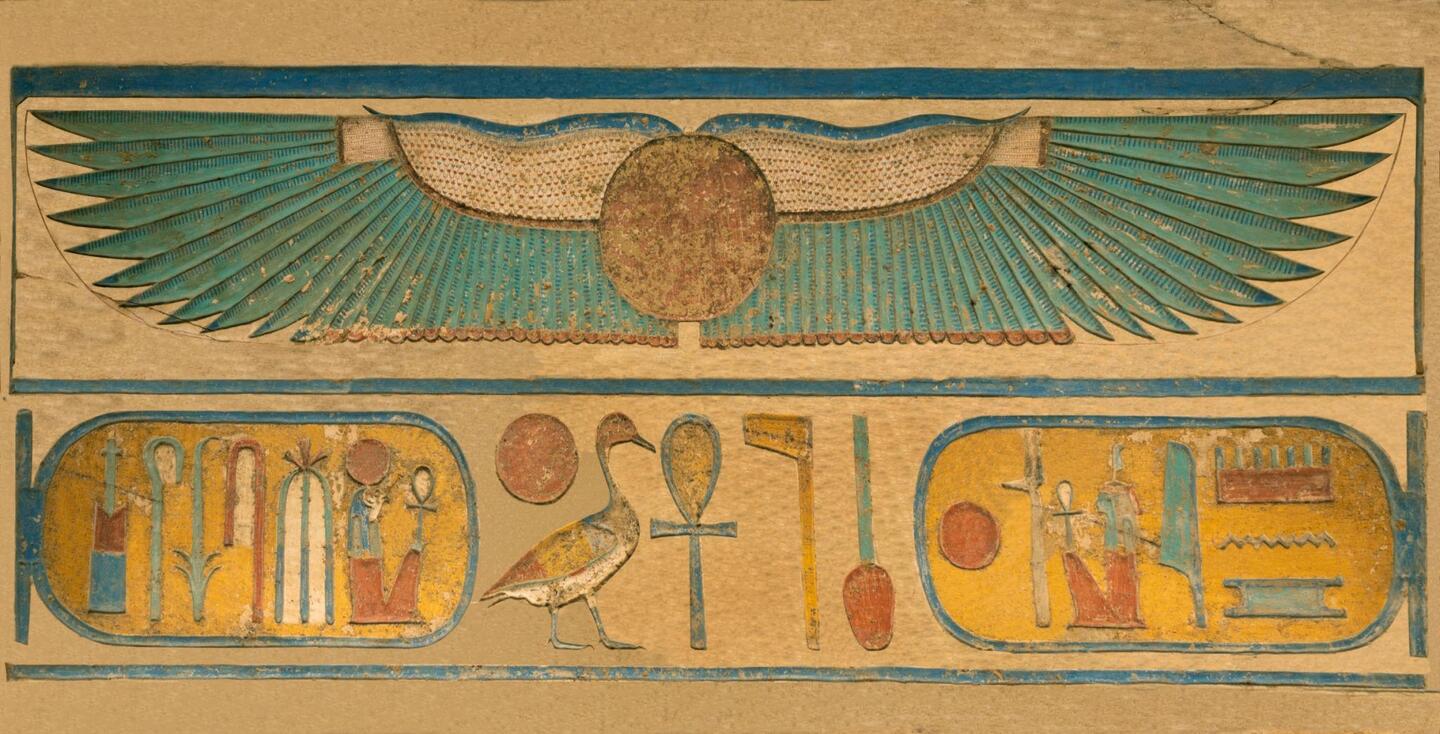
The winged sun disc appears much more complex than a simple circle. Large, unfurled wings are positioned on both sides, and sometimes cobras can be seen nearby. This symbol was often placed above entrances and on the upper portions of temple walls. This image was associated with protection and divine power.
Ankh — the symbol of life in solar scenes
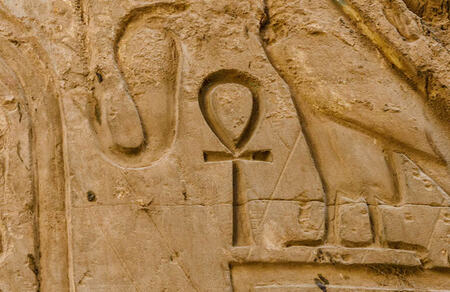
The Ankh is one of the primary symbols of life in ancient Egyptian art. In solar imagery, it takes on a special significance—as if the deity is transmitting vital energy to humankind. This is particularly evident in the art of the Amarna Period, where the rays of Aten terminate in hands holding ankhs. Here, light becomes almost tangible; it doesn’t merely illuminate the figures, but touches them and imparts life. This is one of the most unusual ways light is depicted in all of ancient Egyptian art.