The Evolution of the Human Figure in Art: From the Canonical Profile of Ancient Egypt to the Realism of Late Antiquity.
Concept
Throughout our entire history, painting, sculpture, and other forms of art have reflected human life and its expressions. Creativity helped people understand themselves and the world around them.
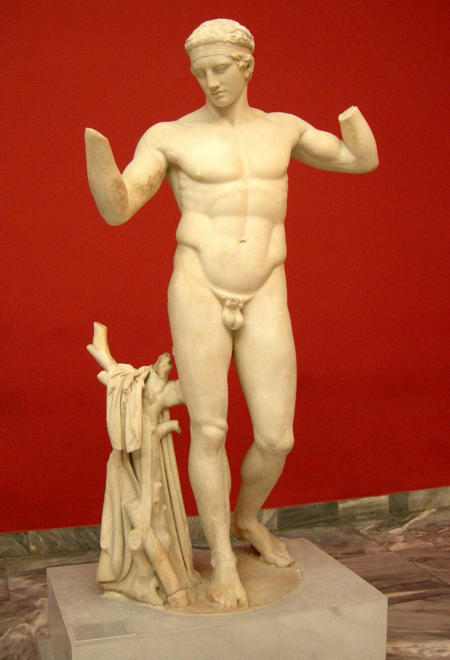
Диадумен, римская копия. Национальный археологический музей Афин
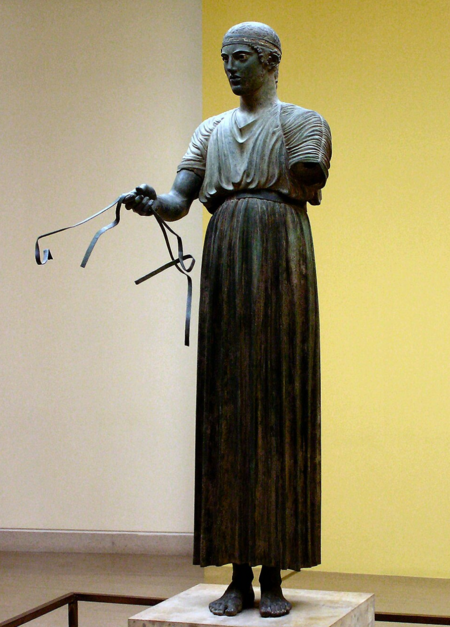
Дельфийский возничий. V в. до н. э. Археологический музей, Дельфы
The theme of the evolution of the human image, from the ancient Egyptian canon to late antique realism, allows one to witness the vast journey of human self-discovery: from the notion that humans must conform to a social hierarchy and a divine cosmic order without individuality, to the recognition of the uniqueness of every single individual with their specific traits, experiences, and emotions.
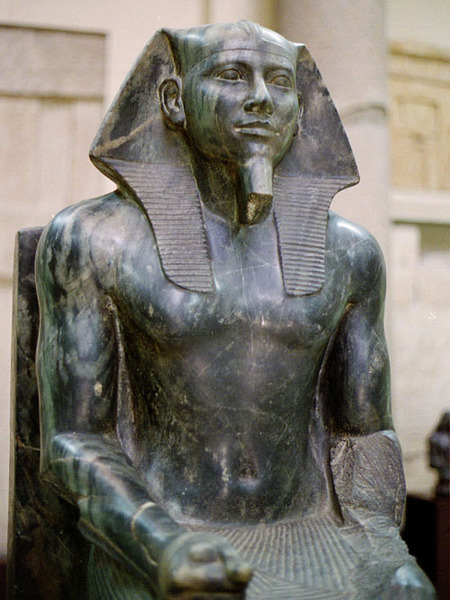
Статуя фараона Хефрена. Древнее царство, IV династия, ок. 2500 г. до н. э. Египетский музей, Каир.
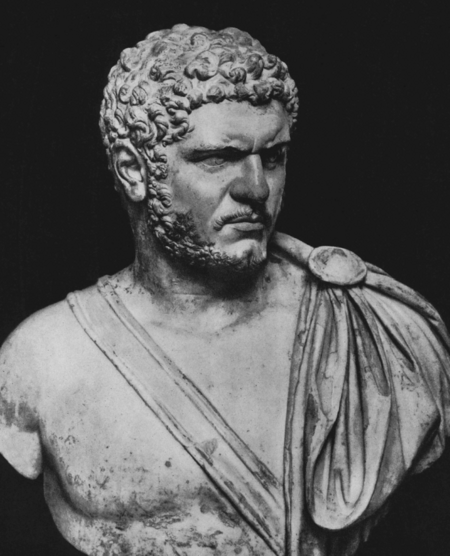
Бюст императора Каракаллы. Мрамор. Начало III в. н. э. Национальный археологический музей, Неаполь.
The choice of topic is dictated by the significance of these philosophical and religious paradigms. It is surprising how by looking at the minute details in the works of ancient masters (eyes, shoulders, or wrinkles), we can learn more about their worldview, their perspectives on life and death. The Egyptian artisan, the ancient Greek sculptor, and the Roman portraitist all set out to accomplish one task—to depict humanity—but arrived at fundamentally different conclusions. Our interest lies in uncovering that difference.
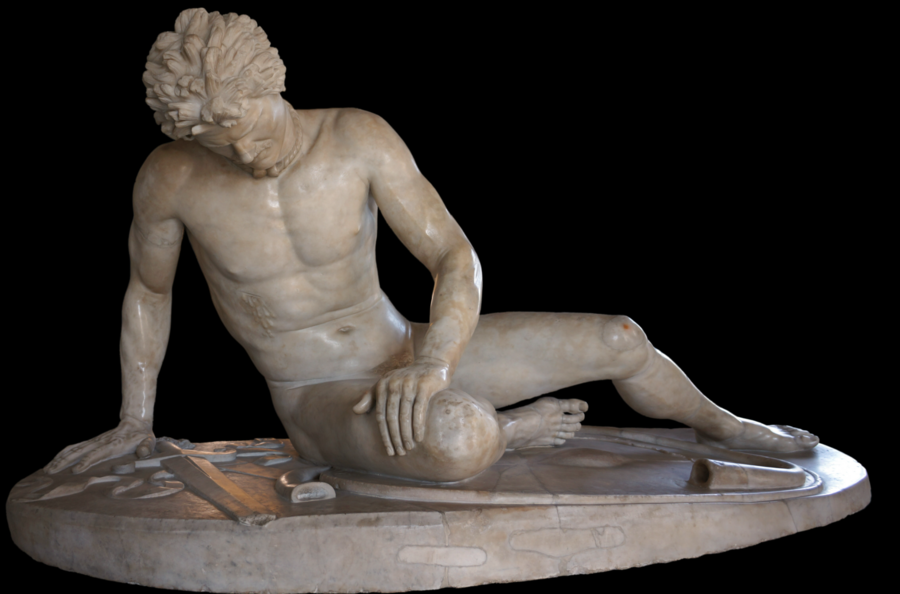
Unknown artist. Dying gall. Roman copy of a Greek original, 3rd century BCE. Capitoline Museums, Rome.
Material selection is based on referencing canonical artworks that illustrate pivotal shifts in artistic styles. We focus on key epochs in art history: Ancient Egypt (rigid canon), the Amarna period (a brief moment of individual awakening), Greek Archaic and Classical periods (the pursuit of ideal, precise proportions, harmony, and balance), Hellenism, and Roman sculptural portraiture (the peak of psychological realism).
Akhenaten, his wife Nefertiti, and their children worship Aton.
Principle of Rubrication: Strict chronological and thematic logic. Three blocks as three stages of this evolution.
Section 1: Ancient Egypt as the formula of eternity.
Section 2: Ancient Greece: the search for harmony and the birth of the individual.
Section 3: Late Antiquity: realism and dramaticism.
The principle for selecting and analyzing textual sources is based on classical art historical works, which help to understand the cultural context of the era. Data regarding the dating and location of the artworks is cross-referenced with museum websites. We also rely on art expertise, which allows us to identify the compositional features of each period. However, the texts are not used as ready-made assessments, but rather as a tool for our own comparative image analysis.
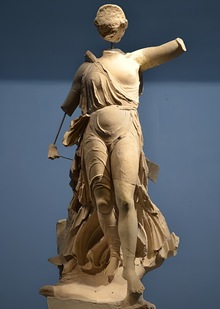
Dionysus reclining, East pediment of the Parthenon, c. 447–433 BCE
Key research question: how and why has the visual presentation of the human figure changed over many millennia—and what underlying societal processes drove these changes?
The research hypothesis posits an inextricable link between the expansion of human self-awareness and the evolution of its representation in art. This is a centuries-long journey—from perceiving oneself as an eternal function within the divine cosmic order to recognizing the intrinsic value of the singular, mortal, and vulnerable individual.
Section 1: Ancient Egypt as the Formula of Eternity.
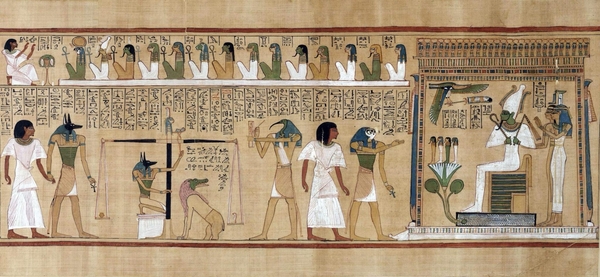
The ancient Egyptian civilization spanned many millennia, and throughout that time, its art remained surprisingly consistent. The artists' objective was to create an ideal, eternal image—one that the Egyptians believed possessed magical power and could serve as a guide for the soul into the afterlife.
Image 1
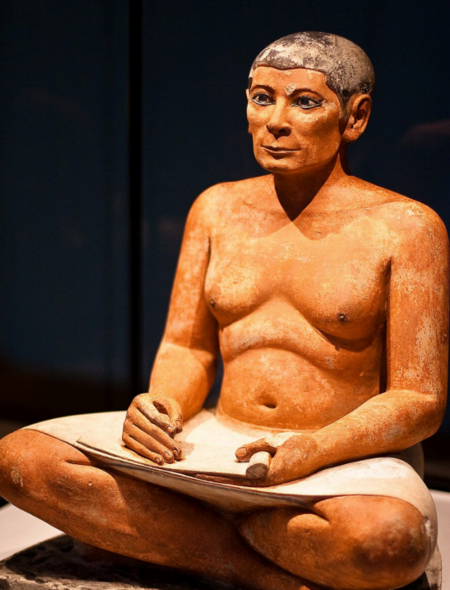
Statue of the Scribe Kai. Old Kingdom c. 2500 BCE Louvre, Paris.
This statue is a classic example of ancient Egyptian canon. If you look closely at the pose of the scribe, you will notice that he is standing upright, his gaze directed into the distance. The figure is absolutely static—there is no trace of movement. The face is shown in frontal view, but the eyes, shoulders, and legs are depicted so that the viewer can gain complete information about the figure. This is known as the «composite profile.» The man’s body was traditionally painted dark brown, the hair black, and the clothing white.
Scribes in Ancient Egypt played an important role because they could «hear» and transcribe the «words of the god.» Sculpture guaranteed its owner eternal life in the afterlife.
Image 2
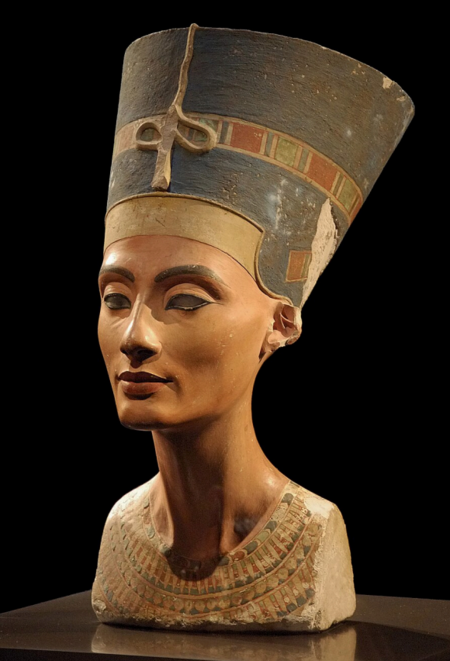
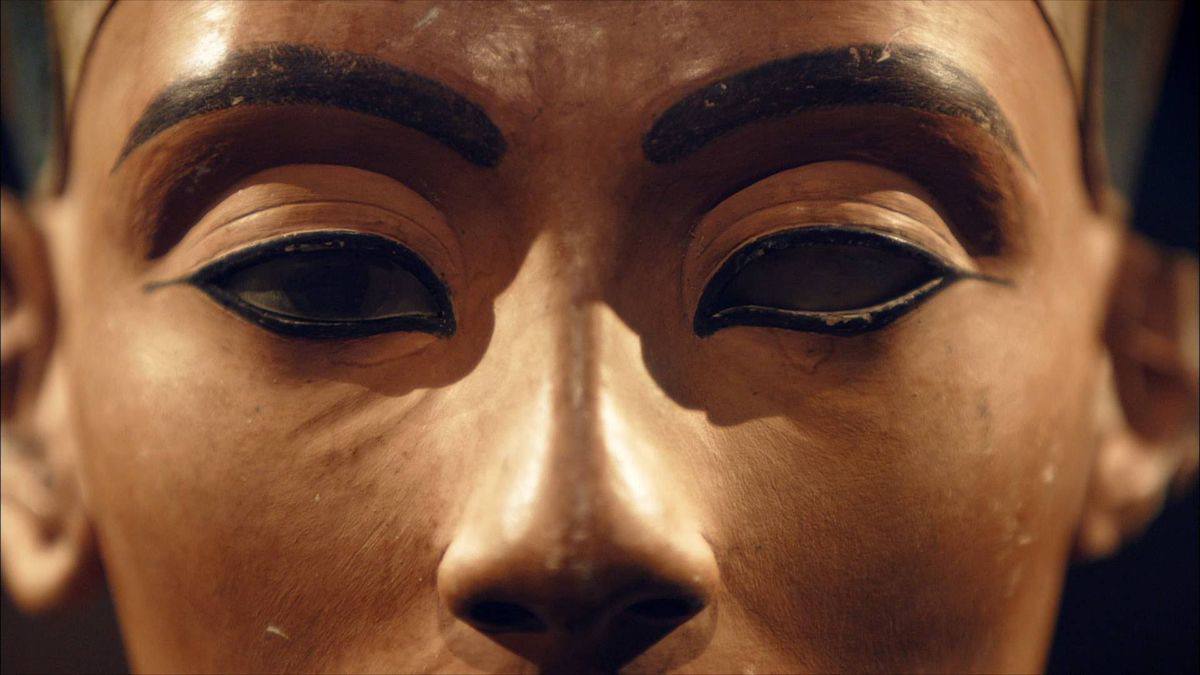
Sculptural portrait of Queen Nefertiti. Artist Thutmose. 14th century BCE. Neues Museum, Berlin.
The Amarna Period (the reign of Pharaoh Akhenaten) became a time of fundamental restructuring, not only in religion but in the entire artistic language of Ancient Egypt. The Pharaoh initiated a reform that abolished the worship of multiple gods in favor of the single god Aten. For the first time, the human being became a focus of artistic interest.
The face of Echnaton’s wife, Queen Nefertiti, is proportional and beautiful, with an elongated neck. This represents a departure from the rigid frontal canon. However, the image remains idealized, emphasizing the ruler’s divine origin rather than her personal characteristics.
After the death of Akhenaten, civilization returned to convention, and Amarna remained a brief episode—yet this very fact proves that Egyptian conventionalism was a choice, not a lack of skill.
Section 2: Ancient Greece: The Search for Harmony and the Birth of the Individual.
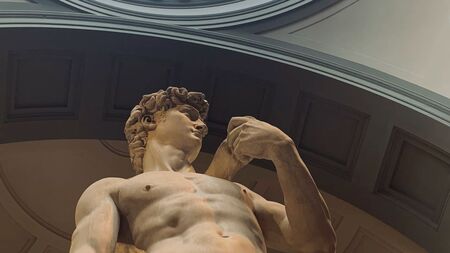
Greek philosophy differed from Egyptian philosophy. In the worldview of the Greeks, man was «the measure of all things, ” as expressed by the Sophist Protagoras. The human body became the center of art. Creators studied it, celebrated it, and depicted it.
Image 3