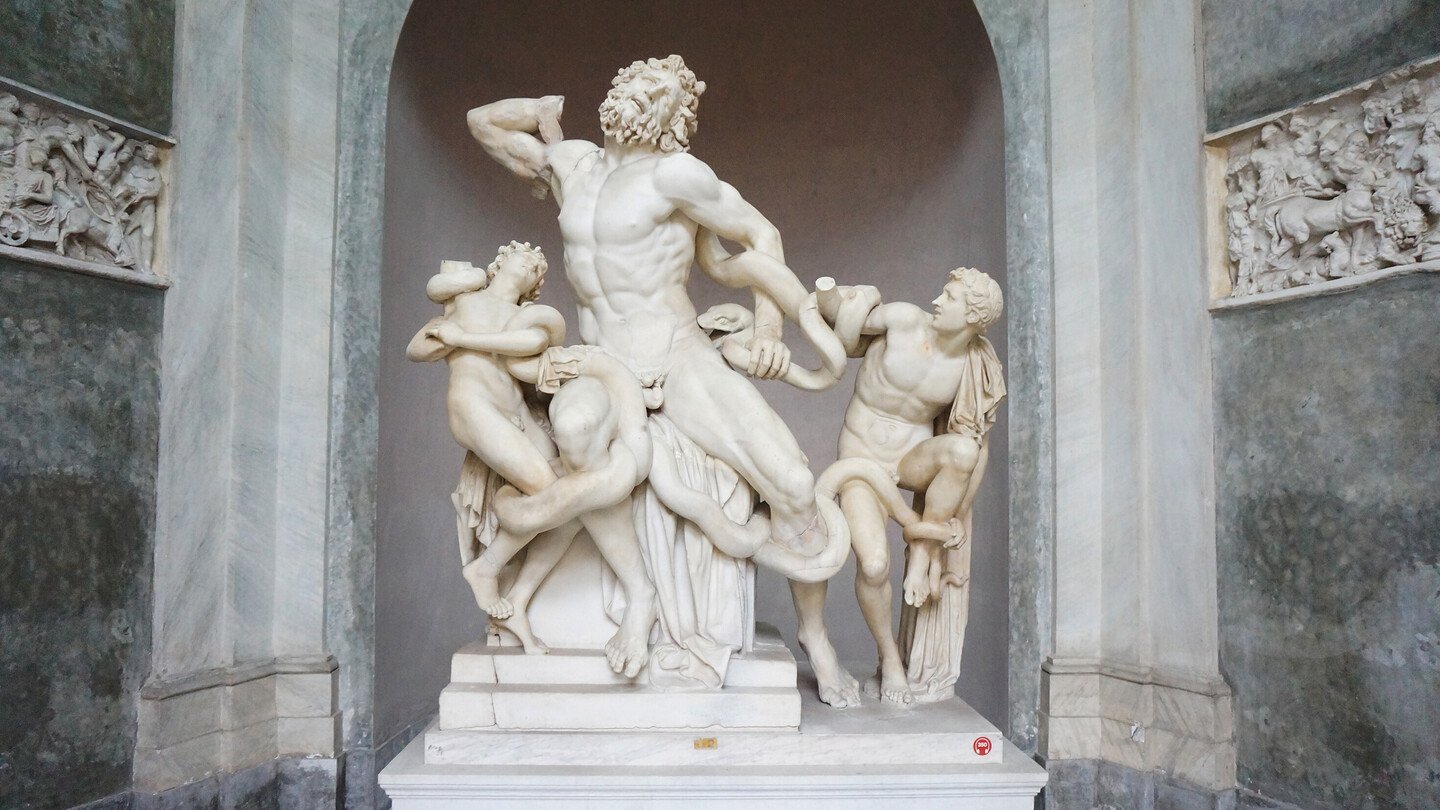
Finally, what a shame to grow old because of your dismissive attitude toward everything, never having seen what a handsome, strong person you could become!
Concept
Which human bodies are perceived as embodying perfection? Why have notions of proper proportions, physical beauty, and harmony changed across different historical eras? And why did Ancient Greece become one of the primary sources for conceptions of the ideal human body? Reflecting on this theme, I would like to begin by asking what actually makes the human body beautiful. Is beauty a result of natural physical characteristics, or is it shaped by culture, philosophy, and societal perceptions?
In Ancient Greece, the human body held a special place in culture. It was perceived not merely as a physical shell, but as a reflection of inner harmony and perfection.
The concept of kalokagathia—the union of physical beauty and moral virtue—held particular significance. In a sense, a beautiful body became the embodiment of certain ideals regarding a harmoniously developed personality.
However, ideas about the ideal body were not static. In archaic art, young, symmetrical, and static figures with conventionally rendered anatomy predominated. During the Classical period, the human body was examined through the harmony of proportions, balance, and the naturalness of movement. Sculptors strove to find a specific system of perfection, most vividly expressed in Polyclitus’s canon. In Late Classical art, interest intensified in the grace, plasticity, and sensuality of the human form. During the Hellenistic period, conceptions of beauty became more varied: artists began to be interested in individual characteristics, age, emotion, and diverse body types.
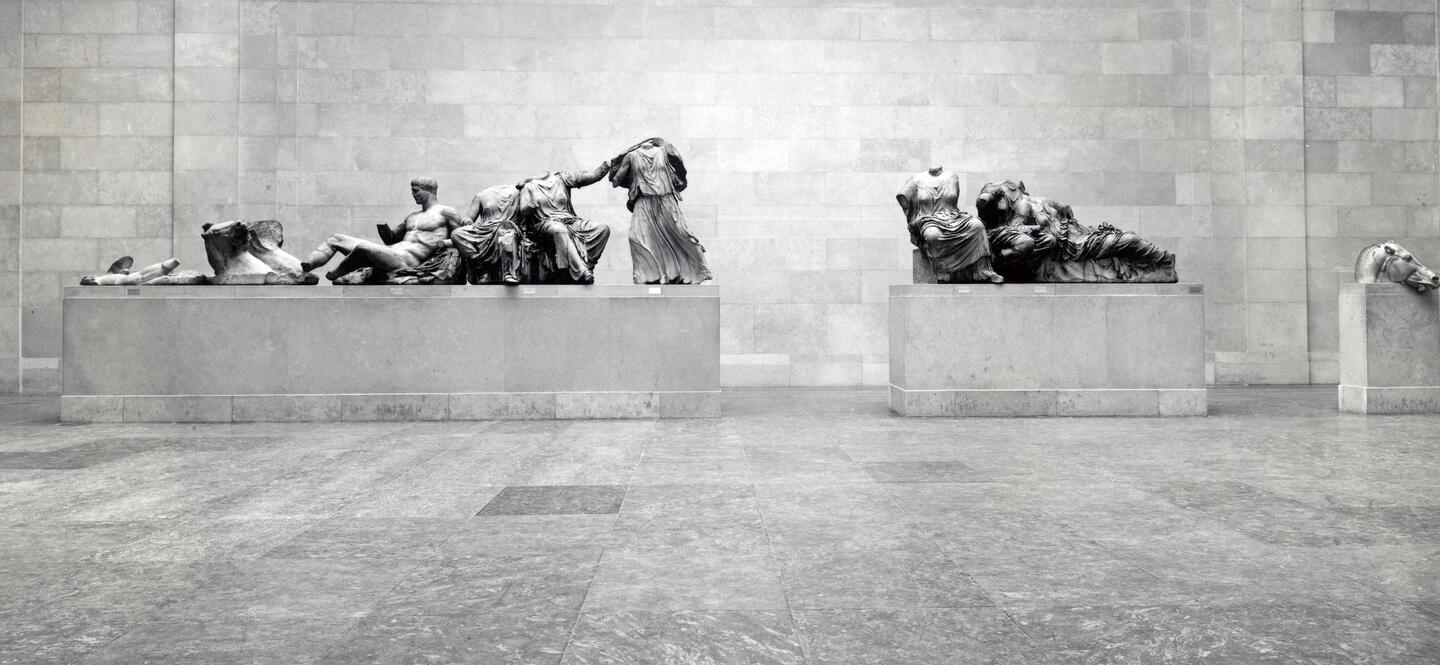
Sculptures from the Eastern Pediment of the Parthenon are on display in Room 18. Marble sculpture. Athens, 438–432 BCE.
This topic remains relevant because the ancient Greek ideal of physical perfection continues to influence contemporary culture. Images of Greek athletes, gods, and heroes are still utilized in art, architecture, design, and visual culture as symbols of harmony and beauty. At the same time, the concept of the ideal body continues to be a subject of constant reinterpretation.
Material Selection Principle and Categorization
The principle for selecting materials involved choosing works of ancient Greek sculpture from various historical periods in which the prevailing ideas of each era regarding the ideal human body are most clearly expressed.
The main focus is on representations of the human figure that allow us to trace changes in anatomy, proportions, plasticity, body posture, facial expression, and physical characteristics. The study examines both male and female figures because the concept of the ideal body varied depending on the sex and the cultural role of the depicted individual.
To conduct the analysis, we use sculptural works, historical and philosophical texts, scientific publications, and museum descriptions and collection catalogs, which allow for the most accurate and comprehensive exploration of the topic. Particular attention is paid to works that reflect the characteristic artistic features of each period.
The structure of the study is built primarily on a chronological principle, taking into account the evolution of concepts of human perfection.
The chapters are arranged to demonstrate the sequential transformation of the ideal human body.
Chapter One — The Archaic Period.
The human body is viewed as an embodiment of youth, physical strength, and symmetry. Primary focus is placed on kouroi and korai, as well as the features of stylized anatomy and figure frontality.Chapter Two — The Early Classical and High Classical Periods.
This chapter investigates the formation of concepts concerning naturalness, harmony, and proper proportions. The development of anatomical accuracy and the emergence of the canon of the ideal human body are examined. Special attention is given to the work of Myron and Polykleitos.Chapter Three — The Late Classical Period.
This explores the transition from strict harmony to a more graceful and plastic depiction of the human form. Changes in proportions, the emergence of freer poses, and the development of the sensual image of the female body are studied.Chapter Four — The Hellenistic Period.
The human body is examined through the lenses of individuality, emotion, and diversity. The study investigates the interest in different ages, body types, complex movements, and the expressive quality of the human figure.Key research question:
How did the concept of the ideal human body change in Ancient Greek art, and what factors determined these shifts?
Hypothesis:The concept of the ideal human form in ancient Greek art gradually evolved: shifting from a generalized and visually simpler representation toward a more individualized and emotionally expressive one. Simultaneously, the ideal of physical perfection changed over time, influenced by factors such as the development of philosophical thought regarding the relationship between external beauty and the spiritual dimensions of the individual, the popularization of athletic culture, advancements in human figure depiction techniques, and more.
Chapter I. The Archaic Period. The Image of Youth and Physical Strength. 7th–6th Centuries BCE
Masculine Archetype: Courses
The Archaic period marked a significant phase in the formation of the ancient Greek conception of human beauty. During this time, the monumental image of humankind gained prominence, wherein physical perfection was expressed through youth, strength, symmetry, and proportion.
The depictions of young men—the kouroi—held a special place in art. These were nude male figures portrayed in a strictly frontal pose, with a straight back, arms held down alongside the body, and the left leg extended forward. Their bodies were symmetrical, featured defined musculature, and possessed generalized facial features. Furthermore, the anatomy was rendered quite schematically: individual muscles and body parts were indicated in a simplified manner, adhering to the overall structure of the figure.
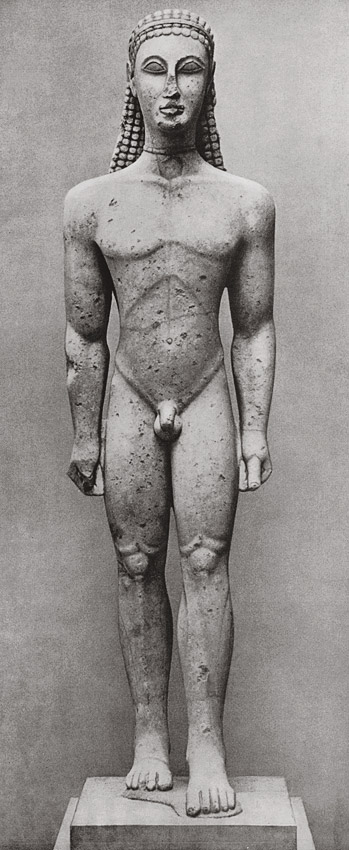
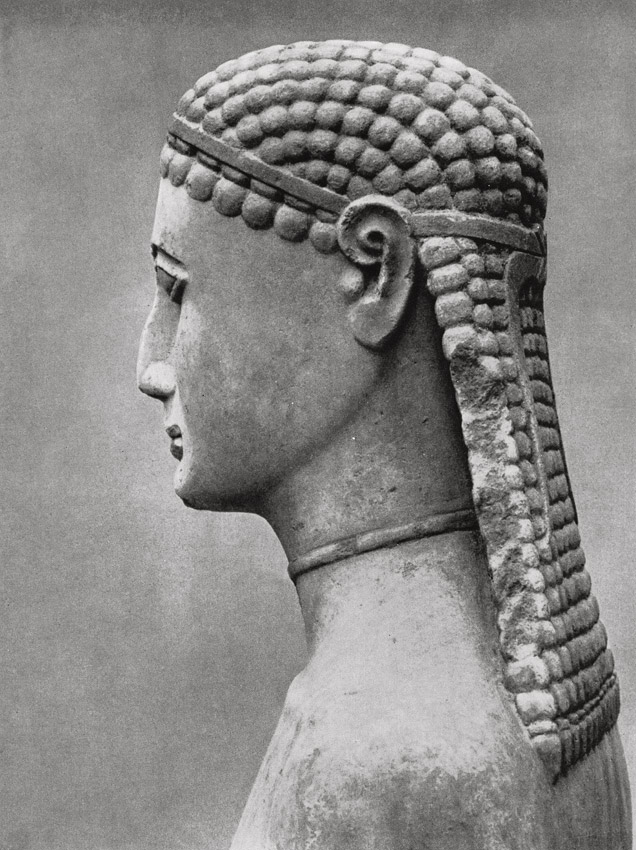
Kuros (young man). Marble. Circa 600 BCE. New York, Metropolitan Museum of Art.
The New York Kouros is a marble statue of a nude youth, created around 590–580 BCE in Attica, Ancient Greece. This sculpture is one of the earliest surviving examples of monumental Greek sculpture from the Archaic period.
The youth is presented in a characteristic, strictly frontal pose: he stands upright, supported by both legs, with his left leg slightly advanced and his arms hanging by his sides. The figure is defined by elongated proportions, broad shoulders, and pronounced symmetry.
Particular attention is paid to rendering human anatomy. We can observe that the musculature of the abdomen, chest, and legs is indicated with clear lines. However, the anatomy does not yet possess complete naturalism. The youth’s face retains the characteristic features of Archaic sculpture—a conventional smile and almond-shaped eyes.
The New York Kouros exemplifies an early Archaic conception of masculine beauty, based on youth, physical form, symmetry, and proportionality. Unlike later sculptures, the ideal human form here is depicted through conventional geometry rather than a realistic representation of anatomy.
The figure of the statue was not a portrait of a specific individual in the modern sense. It embodied a generalized concept of youth and physical strength. Such statues were used as funerary monuments and dedications to the gods.
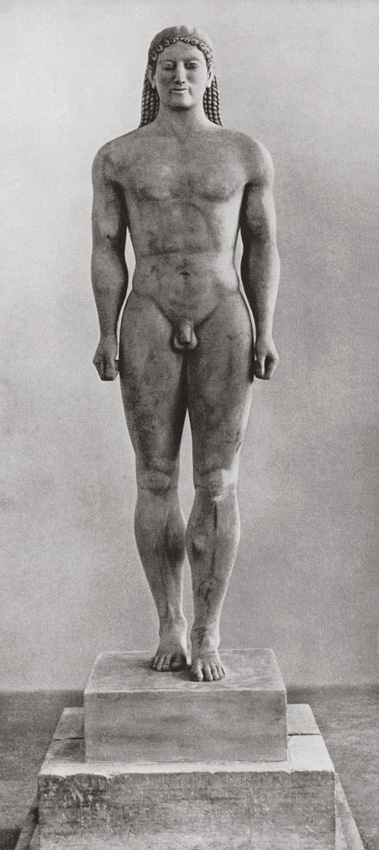
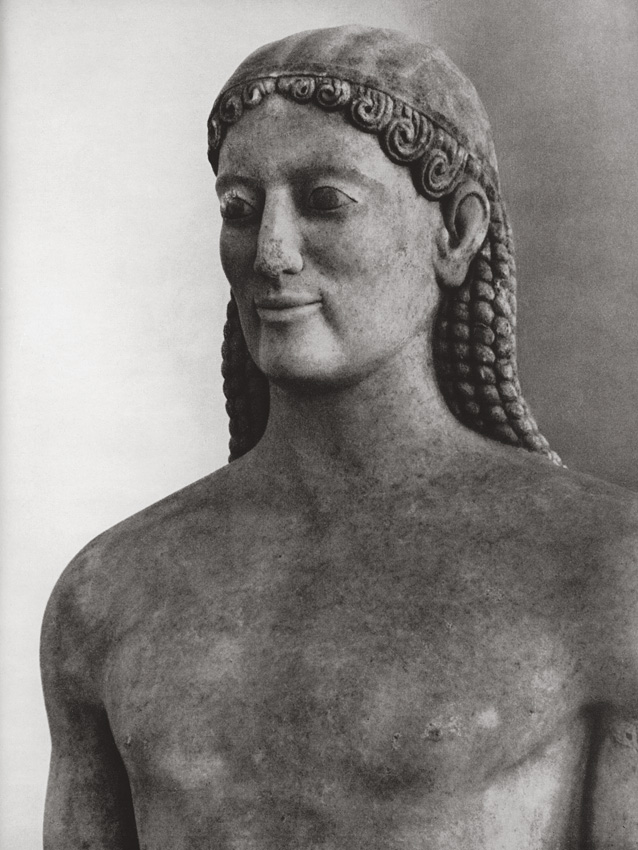
Croussos from Anavyssos (Tomb Statue of Croesus). Marble. Late 6th century BCE. Athens, National Archaeological Museum.
The Kouros of Anavyssos (Tomb Statue of Kouros) is a marble sculpture created around 530 BCE in Attica, Ancient Greece.The figure of the youth is also depicted nude, in the frontal pose traditional for kouroi. The sculpture exhibits features characteristic of the Archaic period: symmetry and staticity. Nevertheless, the Kouros of Anavyssos already possesses a more natural anatomy: the musculature of the chest, abdomen, and legs gains volume, and the transitions between different body parts become smoother. The face retains the characteristic Archaic smile, and the hair is meticulously arranged in long decorative locks.Unlike the earlier New York Kouros, the Kouros of Anavyssos has a more plausible anatomy. While the musculature in the first work is conveyed primarily through conventional geometric lines, here the forms of the human body appear more volumetric and natural.The Kouros of Anavyssos reflects a subsequent stage in the development of the Archaic ideal of male beauty. Its main characteristics remain youth, physical strength, symmetry, and proportional harmony; however, the naturalism of the anatomy gains increasing importance. The sculpture serves as an example of the gradual transition from the stylized representation of the ideal body to a more realistic understanding of human beauty.
The Feminine Archetype: Bark
The female ideal in archaic sculpture was represented by kores—statues of young girls who, unlike kouroi, were depicted as clothed. The sculptors' attention was focused on the silhouette of the figure, the plasticity of the drapery folds, the hairstyle, and the ornamentation. This reflected the differences in the artistic portrayal of male and female figures.
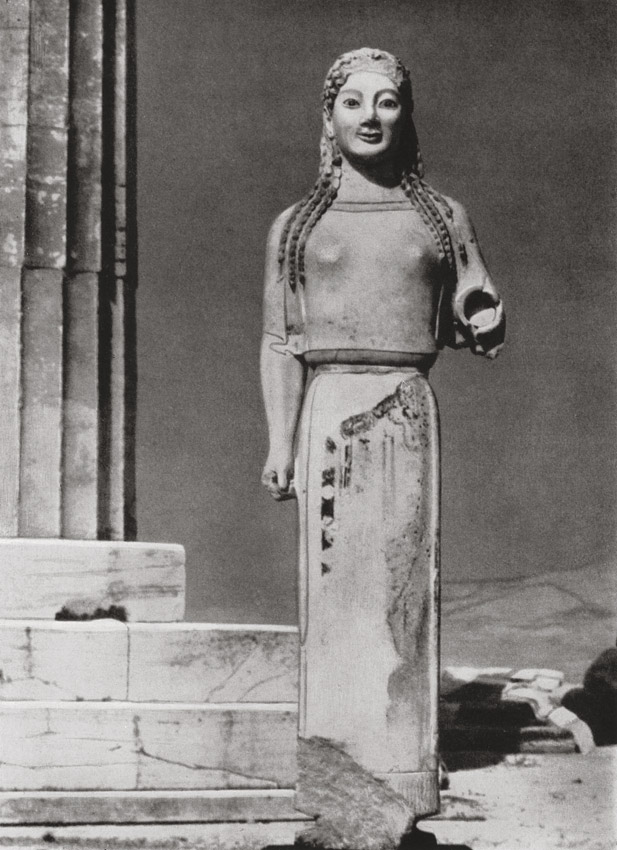
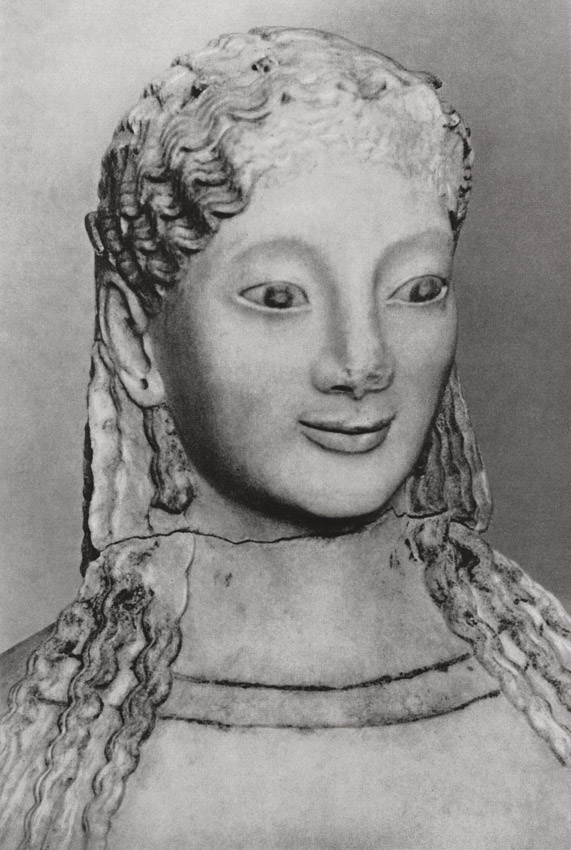
Corinthian helmet. Marble. 6th century BCE Athens, Acropolis Museum.
Kore in Peplos—a marble statue of a girl created around 530 BCE and discovered in 1886 on the Acropolis of Athens.The girl stands straight, in a frontal pose, which allows the composition to maintain its symmetry. Although her body is covered by layered garments—a peplos and a chiton—the sculptor managed to convey the natural contours of the human form. Kore’s face is distinguished by a serene expression and a characteristic archaic smile.Unlike later works of the Classical period, this sculpture has not yet achieved complete anatomical naturalism. The primary focus is on the harmony of proportions, symmetry, youth, and decorative expressiveness.
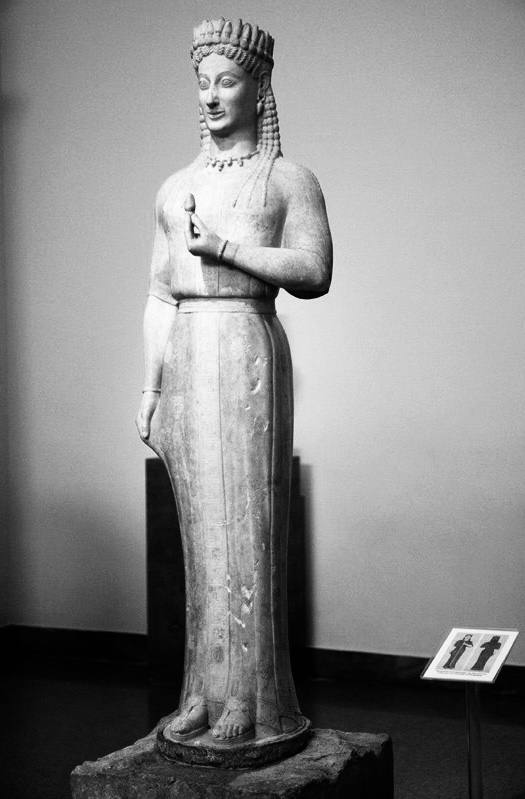
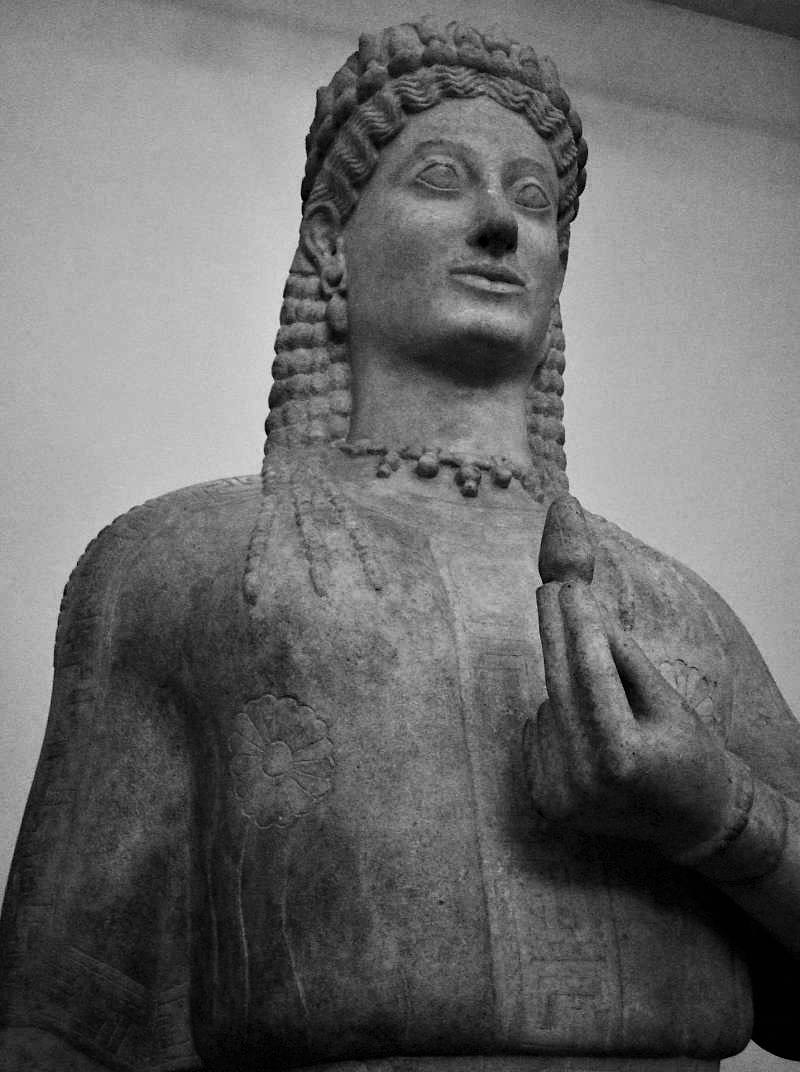
Phasicicle Bark. Marble. c. 550–540 BCE. National Archaeological Museum, Athens.
The Kore of Phaskyle is a marble funerary statue of a young maiden, created around 550–540 BCE by the Greek sculptor Aristion from the island of Paros.
The figure of this Kore is presented in a frontal pose. She stands upright, maintaining the symmetry and static nature of the composition. On her, we can observe a long chiton adorned with decorative ornaments. With one hand, the girl lightly raises the hem of her garment, while in the other, she holds a lotus bud situated near her chest.
The Kore of Phaskyle is a striking example exhibiting the characteristic traits of the Late Archaic ideal: youth, slender physique, symmetry, meticulously organized appearance, and decorative expressiveness. Furthermore, the image is revealed not so much through a realistic rendering of anatomy as through her clothing, ornaments, and symbolic details.
Throughout the archaic period, the representation of the human body gradually became more naturalistic. Sculptors refined the depiction of anatomy, moved away from excessive schematic representation, and paid greater attention to individual facial features and body structure. However, the pursuit of symmetry, stability, and an idealized human form remained a defining characteristic of the era.
Chapter II. Early Classicist and High Classicist Periods. The Formation of the Ideal Canon.
During the Classical period, the concept of the perfect human body acquires new meaning. If in the Archaic period it was expressed primarily through symmetry, youth, and physical strength, now the focus shifts to the harmonious proportion of the body’s parts, the naturalness of movement, and proportionality.