Женская красота в искусстве Древнего Египта
(1) Concept:
I chose this topic because I am interested in how the concept of feminine beauty was formed in Ancient Egypt and how it was reflected in its art. The images of queens and goddesses are recognizable due to their eye makeup, wigs, jewelry, and characteristic facial features. However, beneath the external attractiveness lie concepts of status, power, and religion. In this study, I aim to unravel the elements that constituted the ideal of feminine beauty and what that ideal signified for the ancient Egyptians. The main focus is on the New Kingdom period (approximately 1550–1070 BCE). I examine sculptural portraits, statues, reliefs, jewelry, mirrors, and cosmetic vessels. The depictions of queens Nefertiti and Tiye are examined separately. They help illuminate the specific aspects of female imagery and the understanding of ideal appearance. The material is selected based on several principles. Each object must be connected to the theme—either depicting a woman or relating to the creation of her appearance. The presence of reliable information regarding the object’s origin, dating, and function is also essential. Many artifacts are connected to the royal family and do not reflect the lives of all Egyptian women. The research is structured from the general context to the individual components of the image, and then to their significance. First, the New Kingdom era and the characteristics of the ancient Egyptian artistic canon are reviewed. Next, the material is divided into themes: face; hair and wigs; cosmetics and grooming; clothing and jewelry; the link between beauty, power, and religion. The observations are synthesized and compared in the conclusion. For the textual part, I use museum catalogs and object descriptions, as well as scholarly and art historical publications on the art and culture of Ancient Egypt. When selecting sources, I take into account their reliability, authorship, and the accuracy of dating and attribution. Museum descriptions help verify information about the objects, while scientific publications help explain their historical and cultural context. In the analysis, I separate what is directly visible in the artwork from historical interpretations. This is important because ancient Egyptian art was not a precise depiction of reality: external appearance could be governed by artistic canons and symbolic rules. The study’s hypothesis is that the ideal of feminine beauty was shaped not by a single feature, but by a combination of facial and body proportions, eye detailing, hairstyle, clothing, jewelry, and markers of social status.
Beauty in Ancient Egypt was not just about appearance, but an entire visual iconography.
I became interested in why the images of ancient Egyptian queens and women are still perceived as a symbol of beauty. There is something very recognizable about them: expressive eyes, clear profiles, intricate hairstyles, jewelry, and serene facial features. I wanted to figure out whether the ancient Egyptians truly represented beauty in this way, or if a whole system of rules and symbols lay beneath these images.
Исследовательский вопрос:
«How did ancient Egyptian art create and solidify the concept of feminine beauty?»
Hypothesis:
I propose that in Ancient Egypt, female beauty was not perceived as a collection of individual attractive traits. Instead, it was composed of several elements: harmonious proportions of the face and body, well-kept hair, cosmetics, jewelry, clothing, and the woman’s social standing. It was precisely the combination of these details that transformed the image into a recognizable ideal.
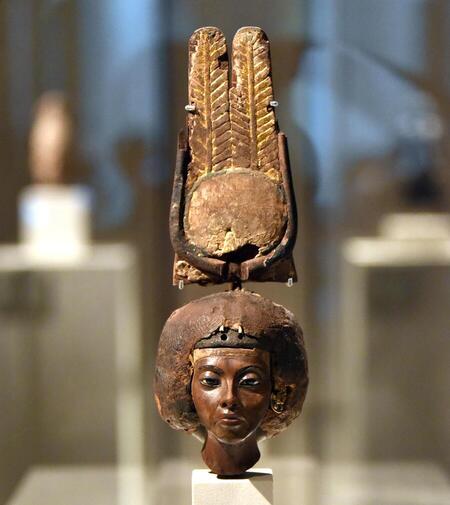
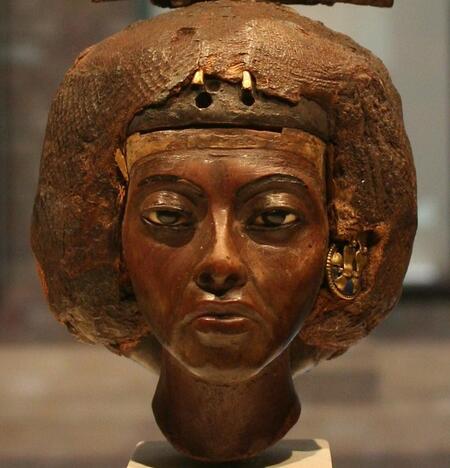
1. Queen Tiy in a headdress with a solar disk and two plumes, circa 1355 BCE 2. Head of Queen Tiy, circa 1355 BCE
(2) Historical Context
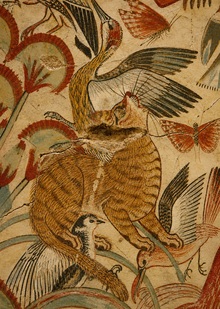
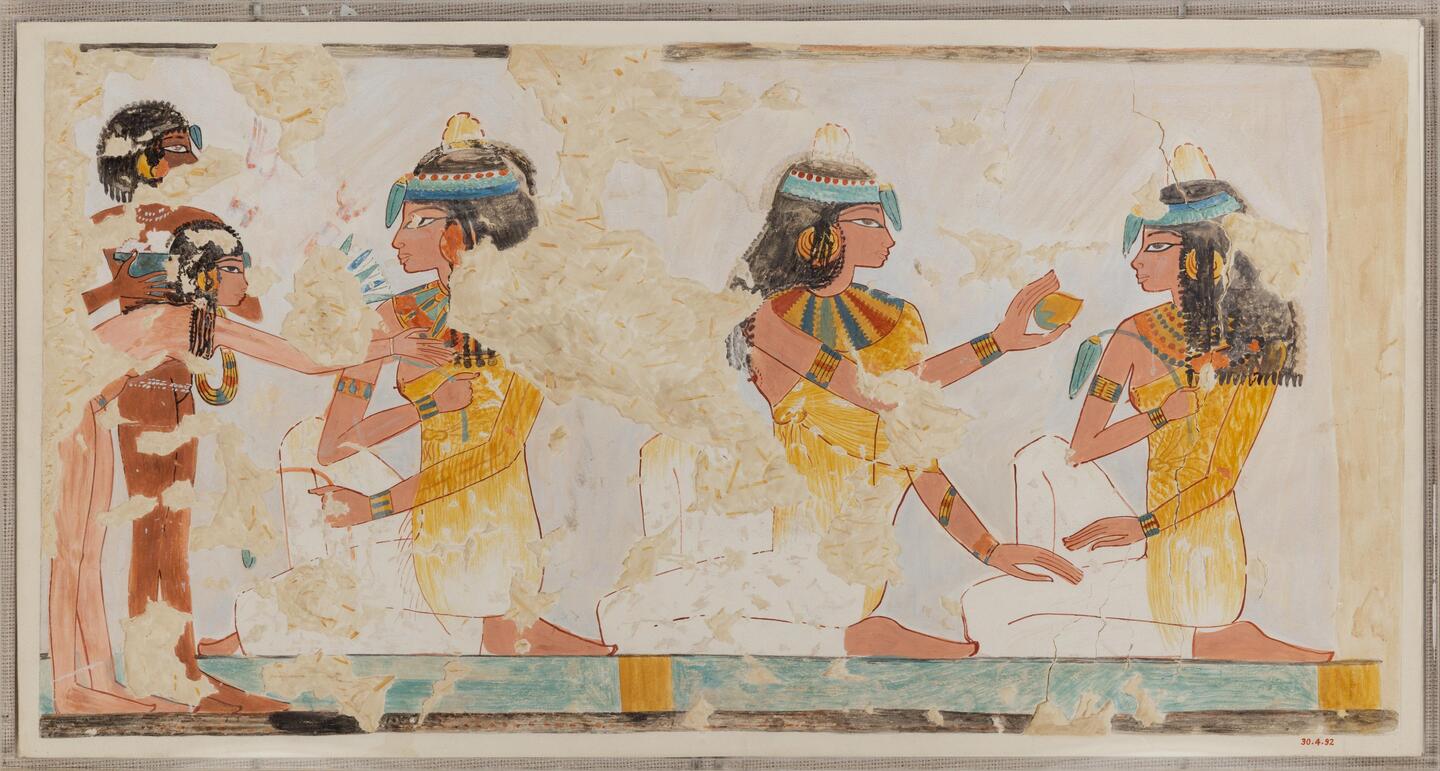
A scene from the fresco of an ancient Egyptian tomb. New Kingdom.
The New Kingdom was a period of flourishing for the ancient Egyptian state. Many famous depictions of queens, statues of noblewomen, jewelry, and personal grooming items date back to this time. I chose this period for my study because the preserved works allow for an examination of the female image from various perspectives—from formal portraiture to the details of daily care.
Art of the New Kingdom, Ancient Egypt, 16th–11th centuries BCE
A woman’s standing in Ancient Egypt depended on her lineage, family, and social status. Women could own property, inherit it, and participate in religious life. However, most of the surviving ceremonial imagery is associated with the royal family and wealthy segments of society. Therefore, one cannot judge the appearance of all Egyptian women based solely on these depictions.
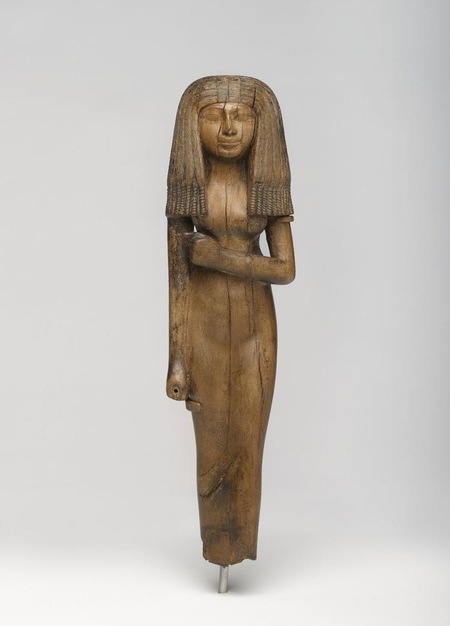
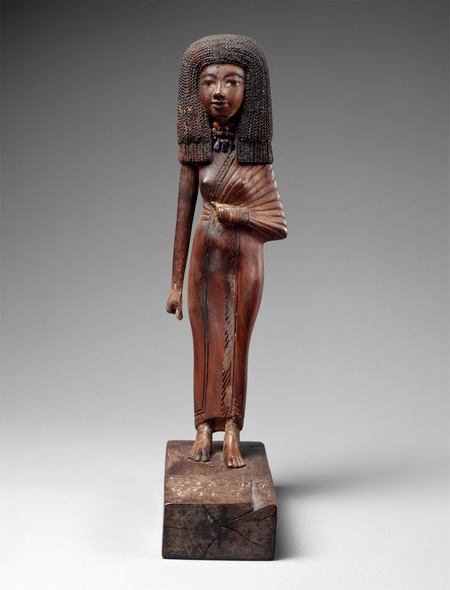
1. Female statuette, circa 1390–1353 BCE 2. Statuette of Lady Tye, circa 1386–1330 BCE
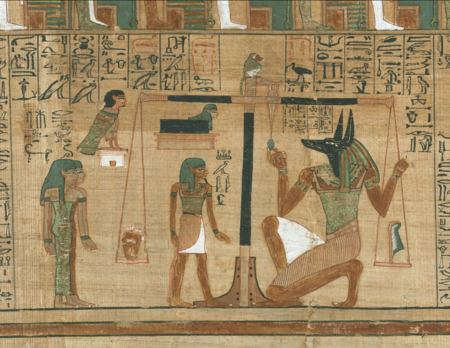
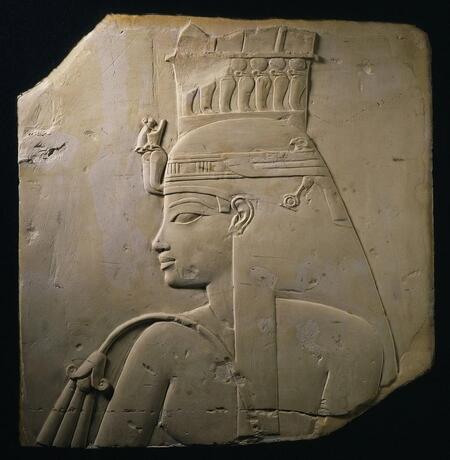
Ancient Egyptian masters adhered to established conventions for depicting the human figure. Reliefs and paintings combined various viewpoints: the head and legs were often shown in profile, while the shoulders were nearly frontal. This mode of depiction helped to convey essential body parts and maintain silhouette clarity. It differed from the pursuit of realistic perspective familiar to the modern viewer.
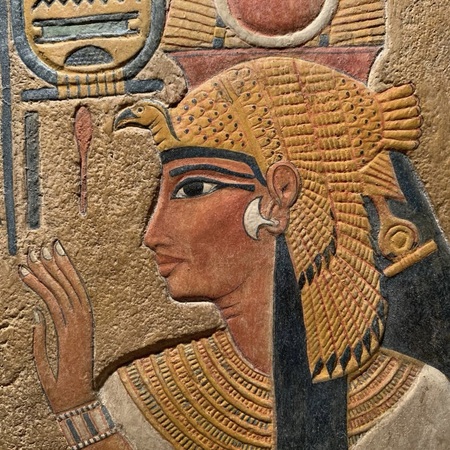
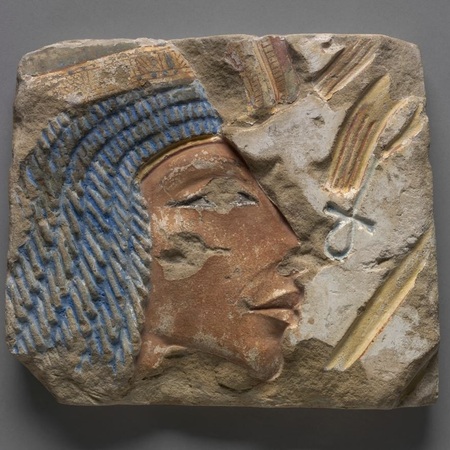
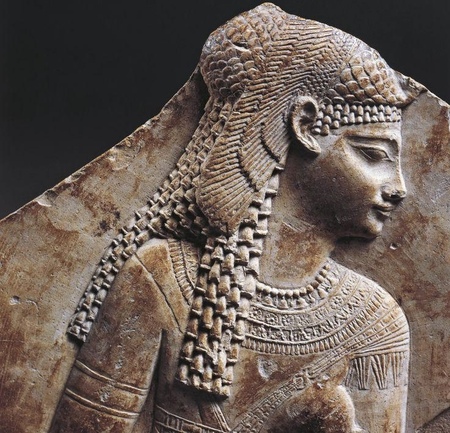
1. Fragment of ancient Egyptian painted relief. New Kingdom. 2. Relief depiction of Queen Nefertiti. Amarna Period, circa 1353–1336 BCE.
In images of noblewomen, youth, smooth facial features, a slender silhouette, and an elaborately styled hairdo frequently recur. This does not necessarily mean the artist was attempting to capture the model’s exact likeness. Rather, they were crafting an image that conformed to the era’s ideals of beauty, affluence, and high social standing.
The ideal of beauty was associated with notions of harmony, youth, status, and order.
(3) Face
Bust of Queen Nefertiti, circa 1351–1334 BCE.
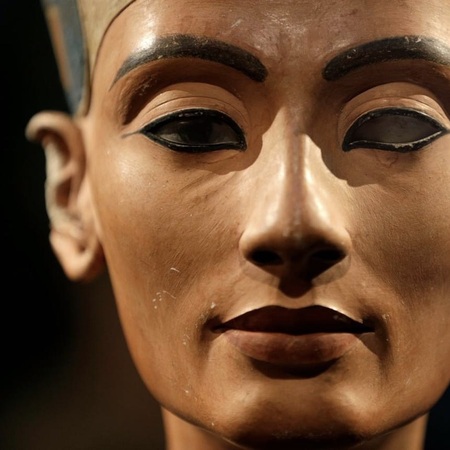
Nefertiti Bust—one of the most recognizable masterpieces of ancient Egyptian art. It is often perceived as an archetype of ideal feminine beauty. I was particularly drawn to how a few subtle details create such a powerful impression: the elongated oval, expressive eyes, a crisp line defining the nose and lips, and the tall blue crown.
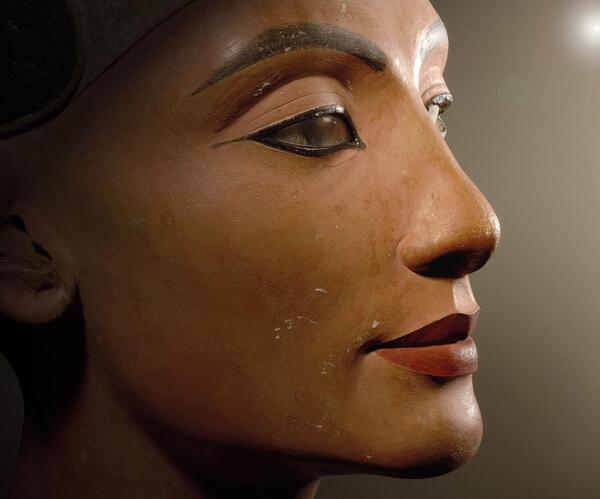
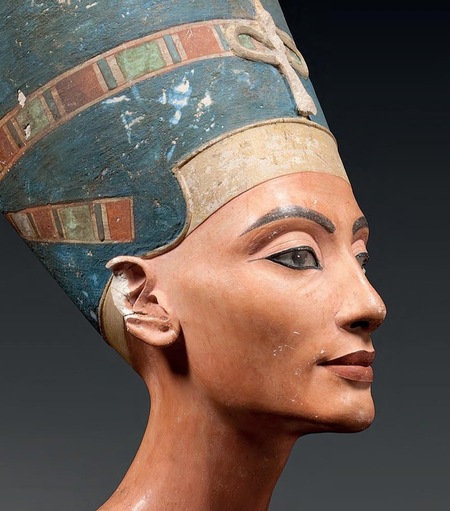
1. Fragment of the Nefertiti bust, c. 1351–1334 BCE 2. Bust of Queen Nefertiti, c. 1351–1334 BCE
The Nefertiti profile is particularly striking due to the straight line of the nose and the smooth transition to the forehead. This angle allows the facial form to be viewed as a unified silhouette. The lips on the Nefertiti bust are defined quite clearly, but the facial expression remains restrained. The chin continues the overall oval line. Together, these details create a sense of serenity and composure, which is often associated with this portrait.
Head of Queen Tiy, 1391–1353 BCE
The portraits of Queen Thiye differ from the familiar image of Nefertiti. They show more pronounced individual features: more expressive folds, unique mouth characteristics, and a more complex facial expression. This suggests that ancient Egyptian art did not always strive for a uniformly youthful and smooth appearance.
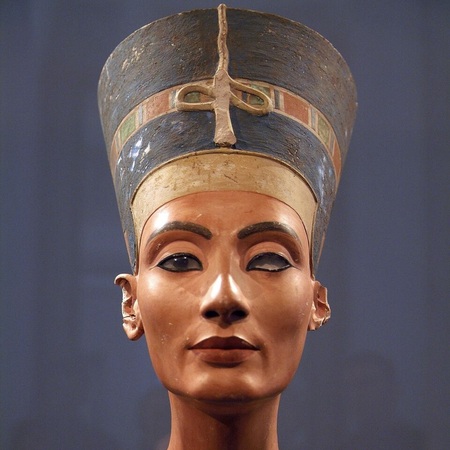
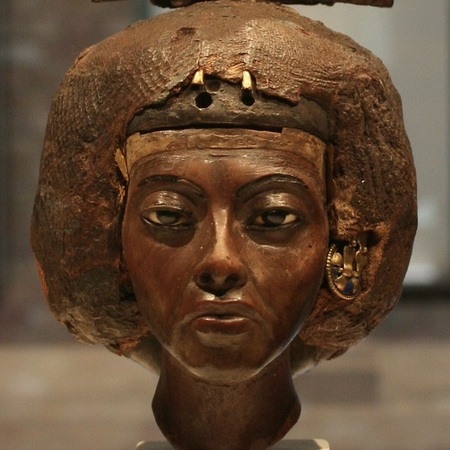
1. Nefertiti. Calm, smoothed features with emphasized harmony. 2. Queen Tiy. A more individualized facial model with expressive age characteristics.
Two portraits demonstrate that the conception of beauty was not confined to a single facial type.
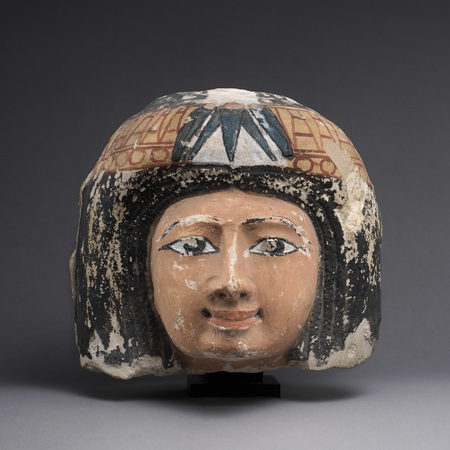
In later works, one can see different iterations of the female figure. Not only facial features but also the voluminous hairstyle, ribbons, and floral elements begin to play a significant role. Upon close examination of the details, it becomes evident that the expressiveness of the portrait is not generated by a single feature. Proportions, contours, and the relationship between light and dark areas are crucial.
The face in Egyptian art is a combination of proportions, expressive details, and artistic ideal.