One question—different forms
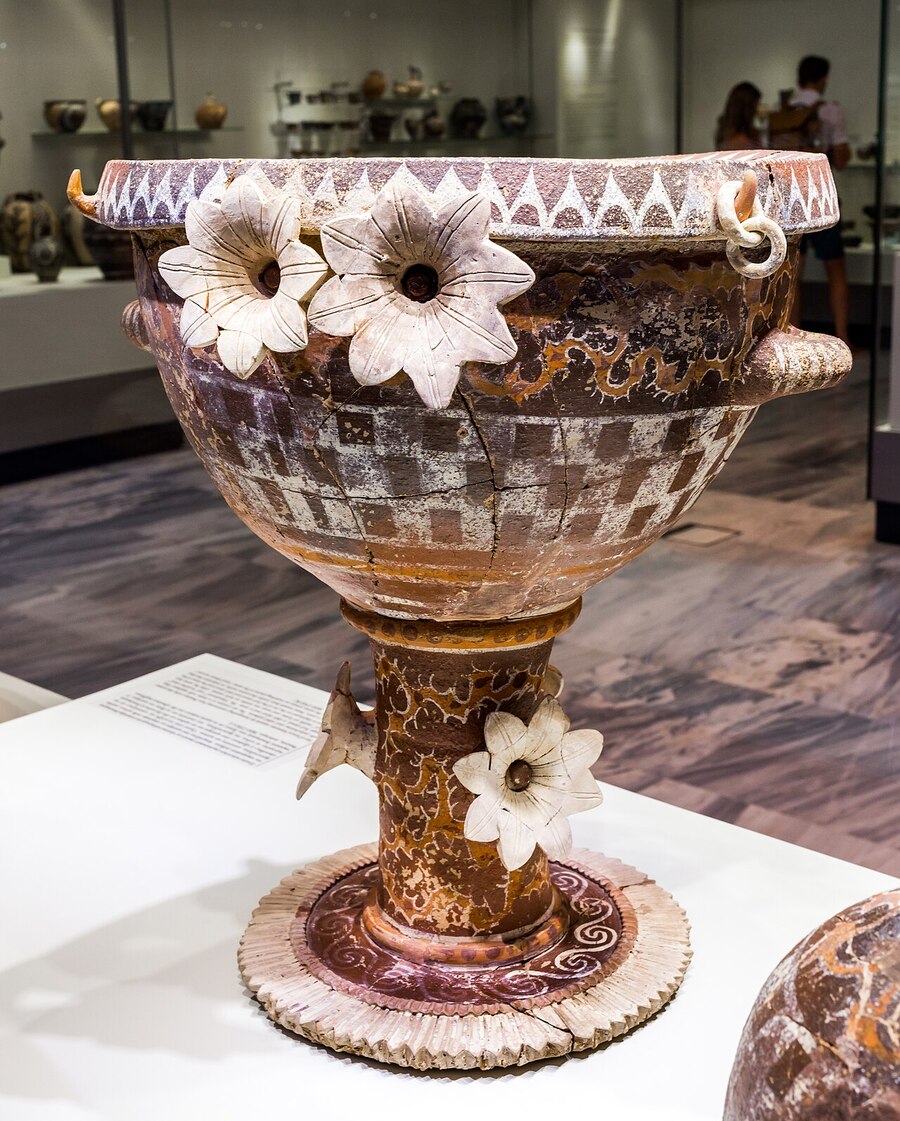
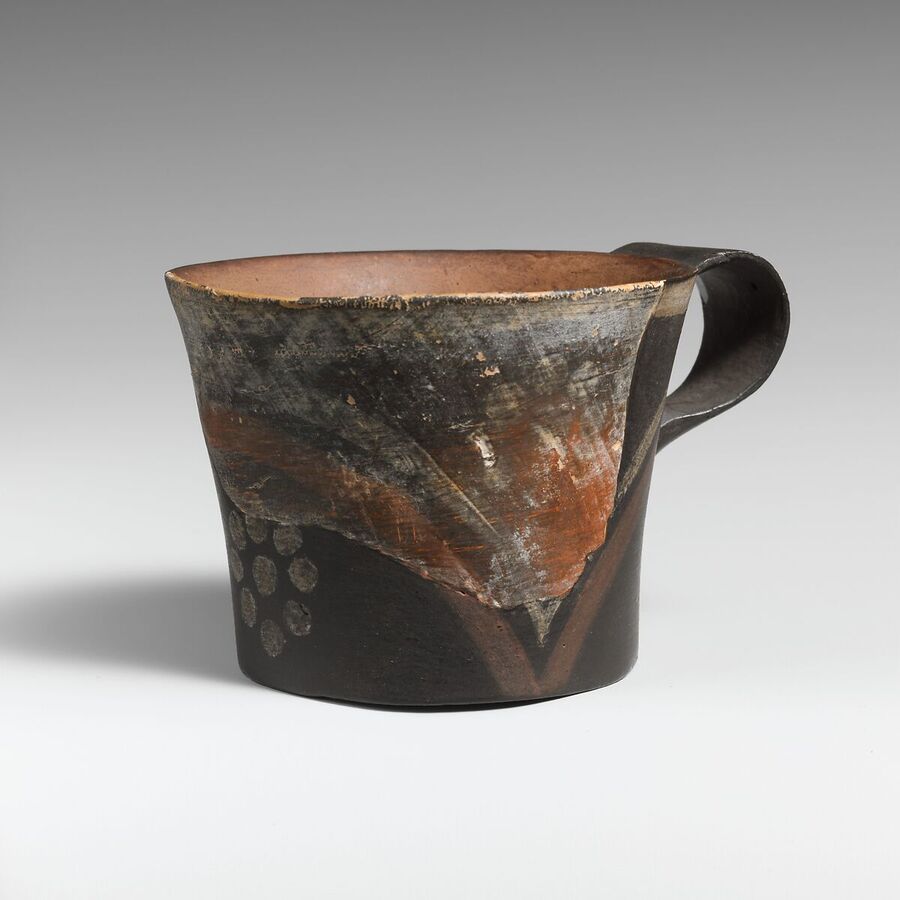
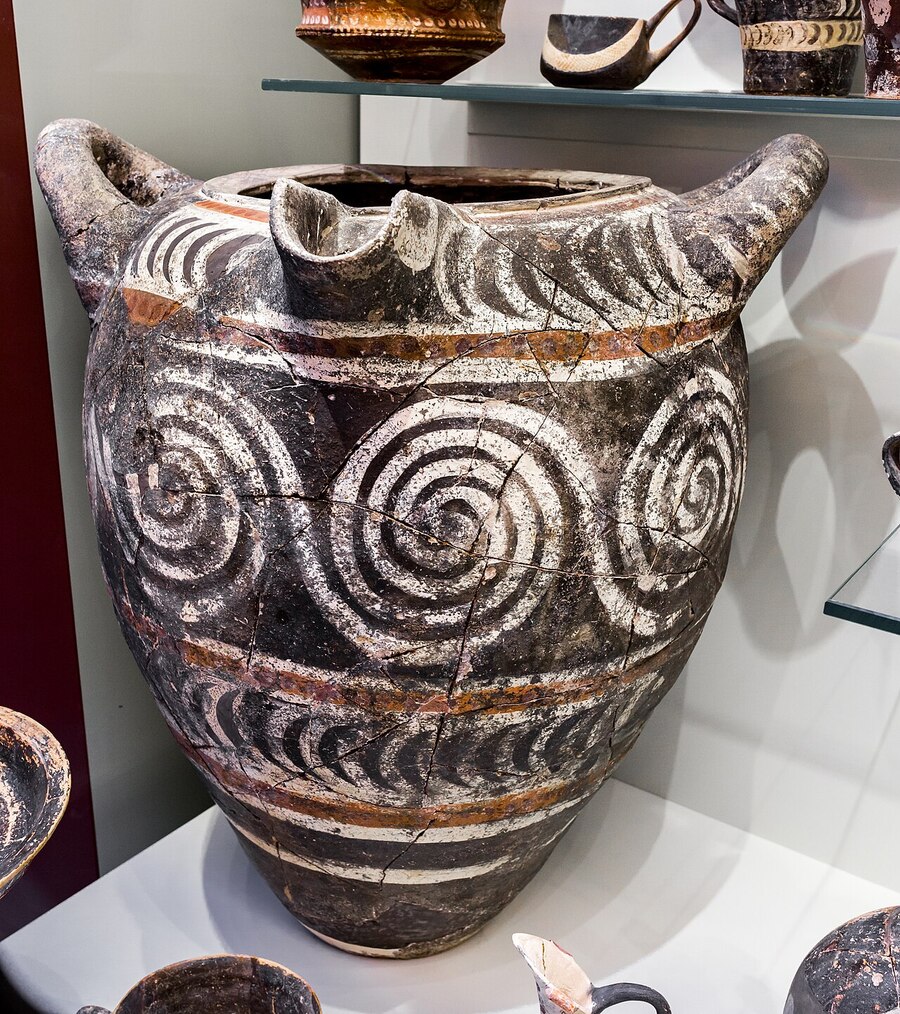
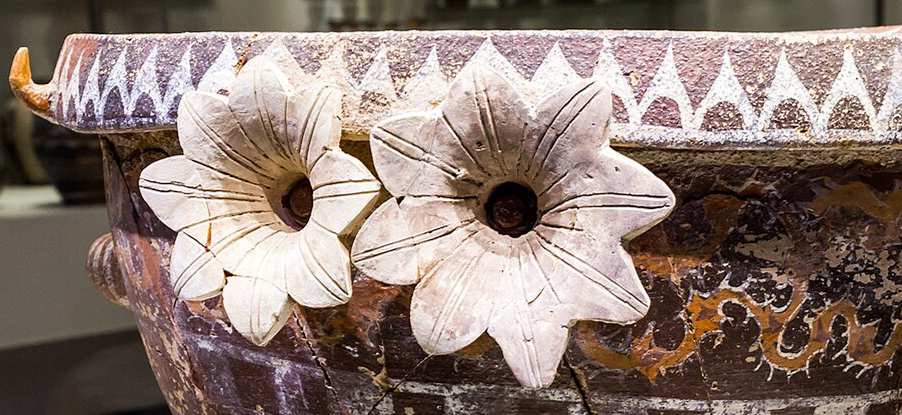
1. Unknown master. Cup with straight walls. c. 1800–1700 BCE. Crete. Metropolitan Museum of Art, New York. Inv. No. 11.186.28. 2. Unknown master. Large vessel with a bridge spout. c. 1750–1700 BCE. Knossos. Archaeological Museum of Heraklion. Inv. No. Π2669. 3. Unknown master. Krater on a tall cylindrical stem. c. 1750–1700 BCE. Phaistos. Archaeological Museum of Heraklion. Inv. No. Π1
The straight wall of the cup, the tapering body of the closed vessel, and the dissected silhouette of the crater provide different surfaces for decoration. The comparison begins with this distinction. Ornament is considered in conjunction with the form upon which it resides.
Mug Silhouette
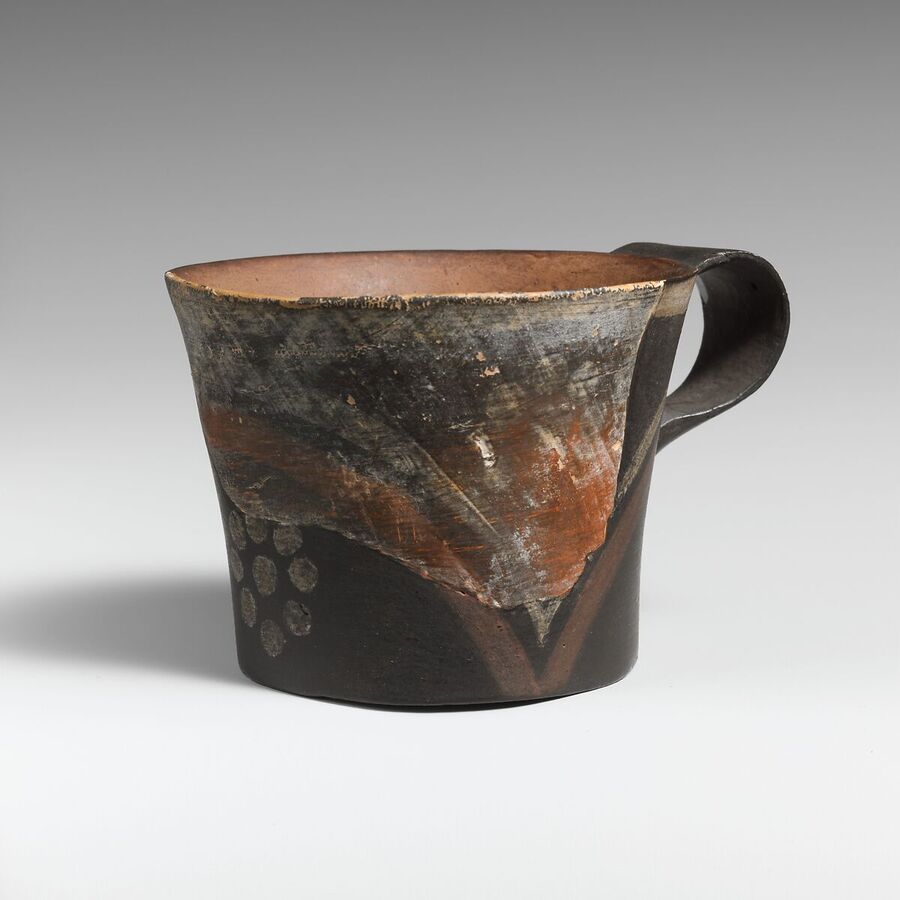
Unknown master. Cup with straight sides. Circa 1800–1700 BCE. Cretan. Metropolitan Museum of Art, New York. Accession No. 11.186.28.
The cup features relatively straight side walls and an open top. A large color blotch crosses the wall diagonally, while the rim remains a horizontal reference point. Even here, the direction of the form and the pattern do not fully align.
Curved surface
Unknown master. Rounded, thin-walled cup. Circa 1800–1700 BCE. Knossos. Archaeological Museum of Heraklion. Inventory No. 8406.
The wall of the rounded cup gently slopes toward the base. Rows of small motifs curve around the visible part of the body. Compared to Cup A, it is more difficult to distinguish a separate flat area here; the pattern is perceived on a continuously changing surface.
Vessel with a wide body
Unknown master. Large vessel with bridge-shaped spout. 1750–1700 BCE. Knossos. Archaeological Museum of Heraklion. Inv. No. Π2669.