Navigation
Concept and Methodology Section 1: Archaic and Ancient World Section 2: Middle Ages Section 3: Renaissance Section 4: Early Modern Period Section 5: Modernism (20th Century) Section 6: Contemporaneity Conclusions
Section 1
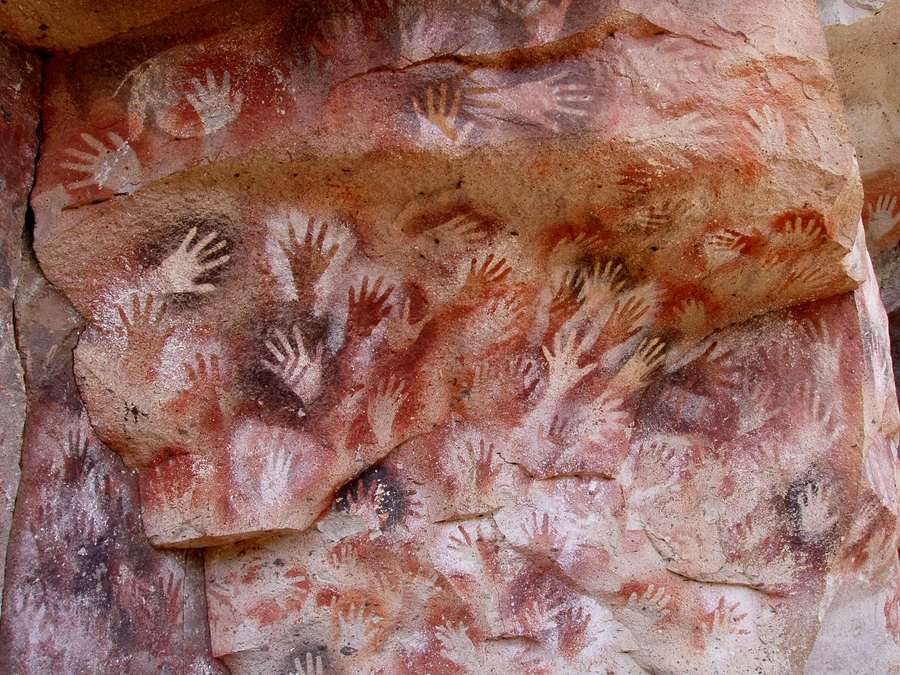
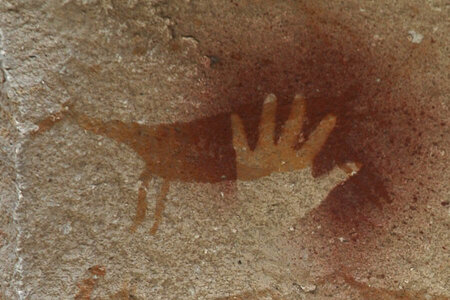
Handprints in the Cuevas de las Manos Cave
text will be here
Ancient Egypt. The God Osiris and Tutankhamun’s Sarcophagus
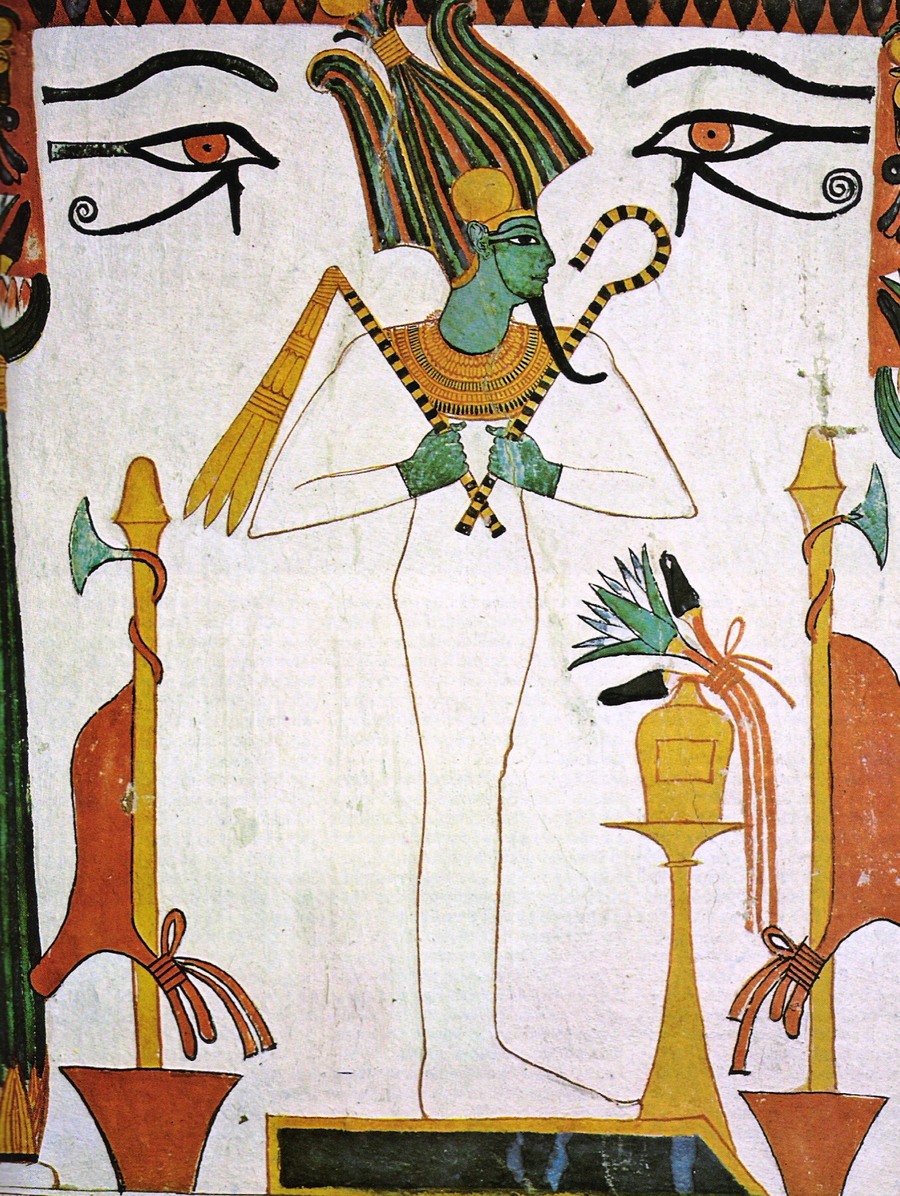
Depiction of Osiris from the wall of the Senejem tomb — 1292–1186
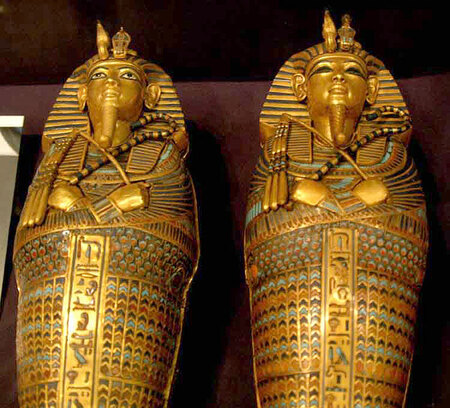
Osiris—god of rebirth, king of the underworld, and supreme judge of all the deceased… His crossed arms became a standard for burial (most often for royalty) due to the god’s association with death and his holding symbols of power—Heket and Nephthys. (Interesting fact—by the way the hands were positioned on mummies, their gender could be determined. If the arms were bent into fists on the chest, a man was buried; if the arms were folded with palms facing up, a woman was buried.)
Ancient Mesopotamia / Hittite Kingdom. Ritual vessel in the form of a clenched fist
blah blah blah… connected to the cult of the thunder god Tarkhun. The fist here is not a symbol of aggression, but a concentration of divine power… Here, the hand becomes not just an attribute of the image, but a functional vessel of sacred force: it holds what is forbidden for a human to hold.
Ancient Rome. The «pollice verso» gesture
«Pollice verso» — Jean-Léon Gérôme 1872
Here, we can discuss how the famous thumbs-up/thumbs-down gesture from gladiatorial combat is not entirely accurate, having first been depicted as early as 1872, but subsequently, media and various films about gladiators have ingrained it in the public consciousness.
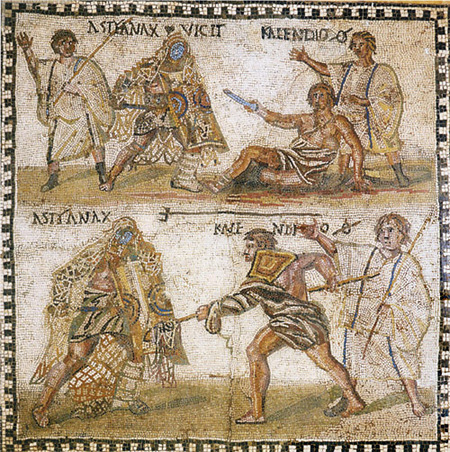
Although we don’t know 100% what the symbol looked like, we know it existed. Mosaic at the National Archaeological Museum in Madrid showing a retiarius (net-fighter) named Kalendio fighting a secutor named Astyanax. In the bottom image, the secutor is covered in the retiarius’s net, but doesn’t seem to be hindered. In the upper image, apparently the conclusion of the skirmish, Kalendio is on the ground, wounded, and raises his dagger to surrender. The arena employees await his fate from the editor, not pictured. The inscription above reads ASTYANAX VICIT, as well as the name of Kalendio followed by the symbol ∅ (null), implying that he was killed by Astyanax The judge raises an open palm with an index finger pointing up. Researchers interpret this gesture in two ways: it is either a signal to stop the fight or a sign that there will be no mercy. In any case, this is a specific ancient artifact showing how the hand decides fate. 4th century AD.
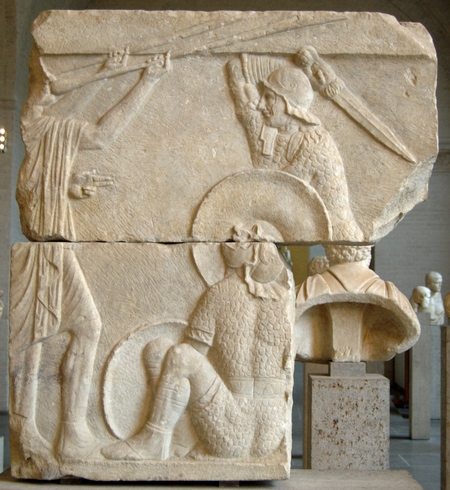
Relief from the Glyptothek (Munich) The fight here is over—the pipes signify one fighter’s victory, while he stands waiting with his raised sword for the judges' verdict on the defeated opponent. Researcher Korbayl interprets the gesture we can see on the left as a possibility of mercy (missio). Here, the thumb is pressed against the bent remaining fingers (?).
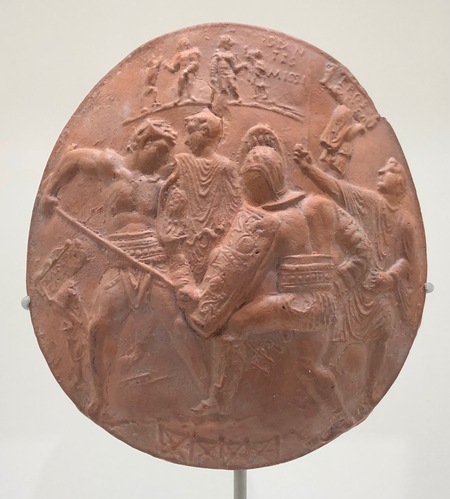
Terracotta medallion from the Rhone Valley (Cavillargues, France) It depicts a hand with the thumb pressed against a fist. The same historian, Corbinel, believes this could be a symbol of a draw or an expression of goodwill—both fighters leaving the ring unharmed.
Ancient India. Dancing Shiva—Nataraja
Here, he has four arms—four different symbols. (Tell about each one) Add a note about the tradition of conveying information through gestures, which is still preserved in Indian dance.
Section 2
Byzantium and Kievan Rus'. The Icon «Oranta»
here is the text
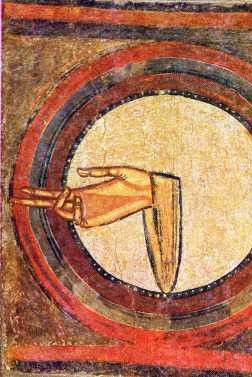
«The Creator’s Hand» or «God’s Right Hand,» 9th–13th Centuries
I lost the picture here..... ((
Section 3
Botticelli Primavera