Concept
Color that was meant to survive the human
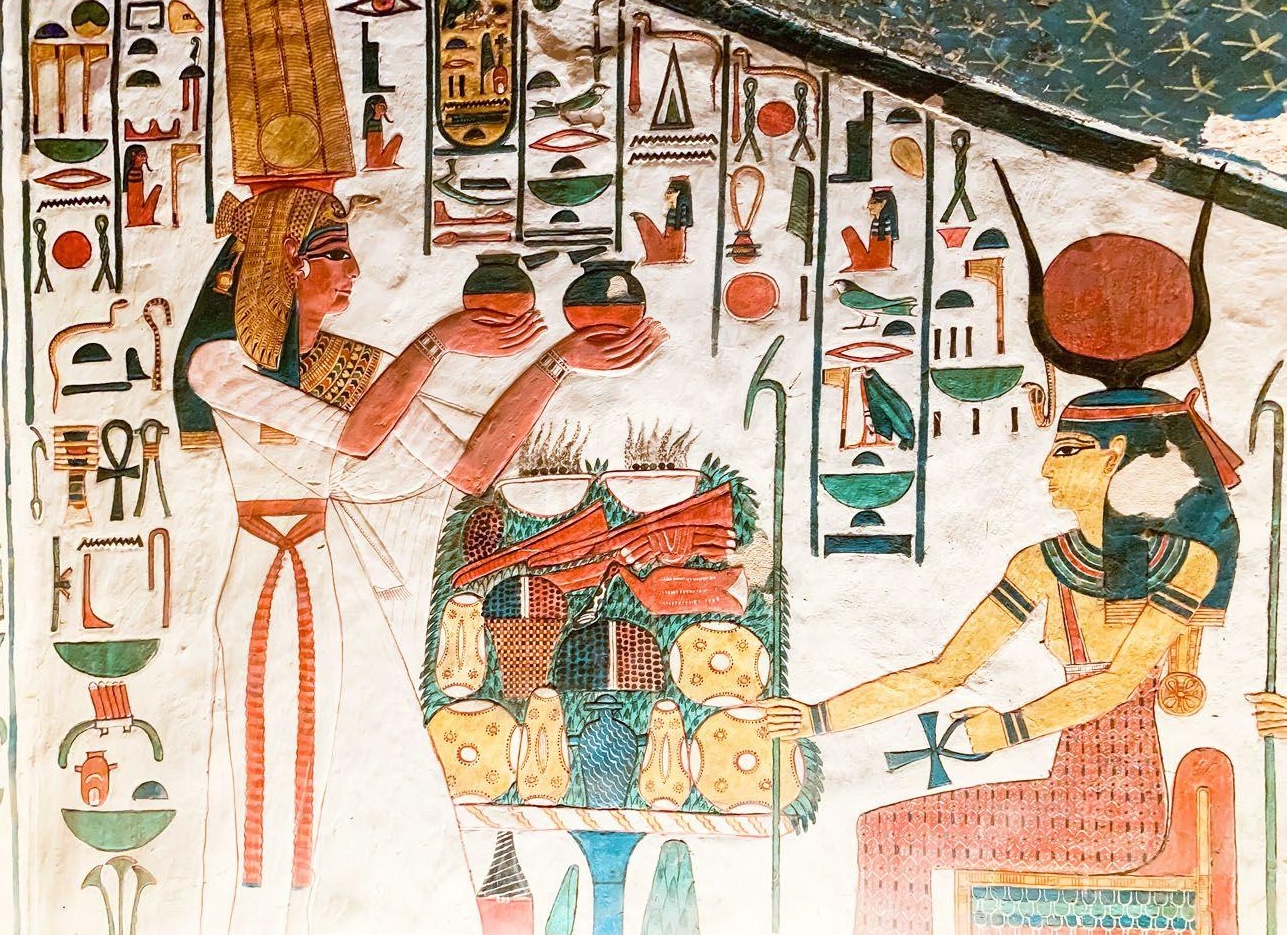
In ancient Egyptian tombs, painting was not for the sake of decorating a room. Most of these images were not intended for the constant viewing of the living. They were created for the deceased and were connected to their existence after death.
The walls feature gods, rituals, scenes of earthly life, plants, animals, and the realm of the afterlife. All of this formed a special system of imagery. Color played an important role in this system: through it, the artist separated figures, denoted materials, highlighted sacred objects, and conveyed concepts of life, death, and rebirth.
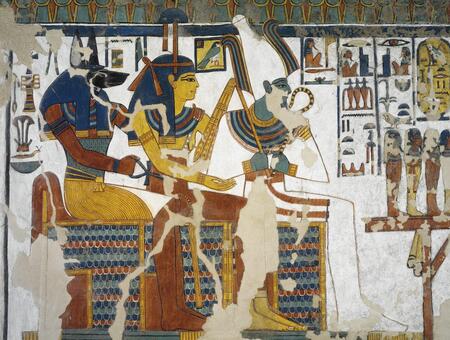
I was interested in how consciously this system was utilized. For instance, Osiris’s green skin looks unusual from the perspective of realistic painting, but it becomes more comprehensible when linked to vegetation and the renewal of life. The black color, which is often perceived as mournful today, could in Egyptian art have indicated fertile land and the capacity for rebirth.
Research Question
How did color in the funerary paintings of the New Kingdom convey religious concepts about death, the protection of the deceased, and rebirth?
Hypothesis
Color in New Kingdom funerary art was not merely an artistic device. It played a role in establishing the religious meaning of the image. Furthermore, its significance depended on where and how it was used—one hue could denote the divine nature, a natural element, a material, or a specific state.
Goals and Objectives
The goal of this work is to investigate the color system of New Kingdom funerary paintings on specific monuments and understand how it relates to their narrative themes. To do this, I examine the primary colors and pigments, correlate the depictions of gods and the deceased, study natural motifs, and then compare three monuments based on their palette and composition.
Nefertari · QV66 19th Dynasty
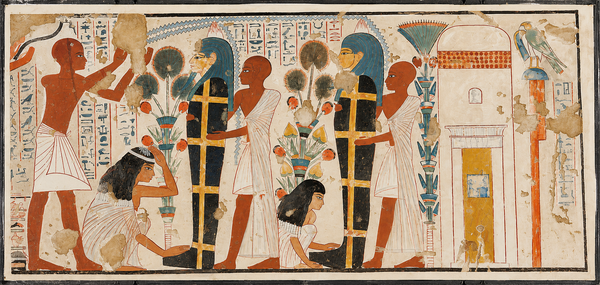
Sennedjem · TT1 Nineteenth Dynasty
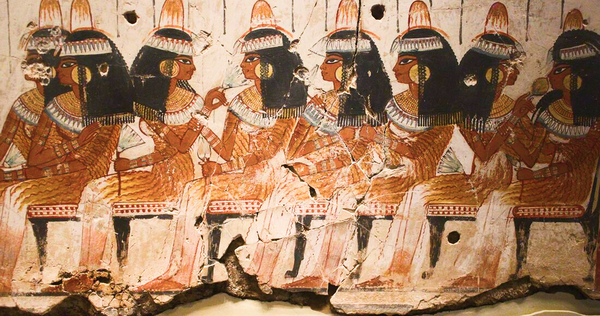
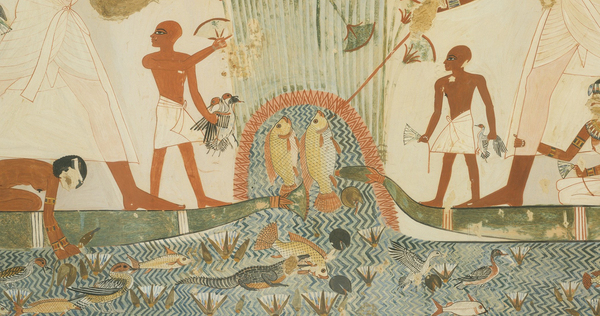
Nebamon 18th Dynasty
Why these monuments specifically?
The Tomb of Queen Nefertari allows one to observe paintings dominated by religious scenes and depictions of deities. The tomb of Sennefer gives insight into the afterlife through familiar human activities: farming, harvesting, and dwelling in an ideal world. The paintings of Nebamon’s funerary chapel are particularly interesting for their depictions of nature, hunting, and gardens.
These are not three identical examples. They belong to different social and artistic contexts. This is precisely why comparing them is useful—it allows us to see which color schemes recur and which are dependent on the specific subject matter.
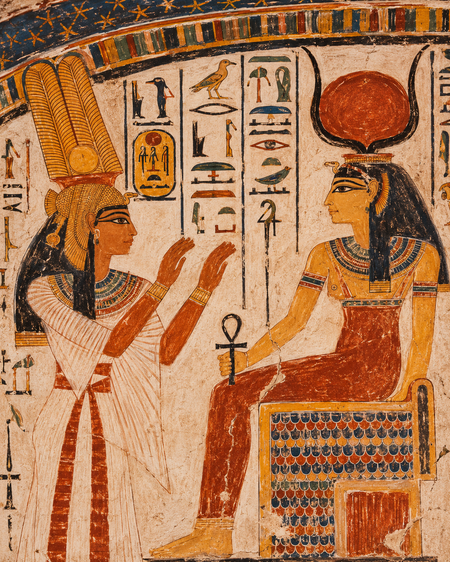
For me, it’s important to examine these paintings not only from a historical perspective but also from a design standpoint. I want to understand how the artists combined colors, created contrasts, and highlighted the main compositional elements. Such an analysis will help reveal how the color choices influenced the perception and meaning of the image.
Color Palette and Materials
Six colors that make up the image
Blue
Green
Yellow
Red
Black
White
At first glance, the palette of Egyptian paintings appears simple. It frequently features red, yellow, blue, green, white, and black. However, from this small set of pigments, artists created highly diverse imagery.
It is particularly interesting that brightness here is not necessarily linked to a large number of hues. Saturated color, sharp contours, and repeating combinations make the compositions expressive even without complex chiaroscuro modeling.
What Paints Are Made Of
Red: Red ochre, iron compounds. Stable earth pigments
Yellow: Yellow ochre, and sometimes other mineral pigments. Ranging from soft sand tones to rich yellow
Blue: Egyptian blue. An artificially produced pigment
Green: Malachite, copper compounds, and synthetic green pigments. Hues varied depending on composition and preservation
Black: Charcoal, soot. Used for outlines, hair, inscriptions, and dark surfaces
White: Plaster, calcite, and other light mineral materials. Ground, clothing, figure details