Categories
1. Life Philosophy as the Foundation of the Canon
2. The Evolution of the Canon
3. Inevitable Changes
4. One Canon—Varying Manifestations
5. Conclusion
Research Concept
Contemporary art exists in a continuous pursuit of originality. The conventional principle of creation today is reinterpretation—dismantling «outdated» rules, and striving to reflect the world’s variability and contradictions. Many people now, including myself, wonder: what if recognizability is not born solely from the desire to break existing boundaries? Perhaps art and the world as a whole currently lack a certain stability and uniformity?
Following this logic, ancient Egyptian art attempted to conquer time through immutability: from one era to the next, the Egyptian artist continually returned to the same forms—what was established and tested by time was valued. The canon regulated almost everything: body proportions, figure scale, head and limb positioning, composition, and the depiction of movement. It is remarkable that masters from different parts of the kingdom and in different centuries adhered to the same principles in their creations. But did this not restrict creative freedom? Did ancient artists have the capacity to express their unique voice within established rules? We will investigate these questions from the perspective of how the visual identity of ancient Egyptian art was formed.
1. Life philosophy as the foundation of the canon
To understand the origins of this canon and how its characteristics were inherited over millennia, one must pay attention to the circumstances under which the worldview of the ancient Egyptians was shaped and the unique style of their art was cultivated.

The Curve of the Nile, Egypt
The territory of Ancient Egypt was a narrow river valley surrounded by endless deserts. Civilization lived according to the biological rhythms of the fertile river: the annual inundations of the Nile, combined with the active sun, created a favorable environment for agricultural prosperity. Egypt was undoubtedly the «gift of the Nile, ” as wrote the famous Greek historian Herodotus.
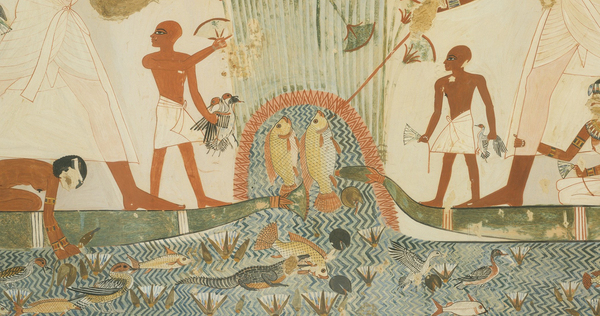
Harvest Scenes, Tomb of Menes New Kingdom, 18th Dynasty, circa 1396–1347 BCE Metro Museum
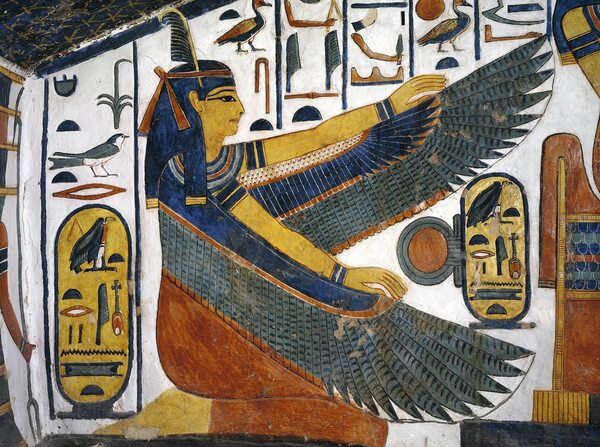
In correspondence with local factors, the Egyptians developed a unique perception of the laws of the universe and understood life as a cycle. For instance, they distinguished between two types of eternity: Djet, linear time, which represented human life, and Neheh, cyclical, connected to the movement of the sun. Ideally, an Egyptian—a person who lived in accordance with the decrees of Ma’at (the goddess of truth, justice, and order), maintaining the proper order of things, and who was buried properly—would exist eternally (Djet) and for ages to come (Neheh).
The Goddess Ma’at. Tomb of Nefertari, circa 1298–1235 BCE.
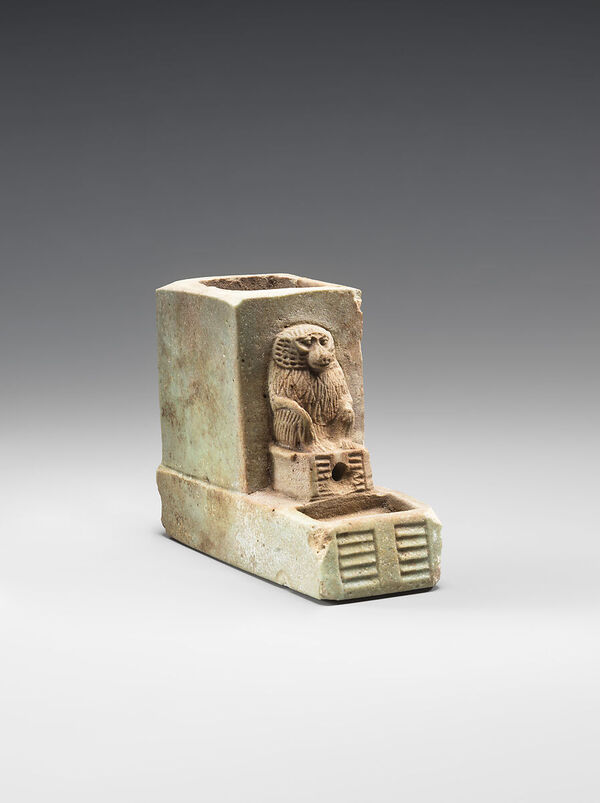
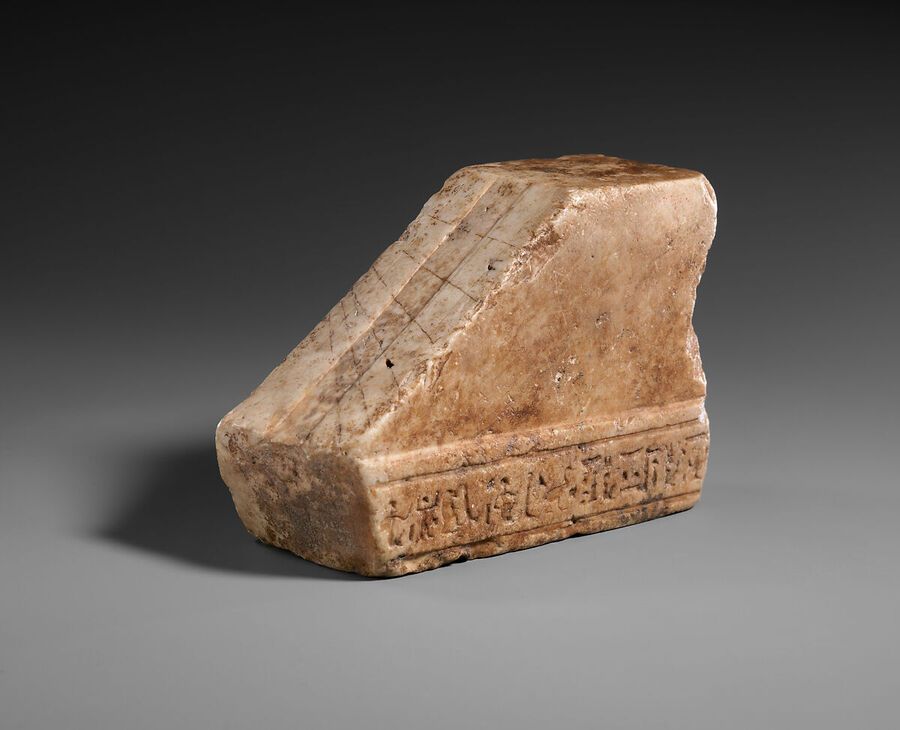
Water clocks, 664–30 BCE. Sundials, 305–30 BCE. Ancient Egyptians tracked time using various devices and systems. They were among the first cultures to systematically divide the day into segments, which again highlights their drive toward order.
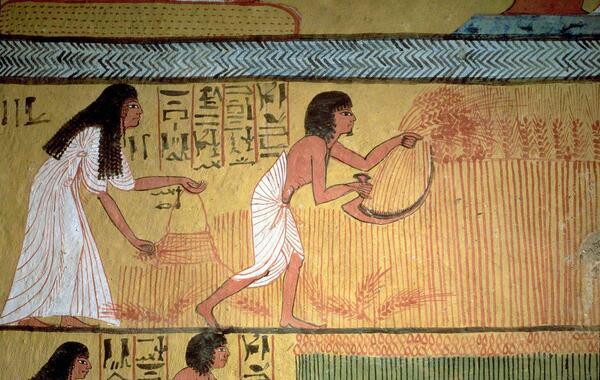
Many ancient reliefs depict agricultural scenes as a vital part of civilization. In the paintings of the Senenmut tomb, the ancient Egyptian conception of cyclicity and pattern is particularly vivid: the sun rises first, followed by people plowing, sowing, harvesting, and storing supplies—a cycle that repeats time and again.
Sowing and plowing in the fields Tomb of Senndjen, 19th Dynasty, 13th century CE
The immutability of the world—that was the ideal of the ancient Egyptian.
Yet, change inevitably penetrated people’s lives—death being the most unpredictable of all. Therefore, the Egyptians sought to incorporate this process into their immutable order of existence. Primarily, the nation’s main intellectual and creative energies were directed toward securing the afterlife for pharaohs and other noble figures.
Agricultural Scenes from the Tomb of Ra’emqa Old Kingdom, 5th Dynasty, 2446–2389 BCE
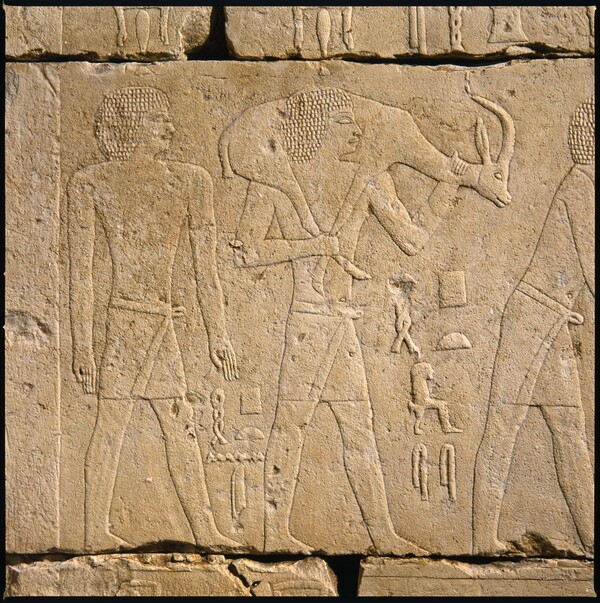
Everything that appeared on funerary images carried a specific sacred meaning. The foundation of the canon was the belief in the resurrection of the deceased—not only spiritual but also physical. It was necessary to take care both of the preservation of the body (mummification) or its figurative likeness (reliefs) and of the material resources that people bequeathed to the afterlife. The depicted abundance of food and livestock was considered a guarantee that the deceased would be provided for.
Agricultural scenes from the tomb of Raemka, ancient kingdom, 5th Dynasty, 2446–2389 BCE.
Relief with Agricultural Scenes Old Kingdom, 6th Dynasty, 2311–2281 BCE
This desire of ancient creators to conceive a comprehensive image, reproduce it in a specific form that reveals the fullness of its meaning, led to the establishment of the canon.
Relief with agricultural scenes Old Kingdom, 6th Dynasty, c. 2311–2281 BCE
Relief with Agricultural Scenes Old Kingdom, 6th Dynasty, 2311–2281 BCE
2. Evolution of the Canon
However, Egyptian art needed to undergo a long developmental journey before specific techniques of representation were established and solidified. In artifacts from the pre-dynastic period (4th millennium BCE), there is a dynamic quality to the imagery that ancient artists did not inherit (although this technique occasionally appeared in later works) as they transitioned toward more static figures. This can be observed in the «Lion Palette,» where humans and animals are arranged more haphazardly and chaotically. However, on the Palette of Narmer, created during the rise of the pharaohs' dynasty, the imagery gains clarity; the customary frieze composition, the maintenance of consistent body proportions across each figure, and other characteristics become apparent.
Lion Palette, Predynastic Period, circa 3100 BCE
Narmer Palette, Early Dynastic Period, circa 3100–3000 BCE
Over time, the approach to depicting figures undergoes gradual changes. For instance, on the walls of the Nicauhora and Sehemhathor chapels, one can trace the artist’s adherence to already recognized principles, such as body scaling and proportion, yet some of the central figures still maintain a certain dynamic posture.
Western wall of the chapel of Nekauhor and Sekhemhator, Old Kingdom, V Dynasty, circa 2465–2389 BCE.
There gradually arises a need to capture increasingly grander events, to expand the scope of the narrative. In the Tomb of Ti at Saqqara, one can observe various scenes of stunning detail. The actions depicted in the reliefs seem frozen in time—they have achieved such masterful balance between movement and stasis. Even though all the numerous human figures adhere to canonical rules, they do not appear lifeless or meaningless. Together, these figures form that characteristic compositional rhythm, allowing us to feel the grandeur of ancient civilization and its people centuries later.
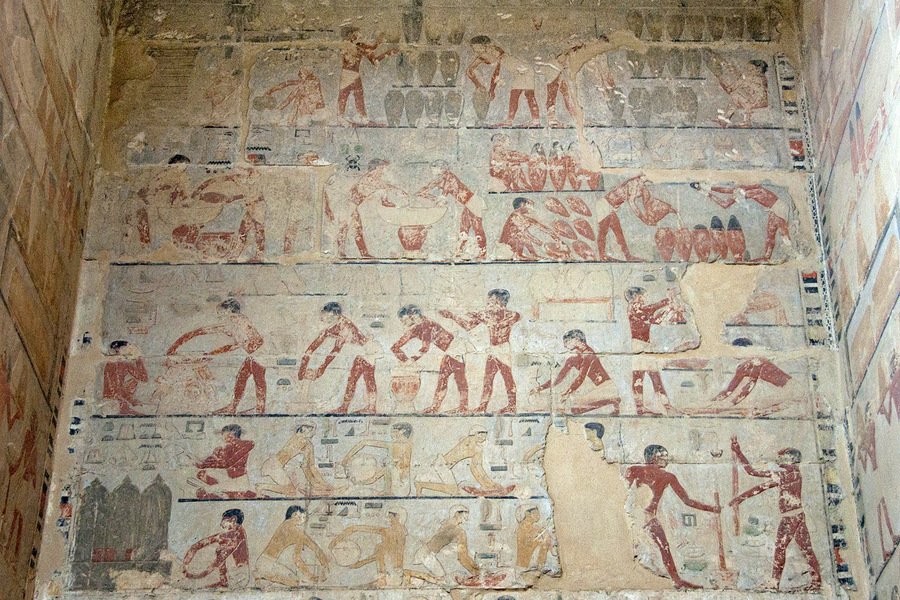
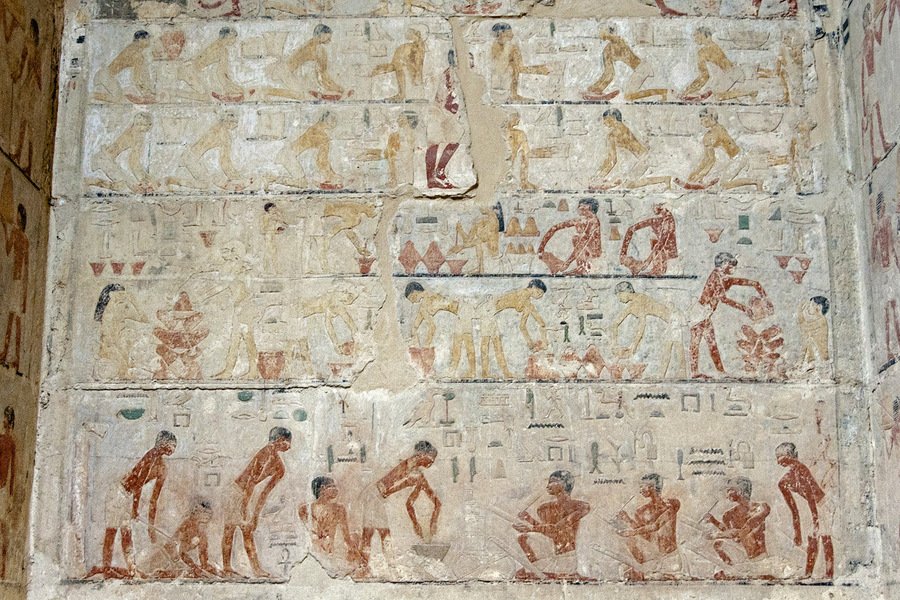
Tomb of Ti at Saqqara: scenes of bread making and beer brewing; Old Kingdom, circa 2400 BCE.