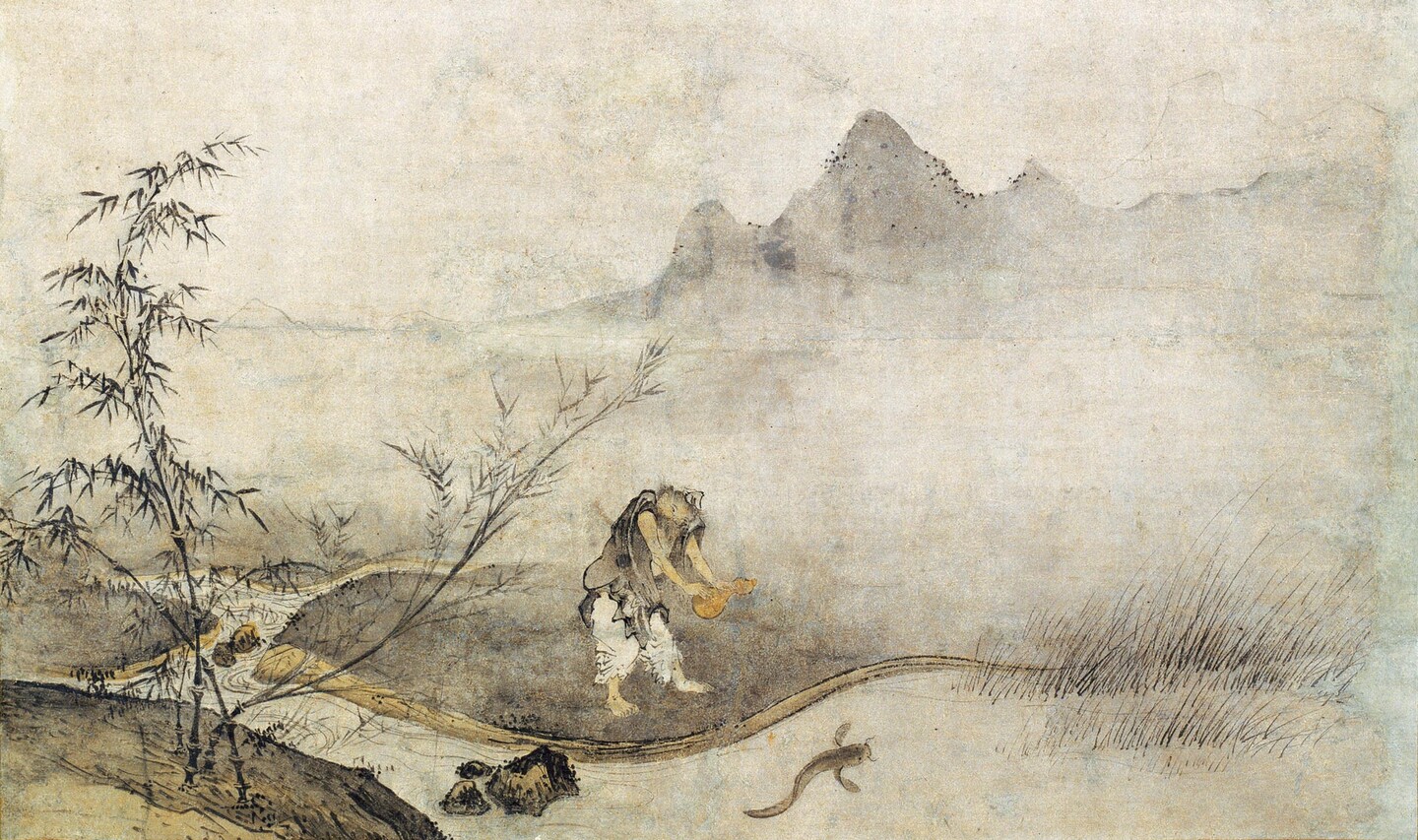
Возникновение буддизма в истории искусства Японии
Религии — мощный импульс в развитии искусства
Japan — a beautiful color.
The bloom of glaciens.
Fall in love with Japan, poet
Concept
In the mid-6th century, the emergence of Buddhism had a profound influence on the development of art during the Asuka period and all subsequent eras. Initially, the religion faced political opposition and encountered resistance from the indigenous Shinto religion, but over time, the new faith secured its place in society. At first, Buddhism was considered a simple religion due to the small number of deities whose likeness needed to be depicted, but after some time (around a century), the pantheon expanded significantly. Temples at that time served not only as sacred places for worshipping deities but also as centers for education and art.
The stylistic rendering of the deity’s face evolved over the subsequent centuries; we will examine the period from the mid-6th to the 12th centuries.
What were the first progressive changes characteristic of the subsequent Nara period?
During the Nara period, active Sinicization took hold in Japanese society, which in turn influenced the ideals within the nation’s creative output. The Japanese viewed Chinese culture as a model to emulate. Despite a significant scarcity of indigenous traditions, scholars and artisans actively worked to broaden their visual literacy, gradually forging an individual style because the Japanese almost always adapted external perceptions of beauty in a personal manner.During the Nara period, depictions of the Buddha were characterized by realism.
The veneration of saints inspired people toward the practice of self-improvement in the mastery of painting, calligraphy, sculpture, and carving in wood, stone, and precious metals.
How the Japanese sought to transmit their cultural knowledge to subsequent generations.
The late 8th and 9th centuries were a period of integrating foreign innovations that impacted Buddhism, specifically the emergence of new esoteric religious schools with their own rituals and etiquette. During this time, the Tendai and Shingon schools gained popularity. These schools originated in India, first appeared in China, and were later brought to Japan by two scholars.
The highest level was occupied by the Shingon-shu school, which translates to «true words.»
Most of the important Buddhist centers and major monasteries of this school were located on Mount Koya, near Kyoto. One of the primary functions of these centers was to house a large collection of works of art.The 9th century in Japanese history was marked by certain complexities regarding significant changes in the execution of traditional works by artists and sculptors. In the field of painting, a core issue was the increased number of deities. Sculptors, in turn, elevated their mastery to a new level; their works began to distinguish themselves through textile detail, specifically featuring sharp carving with deeper, clearer folds and other minor details that received greater attention. Overall, the sculptural work became more detailed.
The 11th–12th centuries were a time of new authority.
Emperors were advised to shift their focus from state affairs to a more spiritual sphere, dedicating time to the arts of painting, poetry, and sculpture.
1. During the Asuka period, Buddhism arrived in Japan from China via Korea (552 AD).
Horyu-ji Temple
Наглядный пример для иллюстрации раннебудийского искусства.
Horyuji Temple Monastery in Ikaruga, 607 AD
It is in this temple that the statue of the great Triad of Syaka-Nyorai (Torii Boshi) is housed. Buddha himself is seated in the center, flanked by human figures on either side. Their robes are depicted schematically, as the folds of fabric are in perfect symmetry. The entire statue is rendered in a Chinese style that arrived via Korea approximately 50 years ago.
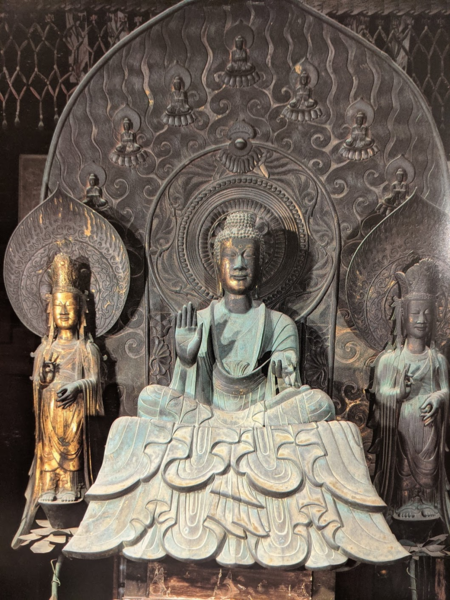
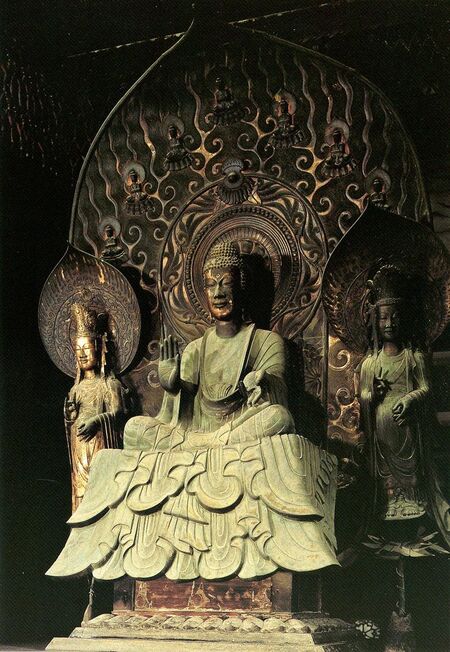
Tori Bussi. Statue of the Great Triad of Syaka-Nyorai. 623 CE.
The piece features a signature by Tori Bussi, referencing his authorship. The back of the sculpture has an engraving containing a lengthy prayer for health and eternal life in the Land of Bliss for Prince Shotoku and his family. Buddhist sculptures are positioned on either side of the Buddha.
Kuratsukuri-no Tori (Japanese: 鞍作止利 / 鞍作鳥, meaning «Torii Saddle Maker») is a master of early 7th-century Buddhist sculpture from the Asuka period. He is considered Japan’s first professional sculptor. He is also known as Tori Busshi (Japanese: 止利仏師, meaning «Sculptor Tori»).
Koryu-ji Golden Hall
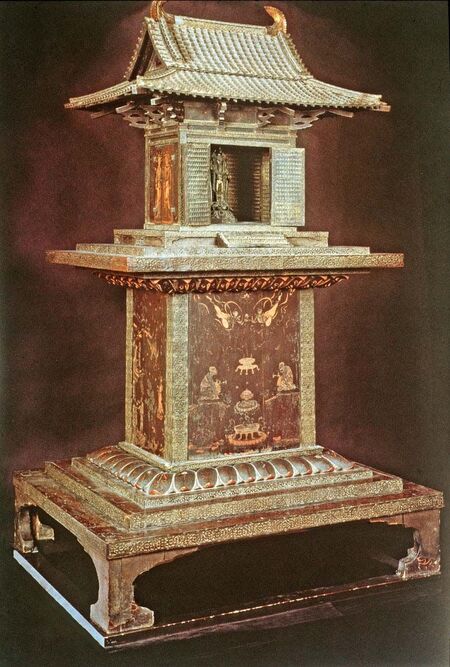
The interior of the Horyu-ji Golden Hall is adorned with a miniature Tamamushi-no-zushi VII A.D. altar. It holds immense artistic value because it is one of the most unusual lacquered art objects. The temple stands 2.33 meters tall, constructed from wood (camphor and cypress) and finished with lacquer. Along the entire perimeter, you can observe paintings imbued with Buddhist themes. The artist is unknown.
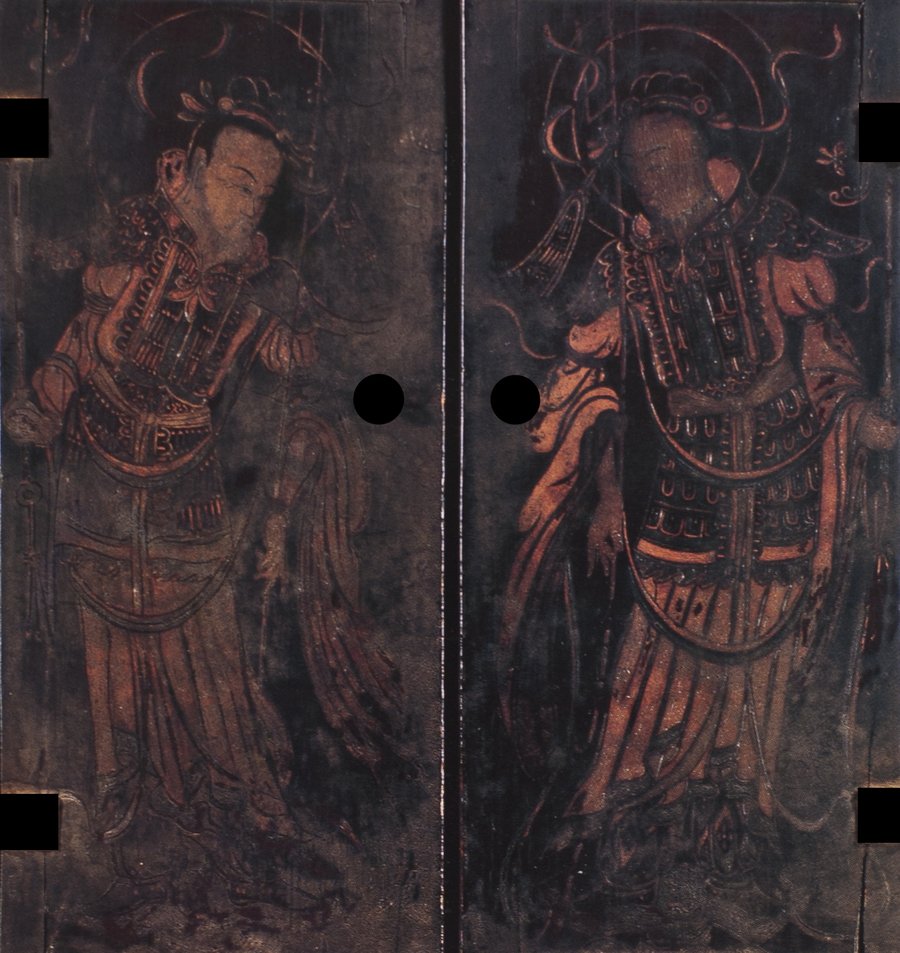
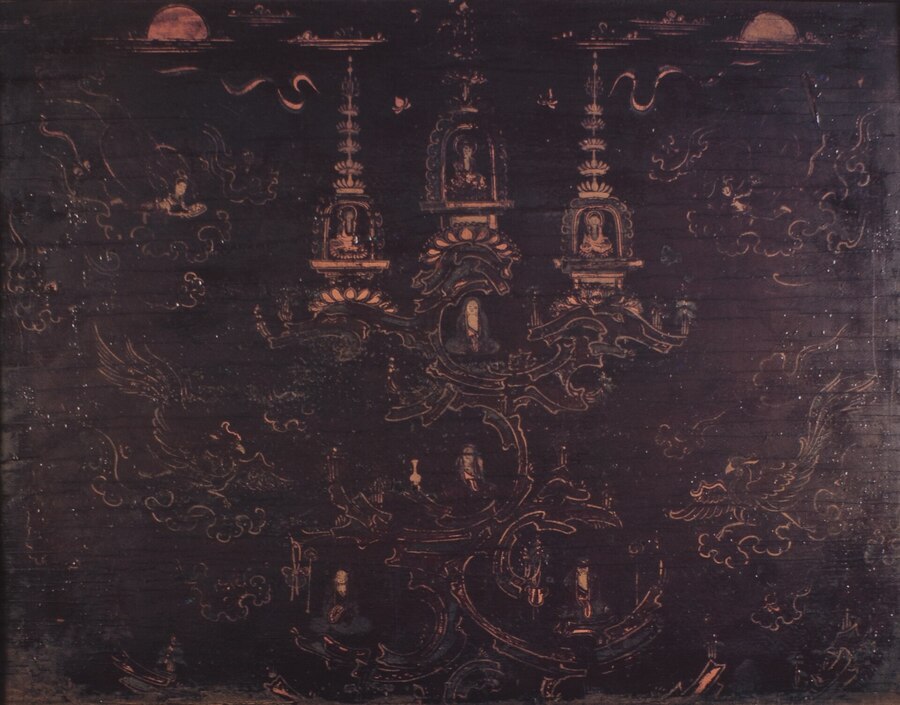
Door guards and the upper rear section with mountains
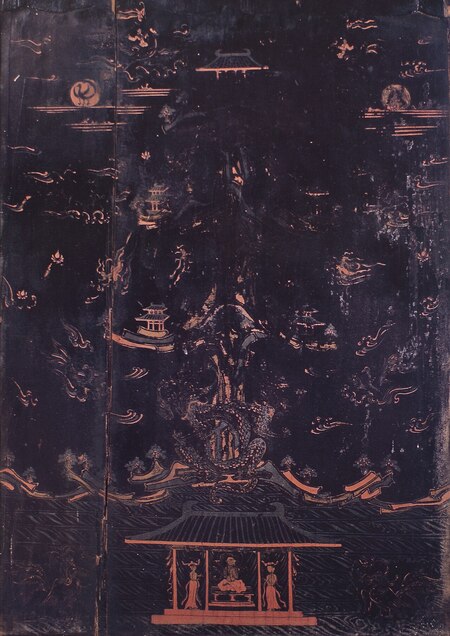
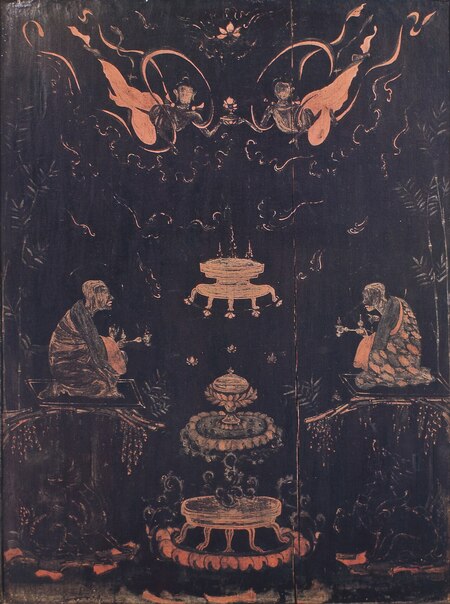
Bottom rear and front view
The facade of the temple is adorned with the forewings of the 'Tamamushi' beetle. These are called elytra, and they can often be seen in Japanese art. They possess a luster that does not fade even after the beetle dies. Approximately ten thousand such wings were used for this building, adhered with lacquer.
Horyuji Temple Gates
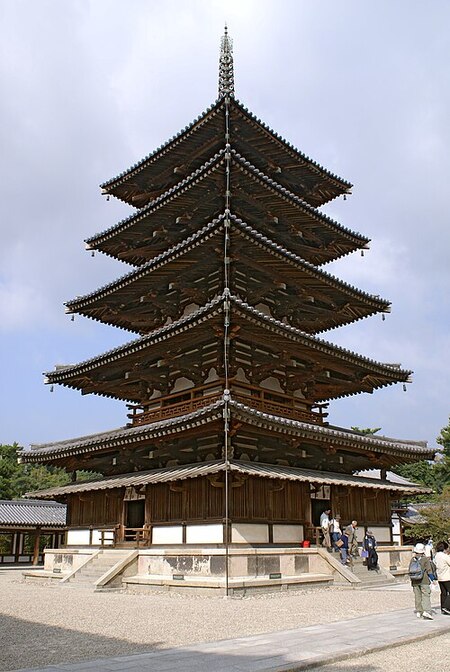
The five-story pagoda of Horyu-ji Temple, Japan’s oldest wooden structure
Book — The Art of Japan / Authored and Edited by V. Bazhenov, A. Chudova — Moscow: Publishing House: AST, 2024. — 160 p.
Wikipedia Article — https://ru.wikipedia.org/wiki/Kuratsukuri-no_Tori?ysclid=mwgp0o278d948282540
Tori Busshi. Statue of the Great Trinity of Shakyamuni and Nairai. 623 CE -https://lh3.googleusercontent.com/KQQk0Wl2QiJ8yQKL4dHQslm69yDa8WSnHLUFjJAIxggUHCfm-12bASibokMlwGW8nfhx-Ta-iGN9TjuQfuVPJXXRyOxMrCGoAHNrNaNseQ_kxt_nUvcUVIjamhRqK9f1K_3ZJea0; https://i.pinimg.com/736x/1c/d5/f6/1cd5f649412d712ac142901f67015e28.jpg
Horyu-ji — https://thumb.wikimedia.org/wikipedia/commons/thumb/9/94/Horyu-ji13s3200.jpg/3840px-Horyu-ji13s3200.jpg?utm_source=ru.wikipedia.org&utm_campaign=imageinfo&utm_content=thumbnail; Golden Hall — https://upload.wikimedia.org/wikipedia/commons/1/17/Horyu-ji11s3200.jpg?utm_source=en.wikipedia.org&utm_campaign=imageinfo&utm_content=thumbnail_unscaled; Gates — https://thumb.wikimedia.org/wikipedia/commons/thumb/0/01/Horyu-ji02s3200.jpg/3840px-Horyu-ji02s3200.jpg?utm_source=ru.wikipedia.org&utm_campaign=imageinfo&utm_content=thumbnail; Pagoda — https://thumb.wikimedia.org/wikipedia/commons/thumb/e/ed/Horyu-ji09s3200.jpg/1280px-Horyu-ji09s3200.jpg?utm_source=ru.wikipedia.org&utm_campaign=imageinfo&utm_content=thumbnail
Tamamushi-no-dzushi — https://i.pinimg.com/originals/96/e4/48/96e44853d760a030df7e8966208fd81d.jpg; https://upload.wikimedia.org/wikipedia/commons/b/b3/Tamamushi_Shrine_%28front_doors%29.jpg?utm_source=en.wikipedia.org&utm_campaign=imageinfo&utm_content=thumbnail_unscaled; https://thumb.wikimedia.org/wikipedia/commons/thumb/4/44/Tamamushi_Shrine_%28upper_back%29.jpg/1920px-Tamamushi_Shrine_%28upper_back%29.jpg?utm_source=en.wikipedia.org&utm_campaign=imageinfo&utm_content=thumbnail; https://thumb.wikimedia.org/wikipedia/commons/thumb/1/18/Tamamushi_Shrine_%28lower_back%29.jpg/1280px-Tamamushi_Shrine_%28lower_back%29.jpg?utm_source=en.wikipedia.org&utm_campaign=imageinfo&utm_content=thumbnail; https://thumb.wikimedia.org/wikipedia/commons/thumb/5/5c/Tamamushi_Shrine_%28lower_front%29.jpg/1280px-Tamamushi_Shrine_%28lower_front%29.jpg?utm_source=en.wikipedia.org&utm_campaign=imageinfo&utm_content=thumbnail