Concept:
I chose Bosch for several reasons:
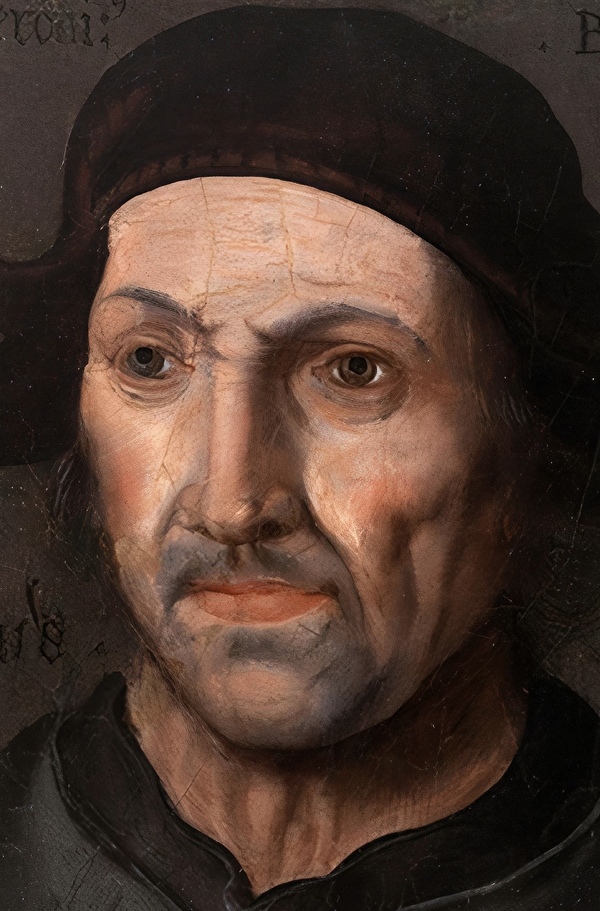
1. A couple of years ago, my mother and I visited an exhibition of reproductions of his paintings. His work profoundly impressed me, and I began to immerse myself in Bosch’s creativity and life. 2. Through my research, I discovered that Hieronymus was an enigmatic figure: his biography is largely unknown, and he left no manuscripts behind that would offer insight into the artist’s life.
Therefore, my interest in his person, his artistic output, and the lack of available information inspired me to select this topic for my visual study.
Hieronymus Bosch, a Dutch painter, depicted human vices in unconventional, at times even terrifying and wild ways. His works are filled with various creatures, people obsessed with sins and demons. At first glance, Bosch’s paintings seem like meaningless chaos, but upon closer inspection, it becomes clear that there is an idea behind every monstrosity. Through fantastical imagery, the artist demonstrated greed, lust, and other mortal sins, portraying the darker aspects of human nature in his paintings.
In Bosch’s work, the theme of sin is one of the central motifs. This is because, during the Middle Ages, painting served not only an aesthetic function but also a moralizing one. Depictions of what happened to people who sinned were meant to remind the viewer of the consequences of their actions. However, Bosch did not limit himself to biblical narratives; instead, he created entire, self-contained worlds where vices became material realities.
The artist’s creativity constitutes a system composed of religious beliefs, the everyday life of people in the Middle Ages, folklore, and Bosch’s own fantasies.
To properly analyze the artist’s work while catching every nuance, one must consider that he lived and worked in the 15th and 16th centuries (primarily the 15th). This era was rife with religious transformation. Furthermore, the medieval person’s worldview differs significantly from our own, which influences how their works are perceived. However, the themes Bosch depicted remain relevant today—only the form of their expression has changed.
However, Bosch’s paintings should be viewed not only as a reflection of the culture of that era but also as the artist’s exploration of the human soul.
In my research, I aim to investigate how artists depicted sins in paintings. To achieve this, I need to examine the imagery and symbols present in the works and analyze precisely how they reveal the vices of humanity. The study is structured into seven parts, with each section dedicated to a specific deadly sin.
PART 1: PRIDE
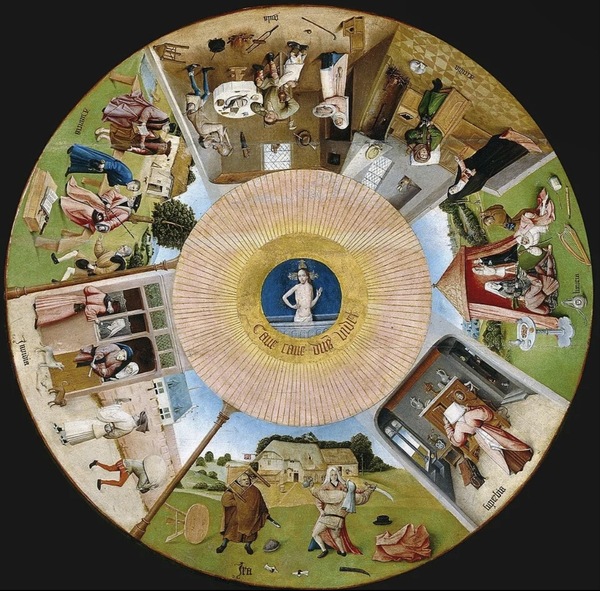
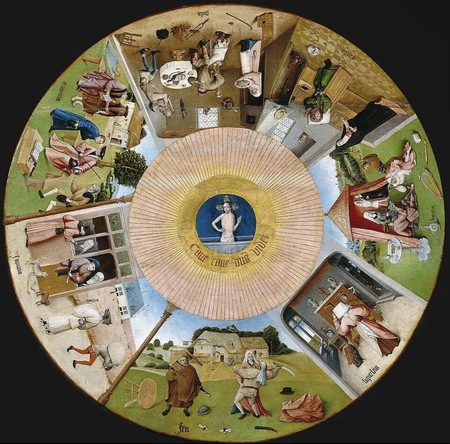
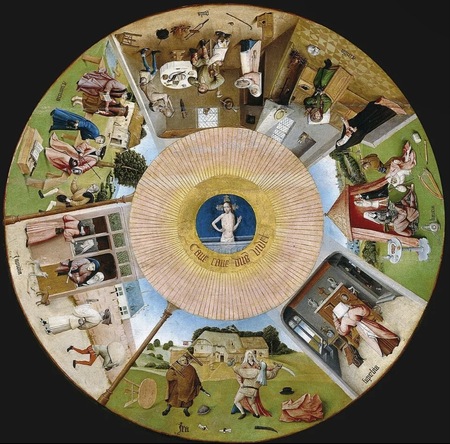
The Seven Deadly Sins and the Four Last Things
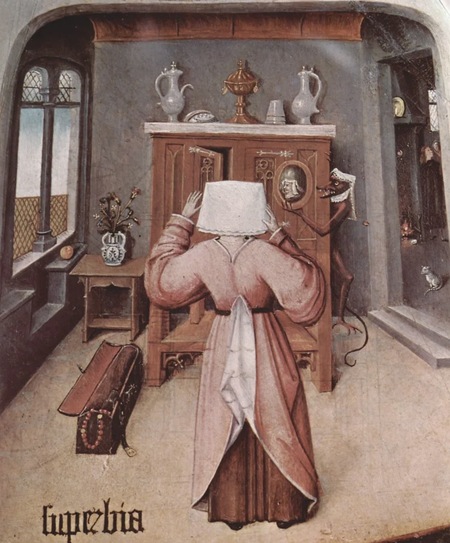
The painting depicts all seven deadly sins and will be used throughout the visual study. In the segment on pride, I am examining the element featuring a woman looking into a mirror held by a creature resembling a demon. I believe this part of the painting specifically illustrates pride because the mirror often symbolizes vanity and selfishness, while the demon signifies the entire «nature» of this vice—that it is the temptation of the devil.
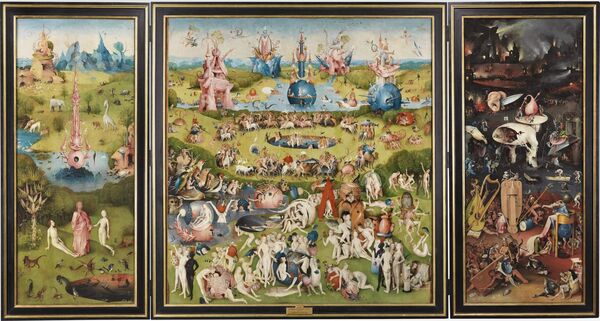
«Garden of Earthly Delights»
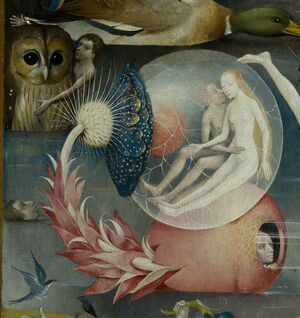
To perceive the pride, one must look closely at the central panel. It depicts nude figures suspended in a vacuum, engaged in pleasure.
This section of the painting can be characterized as prideful because the figures are so proud and vain that they are unashamed of being unclothed in the presence of others.
«Voice of Generations»
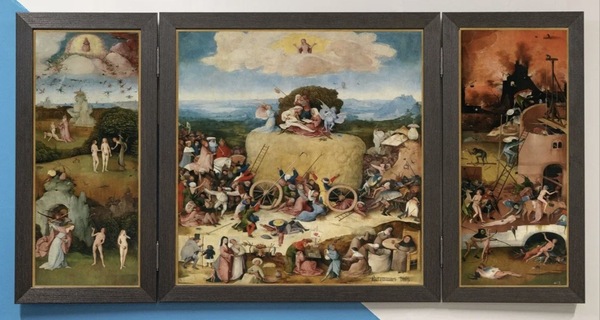
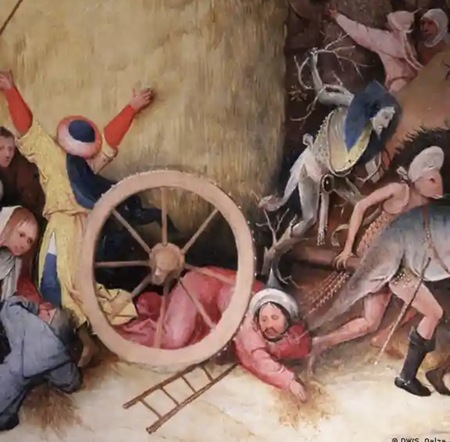
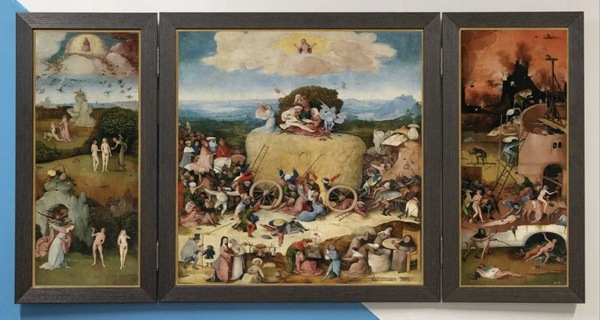
The illustration of pride is depicted on the central panel. A crowd of people from various social strata chases a hay wagon, and each attempts to claim a piece.
Pride is also embodied here because everyone prioritizes their own desires over those of others. Pride is revealed through a sense of self-importance and exclusivity.
The pride in Bosch’s paintings is revealed through the focus on the individual self—whether it’s admiring oneself in a mirror, a lack of inhibition, or the desire to claim as many resources as possible.
PART 2: ENVY
Seven Deadly Sins and Four Last Things
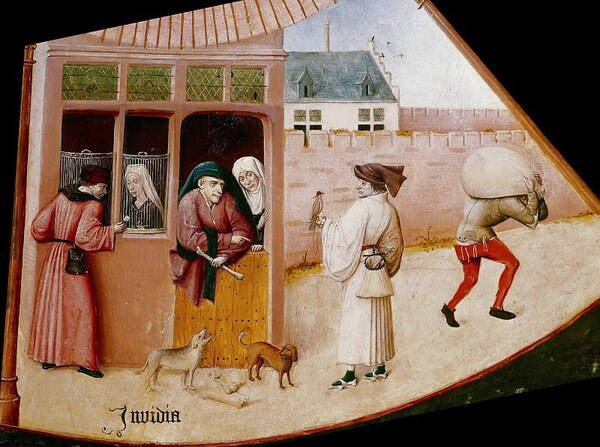
A man and a woman observe a wealthy individual, while at the bottom of the fragment, two dogs fight over a single bone, even though another lies nearby.
Part of the painting symbolizes envy, as the people fail to value what they possess and only pay attention to those who have achieved more. The image of the dogs embodies the desire to possess as many resources as possible.
«Voice of the Sena»
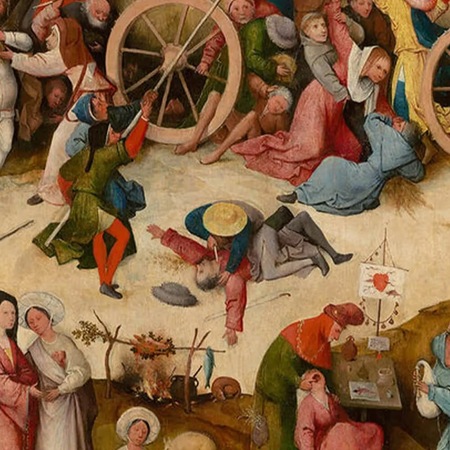
The crowd surrounds the cart and is literally fighting over the hay. People cannot calmly distribute the hay among everyone, and the bounty becomes the «apple of discord.» Envy manifests through the desire to receive more than anyone else.
Garden of Earthly Delights
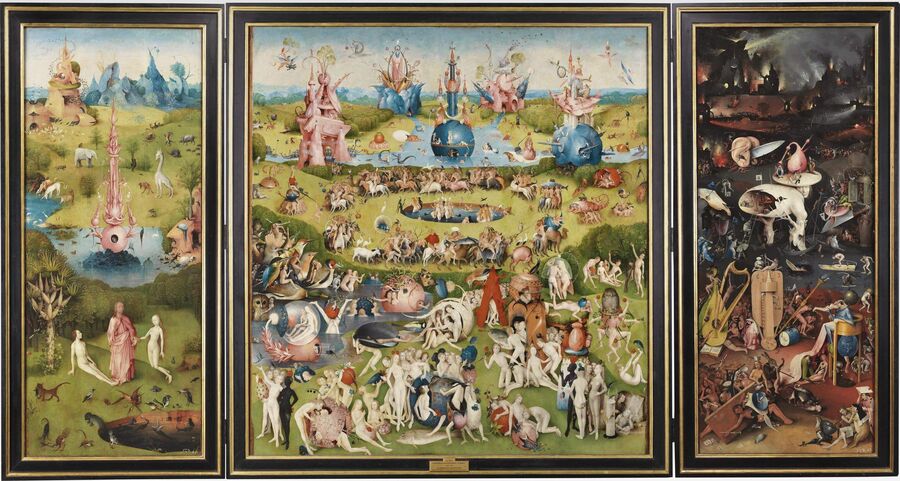
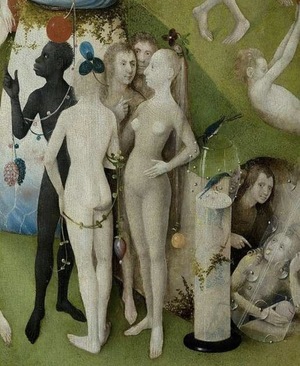
To discern envy, one must observe the multitude of people on the central panel. The crowd interacts and exchanges goods.
This fragment relates to envy through people’s pursuit of pleasures, but only after that pleasure has been noticed in another. That is, the inability to live peacefully when knowing that someone possesses something you do not.
The artist explores envy through the desire to possess what others have, to claim as much as possible, and the urge to try something new only when it becomes available to someone else. Bosch visualizes how envy transforms interpersonal relationships into competition and rivalry.
PART 3: RAGE
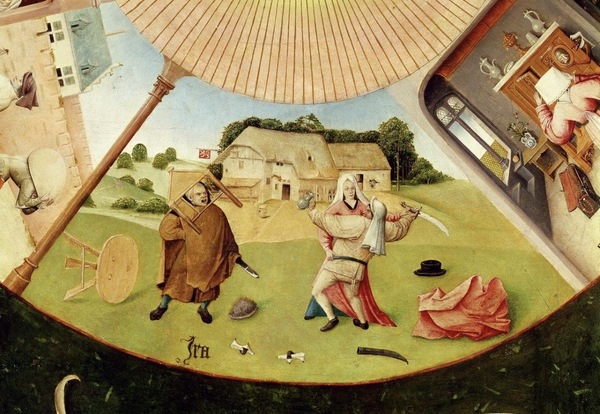
The Seven Deadly Sins and Four Last Things
Two men are fighting, one of whom is armed, while a woman tries to stop them.
The fragment demonstrates conflict and aggression. The argument becomes physically dangerous because the participants in the dispute are unable to control their emotions.
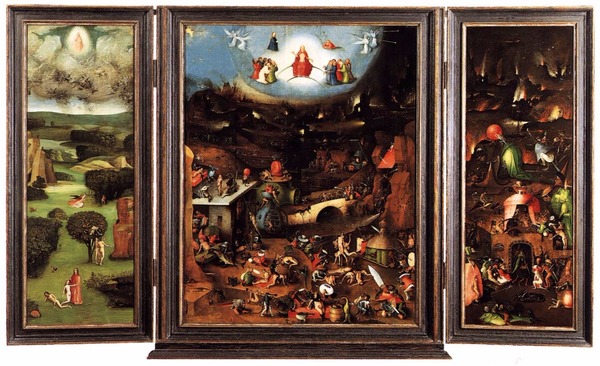
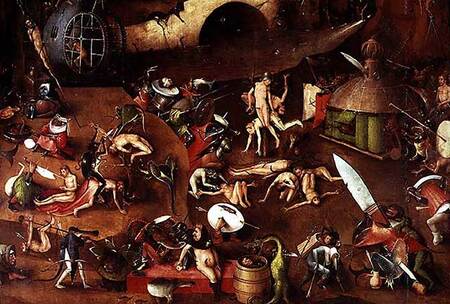
The Last Judgment
On the central panel, figures are engaged in battle with fantastical creatures and demons, and the result of this aggression is visible around them.
Chaos and devastation embody wrath and the consequences of this sin.
«The Temptation of Saint Anthony»