Трансформация скульптурного портрета в Древнем Египте, Греции и Риме
Введение
Visual Research Concept
Topic Selection, Key Question, and Hypothesis
The subject of this paper is that the human face in ancient art was never a mere copy of nature. Over three millennia, from the early dynasties of Egypt to the late Roman Empire, sculptural portraiture served entirely different functions. It functioned as a ritual substitute for the body in sealed tombs, depicted the ideal citizen in the plaza of the Greek polis, or documented the lineage of a Roman politician. A comparison of Egyptian, Greek, and Roman portraits clearly demonstrates how the artist’s technique—regarding stone, proportion, and facial expression—shifted in response to changes in religion and societal structure.
The core question of this research is how the shift in religious and civic functions of the portrait in ancient Egypt, Greece, and Rome influenced specific plastic techniques: facial symmetry, the rendering of the eyes, the conveyance of emotion, and the depiction of age. The study’s hypothesis proposes that the degree of realism in ancient portraiture depended not on the technical skill of the sculptors, but on the intended purpose of the statue itself. Egyptian masters were capable of accurately representing the features of a specific individual even during the Old Kingdom, but as E. Gombrich noted, «here there is neither flattery toward the model nor any attempt to capture a fleeting facial expression. The sculptor was interested only in the essential. All secondary details are eliminated» [3]. Because the statue was intended for the eternal life of the spirit Ka, individual features in Egypt always conformed to a strict frontal geometry. In classical Greece, particular physical traits were smoothed out in favor of the civic ideal of kalokagathia; it was only with the dissolution of the polis system during the Hellenistic period that open drama and complex psychology emerged. In ancient Rome, portraiture initially evolved into an accurate biographical document, but by the 3rd–4th centuries CE, it shifted away from naturalism again toward a rigid frontal schema and enlarged eyes, anticipating medieval iconography.
For the visual presentation, 78 examples of round sculpture, relief, and wax painting (the Fayum portrait as a direct continuation of burial portraiture in Roman Egypt) from The Metropolitan Museum of Art’s collection in New York were selected. Using a single museum collection allowed for the comparison of works from different eras under consistent studio lighting and from similar angles. Decorative arts objects, vessel painting, and coins were intentionally excluded to maintain the focus specifically on volumetric plasticity and facial structure.The research is structured chronologically and comparatively, divided into five sections. The first section examines the relationship between canon and individuality in portraits from the Ancient, Middle, and early New Kingdoms of Egypt. The second section is dedicated to the deformation of proportions in Amarna art under Pharaoh Akhenaten and the return to rigid realism in the Late Period. The third section traces the transition of Greek sculpture from the generalized idealization of 5th-century BCE Classicism to the emotional portraits of the Hellenistic era. The fourth section reveals the contrast between the naturalistic verism of the Roman Republic and the idealization found in imperial portraits. The fifth section analyzes the fusion of Egyptian, Greek, and Roman traditions in Fayum portraits and late Roman sculpture from the 1st to 4th centuries CE.When working with sources and analyzing the monuments, the foundation was laid using specialized books on the history of ancient art: works by V. V. Pavlov on Egyptian and Fayum portraiture [6; 7], B. R. Wipper’s study of Ancient Greek art [2], the writings of N. N. Britova and G. I. Sokolov on Roman sculptural portraiture [1; 9; 10], as well as the works of E. Gombrich and N. A. Pomerantseva on the rules of ancient canon [3; 8].
Раздел 1 | Древний Египет
Canon and Individual Traits in the Portraiture of Ancient and Middle Kingdom Egypt
The purpose of the portrait statue in a tomb
As E. Gombrich notes, «one of the Egyptian words for sculptor literally translates to 'one who preserves life’» [3]. Portrait statues in Egypt were not intended for public viewing. They were placed in a serdab—a sealed, windowless chamber within the tomb. The primary function of such sculpture was to serve as a permanent substitute for the deceased’s physical body—a Ka double—should the mummy itself sustain damage [5; 7].This leads to the main rule of Egyptian portraiture. On one hand, the Ka double had to be unmistakably recognizable to its shell, so the artisan preserved the characteristic features of a specific face: the set of the eyes, the width of the cheekbones, or the asymmetry of the lips. On the other hand, eternal life leaves no room for fleeting emotions, so the face always remains still and is constructed along a strict frontal axis [8].
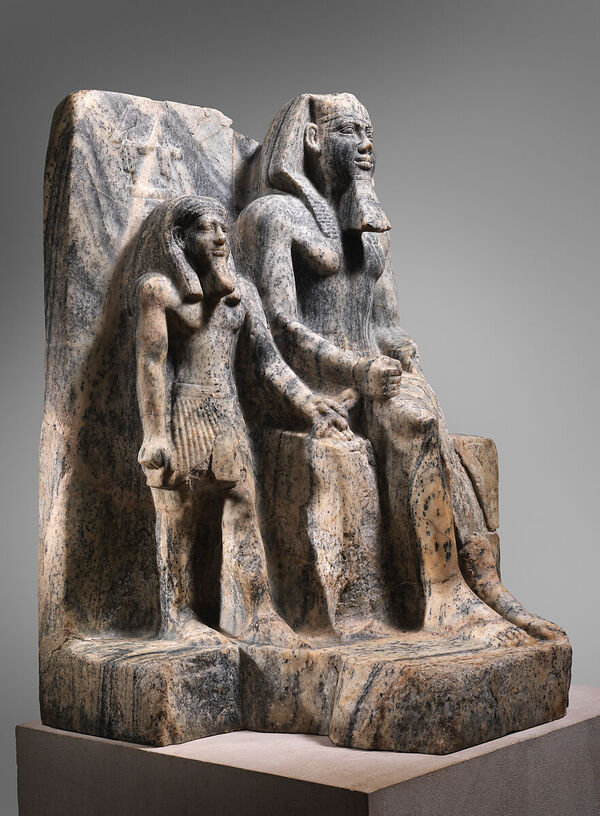
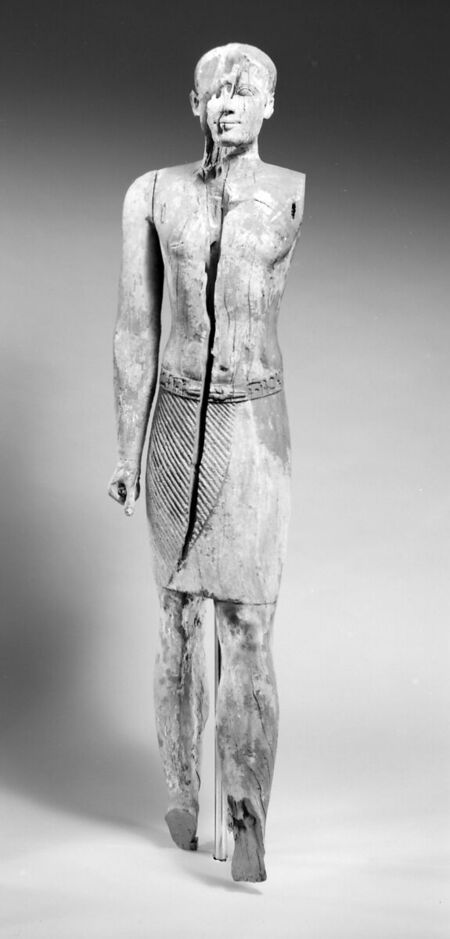
Left: Unknown artist. Statue of Pharaoh Sahure with the God of the Coptic Nome (gneiss), V Dynasty, circa 2458–2446 BCE. The Metropolitan Museum of Art, New York. Right: Unknown artist. Wooden statue of the royal architect Kaipunesut, IV Dynasty, circa 2528–2520 BCE. The Metropolitan Museum of Art, New York.
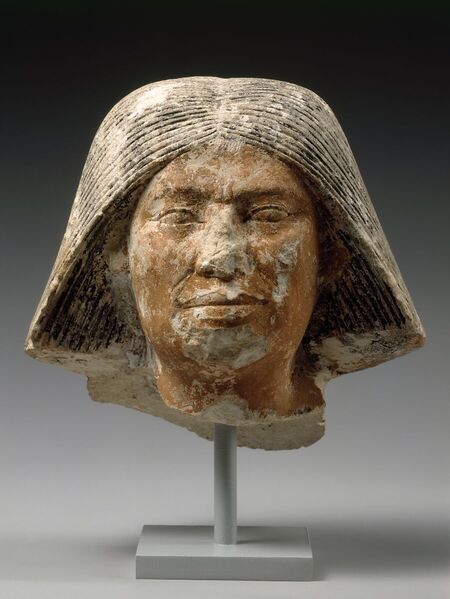
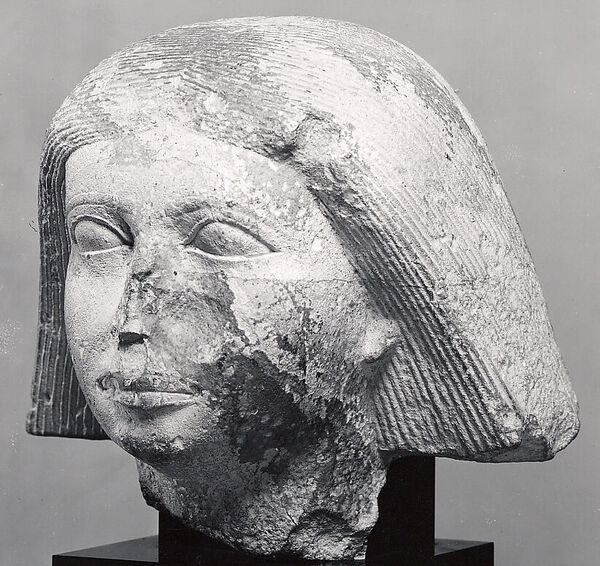
Left: Unknown master. Head of a statue of an elderly dignitary (limestone, painted), 4th–5th Dynasty, circa 2550–2460 BCE. The Metropolitan Museum of Art, New York. Right: Unknown master. Head of a statue from Saqqara (limestone, painted), 5th–6th Dynasty, circa 2400–2150 BCE. The Metropolitan Museum of Art, New York.
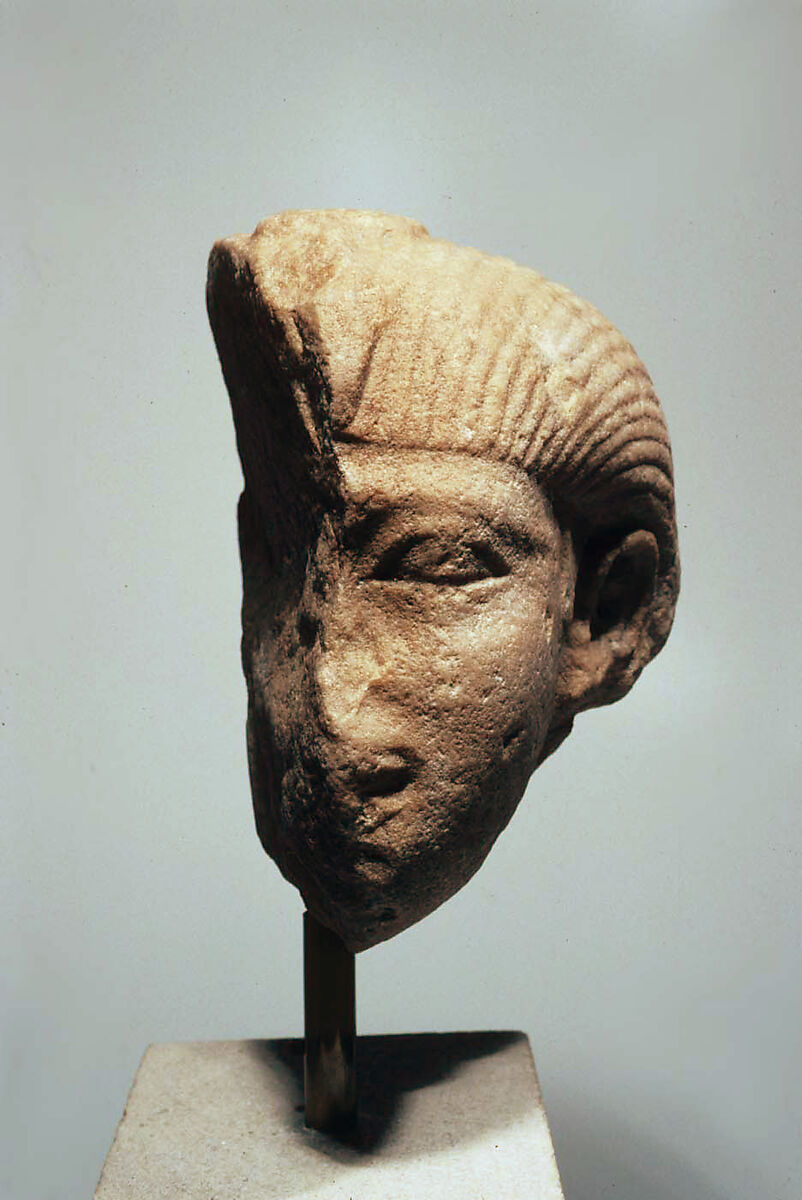
In the works of the Old Kingdom, it is evident how much the detail of a portrait depended on the subject’s status and the hardness of the stone. In the statue of Pharaoh Sahura, the face is reduced to strict symmetry, and the nemes headdress and false beard function as a rigid geometric frame. However, in private commissions for officials carved from softer limestone or wood, the master felt freer. For example, in the head of an elderly nobleman (on the left of the frame, directly above this block), the sculptor vividly depicted a narrow, squinting eye, deep wrinkles around the mouth, and wide lips.
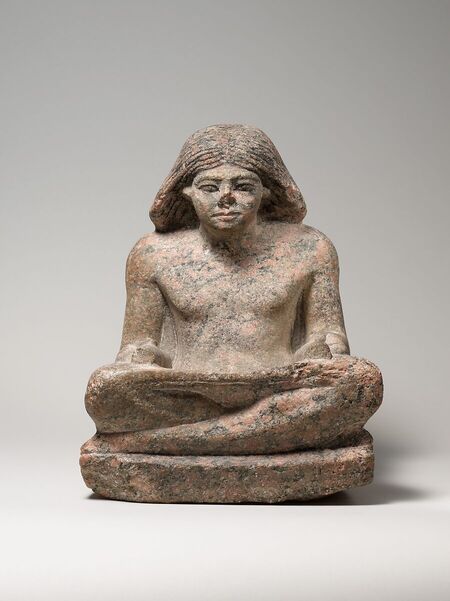
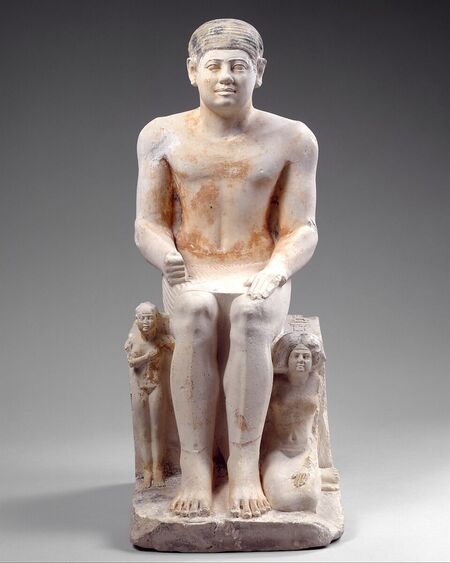
Left: Unknown artist. Grain granary official from Nicare, depicted as a seated scribe, 5th Dynasty, c. 2420–2389 BCE. The Metropolitan Museum of Art, New York. Right: Unknown artist. Statue of Nicare with his wife Huennub and daughter, 5th Dynasty, c. 2420–2389 BCE. The Metropolitan Museum of Art, New York.
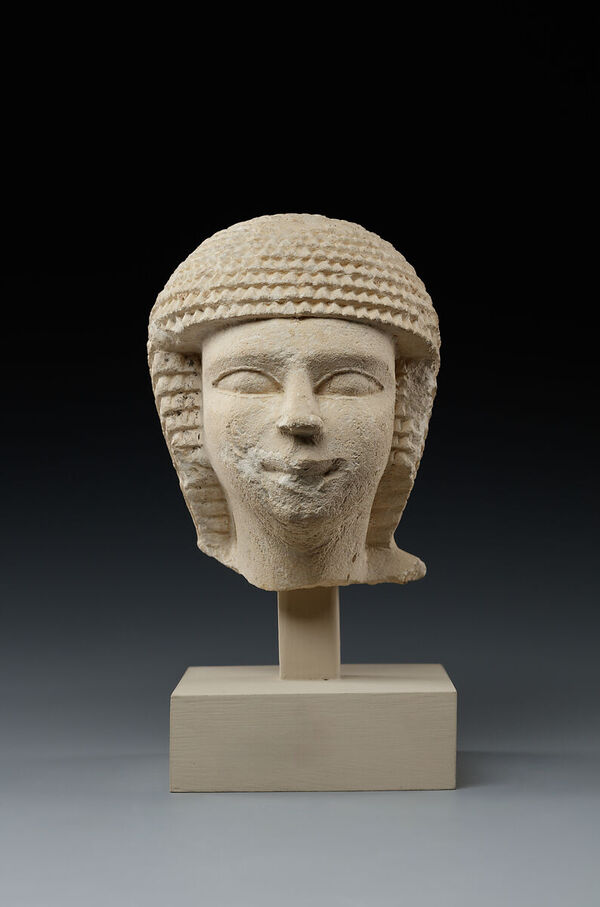
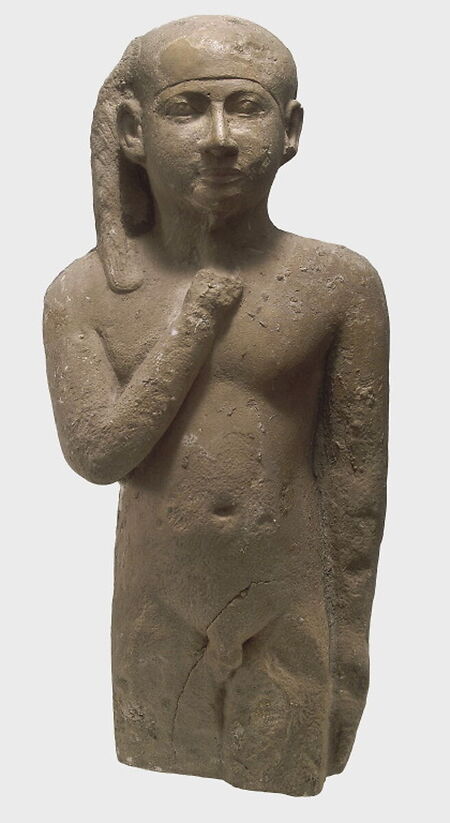
Left: Unknown sculptor. Head of a male statue from the Western Necropolis of Giza, 6th Dynasty, c. 2300 BCE. Metropolitan Museum of Art, New York. Right: Unknown sculptor. Limestone statue of a boy, 5th Dynasty, c. 2465–2323 BCE. Metropolitan Museum of Art, New York.
Wealthy patrons often commissioned several portrait statues for their tombs to more securely preserve the spirit of the deceased. Two sculptures of Nikare, the head of the grain stores, illustrate exactly how the workshop operated. In one case, the client is depicted as a seated scribe, while in the other, he is on a throne surrounded by his family. The poses and wigs differ between the statues, but the master meticulously replicated Nikare’s individual characteristic in both versions: full cheeks and a small vertical indentation in the center of his lower lip.
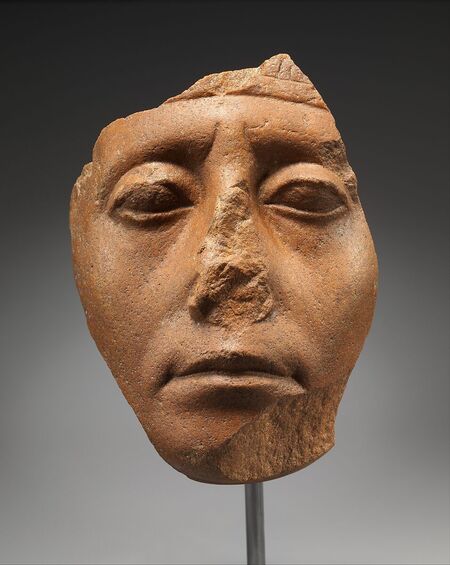
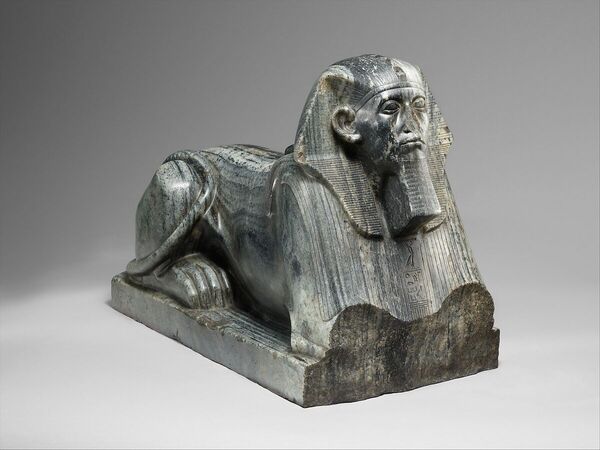
Left: Unknown artisan. Fragment of the portrait head of Pharaoh Senusret III (red quartzite), 12th Dynasty, c. 1878–1840 BCE. The Metropolitan Museum of Art, New York. Right: Unknown artisan. Sphinx of Pharaoh Senusret III (gneiss), c. 1878–1840 BCE. The Metropolitan Museum of Art, New York.
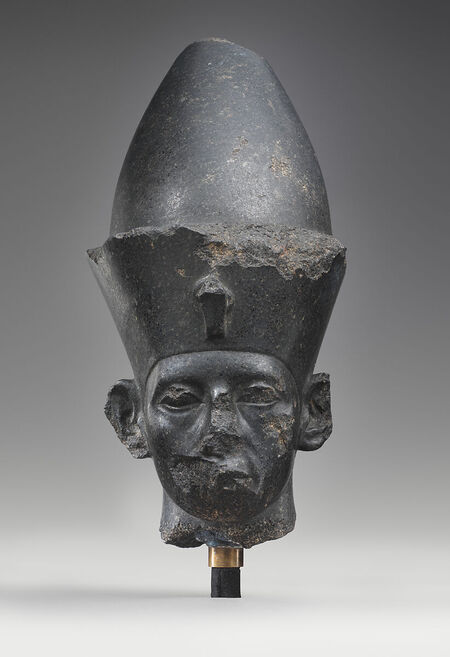
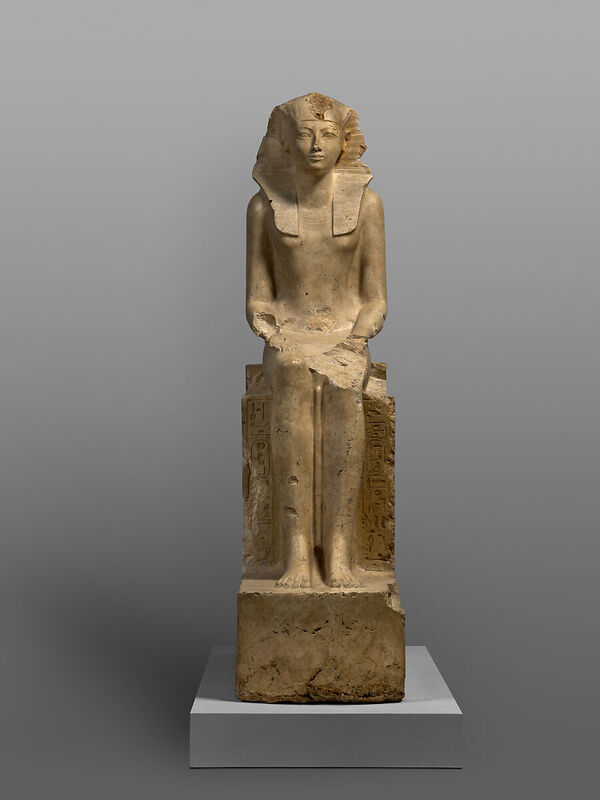
Left: Unknown sculptor. Head of Pharaoh Amenemhat III carved from dark granodiorite, 12th Dynasty, c. 1859–1813 BCE. The Metropolitan Museum of Art, New York. Right: Unknown sculptor. Seated statue of Queen Hatshepsut carved from white limestone, 18th Dynasty, c. 1479–1458 BCE. The Metropolitan Museum of Art, New York.
During the Middle Kingdom (20th–18th centuries BCE), following the country’s collapse and the internal strife of the First Intermediate Period, the image of the pharaoh underwent a significant transformation [7]. The placid faces of the rulers from the Old Kingdom, seen in the portraits of Senusret III and Amenemhat III, were replaced by a stern and concentrated expression. Sculptors deliberately emphasized heavy eyelids, deep creases at the downturned corners of the mouth, and sharp cheekbones, portraying the ruler as a man burdened by the heavy responsibility for the state.
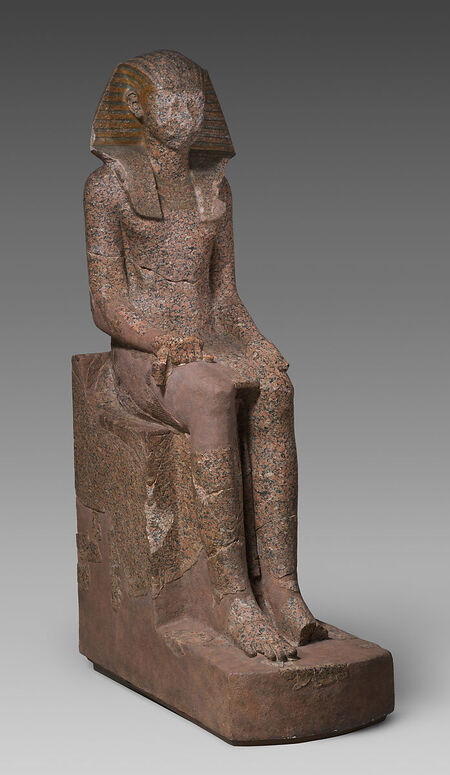
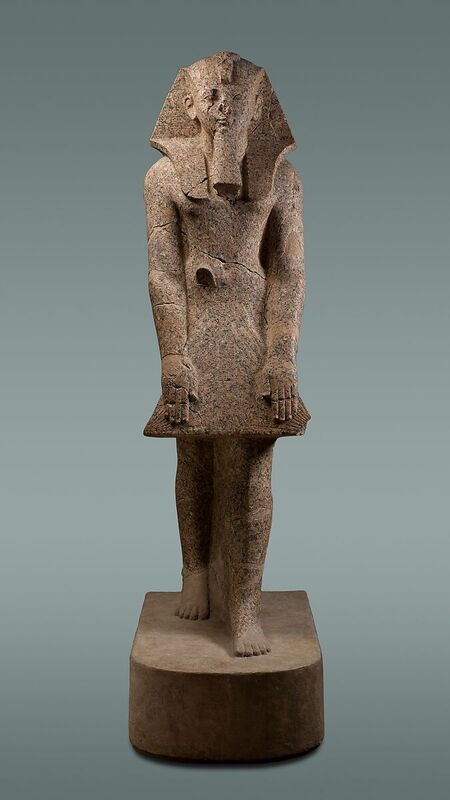
Left: Unknown master. Large granite statue of Hatshepsut dressed as a pharaoh, XVIII Dynasty, c. 1479–1458 BCE. Metropolitan Museum of Art, New York. Right: Unknown master. Granite statue of Hatshepsut in a prayer pose from Deir el-Bahari, c. 1479–1458 BCE. Metropolitan Museum of Art, New York.
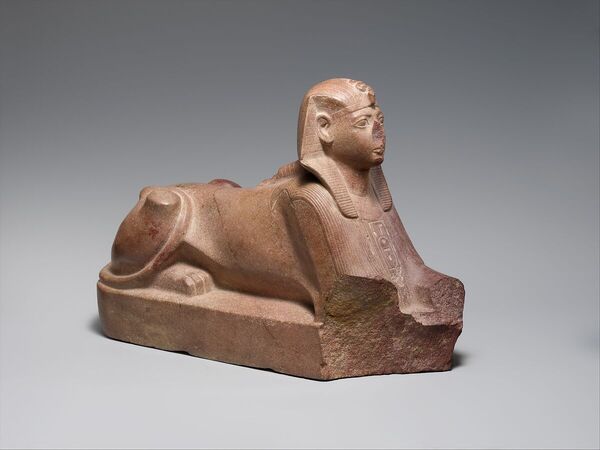
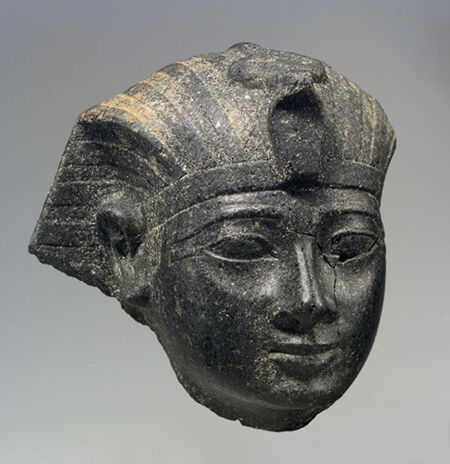
Left: Unknown artisan. Quartzite sphinx of Pharaoh Thutmose III, 18th Dynasty, circa 1479–1425 BCE. The Metropolitan Museum of Art, New York. Right: Unknown artisan. Head of Pharaoh Amenhotep II made of granodiorite, circa 1427–1396 BCE. The Metropolitan Museum of Art, New York.
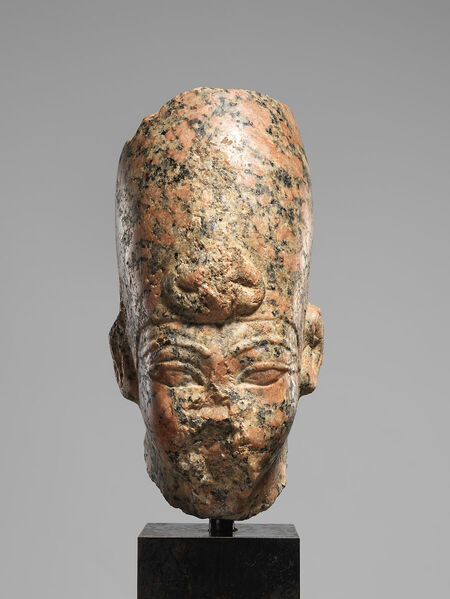
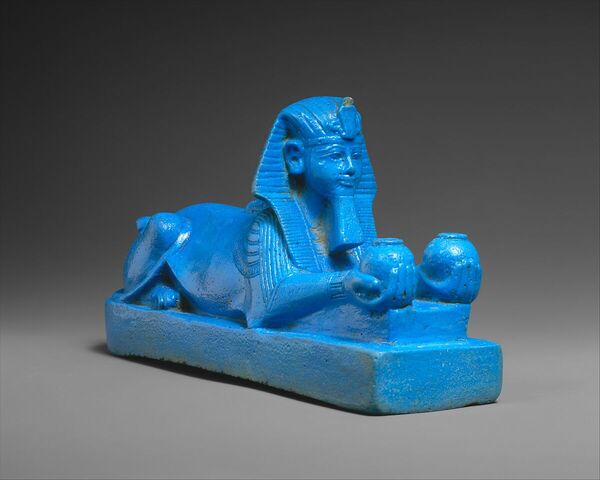
Left: Unknown artist. Granite head of Pharaoh Amenhotep III wearing the White Crown of Upper Egypt, c. 1386–1347 BCE. Metropolitan Museum of Art, New York. Right: Unknown artist. Faience portrait sphinx of Pharaoh Amenhotep III, c. 1386–1347 BCE. Metropolitan Museum of Art, New York.
At the beginning of the New Kingdom (15th–14th centuries BCE), portraiture directly served political objectives. This is particularly evident in the sculptures of the female Pharaoh Hatshepsut, presented in this section above. For the open courtyards of the Temple of Deir el-Bahari, where official ceremonies took place, she was carved from red granite strictly according to the male royal canon—featuring broad shoulders and the ruler’s false beard. However, for the closed chambers of the same temple, statues were made from smooth white limestone, in which the artisan retained a slender chin, a narrow waist, and feminine facial features.
Раздел 2 | Амарна и Поздний Египет
Changes in Proportions in Amarna Art and Late Egyptian Realism
The Amarna Reform and the Departure from the Old Canon
In the mid-14th century BCE, Pharaoh Amenhotep IV (Akhenaten) enacted a religious reform: he abolished the cults of the old gods, introduced the veneration of the single solar disk Aten, and moved the capital to the new city of Akhetaten (Amarna). The rejection of previous traditions immediately reflected in the rules for depicting the human figure [5].
At the Pharaoh’s request, the artisans of Amarna stopped portraying the ruler as an immobile deity and turned to distinctly vital, sometimes even exaggerated forms. The Amarna portrait is characterized by elongated cranial proportions, narrow hooded eyes, full lips, sharp cheekbones, and a long, curved neck.
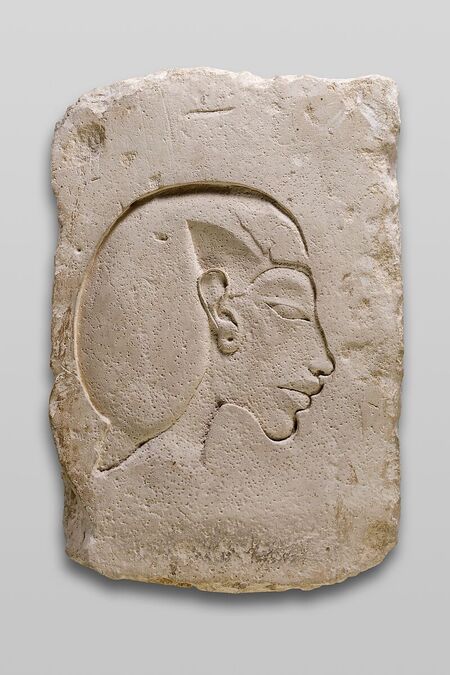
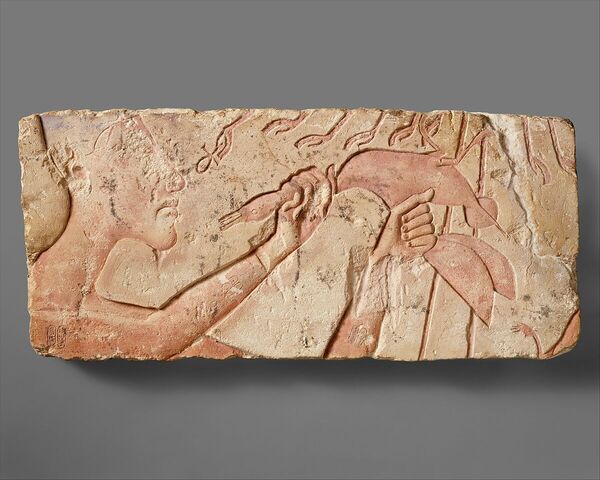
Left: Workshop of Akhetaten. Limestone bas-relief study model featuring the profile of Pharaoh Akhenaten, c. 1347–1330 BCE. Metropolitan Museum of Art, New York. Right: Unknown artisan. Limestone relief from Amarna depicting the scene of Pharaoh Akhenaten offering sacrifice to the god Aten, c. 1347–1330 BCE. Metropolitan Museum of Art, New York.
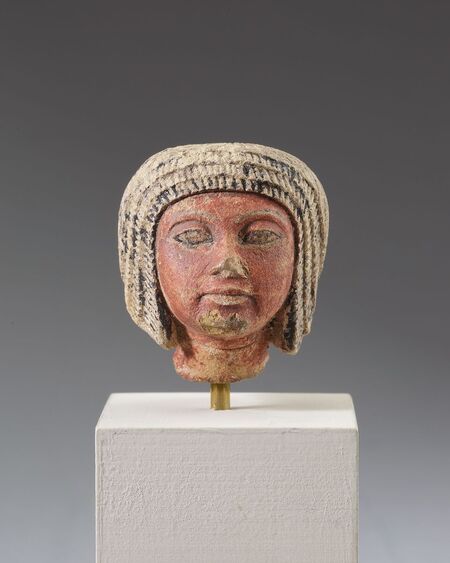
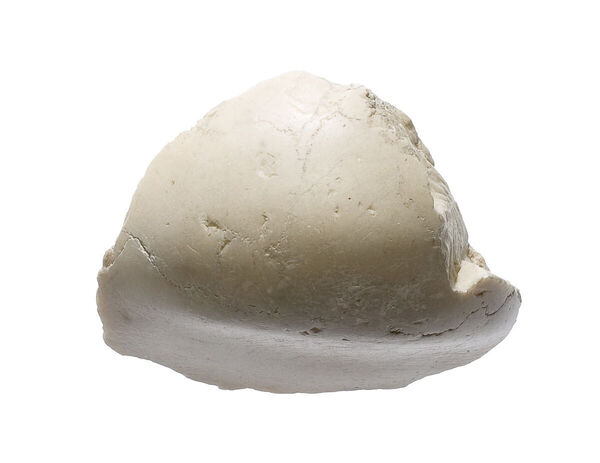
Left: Unknown artist. Painted limestone head from a residential building in Amarna, c. 1347–1330 BCE. The Metropolitan Museum of Art, New York. Right: Unknown artist. Fragment of lips and chin from a royal statue from the Great Temple of Aten in Amarna, c. 1347–1330 BCE. The Metropolitan Museum of Art, New York.
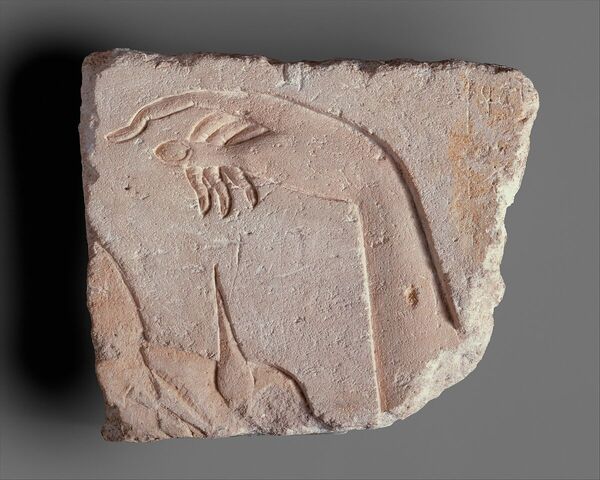
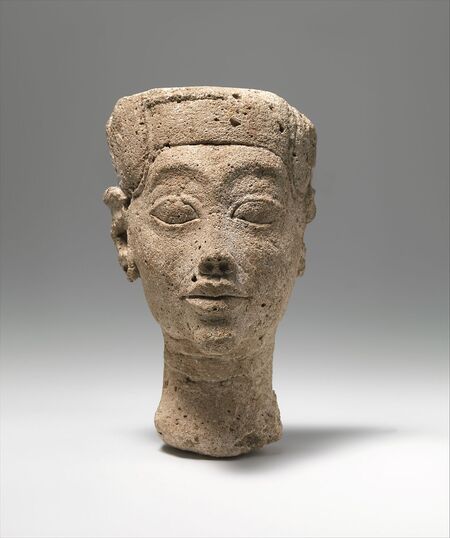
Left: Unknown master. Relief depicting the hand of the Queen of Amarna (limestone, painted), c. 1347–1330 BCE. The Metropolitan Museum of Art, New York. Right: Sculptor’s workshop in Akhetaton. Plaster portrait cast of Akhenaten or Nefertiti, c. 1347–1330 BCE. The Metropolitan Museum of Art, New York.
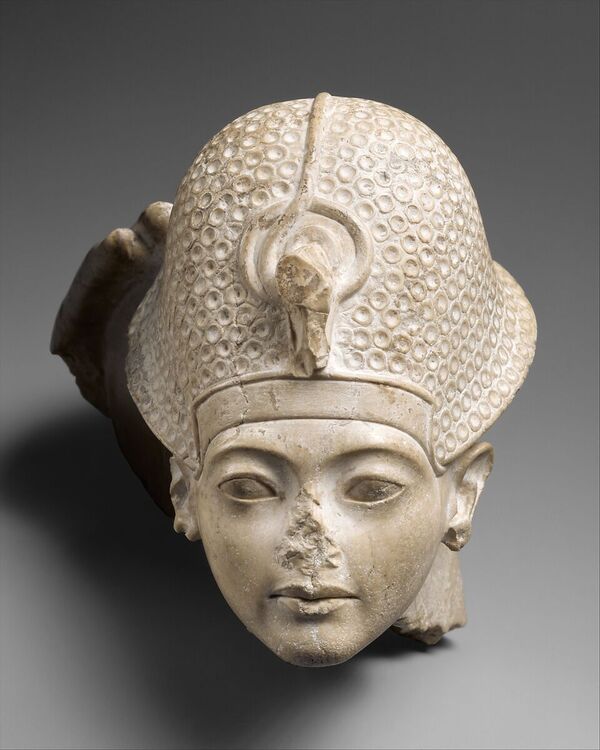
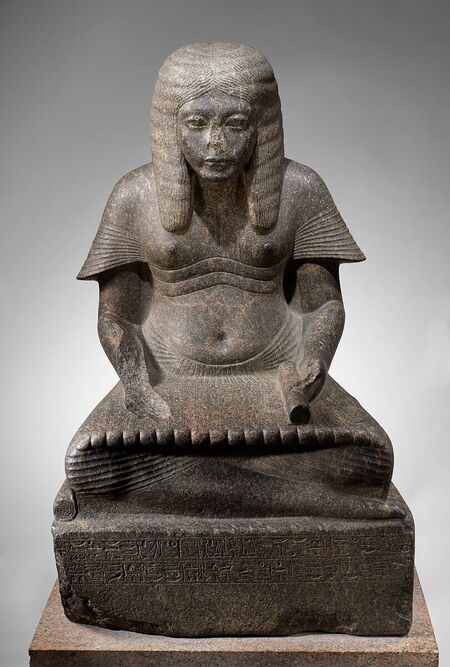
Left: Unknown Master. Portrait head of the young Tutankhamun carved from dense limestone, Post-Amarna period, c. 1328–1318 BCE. The Metropolitan Museum of Art, New York. Right: Unknown Master. Statue of the commander Horemheb in the guise of a royal scribe (granodiorite), c. 1336–1323 BCE. The Metropolitan Museum of Art, New York.
In the workshops of Amarna, sculptors actively used plaster casts from live models. (A plaster cast of a head without paint, like the one shown above on the right, alongside the relief of the queen’s hand, exemplifies this approach.) Through this method, the artisans achieved a very soft, almost lifelike rendering of the lips, eyelids, and chin. Even after Akhenaten’s death and the cancellation of his religious reforms, the Amarna-style softness of the lines, the smooth oval of the cheeks, and the slight tilt of the head persist in the portraits of the young Tutankhamun and the general Horemheb on the panels directly above this text.
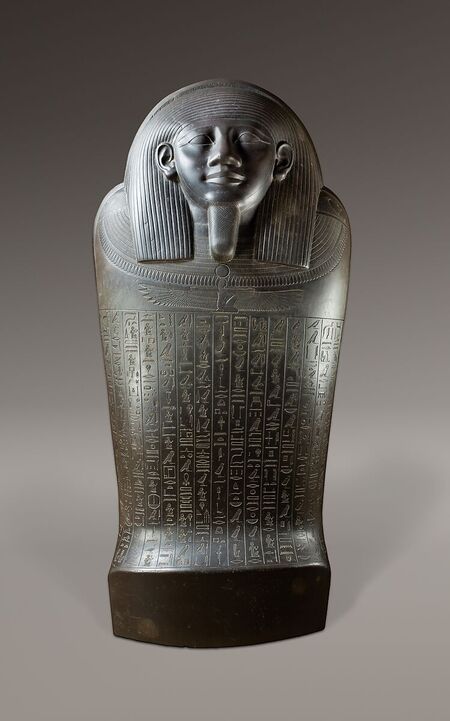
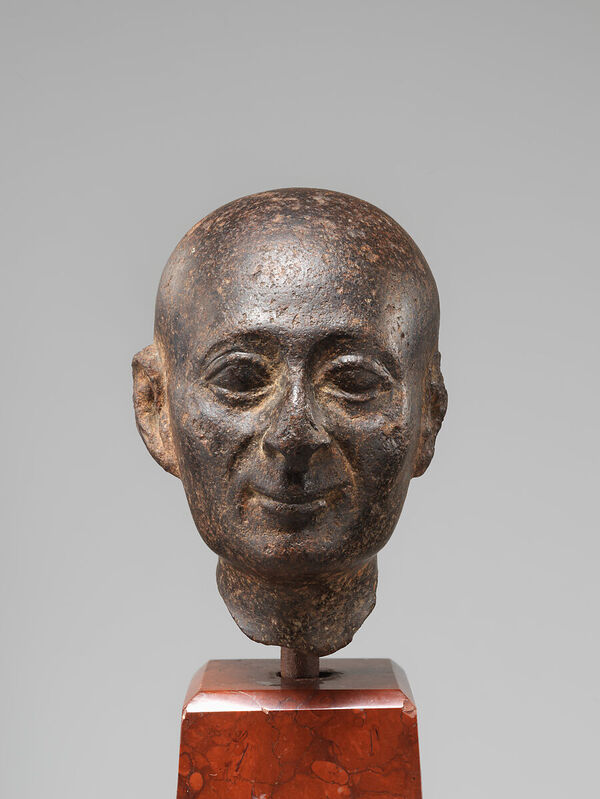
Left: Unknown artisan. Lid of an anthropomorphic sarcophagus belonging to the nobleman Kharchabit, made of grauwacke, Late Period, 6th century BCE. Metropolitan Museum of Art, New York. Right: Unknown artisan. Portrait head of a priest with a shaved skull, 4th century BCE. Metropolitan Museum of Art, New York.