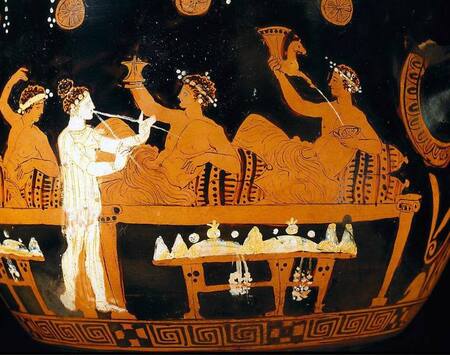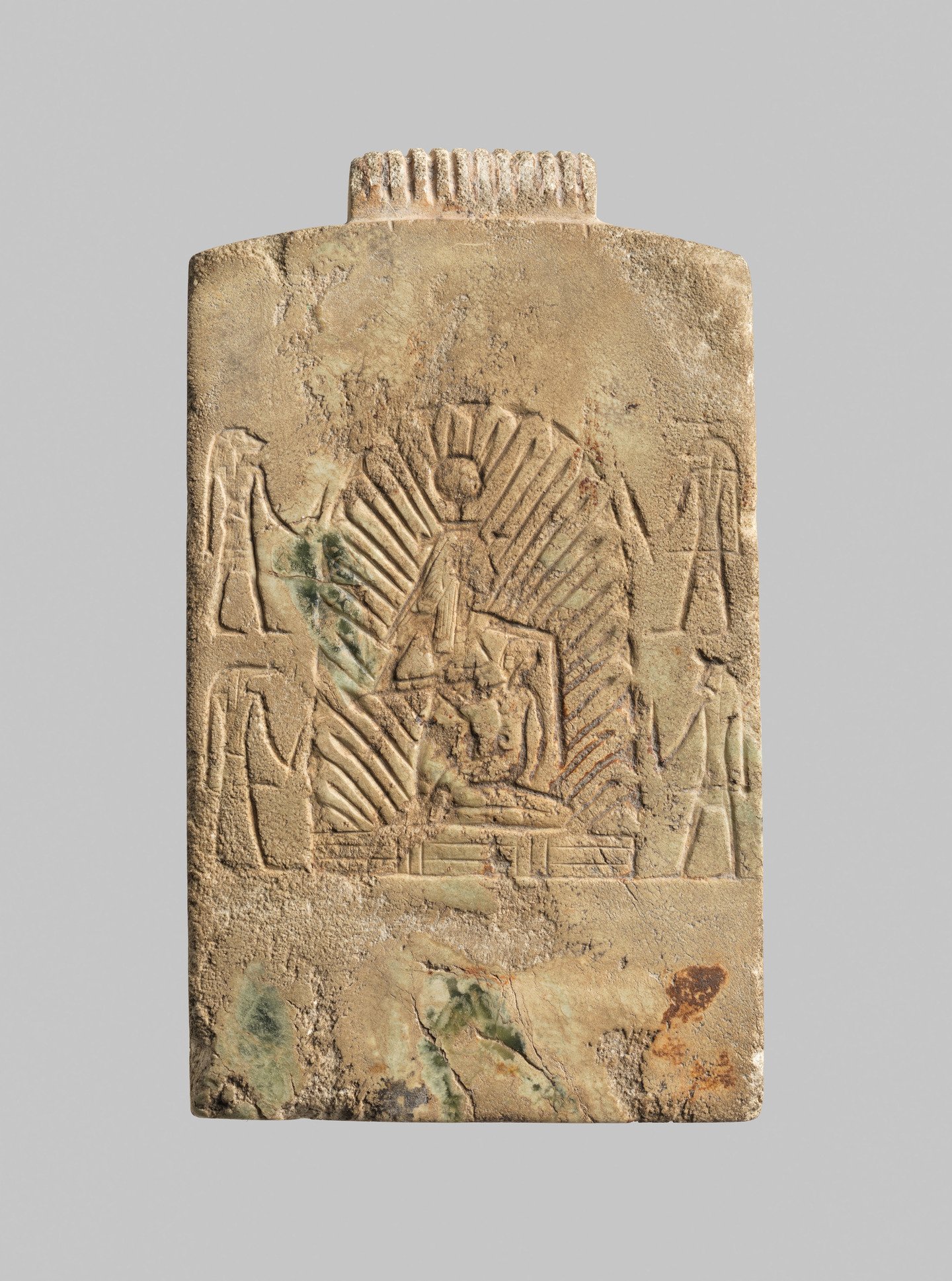
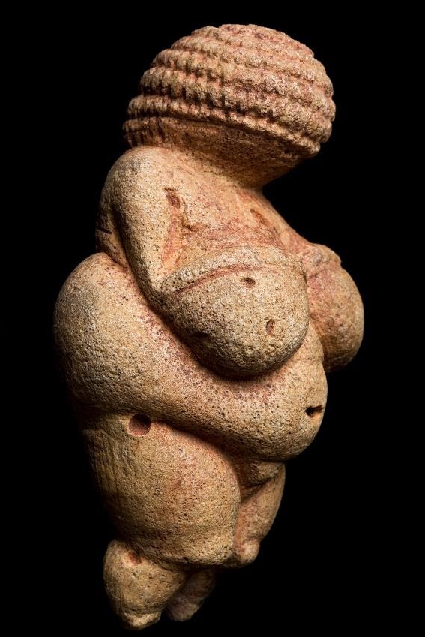
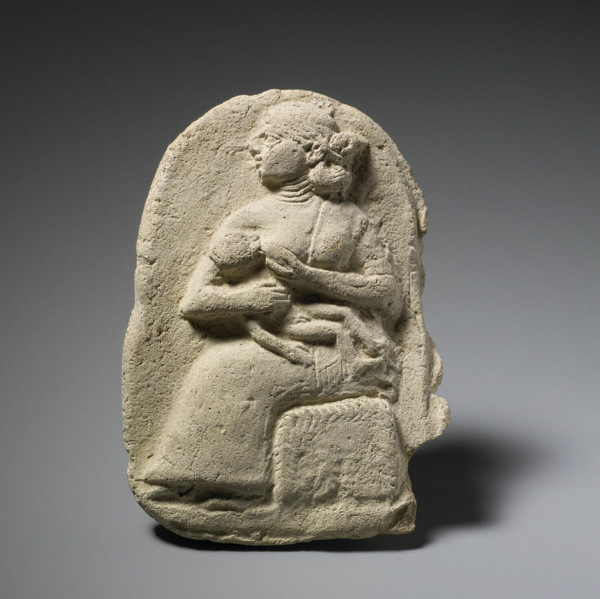
1. Venus of Willendorf, c. 27,500 BCE 2. Woman Nursing a Child (Old Babylonian Terracotta Plaque), 20th–16th centuries BCE
Concept
Across millennia, the maternal image has existed at the intersection of the biological, social, religious, and symbolic: the mother’s body becomes an icon of birth and continuation of life; the maternal figure embodies fertility, protection, and power; and the mother-child relationship constitutes a space for expressing love, dependency, care, and loss. Yet, the conception of motherhood has never been purely natural or universal. Each historical era imbued it with its own meanings, shaped specific visual canons, and selected those aspects of the maternal image that corresponded to its worldview.
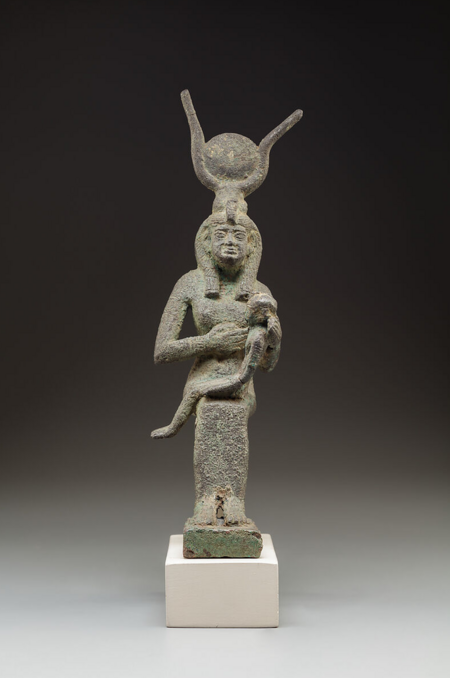
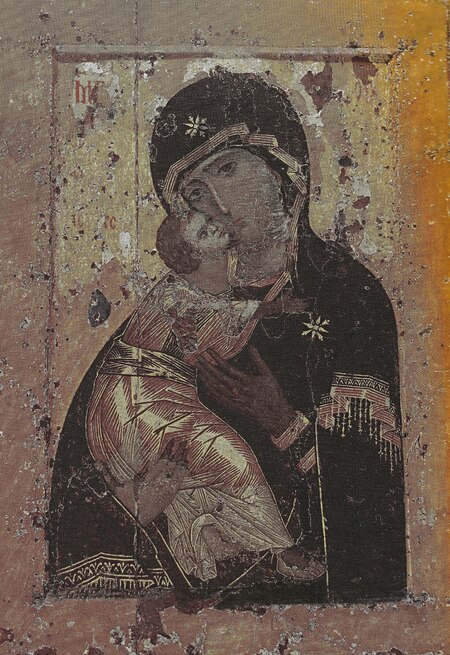
3. Isis Nursing Mount, VII–IV centuries BCE. 4. Vladimir Icon of the Mother of God, 12th century.
The research focuses on a wide range of visual motifs associated with motherhood: the nude and pregnant body, birth, nursing, physical touch, protection, divine patronage, generational continuity, and maternal grief. Examining these motifs allows us to trace how the maternal image gradually moves beyond immediate physical experience to acquire religious, political, and moral significance.
Hypothesis
The evolution of the maternal image represents less a change in the mother’s physical appearance and more a continuous transformation of the meanings associated with her figure. From the bodily embodiment of life and fertility, the maternal image progresses to a complex system of religious and emotional values that integrate concepts of the divine, the human, the familial, and the sacrificial. While the external artistic forms often retain continuity, their symbolic content changes significantly.
THE MATERNAL BODY: PALEOLITH AND NEOLITH
The female figure prior to the emergence of established iconography of motherhood.
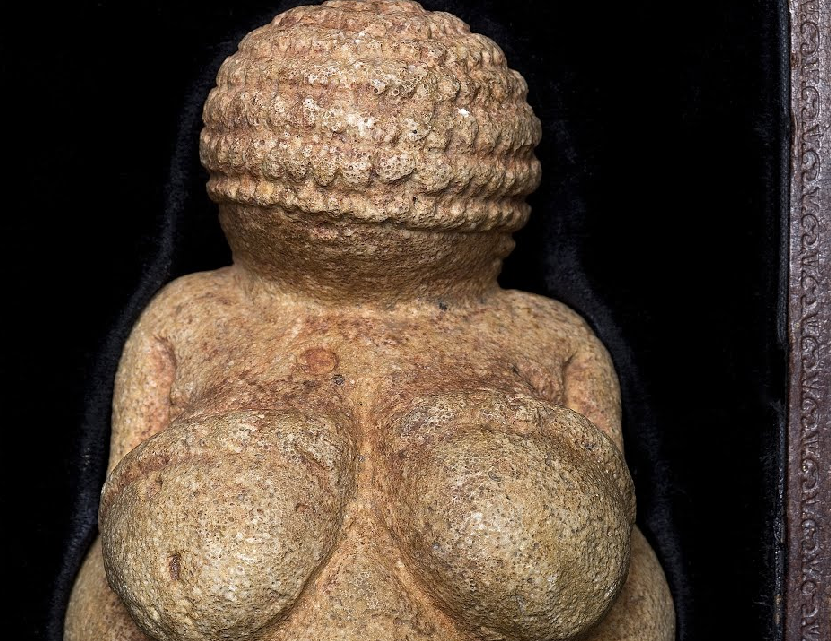
Venus of Willendorf, circa 27,500 BCE
Around 40,000 years ago, some of the oldest known anthropomorphic images were created in Central Europe. The figurine from the Hohle Fels cave, carved from a mammoth ivory tusk, depicts a nude female body with emphasized anatomical features. Its significance remains a subject of scholarly debate. However, the very possibility of depicting the human body at such an early period suggests the emergence of a complex visual language.
Anatomy as a Visual Language
In the Höle-Fels figurine, the breasts, abdomen, and sexual characteristics are emphasized. The face is absent, and a loop is present where the head should be, suggesting the object was used as a pendant. Since the figure does not show unambiguous signs of pregnancy, we can only regard it as a depiction of the female body.
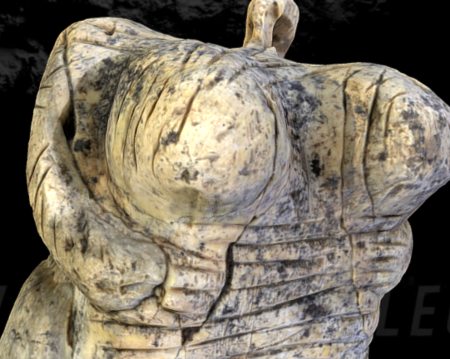
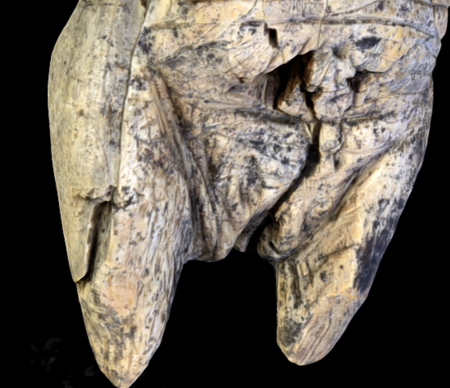
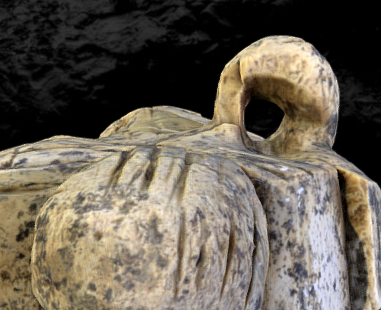
Venus of Hohle Fels, circa 40,000 years BP.
Venera Villendorffskaya: The Body Beyond Individuality
One of the most famous Paleolithic female figurines was discovered in Austria in 1908. The Venus of Willendorf dates to approximately 27,500 BCE, stands about 11 cm tall, and is made of limestone. The massive forms, the absence of an individualized face, and the meticulously worked surface create an image in which a distinct human personality seems to yield to a generalized representation of the female body.
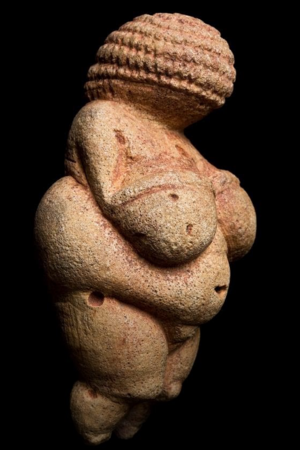
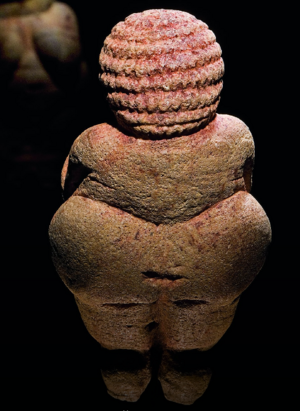
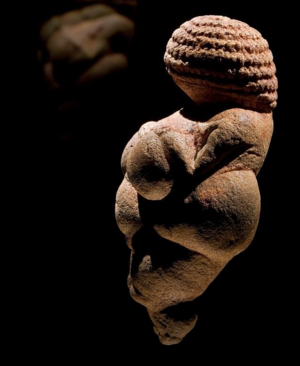
Venus of Willendorf, circa 27,500 BCE
Materials and Fabrication Marks
Venus of Willendorf is carved from limestone and was originally covered in red ochre. Microtomographic studies have allowed for a more detailed examination of the stone’s internal structure and its origins.
Traces of pigment reveal the object’s original coloration, which has been lost over time.
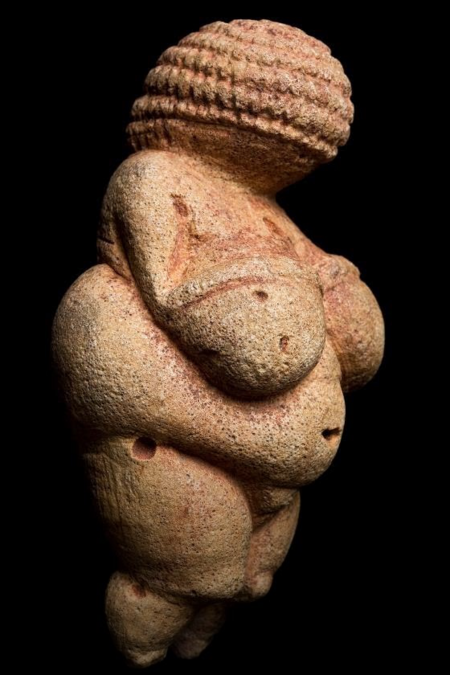
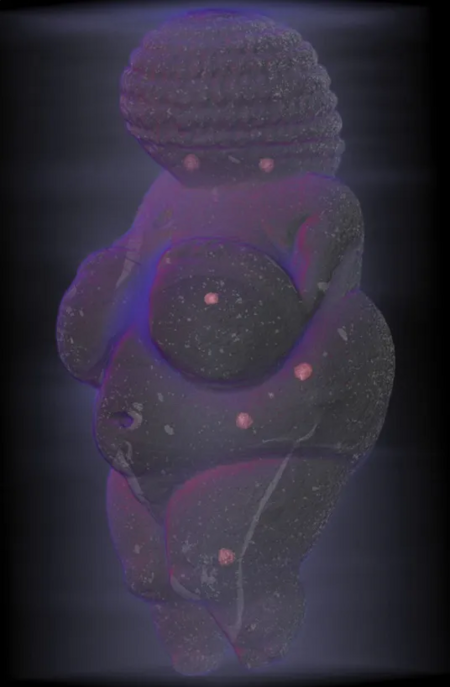
Villendorfska’s Venus Microtomography
Who is Venere Villendorff?
Venus of Willendorf has become one of the most renowned—and controversial—artifacts of Paleolithic art. The explicit figural representation of the body, with emphasis placed on the breasts, abdomen, and hips, has repeatedly served as the basis for interpreting it as a symbol of fertility, pregnancy, or a universal feminine principle. However, such interpretations remain hypotheses; the anatomical features alone do not allow for a definitive determination of the figurine’s purpose or the meaning embedded within it. The name «Venus» emerged during the scientific study of the artifact. It refers to the ancient image of the goddess of beauty and thus inadvertently transplants later cultural notions onto a piece created many millennia before the emergence of ancient civilization.
Chatalhöyük: the female form and the animal world
At the Neolithic settlement of Çatalhöyük in Anatolia, numerous anthropomorphic and zoomorphic figurines were discovered. Researchers paid particular attention to a seated female figure resting her hands on depictions of large felines. Initial interpretations linked it to the cult of the Great Goddess. However, later studies have questioned the universal explanation of such objects through the concept of a mother deity.
Mother Goddess from Çatalhöyük, c. 6000–5750 BCE
Conceptualizing the Mother Goddess
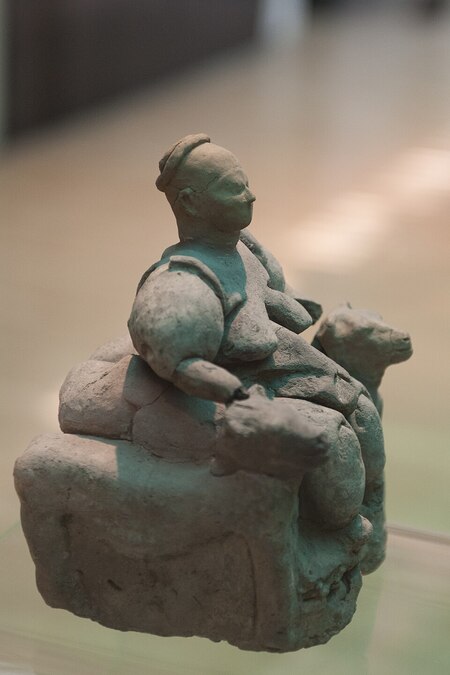
In the 20th century, the interpretation of Neolithic female figurines was largely shaped by the concept of the Great Goddess, developed and popularized by archaeologist Marija Gimbutas. Within this framework, numerous representations of the female body were viewed as manifestations of a single religious cult associated with fertility, birth, the earth, and the cyclical renewal of nature. The female figure acquired the significance of a universal symbol of creative power, and its anatomical features were interpreted as reflections of beliefs regarding origins and the continuation of life. However, later archaeological research has challenged the possibility of unifying such diverse artifacts within a single religious system. Using the example of Çatalhöyük, researchers suggest moving beyond the isolated study of the figurines to consider the circumstances of their discovery, manufacturing methods, materials, and the nature of the archaeological deposits. Such objects may have participated in various practices—ranging from ritualistic to everyday—and their meaning was not necessarily limited to religious symbolism.