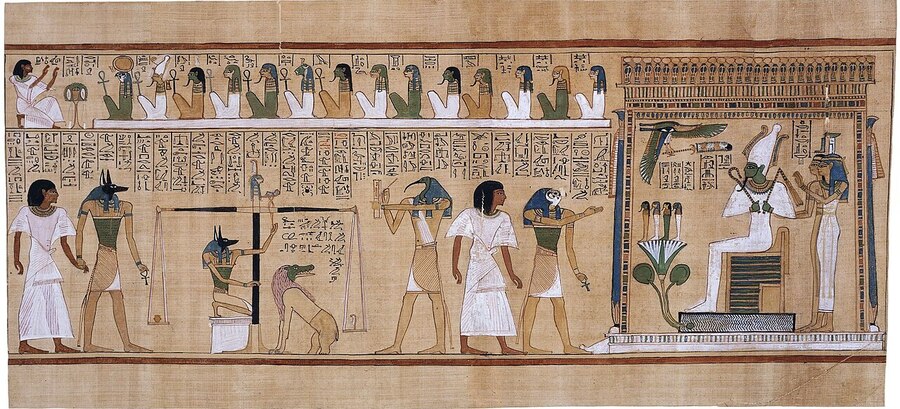
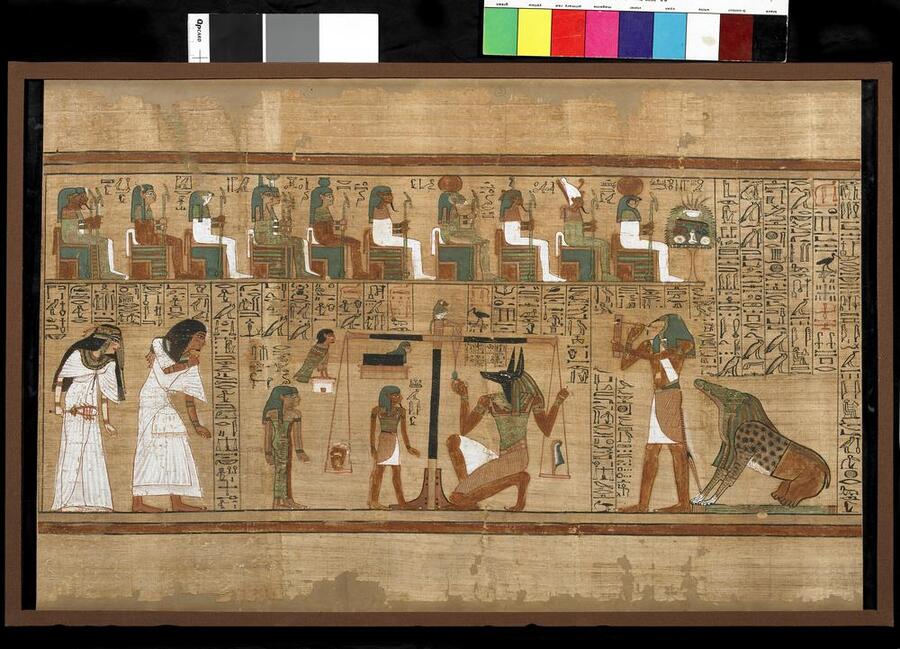
Large fragment of the «Book of the Dead» with hieroglyphs and a vignette—Ani Papyrus (British Museum, c. 1250 BCE).
For the ancient Egyptian, death was not an abyss of existence—it was perceived as a critical threshold beyond which a different form of life began. The very title, «Book of the Dead, ” originally translates to „Spells for Coming Forth by Day.“ The visual language of tombs and papyri fostered a conviction: death could be overcome if the transition space was properly organized using image, color, and ritual. Egyptian art did not mourn an ending—it engineered immortality.
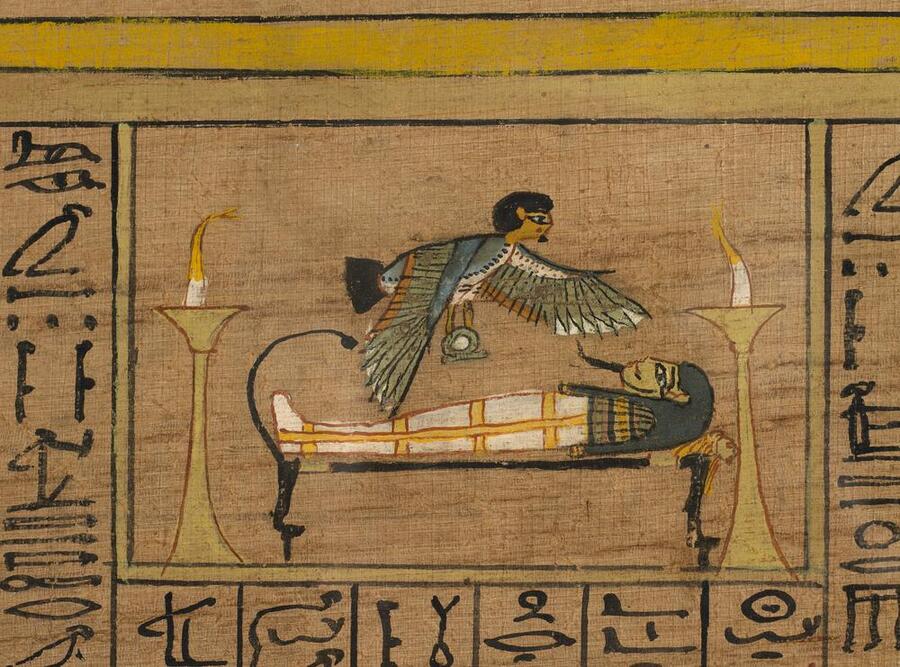
The Soul of Ba (a bird with a human head) hovers over the mummy of the deceased. Circa 1250 BCE.
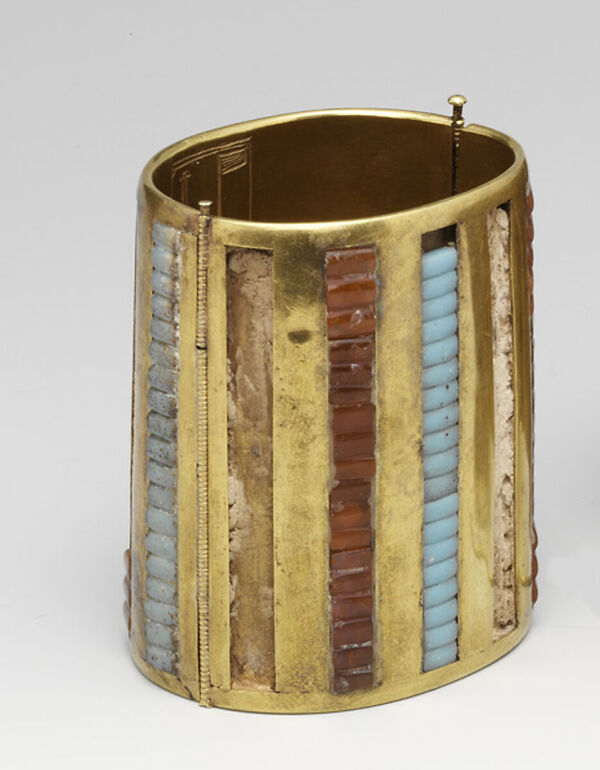
On the left: an immobile sarcophagus like a cocoon for the body. On the right: the winged soul of Ba leaving the tomb.
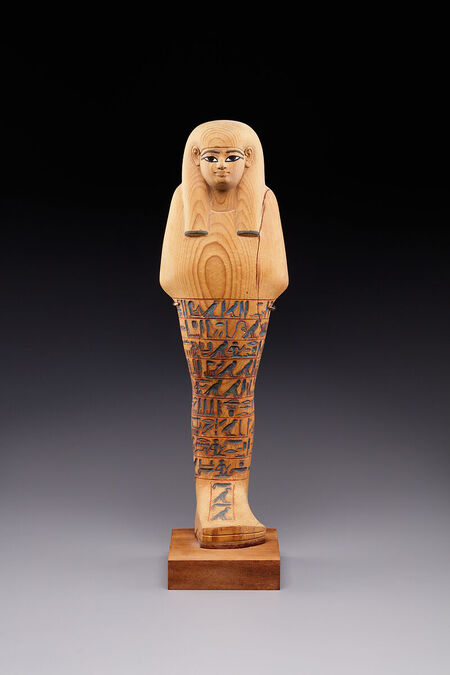
Ancient Egyptian anthropology divided the human being into spiritual entities: the life force Ka, the free soul Ba, and the enlightened spirit Akh. After physical death, these elements dispersed. The primary task of the sculptor and painter was to give them a material support—a portrait statue or relief—so that the soul could recognize its body and reunite with it for eternal life.
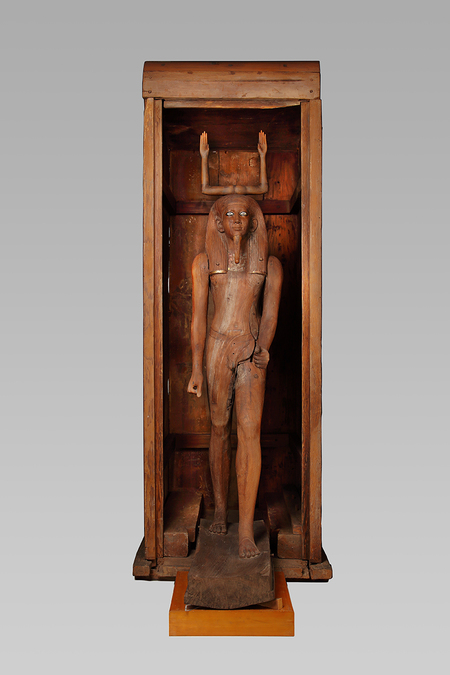
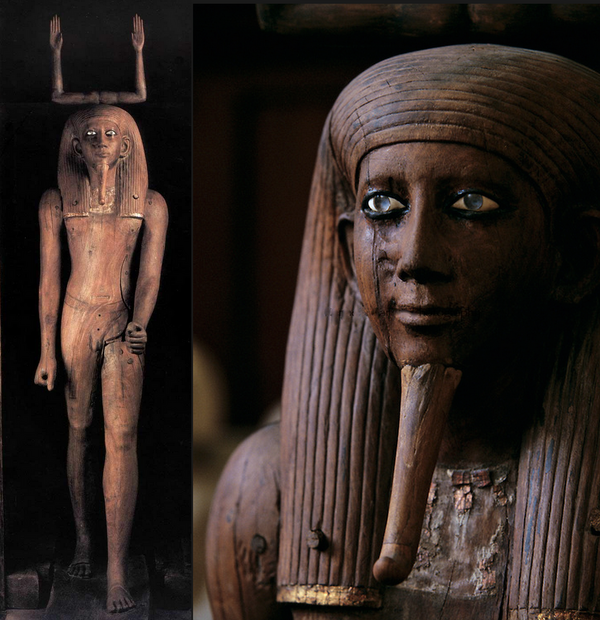
On the left: a full-figure statue of Ka. On the right: a close-up fragment of inlaid eyes receiving the energy of victims.
Funerary Mask (Metropolitan Museum, c. 1550–1295 BCE).
The boundary between worlds is material, but the artist makes it permeable. In the western wall of the mausoleum, a «false door» was installed—a stone relief shaped like a niche. Physically, it was hermetically sealed, but magically, it was open: through it, the soul of Kha exited the dark burial chamber toward the sacrificial altar.
Monumental limestone «false door» from the tomb of Perneb. Circa 2381–2323 BCE.
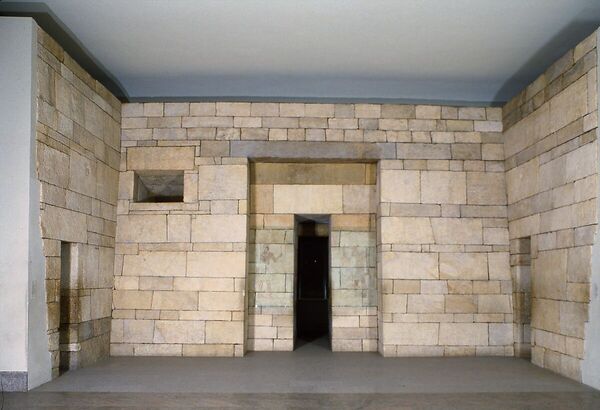
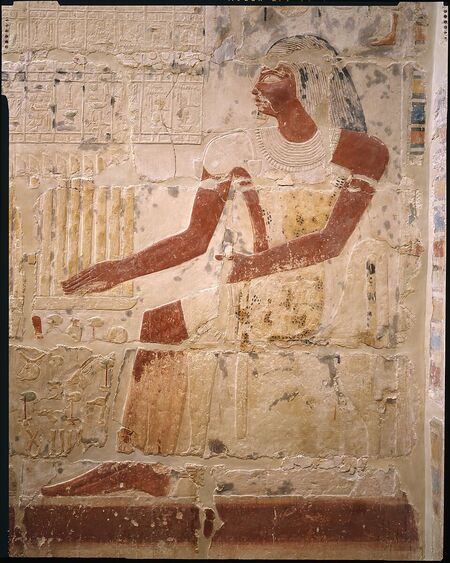
On the left: a general view of the false door. On the right: a magnified central panel where the deceased reaches out a hand toward the loaves of bread.
The Sennegem Burial Chamber in Deir el-Medina: a vaulted space transformed into a model of the cosmos. c. 1279–1213 BCE
CRYPT DESIGNS AND FUNERAL RELIEFS
Scenes of banquets, hunts in papyrus thickets, and family strolls along tomb walls are not nostalgic recollections of the past. In Egyptian consciousness, imagery possessed generative power: what was painted became real in the Duat. The artist literally «programmed» prosperous eternity, transplanting the finest moments of earthly life into the afterlife.
Feast with musicians and dancers from the tomb of Nebamun in Thebes. Circa 1350 BCE.
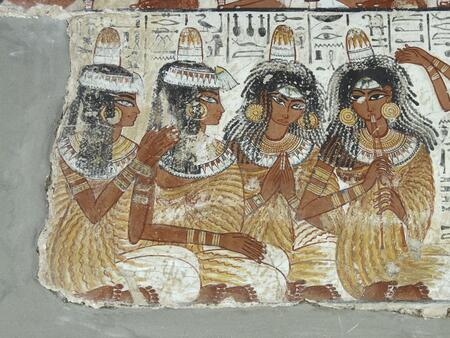
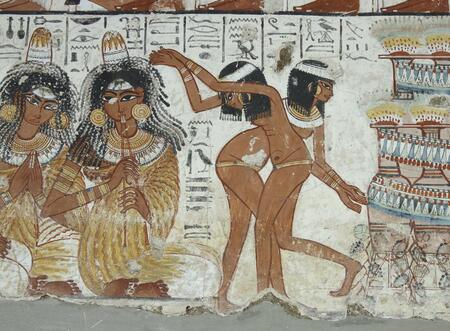
Detailed cropping of the fresco from the Tomb of Nebamun. Close-up of the female musicians depicted frontally (an extremely rare break from the profile canon to convey movement).
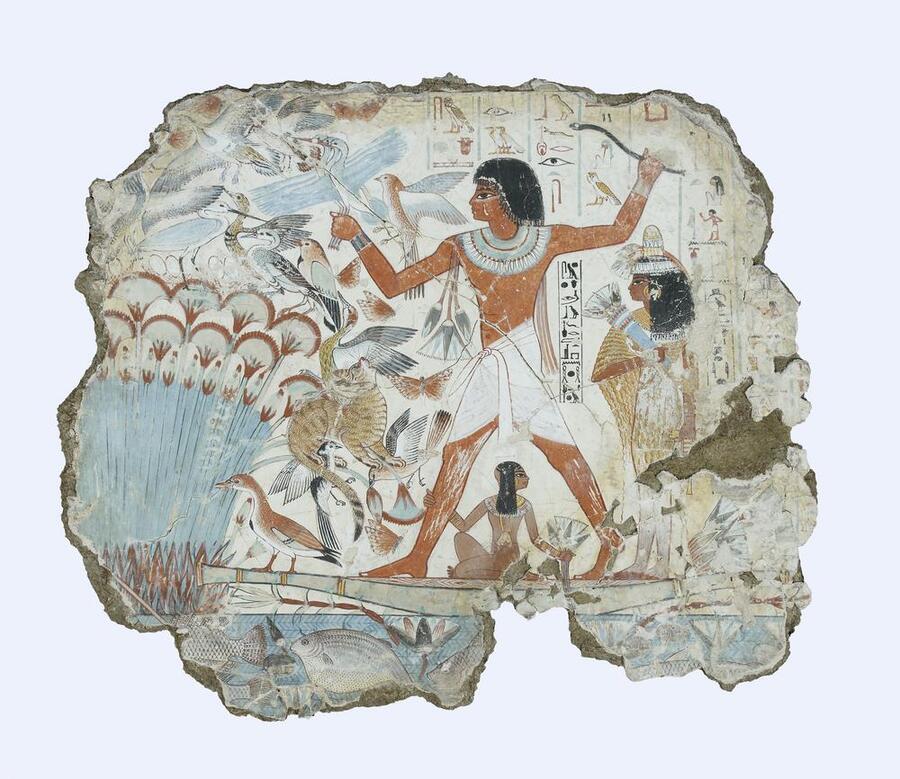
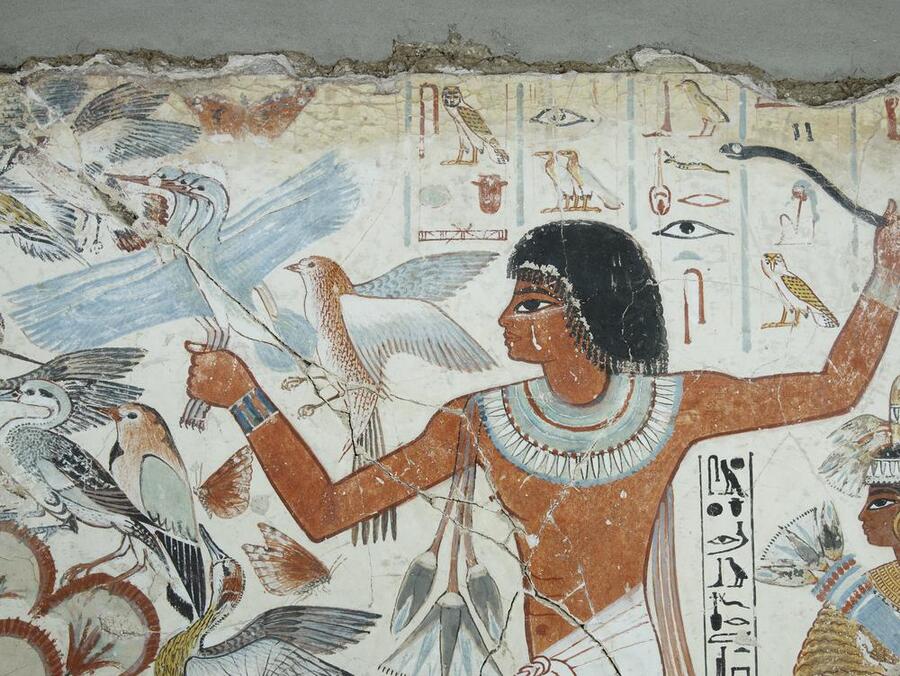
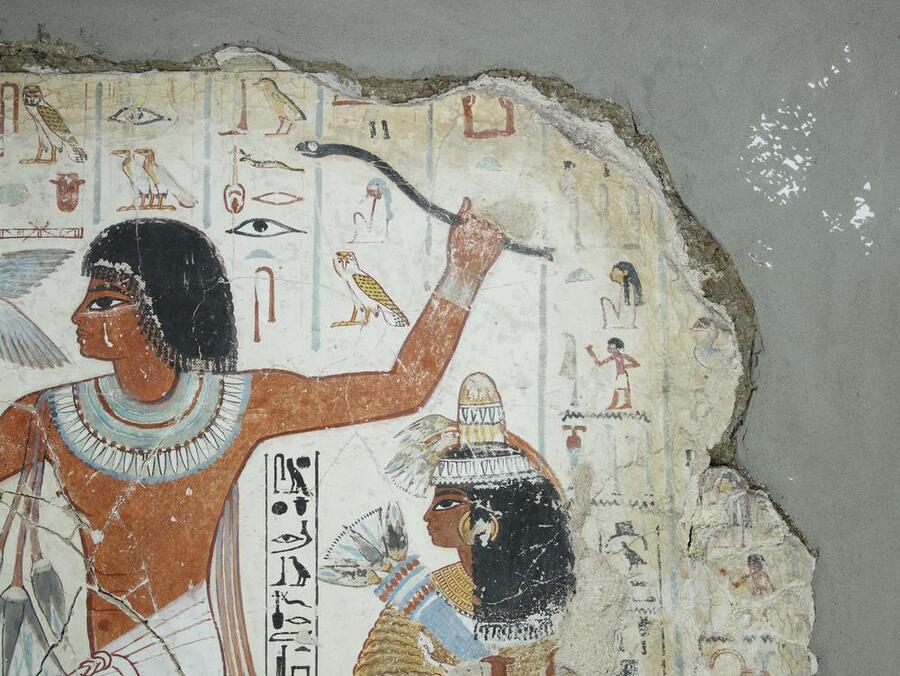
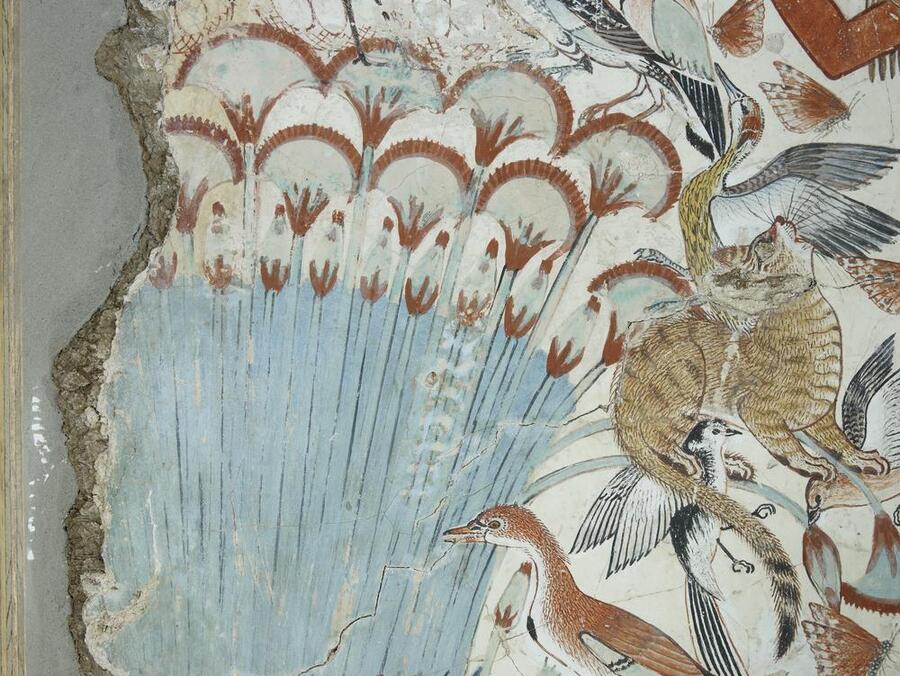
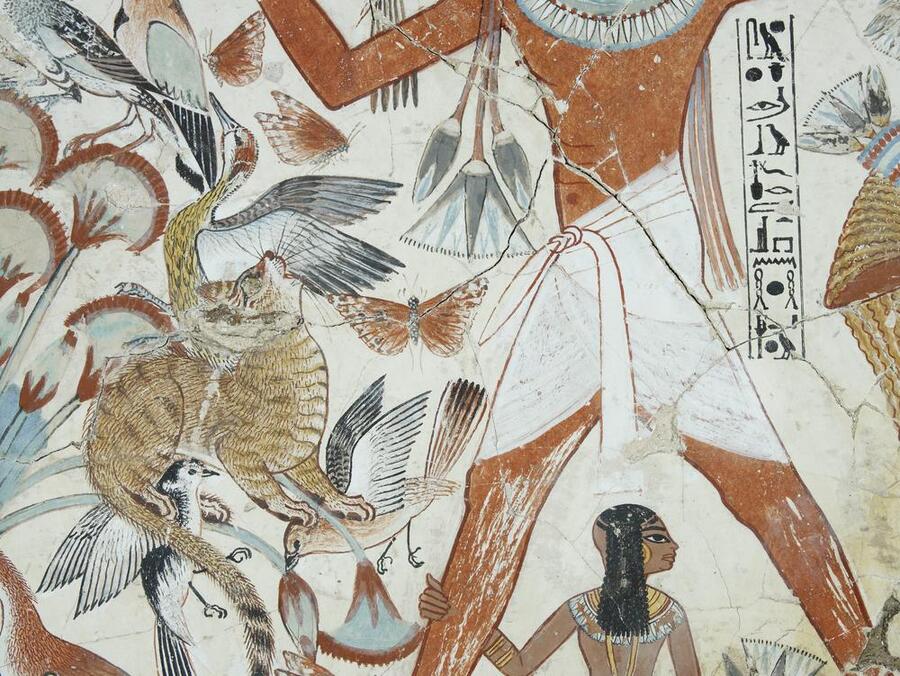
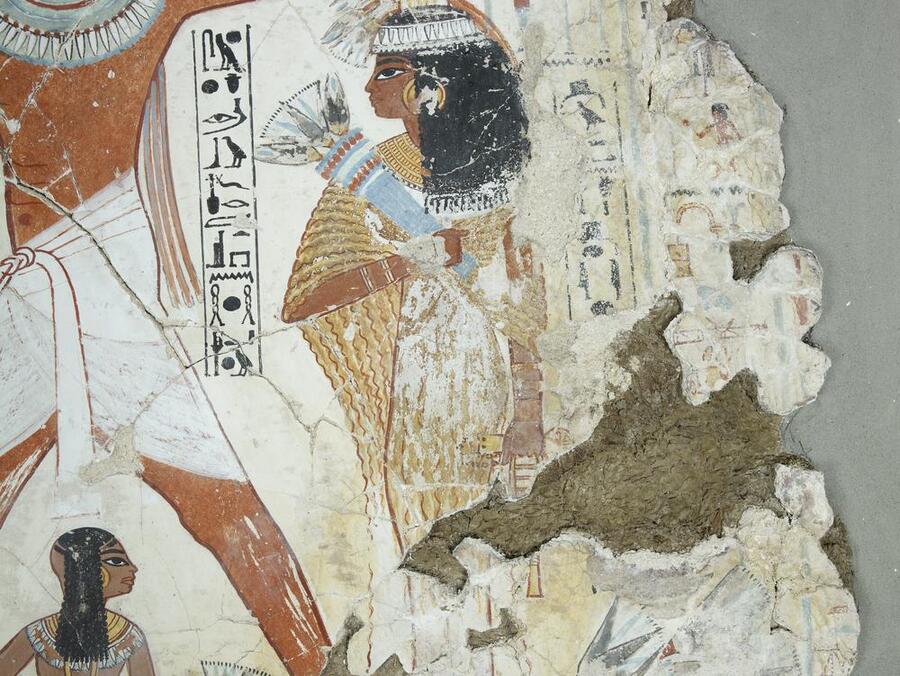
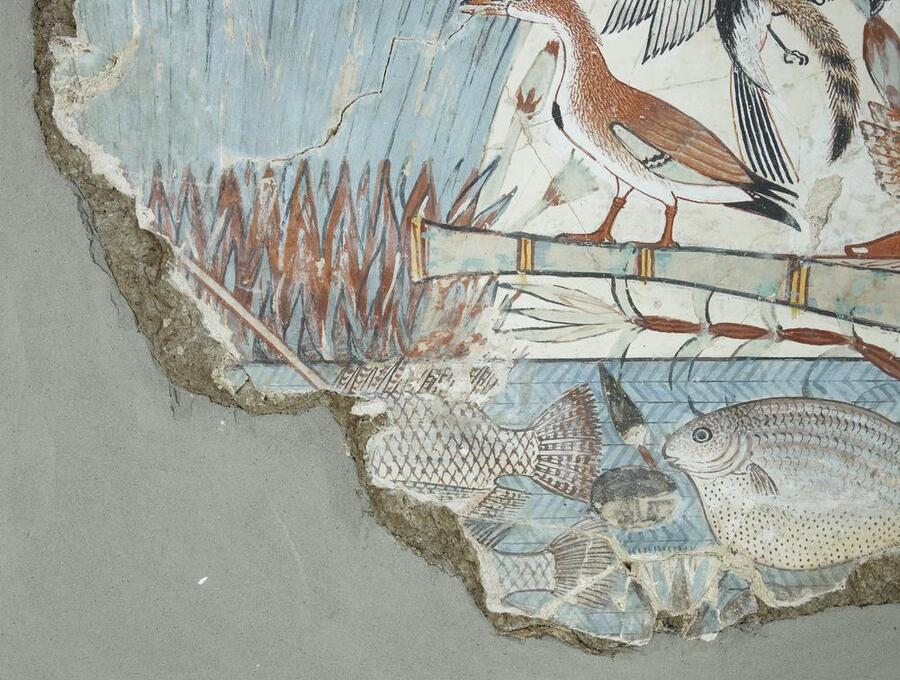
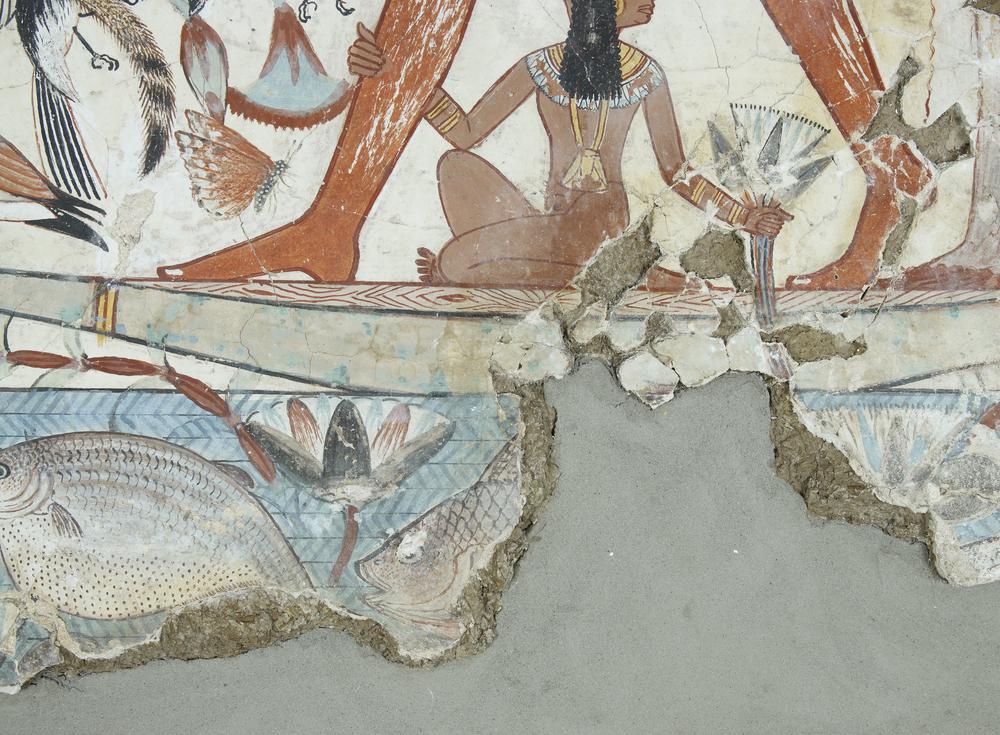
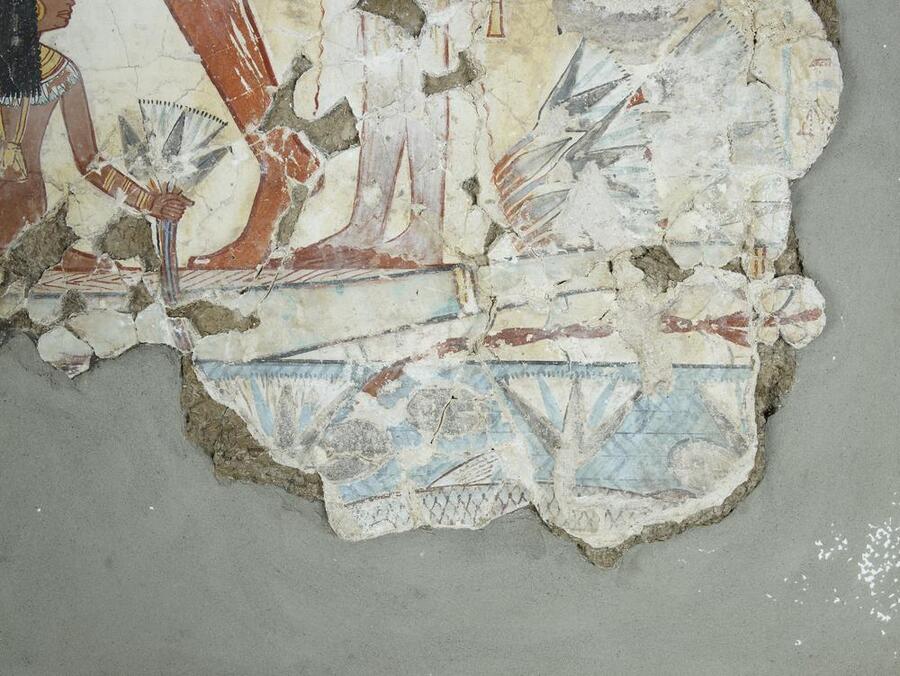
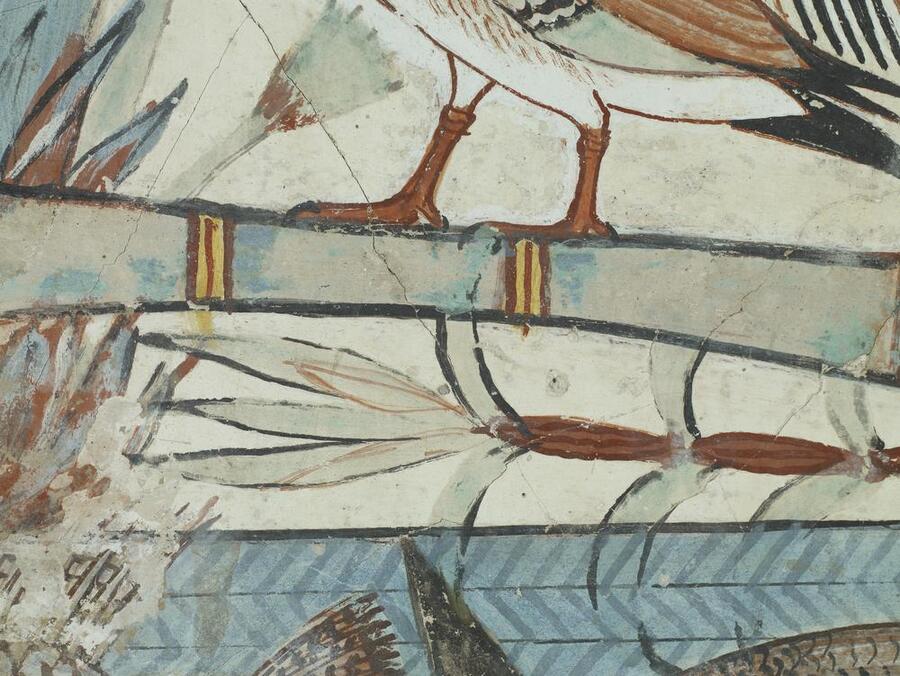
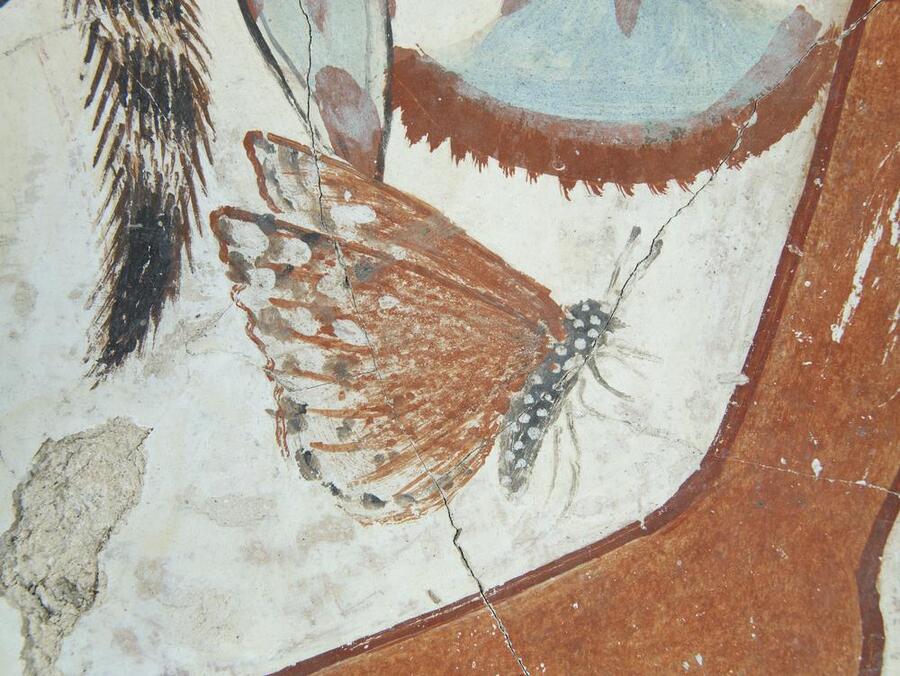
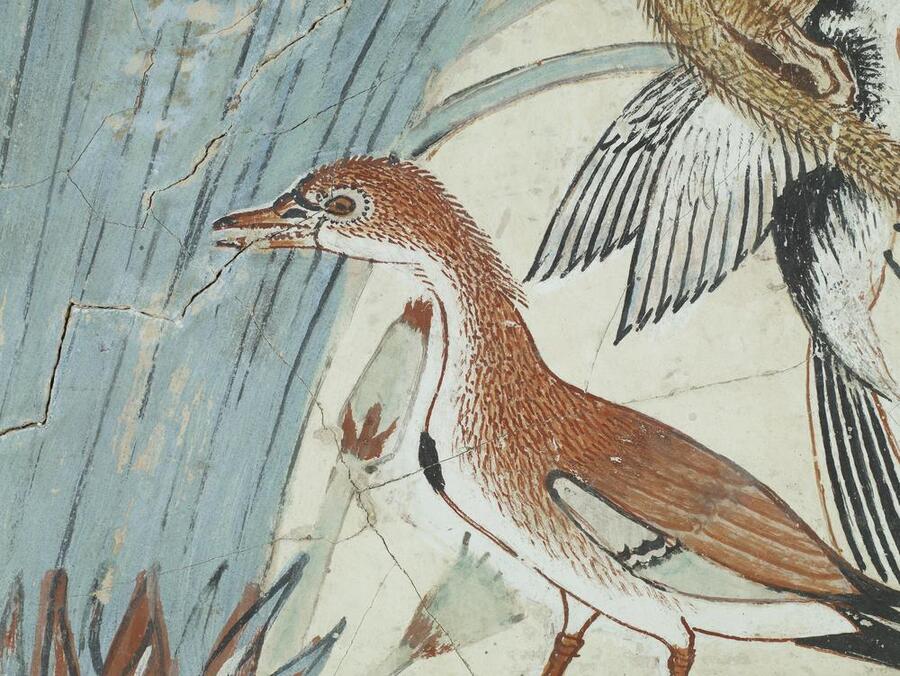
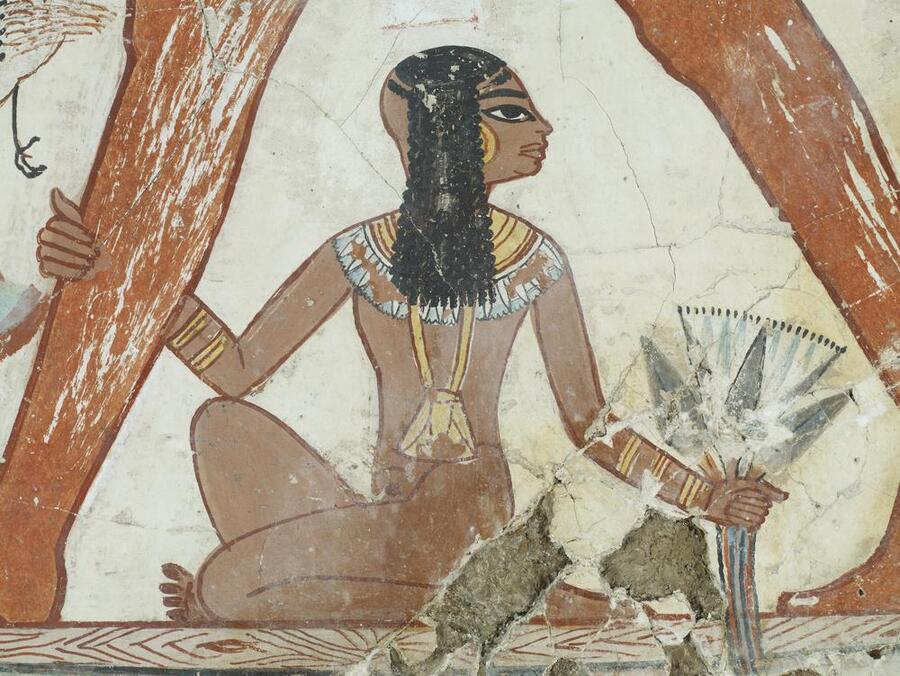
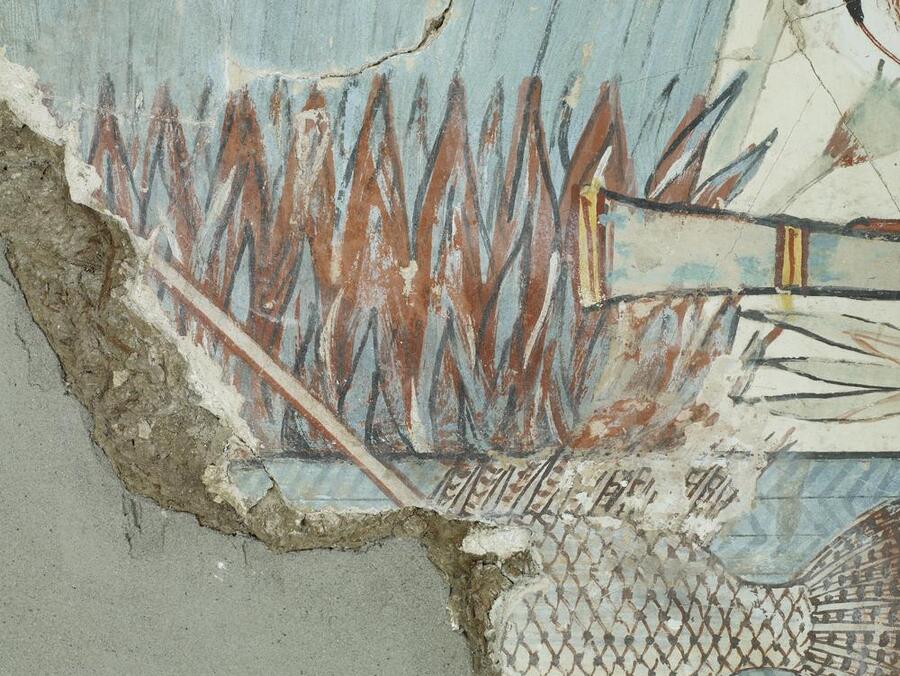
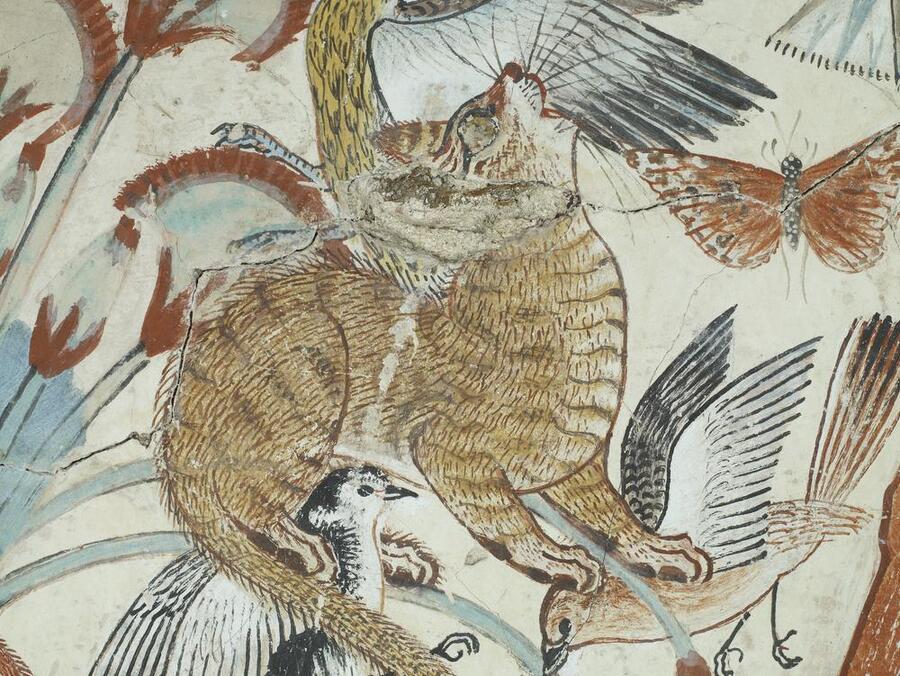
Nebamun hunting in papyrus reeds—a symbol of victory over the forces of natural chaos. Circa 1350 BCE.
In the Old and Middle Kingdoms, the walls of funerary temples and mastabas were filled with endless processions of donors. If priests or descendants eventually stopped offering actual food, the magic of the relief carvings took over. Bread, beer, and game carved into the stone forever provided the soul of Ka with sustenance, rendering its afterlife autonomous.
Painted relief showing a procession of donors from the funerary temple of Senuseret I in Lisht. c. 1950 BCE.
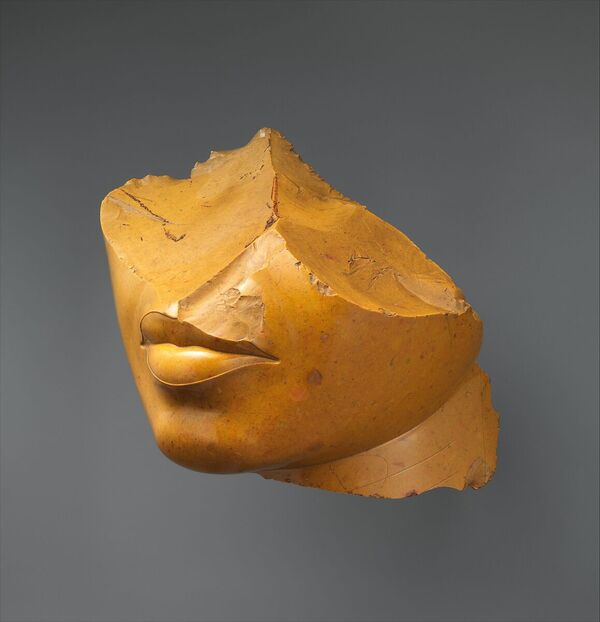
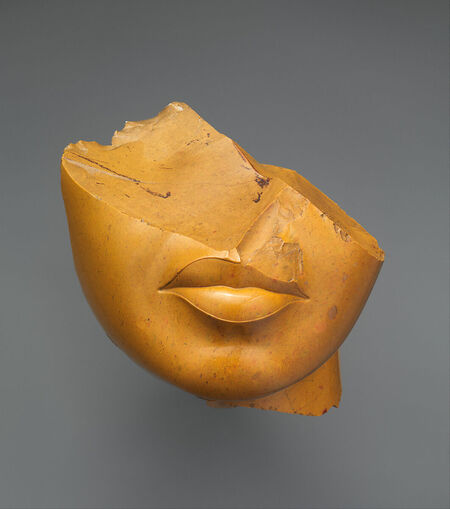
Deep relief featuring a figure of a king/deity (Metro Museum).
Senndjem and his wife Ineferti plow and harvest in the afterlife fields of Ialu. Circa 1279–1213 BCE.
Cropping of the fresco from the Sennejem tomb.
Death brought chaos (Isfet), shattering the familiar world. Art responded with the rigid order of geometry. By dividing the wall into strict horizontal registers and employing hierarchical scaling (where the tomb owner is depicted many times larger than the servants), the artist subjected the afterlife to the laws of cosmic harmony, Ma’at.
Multi-tiered wall of the tomb of the scribe Menes, clearly divided into registers. Circa 1400–1390 BCE.
THE UNDERWORLD JUDGEMENT AND THE IMAGE OF OSIRIS
Fragment of the Papyrus of Hunefere: the throne of Osiris on water (symbol of the primordial ocean) with a budding lotus. c. 1275 BCE.
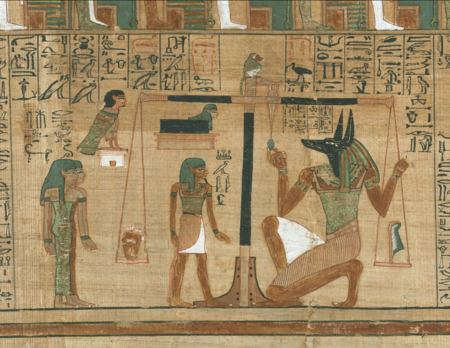
The transition into eternity was not automatic—it required moral justification. Chapter 125 of the «Book of the Dead» transforms the moment of post-mortem judgment into a clear visual formula. At the center of the composition are scales, where the deceased’s heart (the repository of conscience and memory) is balanced against the lightest feather of Ma’at, the goddess of truth. Here, the viewer witnesses the triumph of justice: acquittal is achieved through the purity of a lived life.
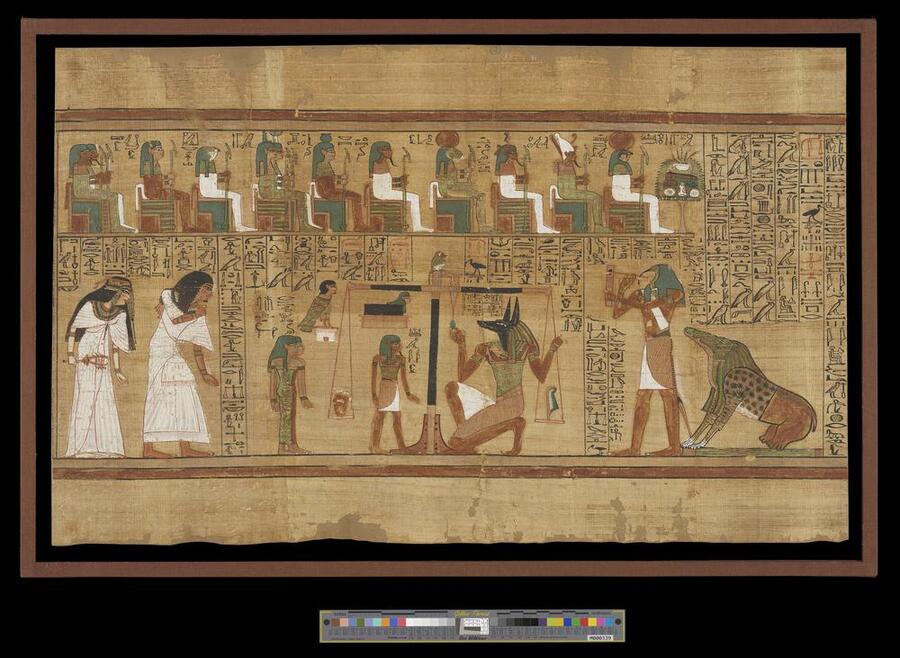
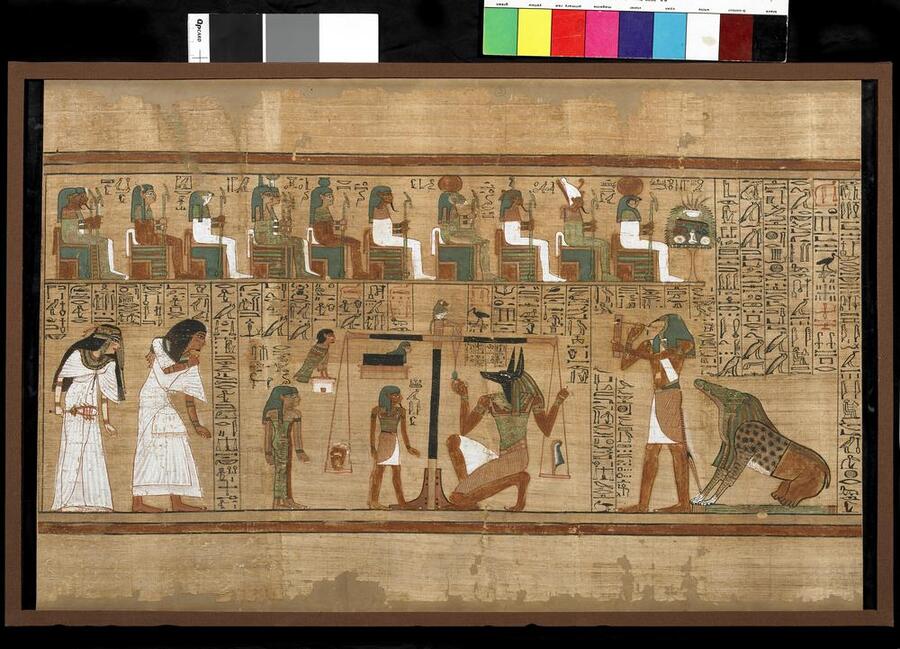
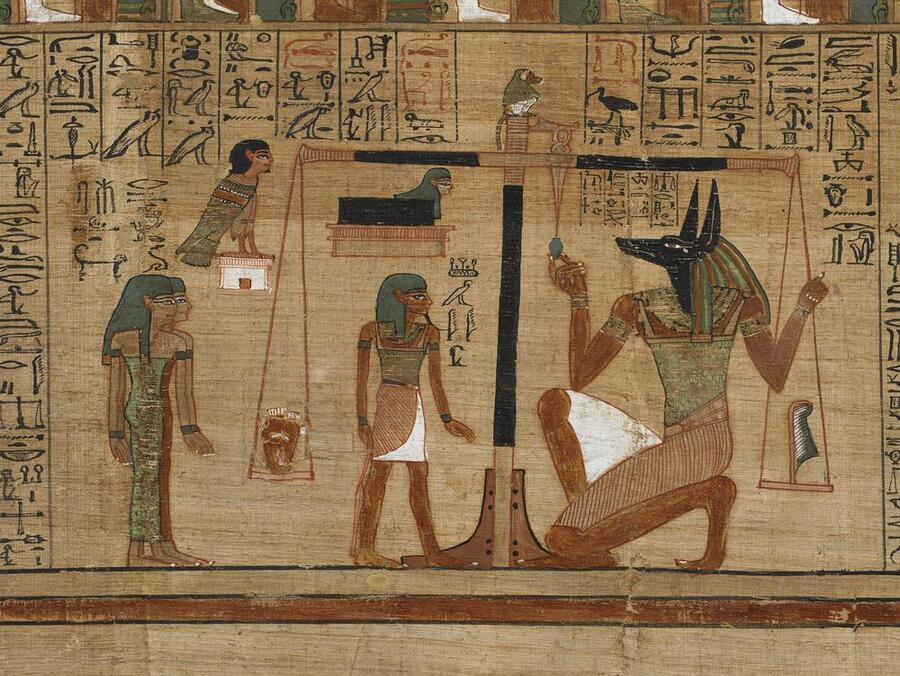
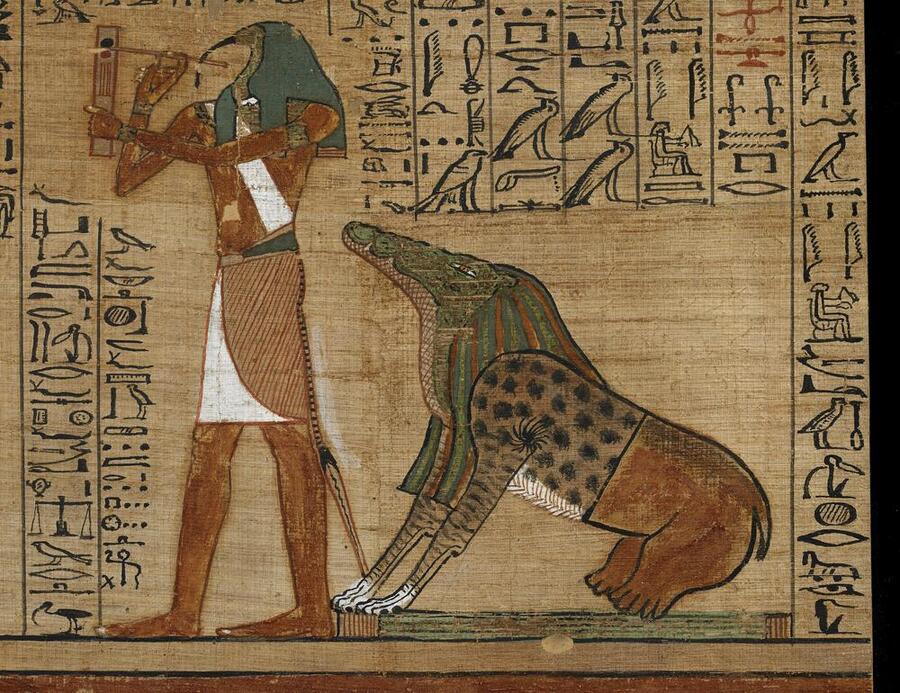
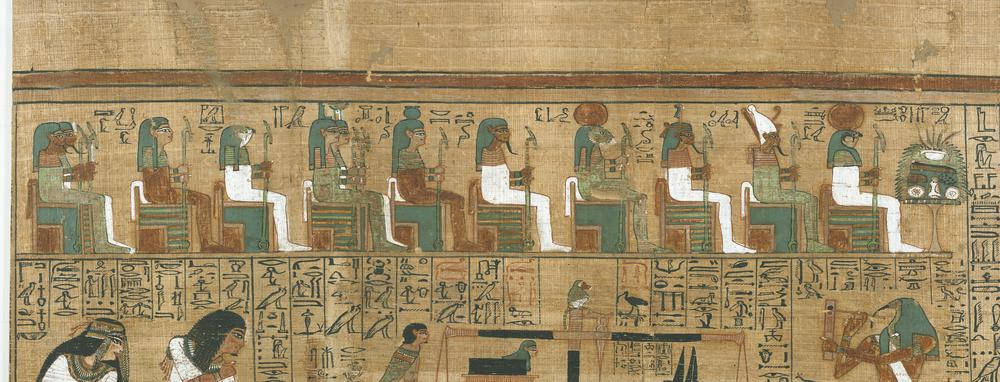
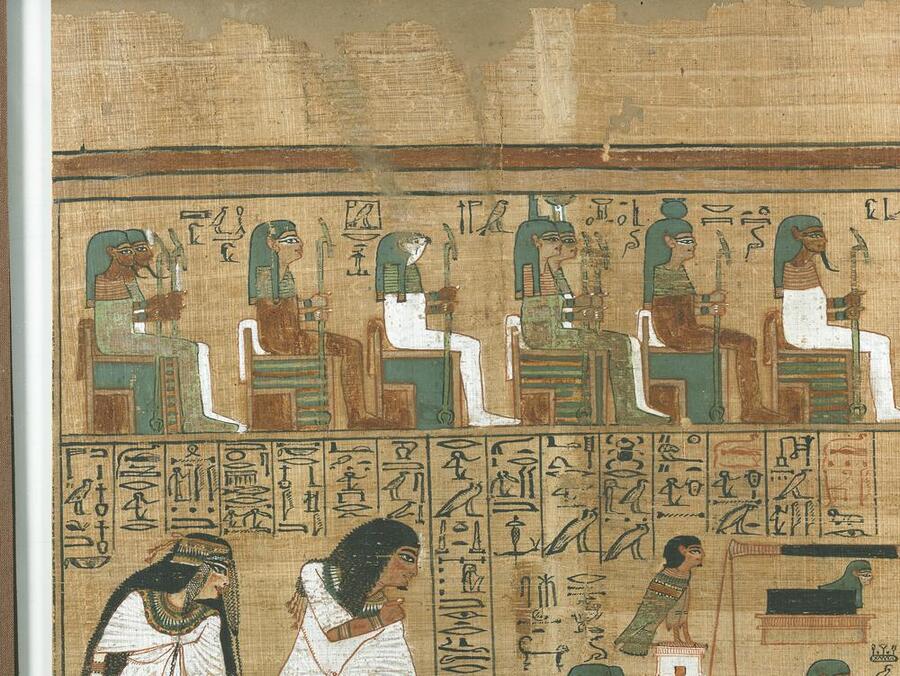
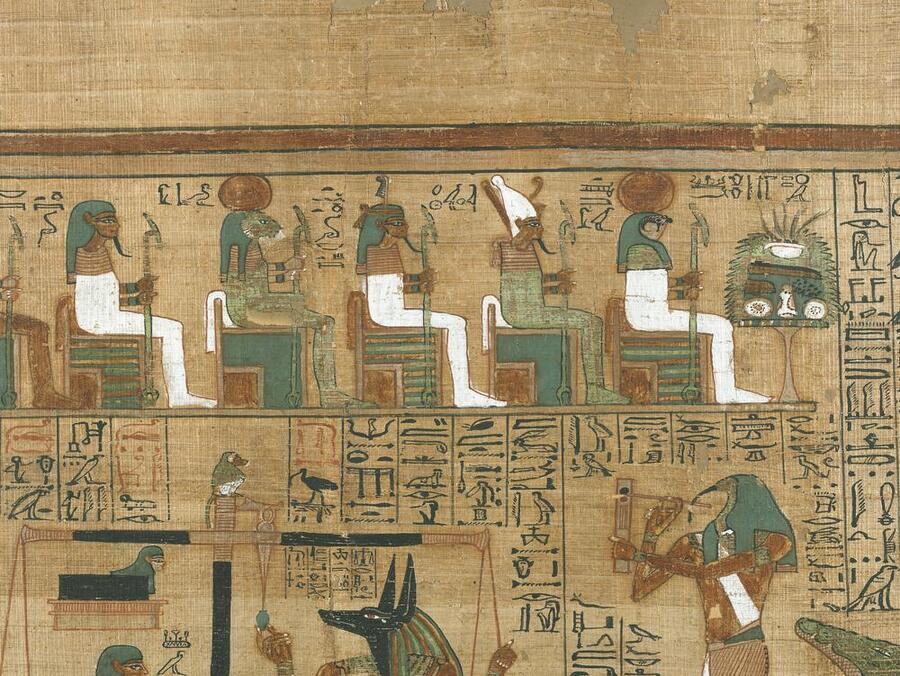
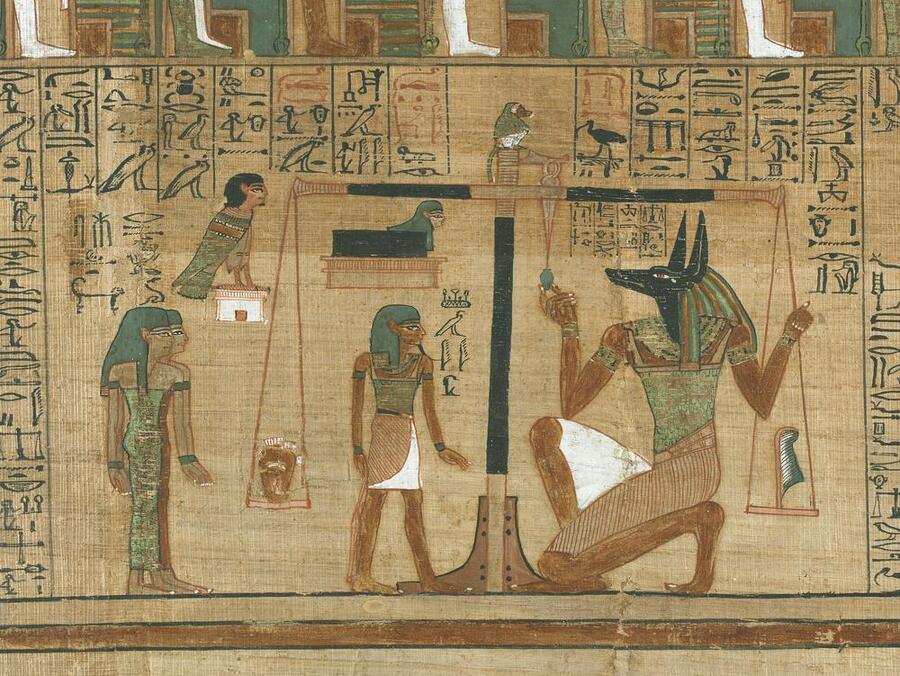
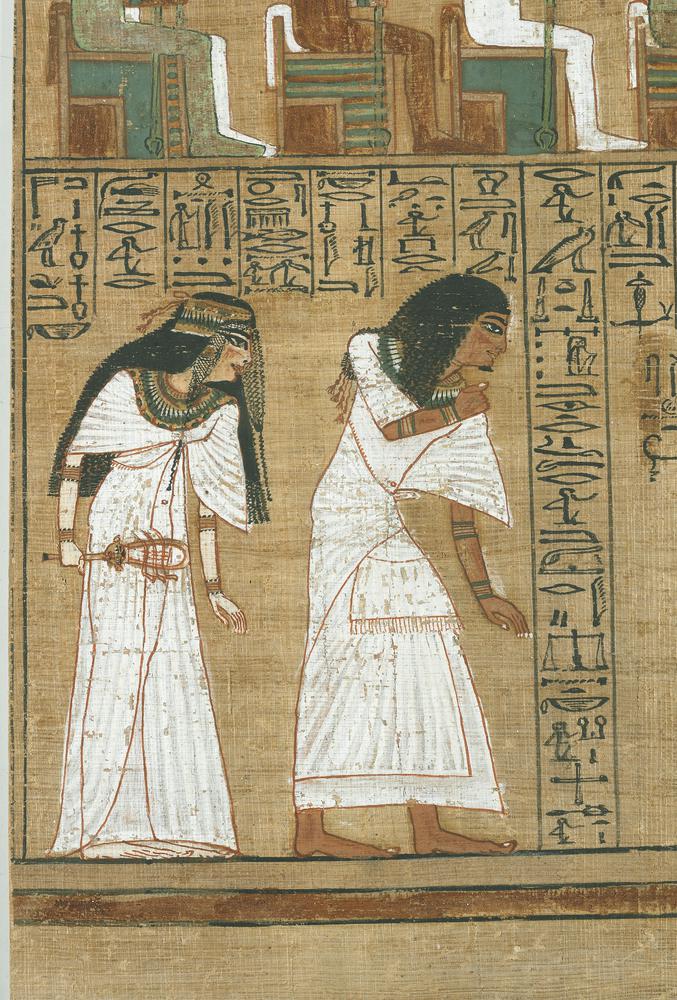
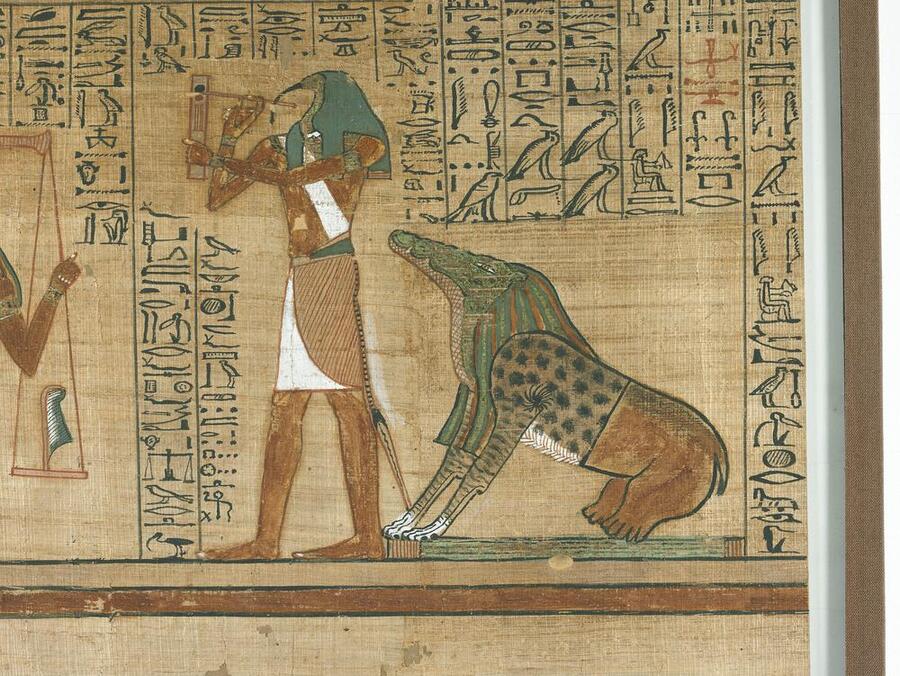
Scene of the Heart Weighing from the Papyrus of Ani. Circa 1250 BCE.