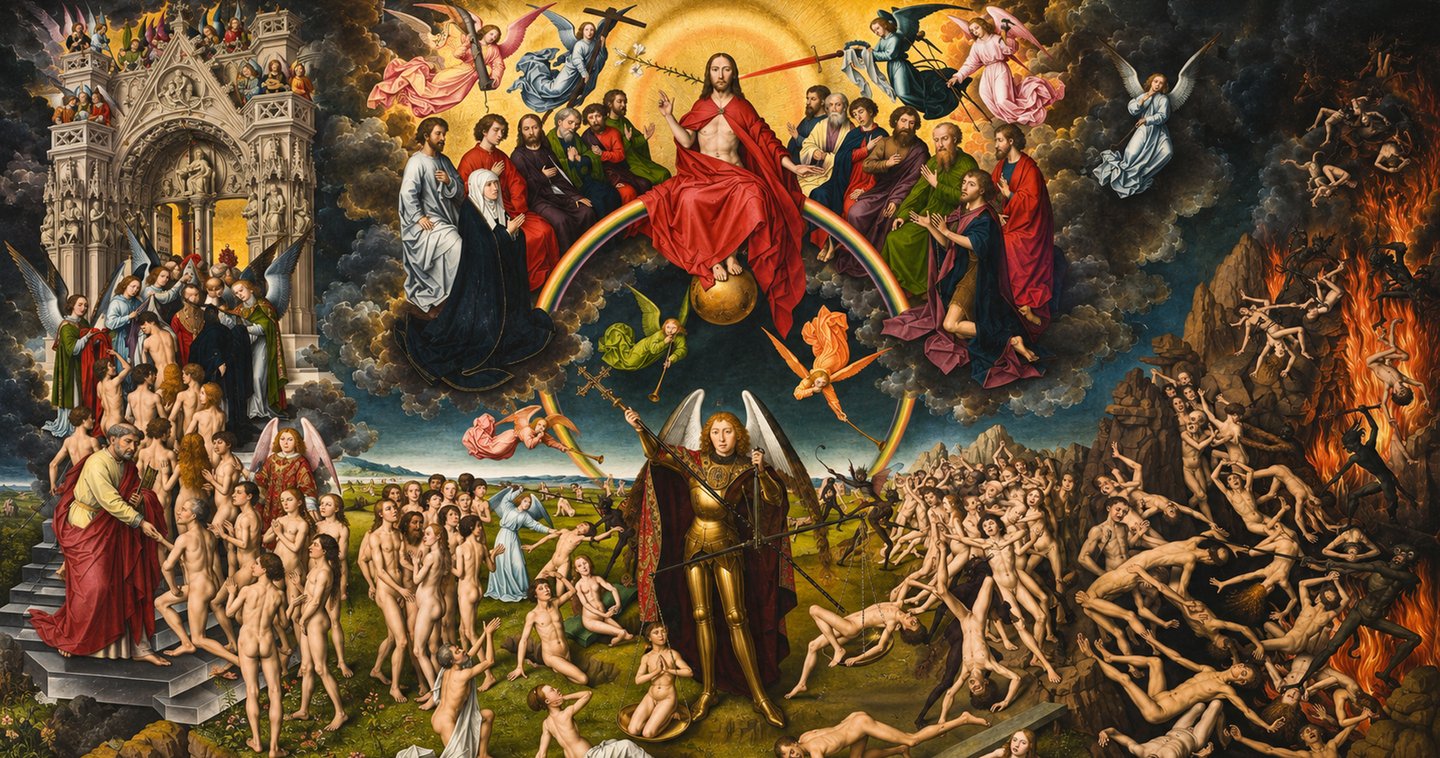
Рай и ад: визуальные принципы противопоставления двух миров в изображениях Страшного суда XII–XV веков
Concept
The Last Judgment is a common theme in Western European religious art from the 12th to 15th centuries. It was depicted on cathedral portals, in frescoes, mosaics, and altarpieces. The foundation of these works is the concept of dividing people into the saved and the condemned. However, artists organized the space of heaven and hell differently, depicted human figures, and conveyed their movement in varying ways. In depictions of the Last Judgment, heaven and hell are not always presented as two separate spaces. Sometimes the boundary between them is indicated by architecture or compositional division, and at other times the difference is most noticeable in the characters' behavior. Therefore, it is important to examine not only what is depicted, but also how the artists structure the composition.
Particular interest lies in how artists contrasted heaven and hell. They depicted these realms not only through religious symbols but also through composition, scale, rhythm, the movement of figures, and color.
The period of the 12th–15th centuries allows for a comparison of Romanesque, Gothic, and Early Renaissance art. During this time, the ways of depicting the human body, conveying space, and using color evolved. Through the works of different periods, one can trace how these changes were reflected in the depiction of the Last Judgment.
What visual elements did artists of the 12th–15th centuries use to contrast heaven and hell in Depictions of the Last Judgment?
It is also important to understand how these techniques differed across various artistic traditions and how they evolved over several centuries.
Research Hypothesis: The differences between paradise and hell are conveyed not only through narrative, but also through the organization of space, the character of the figures' movement, color, and light.
It is hypothesized that images of heaven tend to feature more ordered groupings of characters, whereas scenes of hell are characterized by greater tension and diversity of movement. Nevertheless, individual works may not adhere to this division.
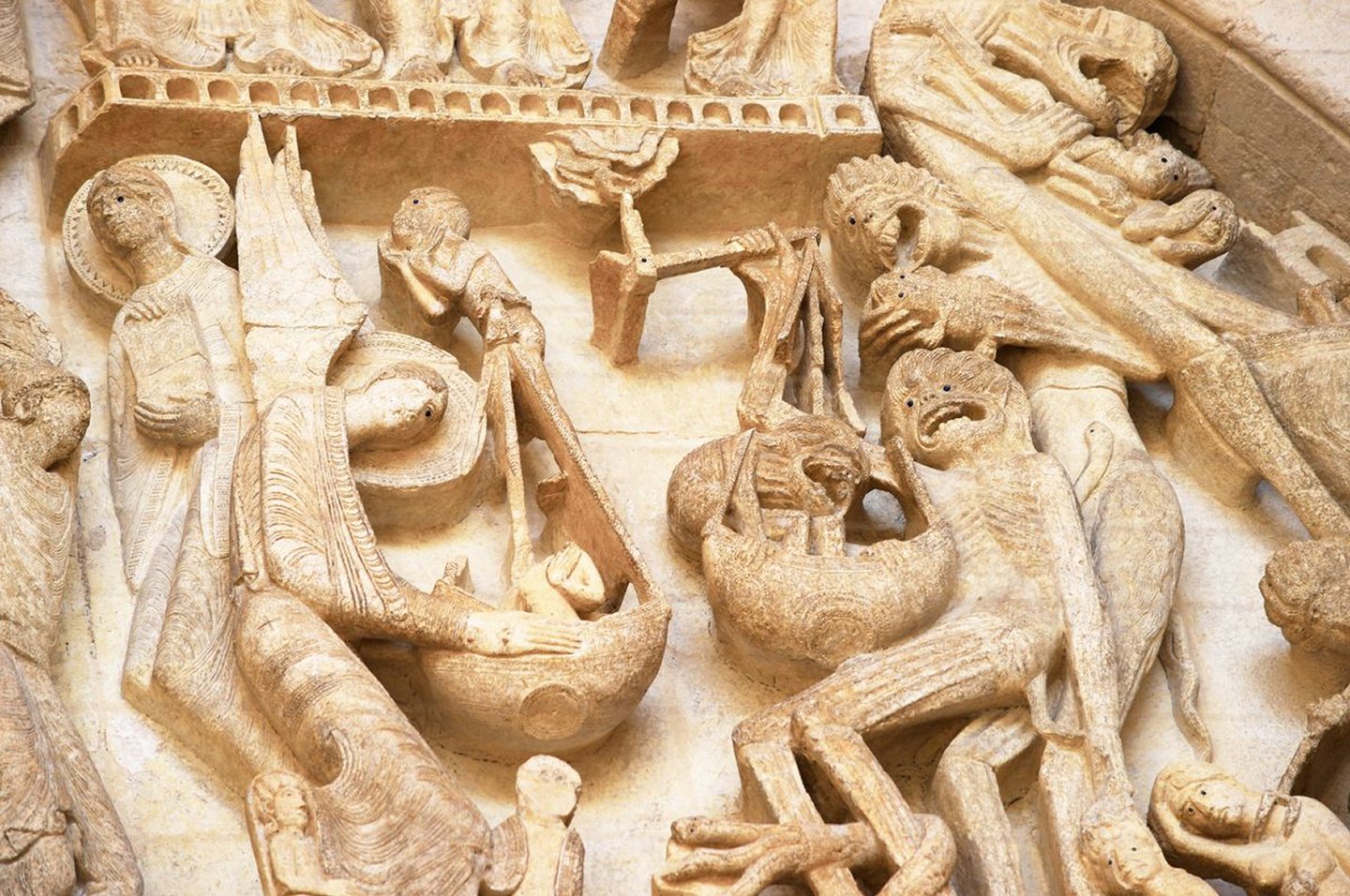
Gislebertus Augustus (traditional attribution), «The Last Judgment, ” fragment „The Weighing of Souls, ” c. 1130–1145.
The research is based on a comparative analysis of works that share the theme of the Last Judgment, yet differ in their methods of depiction.
The principle for selecting visual materials is based on a common theme and the possibility of comparing artistic techniques. The study includes works of Western European art from the 12th to the 15th centuries. Primary focus is placed on the art of France, Italy, and the Netherlands. For analysis, works depicting heaven and hell or contrasting groups of the saved and the condemned have been selected.
The core of the research consists of sculptural reliefs, frescoes, mosaics, and painted works. The paper examines nine pieces from the 12th–15th centuries. Their selection took into account thematic relevance, the diversity of artistic solutions, and dating accuracy. The quality of the images is also crucial, as it allows for detailed examination and comparison of the works.
The research is comprised of four chapters, each dedicated to a distinct group of artistic techniques.
Chapter One examines the compositional and spatial division of two worlds. Primary focus is placed on the placement of Christ, the arrangement of the saved and the damned, and the boundaries between these groups.
Chapter Two analyzes scale, symmetry, and rhythm. The study covers the dimensions of the figures, the density of their arrangement, and the repetition of individual elements. This will help illuminate how artists generated a sense of order or tension.
Chapter Three is dedicated to the plasticity of the human body, gestures, and movement. Postures and actions of the characters will be compared using various examples. This allows for an assessment of how artists conveyed the emotional state of the saved and the damned.
Chapter Four addresses the role of color, light, and artistic technique. The analysis investigates how color contrasts influenced the perception of heaven and hell. Furthermore, the distinct characteristics of different art forms will be explored. This enables a comparison of how the two worlds were depicted in painting, mosaic, and sculpture.
Within each chapter, the artworks will be examined considering the time of their creation. This approach will help reveal common artistic conventions and trace how they evolved from the 12th to the 15th century.
The theoretical foundation of the research consists of scientific works on the history of Western European art and the iconography of the Last Judgment. These works help examine the pieces within their historical context and analyze the specifics of their composition, the depiction of human figures, and the use of color.
When studying the works, research on the iconography of the Last Judgment and the specifics of medieval art is taken into account. For analyzing individual monuments, works by A. Ya. Gurevich, O. V. Subbotina, I. V. Golubeva, and other art historians listed in the bibliography are utilized.Scholarly literature is used to refine dating, historical context, and the characteristics of specific pieces. However, the primary focus of the work is placed on independent image analysis and the comparison of artistic techniques.
The goal of this study is to identify the primary methods of visual contrast between paradise and hell using works of Western European art from the 12th to the 15th centuries as examples.
Comparing these works will allow us to determine which techniques were employed over several centuries and which ones changed with time. It is also important to investigate how frequently artists contrasted heaven and hell through order versus chaos, stillness versus movement, and symmetry versus asymmetry.
I. Space and Composition
One narrative, multiple ways to divide space.
In the images of the Last Judgment, artists contrasted two worlds. They achieved this through the arrangement of figures, compositional boundaries, and the division of space into distinct sections. In most of the selected works, Christ occupies the central position, flanked by the saved and the condemned. However, the methods used to organize these groups vary. To understand these differences, we will examine five works from the 12th–15th centuries.
Unknown Master, «Last Judgment, ” first half of the 12th century.
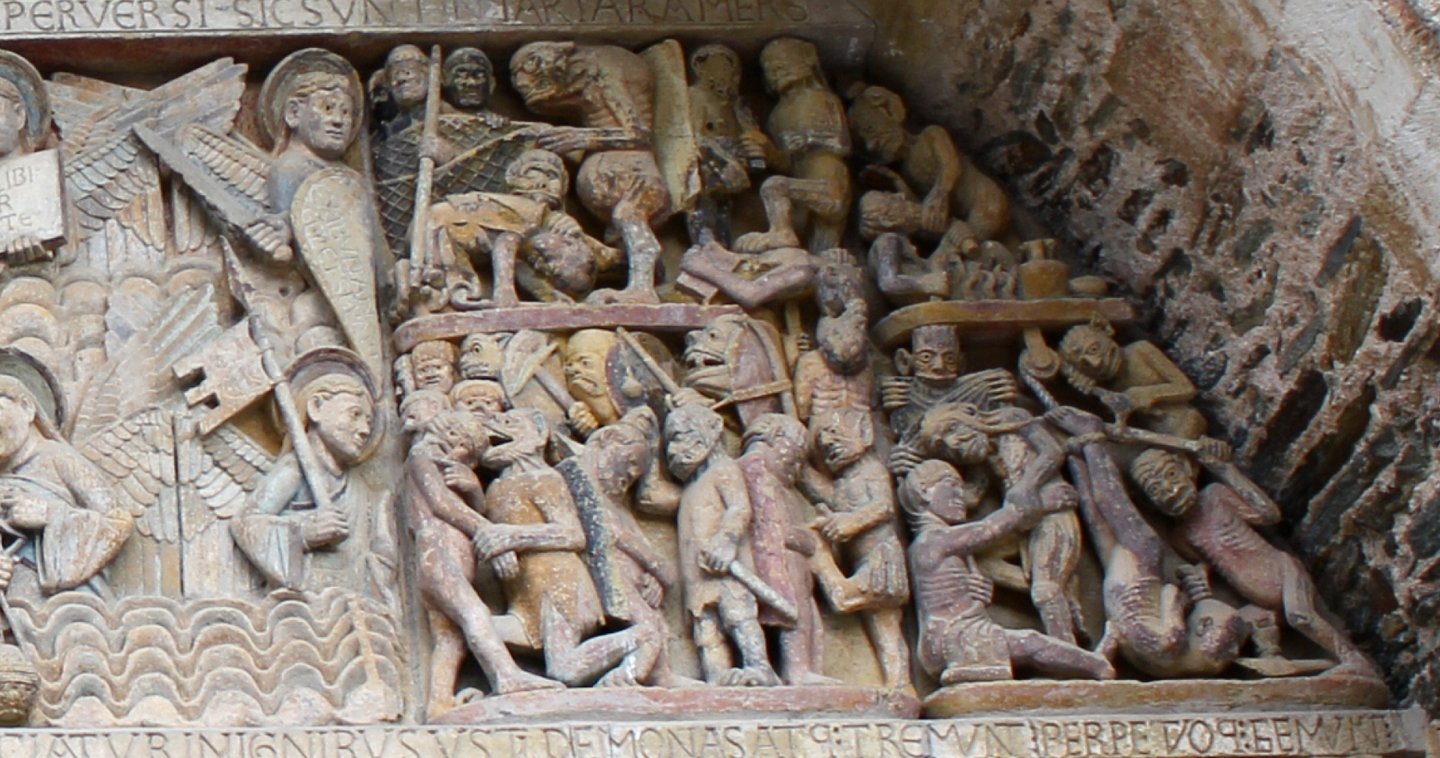
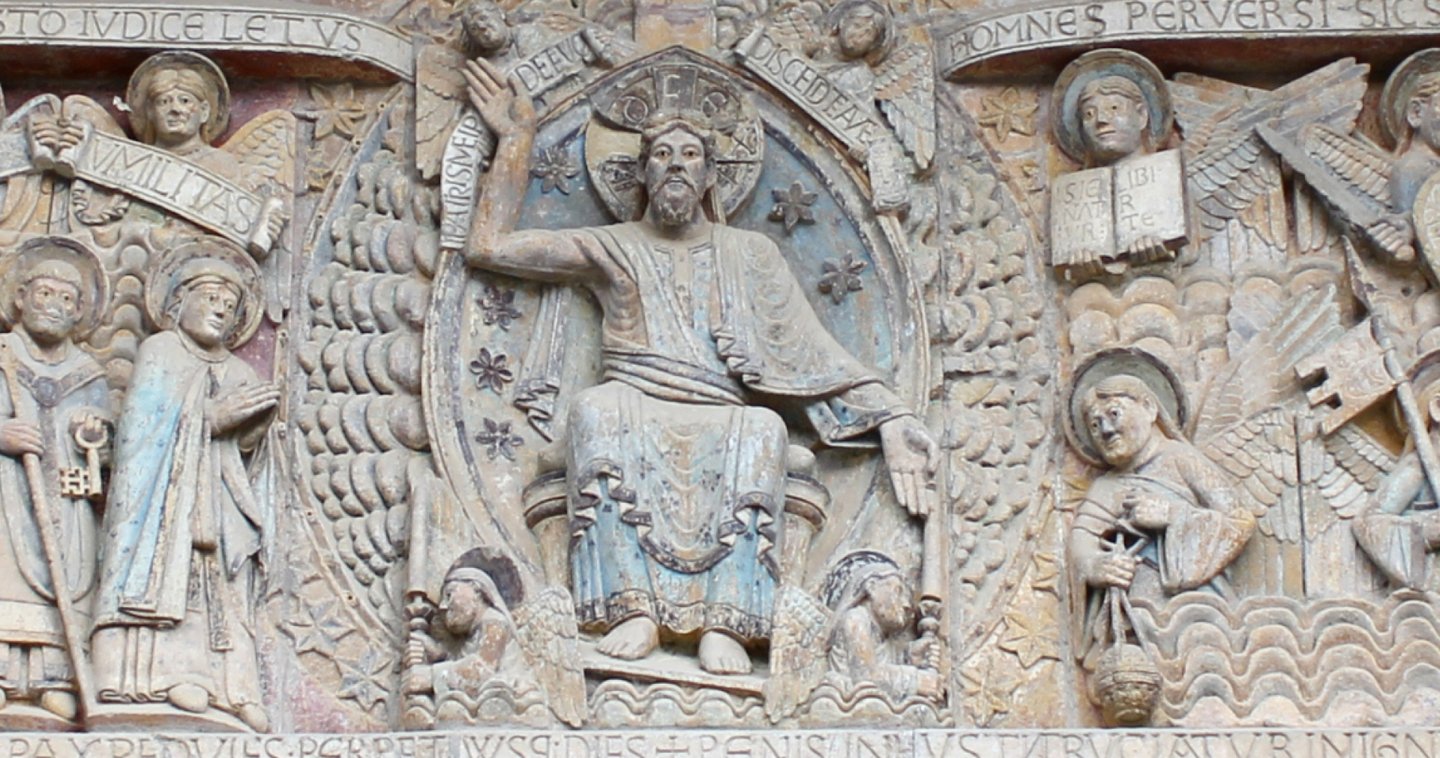
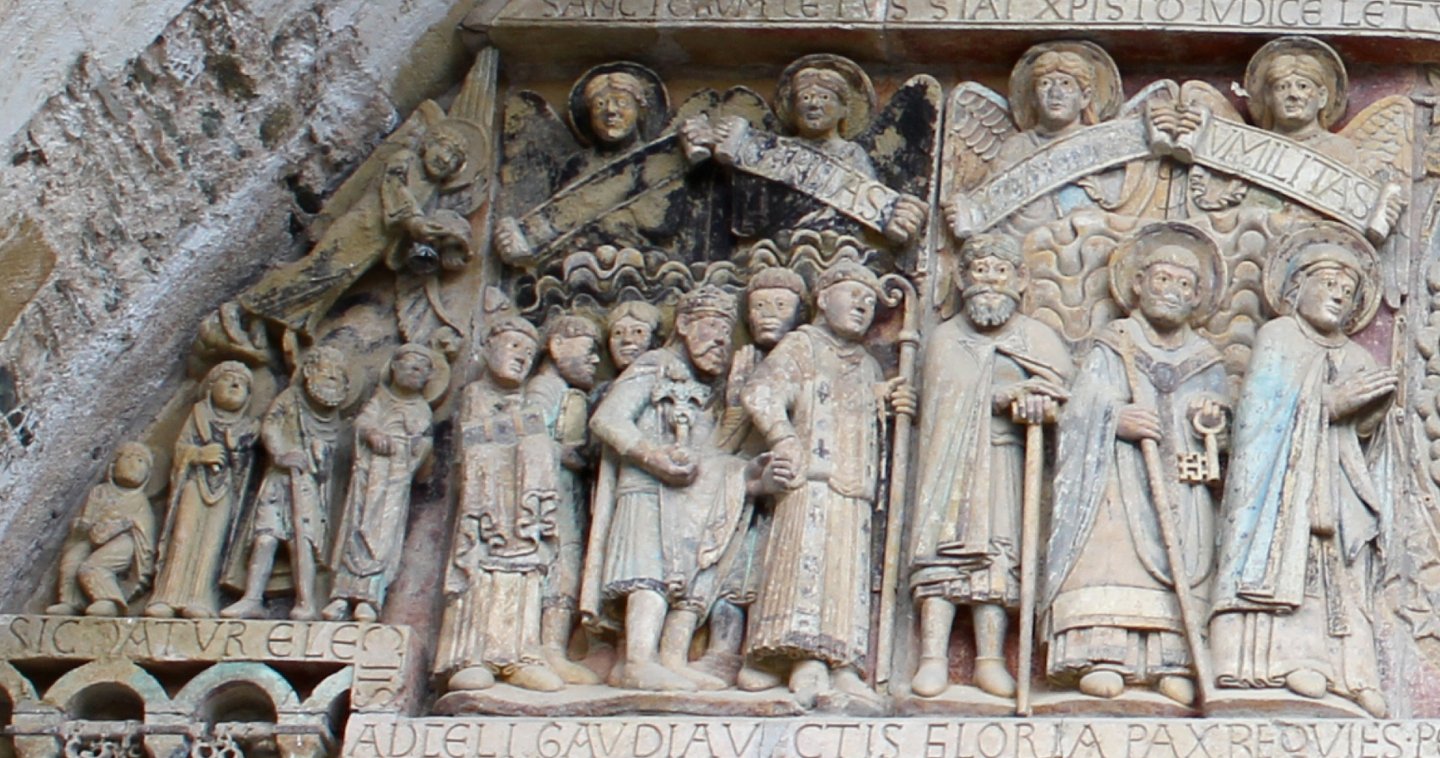
Unknown master, «Last Judgment,» fragments from the central tier, first half of the 12th century.
Christ is at the center of the composition. His figure is significantly larger than the others. To the viewer’s left are the saved, and to the right are the condemned.
Unknown master, «Last Judgment,» early 12th century. Compositional division schema in three tiers.
The composition of the relief is divided into three horizontal tiers. In the upper tier, angels proclaim the coming of the Last Judgment. The central tier features Christ surrounded by the saved, angels, and sinners. The bottom tier depicts heaven and hell.
This division helps sequentially unfold the narrative. Furthermore, the contrast between the two worlds is established vertically as well: the side of the saved is on the viewer’s left, and the side of the condemned is on the viewer’s right.
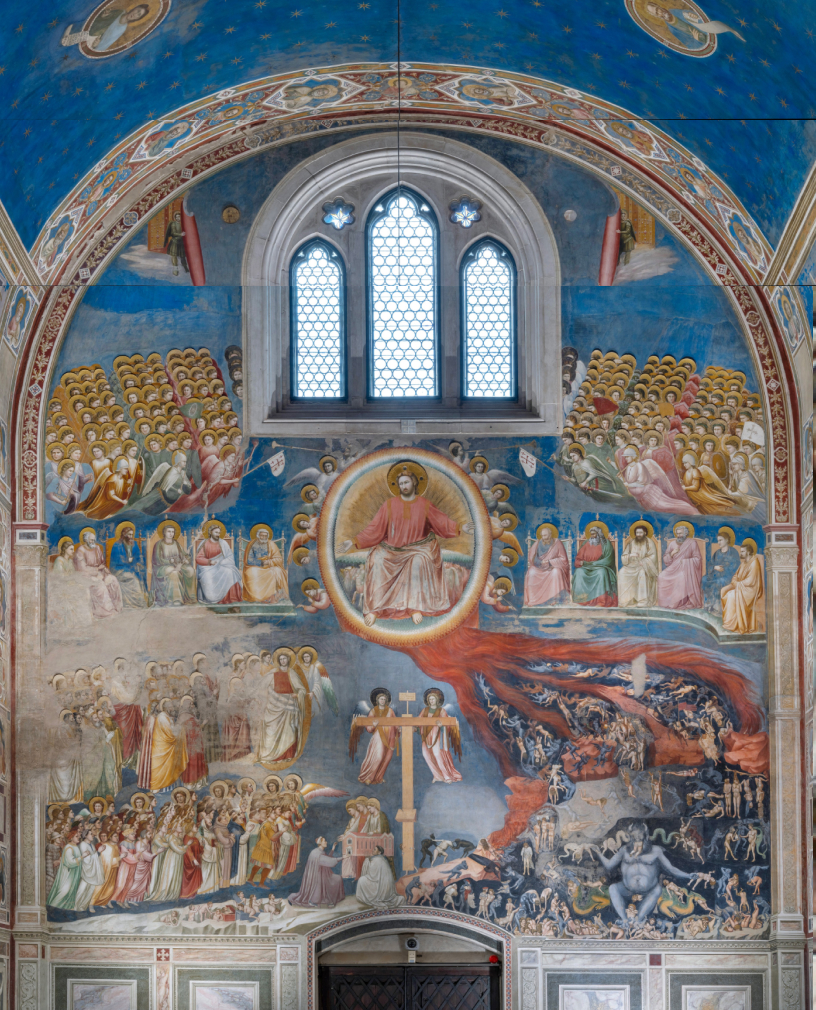
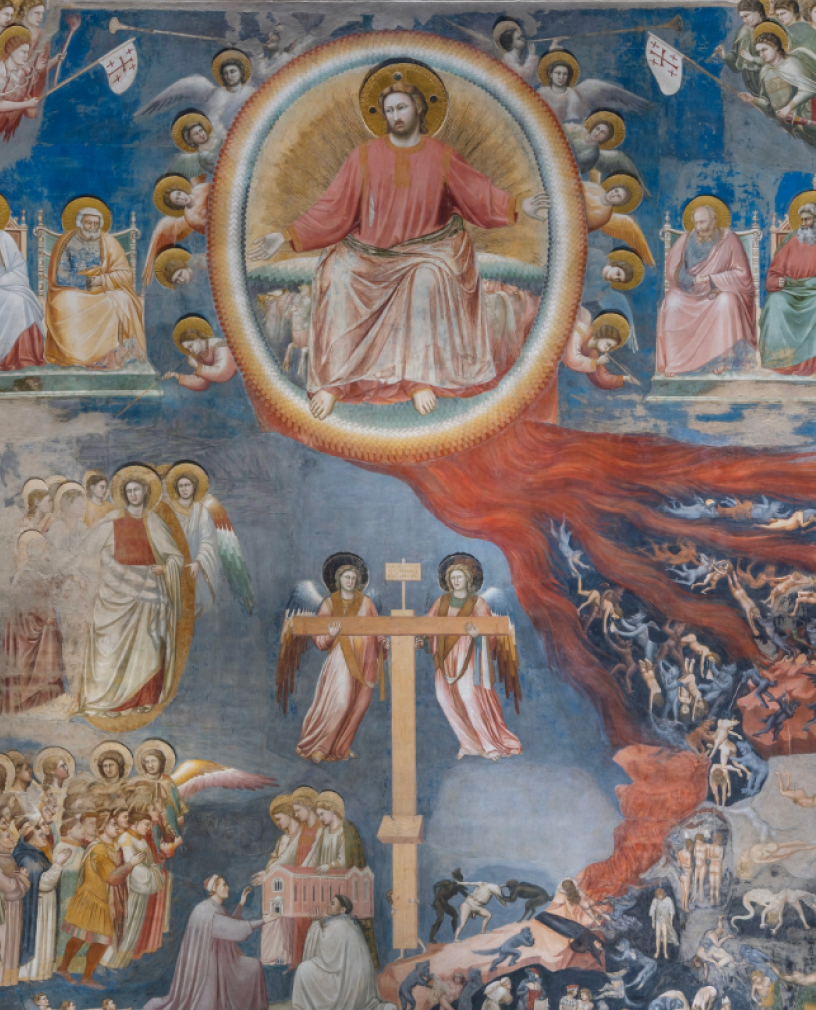
Giotto di Bondone, «The Last Judgment,» 1303–1305
Giotto’s fresco covers the entire west wall of the Scrovegni Chapel. Christ, surrounded by angels and apostles, is depicted in the center. The upper portion of the composition is dedicated to the heavenly realm, while the lower section portrays the saved and the condemned.
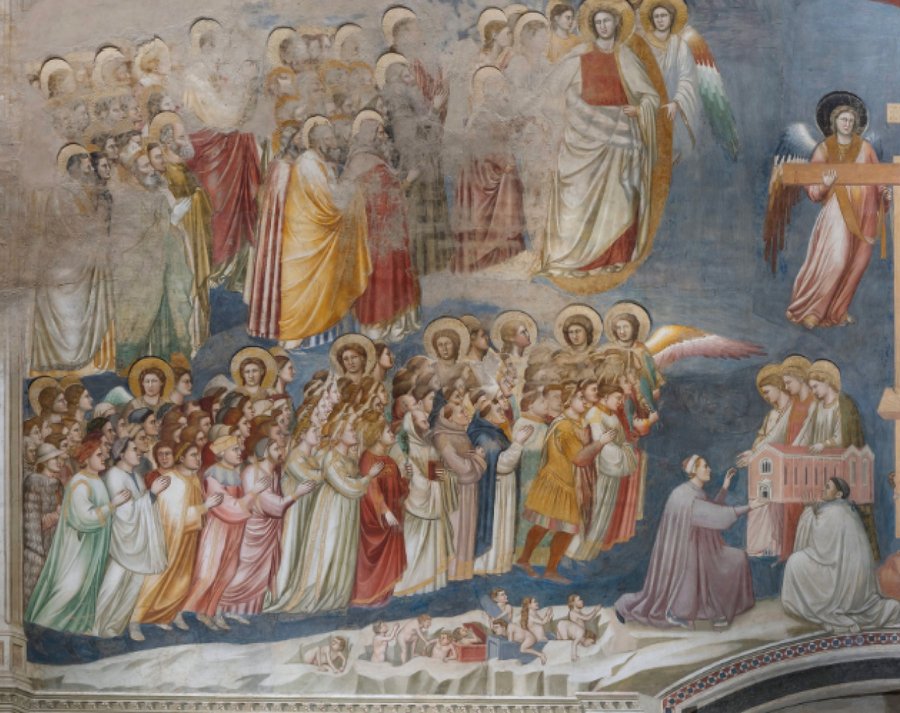
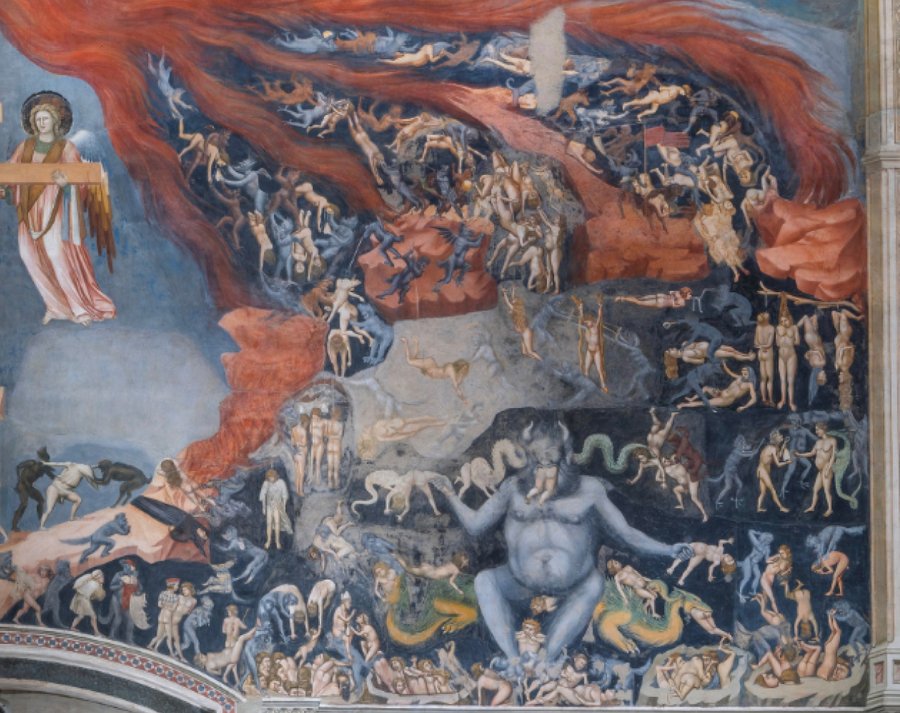
Giotto di Bondone, «The Last Judgment, ” fragments of the saved group and the space of hell, 1303–1305.