Concept
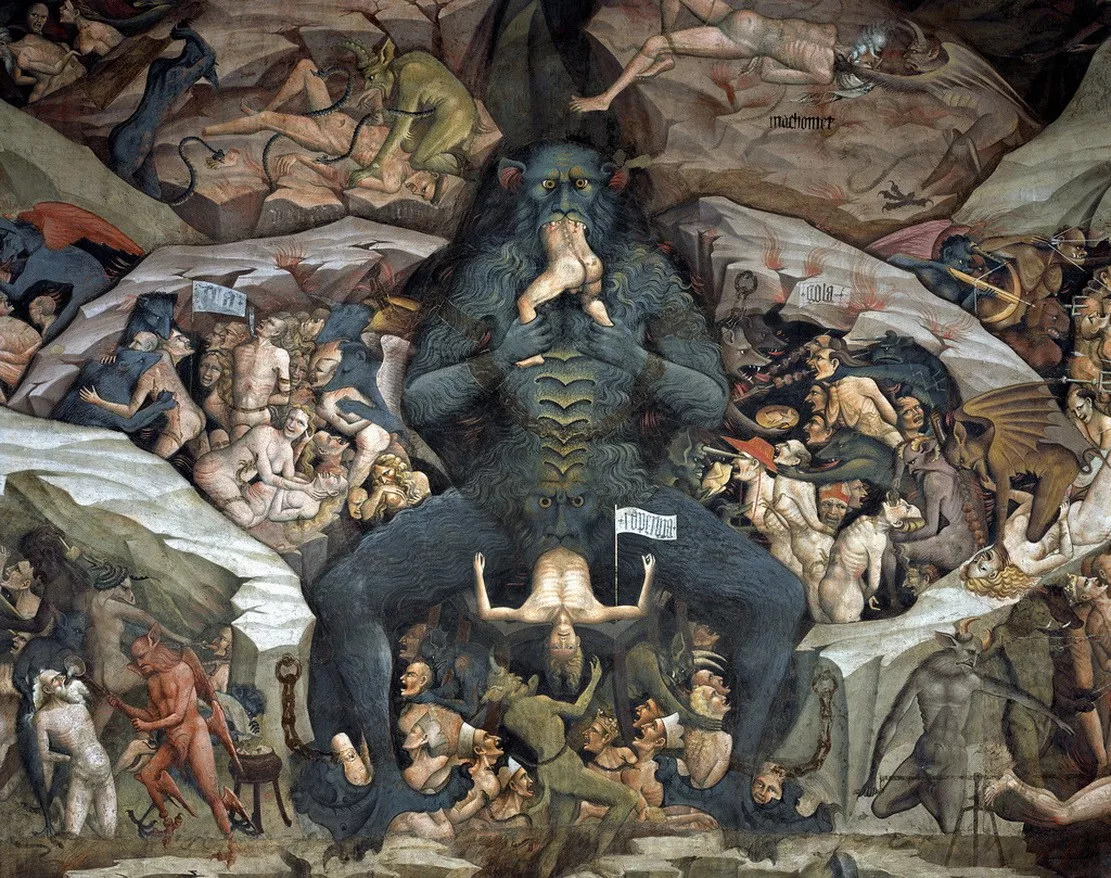
Hell is one of the enduring motifs of 12th–15th century art. Artists depicted it in diverse ways—as the maw of a monster, a fiery abyss, an enclosed space, or a system of distinct levels. The boundaries, internal structure, and placement of figures helped convey conceptions of the afterlife and separate it from the world of the living. The depiction of hell was not limited to isolated scenes of punishing sinners. Artists paid close attention to spatial organization: they utilized rock and architectural forms, divided the image into tiers and zones, highlighted central figures, and repeated specific motifs. These decisions allowed hell to become an independent component of the artistic composition. It is particularly compelling to examine this motif in the art of the 12th–15th centuries. During this period, artists employed various methods to represent the afterlife, which allows one to trace the peculiarities of its visual embodiment and recurring artistic techniques. In this study, I hypothesize that, despite the differences between works, common methods of organizing space and composition can be identified in the depictions of hell. Analyzing these methods will help understand how artists created the image of hell as a distinct world separated from the earthly one. The goal of this research is to identify and systematize the artistic techniques that 12th–15th-century artists used to depict hell, as well as to examine how these techniques influenced the perception of the works. To achieve this, I divided the techniques under consideration into two groups: spatial and compositional. This separation allows for a distinct examination of the structure of the depicted hell and the methods of organizing elements within the artistic composition.
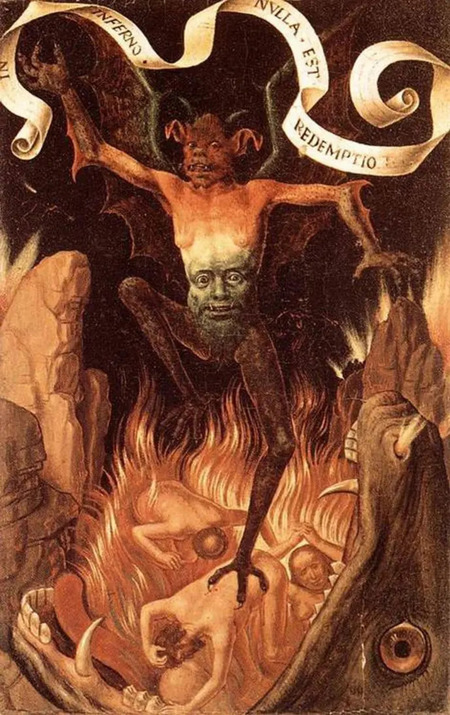
«Триптих земного тщеславия и божественного спасения», Ганс Мемлинг, XV век
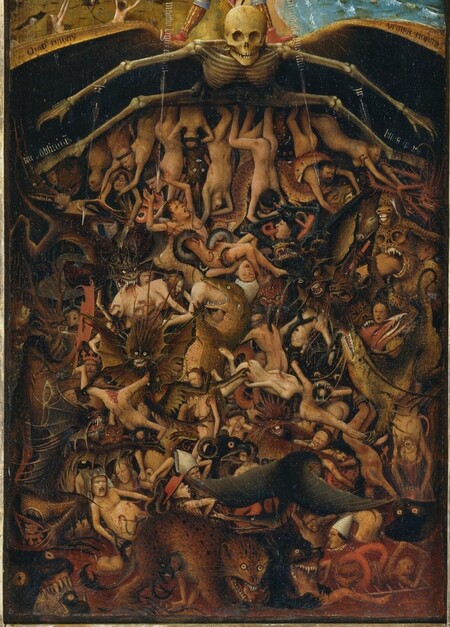
«Распятие и Страшный суд», Ян ван Эйк, XV век
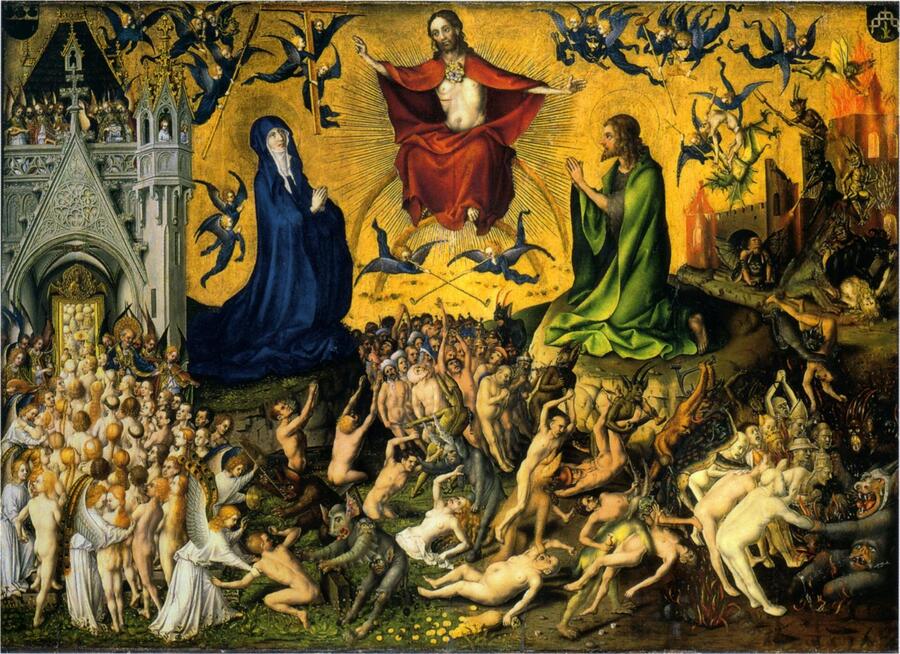
«The Last Judgment,» Stefan Lochner, 15th Century
«The Last Judgment, ” Hans Memling, 15th Century
Spatial Techniques
The Boundary Between Worlds
«The Descent of Christ into Hell, ” Duccio di Buoninsegna, 14th century
In medieval art, artists frequently depicted hell as the maw of a monstrous beast to illustrate the boundary between two worlds.
«Descent into Hell, ” 14th Century
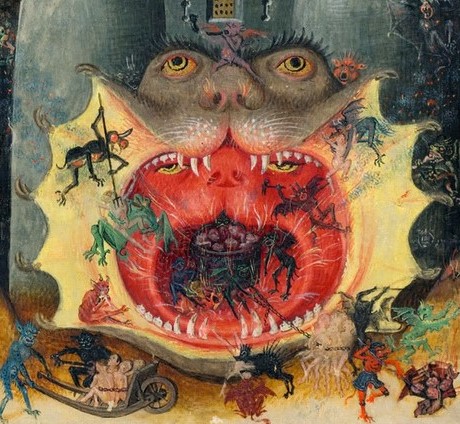
«Пасть ада» из «Часослова Екатерины Клевской», XV век
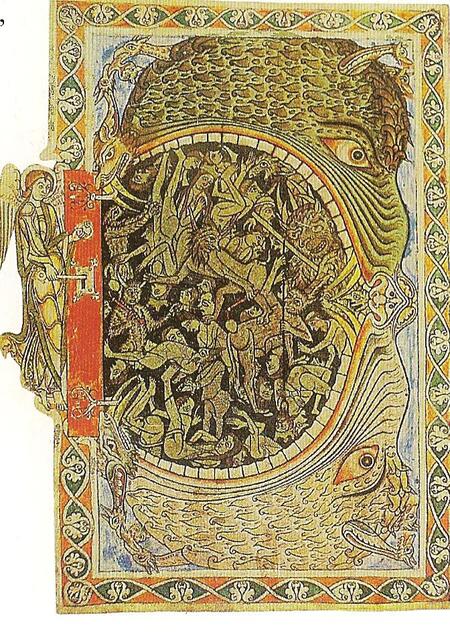
«Архангел затворяет челюсти ада» из «Винчестерской псалтири», Xll век
In some medieval depictions, the creature’s mouth transforms into a kind of frame through which the viewer observes hell. This frame symbolizes entry into the supernatural world, visually separating it from the external environment.
Manuscript: «Morgan Apocalypse, ” Unknown Author, 13th Century
«Winchester Psalter» (or Henry Blaise Psalter), miniature «Descent into Hell, ” Unknown artist, 12th century
A Closed Space of Hell
Artists utilized rock indentations and cave-like formations to depict hell as a closed space, segmented into distinct areas. These natural forms created a sense of depth and spatial confinement.
Miniature «Torment of the Killers» (or «Infernal Cauldron») from the renowned Franco-Flemish manuscript «The Visions of Knight Tondal, ” Simon Marmion, 15th century
The artists depicted the confinement of hell using tightly packed figures, surrounded by rocks and architectural elements. As a result, the space appeared dense, leaving the characters no room to move freely.
Excerpt from Giotto di Bondone’s famous fresco «The Last Judgment,» 14th century
In some works, hell takes the form of a space containing distinct locations for punishment. This structure allowed several scenes to be unified into a single composition, illustrating the internal organization of hell.
Levels and Zones
Artists used a tiered structure to represent Hell as a multi-level, deep-reaching space.
Fragment of the fresco «Triumph of Death,» Last Judgment by Buonamico Buffalmacco, 14th century
In other works, hell was divided into separate zones corresponding to specific tortures. This structure allowed for the depiction of different types of punishment within a single image.
«The Seven Deadly Sins, ” Taddeo di Bartolo, 14th Century
Some artists, such as Taddeo di Bartolo, divided hell into zones for punishment, drawing upon the seven deadly sins. Such a number of sins represents a traditional division in Christianity.
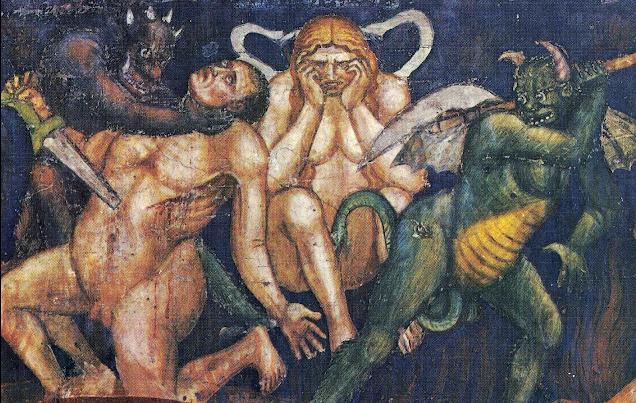
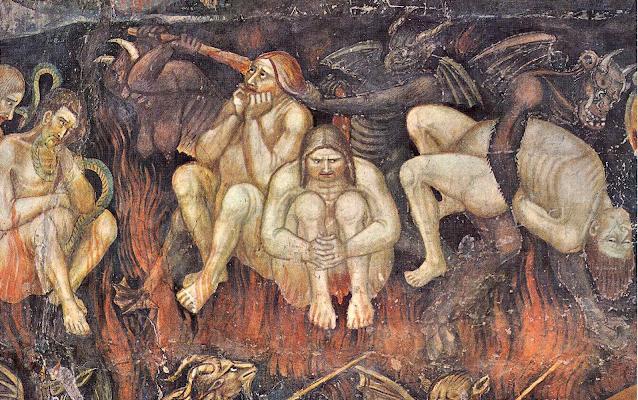
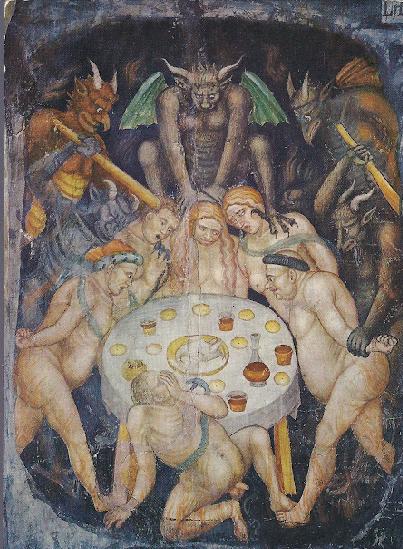
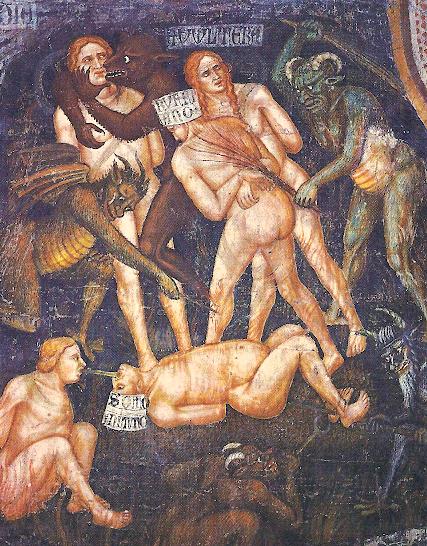
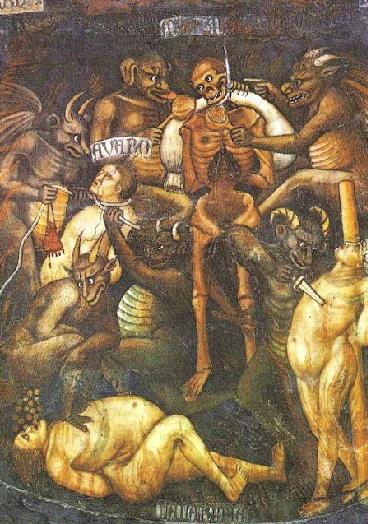
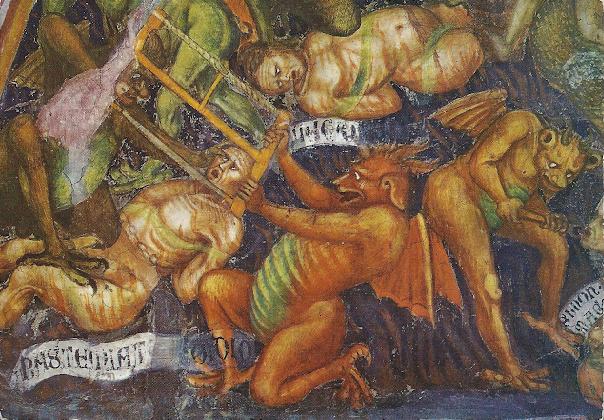
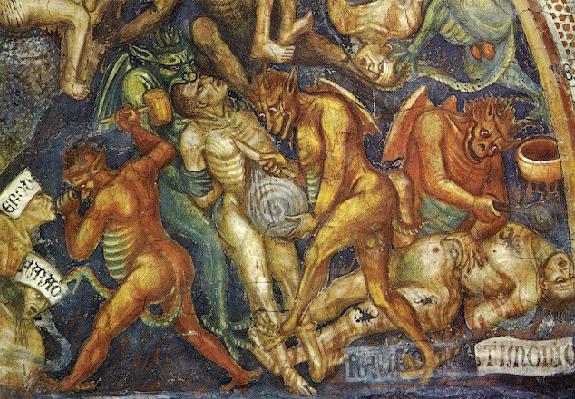
«The Seven Deadly Sins» by Taddeo di Bartolo, 14th century
The image of a multi-layered hell was particularly detailed in the illustrations for Dante’s «Divine Comedy.»
«The Map of Hell» (Italian: La Voragine Infernale or La mappa dell’Inferno), Sandro Botticelli, 15th century