Navigation
1. Concept 2. Primitive Art: Hair as Part of Human Imagery 3. Ancient Egypt: Hairstyle as a Marker of Status 4. Antiquity: Naturalism and Idealization 5. Middle Ages: Hair and Religious Beliefs 6. Renaissance: Hair as an Element of Artistic Expression 7. 17th Century: Hairstyle as a Display of Status and Fashion 8. Conclusion
Concept
The core idea of this visual research is to trace the evolution of hair and headwear—from the simplest forms and textures of the Paleolithic era to the elaborate hairstyles and artistic imagery of the 17th century. The objective is to examine hair not merely as a part of human appearance, but as an independent artistic element that reflects the aesthetic concepts and characteristics of various historical periods. The aim of this study is to determine how the form, plasticity, and methods of depicting hair have changed across different historical periods, as well as to trace how historical hairstyle archetypes are reflected in contemporary fashion.
Primitive Art: Hair as Part of Human Identity
During the Paleolithic era, humans began creating small sculptural depictions of people. One of the popular figures was the so-called «Venus.»
In most cases, attention was focused on the rounded forms of the body; however, some figurines also showed traces of hairstyles or headwear. Such details undoubtedly suggest that
even back then, humans were paying attention to external adornment, possessed a sense of aesthetics,
and strived for self-expression.
This is particularly interesting for the history of fashion: it turns out that the human interest in adorning one’s appearance has a much older history than the advent of clothing as we currently understand it.
The Venus of Willendorf stands out as one of the most compelling discoveries in Paleolithic art. Her head is covered in a dotted pattern that suggests hair, but despite this, researchers interpret the motif differently: it could depict a complex hairstyle or a headdress. The very structure of the pattern draws particular interest—its repeating elements appear quite organized, suggesting the deliberate creation of a specific image. If it truly is a depiction of hair, it may indicate that during the Paleolithic era, hair was already perceived as a significant aspect of appearance, one that could be styled and adorned. Conversely, if it is a headdress, it might represent one of the earliest evidence of using external elements to modify and enhance a person’s appearance.
Venus Villendorfska, artist unknown, c. 29,500–25,000 BCE
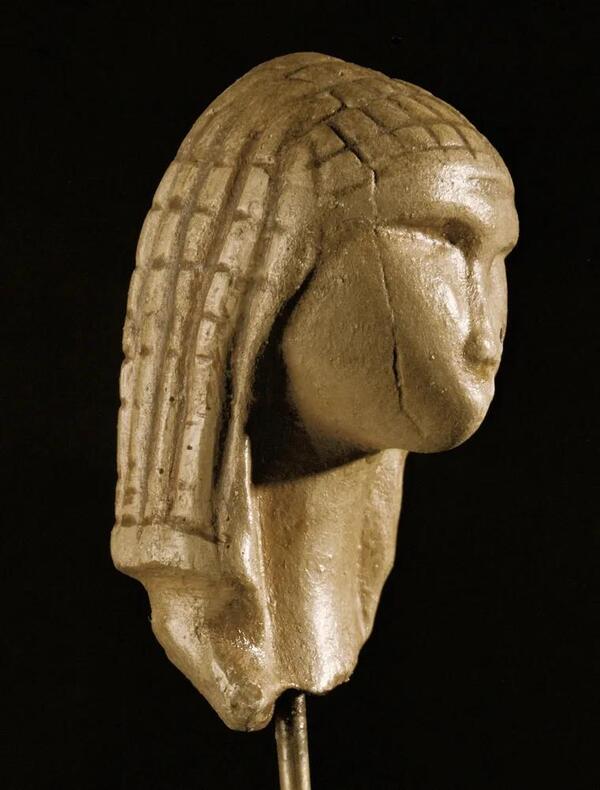
Venus of Brassempouy, carved from mammoth ivory and possessing recognizable facial features, unlike the Venus of Willendorf, can also serve as evidence of the development of human aesthetic perception during the Paleolithic era. However, the interpretation of the pattern on her head remains a point of contention among researchers. Some believe it depicts braided hair, while others suggest it is a net headdress or hood. This is why the sculpture is given the secondary name, «Lady in a Hood.» This designation emerged during the initial study of the find by archaeologist Edward Piette, who used the French name Dame à la Capuche.
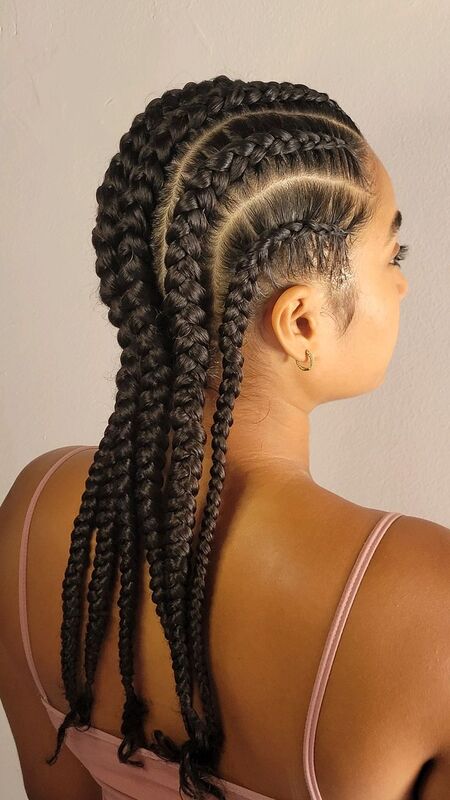
Certain elements of the patterns on Paleolithic statues' heads can evoke associations with modern hair braiding techniques, particularly with African traditions of creating elaborate hairstyles. Of course, this is only a visual resemblance, not a proven historical or cultural connection. Nevertheless, such parallels encourage us to contemplate how ancient the human drive to style and adorn hair might be.
Венера Брассампуйская, автор неизвестен, около 23 000 лет до н. э.
Современная техника плетения волос — корнроу (cornrows)
Ancient Egypt: Hairstyle as a Status Indicator
In ancient Egypt, great attention was paid to head adornment. On surviving sculptures and wall paintings, we can observe numerous variations in hairstyles, wigs, and headdresses. These elements, at first glance simple additions to the overall appearance, indicated a person’s social standing and sometimes served as ritualistic and religious symbols.
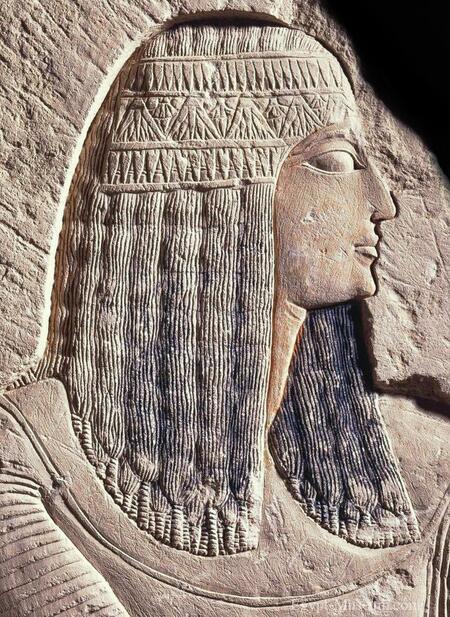
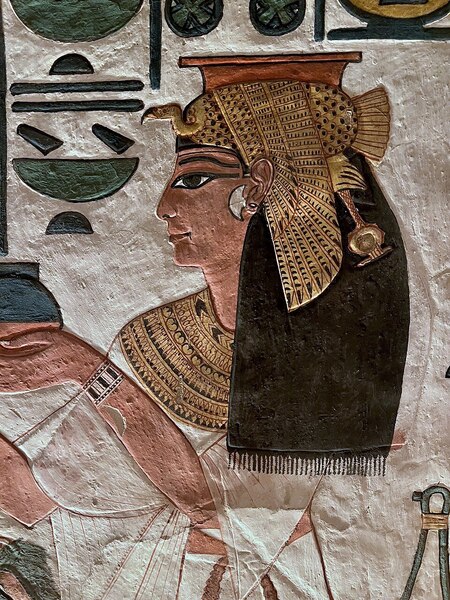
Wigs were an essential element of the ancient Egyptians' appearance. Both women and men wore them. They served several functions: highlighting social status, potentially holding ritual significance, and serving practical purposes. Wigs often featured significant volume and opulence. However, their appearance could be diverse—ranging from a short bob with bangs to intricate compositions mimicking braids or curly hair. In certain variations, a distinctive difference in hair texture at the ends can be observed, which may have been related to the use of braids, curls, or individual decorative elements.
Painting depicting musicians, tomb of Nebamun, circa 1350 BCE.
Рельеф с изображением древнеегипетского дворянина, Новое царство, 19–20 династии, ок. 1295–1069 гг.
Изображение царицы Нефертари. XIX династия, Новое царство, XIII век до н. э.
The materials used to construct wigs could also indicate the owner’s social standing. The most expensive pieces were made from natural human hair, meaning their production was primarily accessible to affluent segments of the population. In simpler versions, plant fibers or a combination of human hair and plant materials were used. Thus, the quality and intricacy of a wig could serve as an additional indicator of a person’s wealth and status. In addition to materials, hair ornamentation played a significant role. Women and men could complement their hairstyles and wigs with decorative elements: beads, metal rings, pendants, and floral rosettes. For wealthy Egyptians, these ornaments could be crafted from precious metals, particularly gold and silver, further emphasizing their social position.
Hairdresser Nauni. Human hair, beeswax. Third transitional period, 21st dynasty, c. 1051–1002 BCE. Discovered in the tomb of Meritamun (TT358), Deir el-Bahari, Thebes.
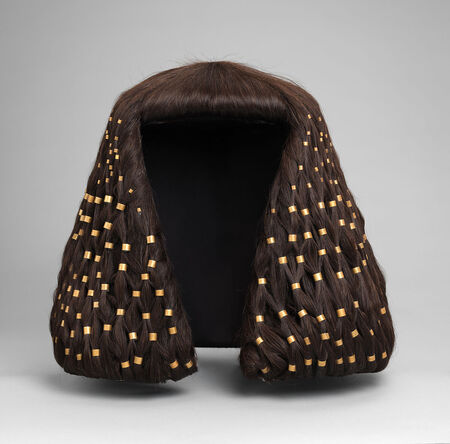
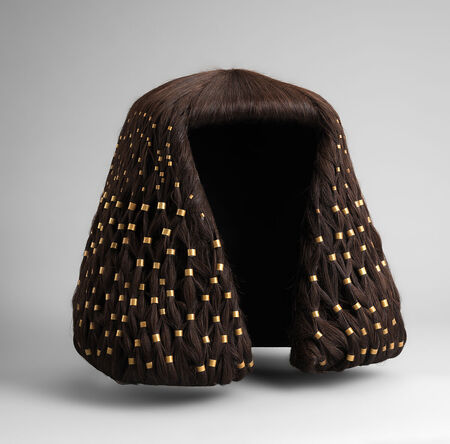
Golden rings for decorating the Sithathoriuneet wig. Middle Kingdom, 12th Dynasty, circa 1887–1813 BCE. 1,251 gold rings of two sizes were discovered in the tomb of Sithathoriuneet in Lahune. Since the hair and foundation of the wig were not preserved, the rings are displayed on a modern reconstruction of the wig in the Metropolitan Museum’s exhibition.
Headwear also served as a way to emphasize one’s status and authority. They could be adorned with images of various animals and objects—snakes, falcons, lions, and solar discs. Such elements carried specific symbolic meanings: they could be attributes of royal power, embody gods, or symbolize protection and patronage.
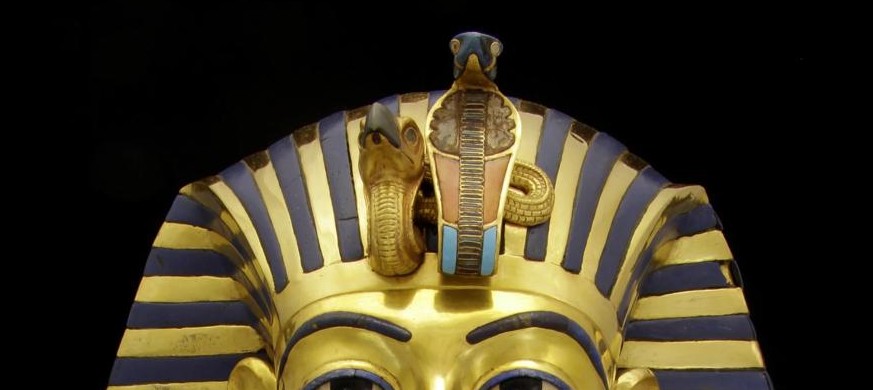
The nemes, or royal striped headdress, is one of the most recognizable headwear of the pharaohs. The most famous depictions of the nemes, such as on Tutankhamun’s golden mask, showcase a combination of blue and gold colors. This head covering was part of the royal regalia and emphasized the ruler’s elevated status. The nemes often featured symbols of royal protection on the forehead: the uraeus—the image of a sacred cobra symbolizing the goddess Wadjet—and the hawk, symbolizing the goddess Nekhbet. Together, they represented the patronage of Upper and Lower Egypt and underscored the pharaoh’s divine authority.
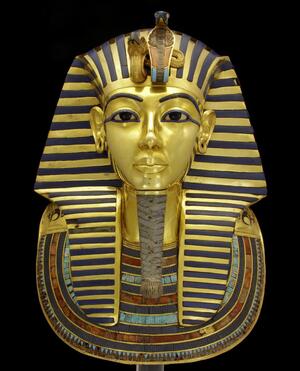
Царские символы защиты — кобра (урей), олицетворяющая богиню Уаджит, и коршун, символ богини Нехбет.
The golden funerary mask of Pharaoh Tutankhamun, complete with the royal Nemes headcloth. New Kingdom, 18th Dynasty, circa 1323 BCE. Discovered in Tutankhamun’s tomb (KV62) in the Valley of the Kings, near Thebes (modern Luxor).
The Pshent—a double crown symbolizing dominion over Upper and Lower Egypt.
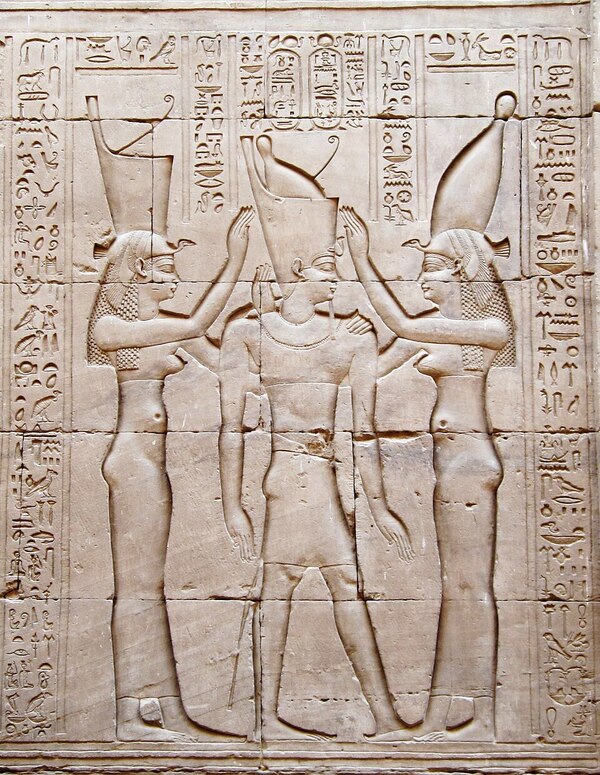
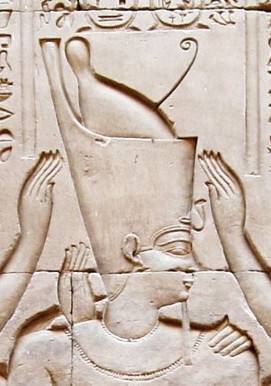
Ptolemy VIII Euergetes II in a double crown (pschent), under the protection of the goddesses Nekhbet and Wadjet. Relief from the Temple of the Goddess Mut in Karnak, Egypt, Ptolemaic period, 2nd century BCE.
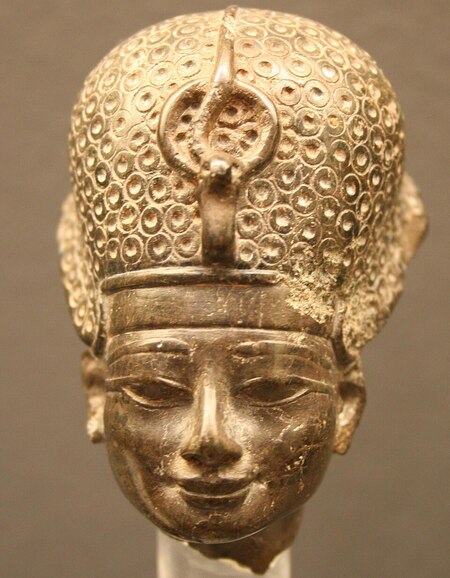
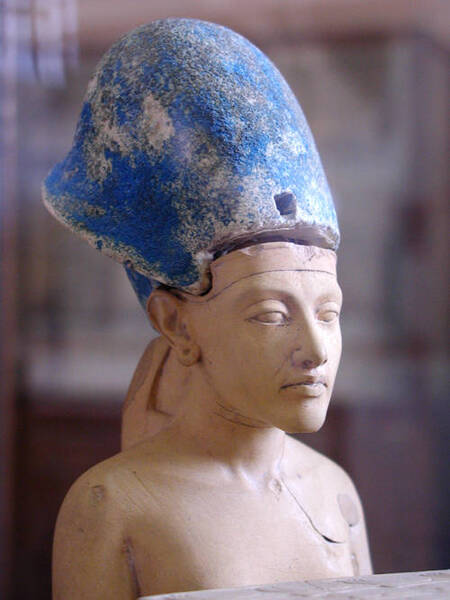
Hepresh, like the nemes and the pschent, was an attribute of royal power. It was a blue crown often depicted on Pharaohs of the New Kingdom era. It had a characteristic rounded shape and was adorned with small circular elements.
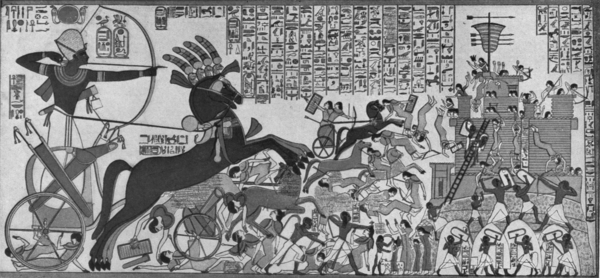
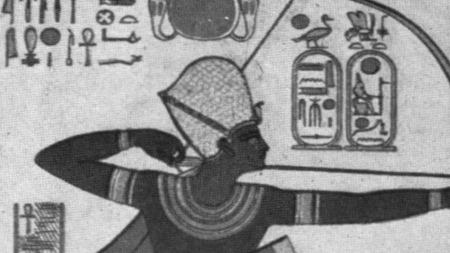
The Battle of Kadesh. Pharaoh Ramesses II in a chariot during the battle against the Hittites. Relief from the Great Temple of Ramesses II in Abu Simbel, Nubia (present-day southern Egypt). New Kingdom, 19th Dynasty, circa 1274 BCE.
Статуэтка Тутмоса IV в короне хепреш. XVIII династия, Новое царство, Египет.
Статуэтка Эхнатона в короне хепреш. XVIII династия, Амарнский период, XIV в. до н. э., Египет.
Antiquity: Naturalism and Idealization