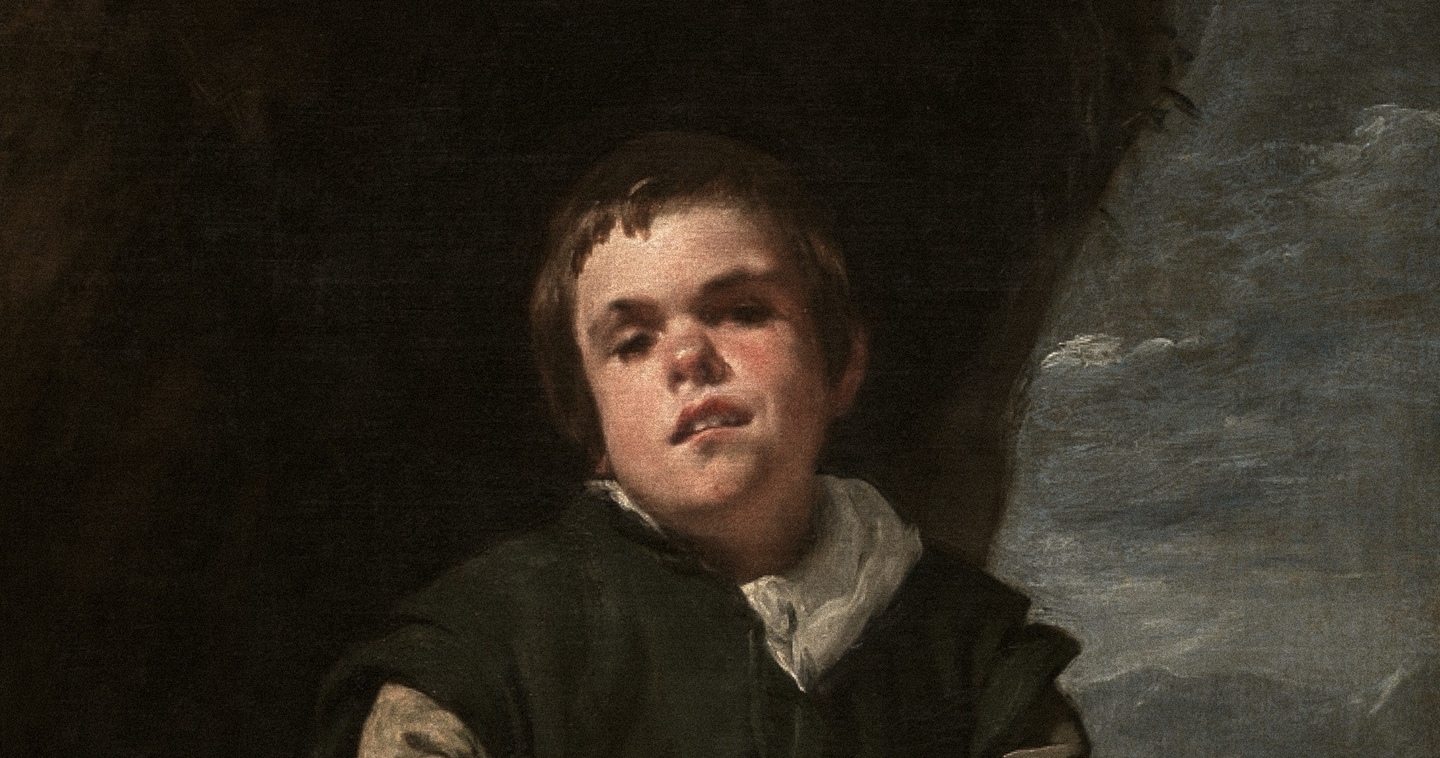
Шуты, карлики, горбуны: эволюция образа от Жака Калло до Диего Веласкеса
Concept
Is physical difference or deformity an unconditional reason for mockery? Or can the familiar, centuries-old stereotype of the cripple and the jester only change the artist’s perspective?
This study aims to demonstrate how an artist’s perspective can completely alter the viewer’s perception, transforming an object of mockery into a persona.
The visual study traces the stages of the humanist revolution in 17th-century European art—from the graphic sheets of Jacques Callot to the painted canvases of Diego Velázquez.
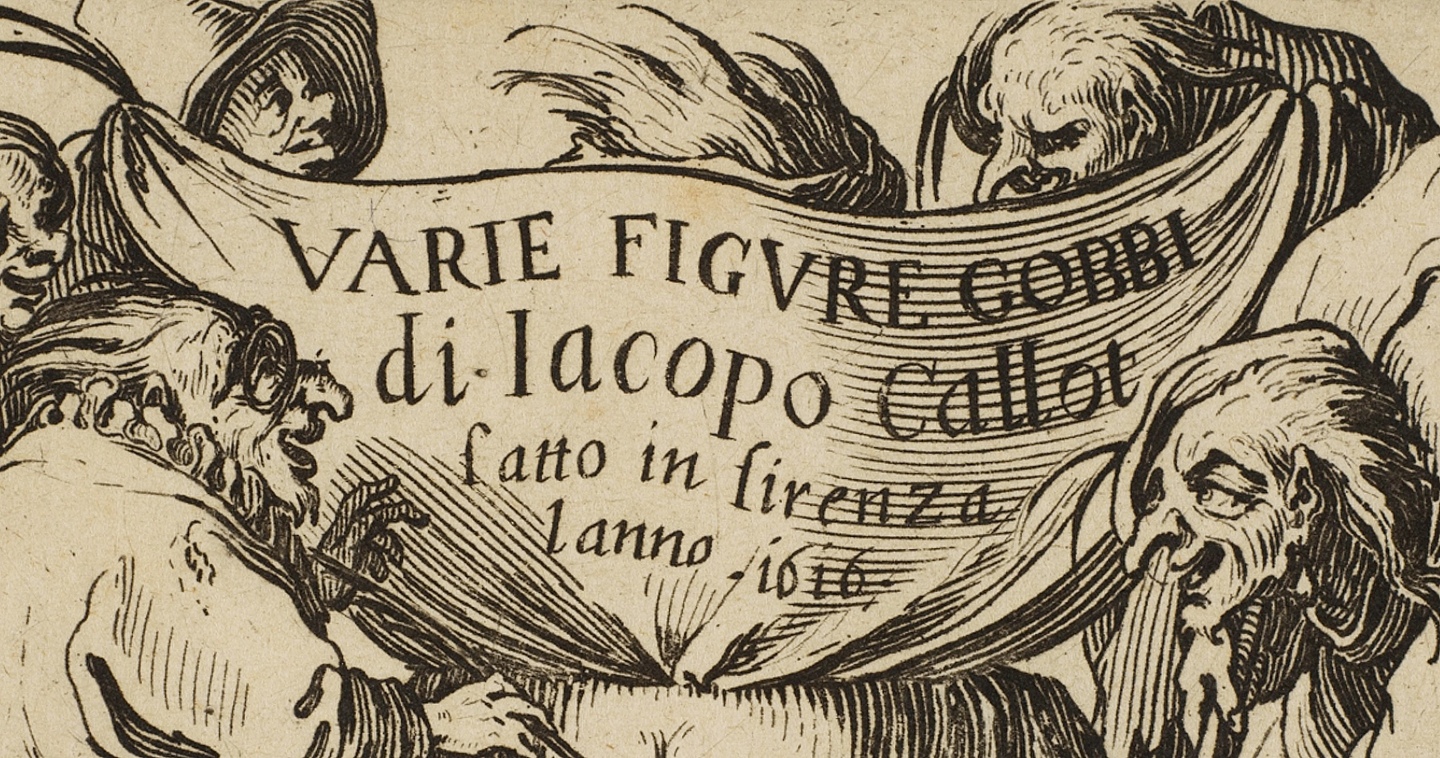
Jacques Callot. Frontispiece from the series «Varied Figures Gobbi» (also known as «Hunchbacks, ” „Pygmies, ” or „Grotesque Dwarfs“) 1616–22. Fragment
Mannerist graphics by Jacques Callot in the print series «Varie Figure di Gobbi» (c. 1616–1622) directly inherit the traditions of medieval satirical culture, street theater, and popular prints. In prints measuring 7×9 cm, the French master depicts the deformed, exaggerated, and distorted body of a dwarf as a faceless figure.
Physical ugliness serves merely as a vehicle for conveying «moral degradation and spiritual inadequacy» (Glickman A. Jack Gallo. L.-M., 1959, p. 52) of specific social types—from street performers to drunkards. Gallo resorts to caricatural hyperbole: his characters have exaggerated, round bellies, broken postures, and grimaces. The characters’ faces are entirely subservient to a grotesque image: they are either hidden behind expressionless masks or reduced to a gaping mouth. Eyes and facial expressions play no psychological role here.
The viewer is not concerned with the jester’s personality; he merely craves a spectacle. In Callo’s graphics, ugliness is intended to elicit detachment, disgust, or laughter from the viewer.
Paintings by Diego Velázquez, created in the 1630s–1640s for the royal hunting lodge Torre-de-la-Parada, execute a fundamental transformation in the depiction of court jesters. The artist challenges the Habsburg court canon, which held that «people of pleasure» (gente de placer) were perceived solely as background accessories meant to enhance the divine beauty of the monarch through their imperfection.
Velázquez removes his characters from the traditional hierarchy, forsaking comic grotesquerie in favor of the value of the human personality. The artist grants dwarfs psychological autonomy, individuality, and dignity. In contrast to the caricatured and hyper-exaggerated images of Callo, the portraits of the Spanish master appear static. They serve as a silent protest against the demeaning status of the foolish jester. Velázquez writes his characters strictly at eye level with the viewer, thereby minimizing the distance of superiority that was historically inherent in all previous portraits of jesters.
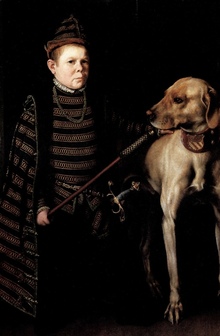
Rodrigo de Villandrand. «Prince Philip and the Dwarf Miguel Sopillo.» Circa 1620–1621.
The piercing, serious, and forward-looking gaze becomes the defining element in all portraits—a look that entirely refutes the stereotype of ignorance, both externally and internally. The painter, sometimes furnishing characters with symbols of knowledge (books and scrolls held by Don Diego de Ascedo), imbues them with intellectual individuality.
Thus, the artist’s gaze performs a radical reinterpretation of the jester myth: physical difference ceases to be an object of ridicule, and the image acquires a unique subjectivity, evoking in the viewer a sense of empathy and genuine interest.
Jacques Callot: Engraving series «Various Figures of Mummers»
Anton van Dyck and Lucas Vorsterman. «Portrait of Jacques Callot» (from the «Iconography» series). c. 1630–1645.
The series «Various Figures of Harlequins, ” consisting of twenty-one leaves, belongs to Callo’s early work. The project began in Florence but was engraved in Nancy between 1622 and 1623. In this work, the artist still adheres to the late medieval and Renaissance tradition, which draws from folk, rustic, and carnival culture.
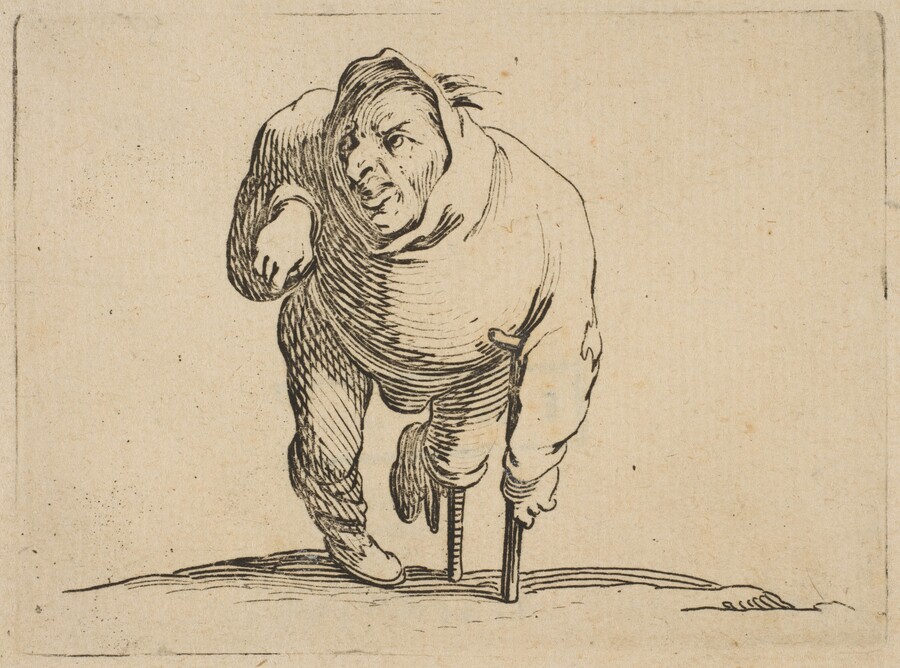
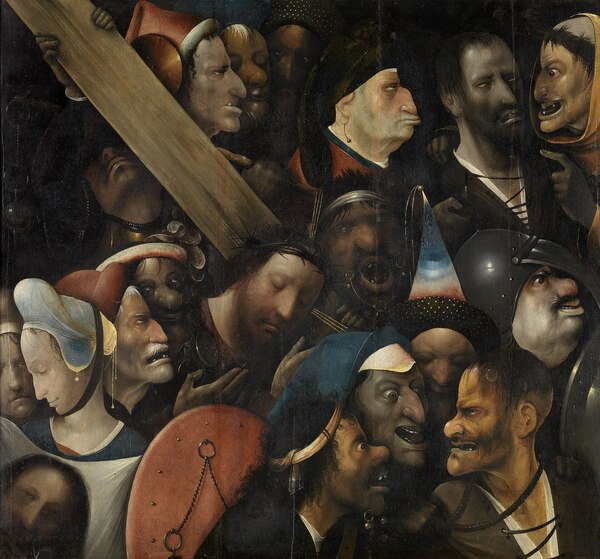
Jacques Callot. «Lame man with crutch and wooden leg.» 1616. Hieronymus Bosch (or workshop). «Bearing the cross.» c. 1510–1535.
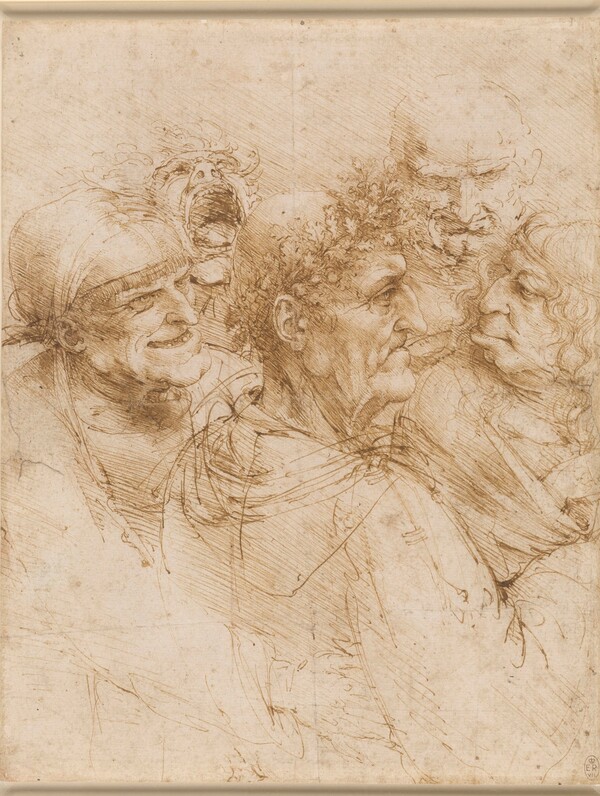
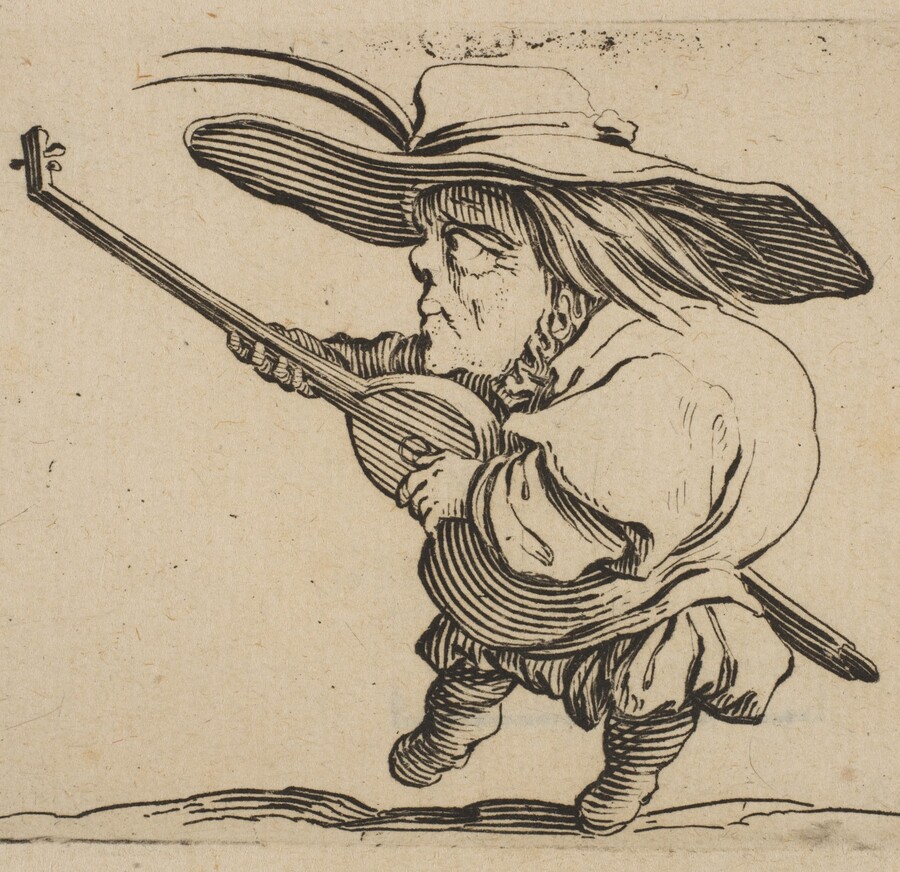
Leonardo da Vinci. «Five Grotesque Heads.» c. 1490–1494. Jacques Callot. «Lutenist.» 1616.
Callo creates grotesque, impersonal figures intended to provoke laughter.
«Thus, the artistic logic of the grotesque image disregards the closed, flat, and mute plane (surface) of the body
and captures only its convexities—protrusions, buds—and openings, that is, only what extends beyond the body and what leads into the body’s depths. Mountains and abysses—that is the relief of the grotesque body, or, speaking in architectural terms, towers and subterranean passages.» M. Bakhtin
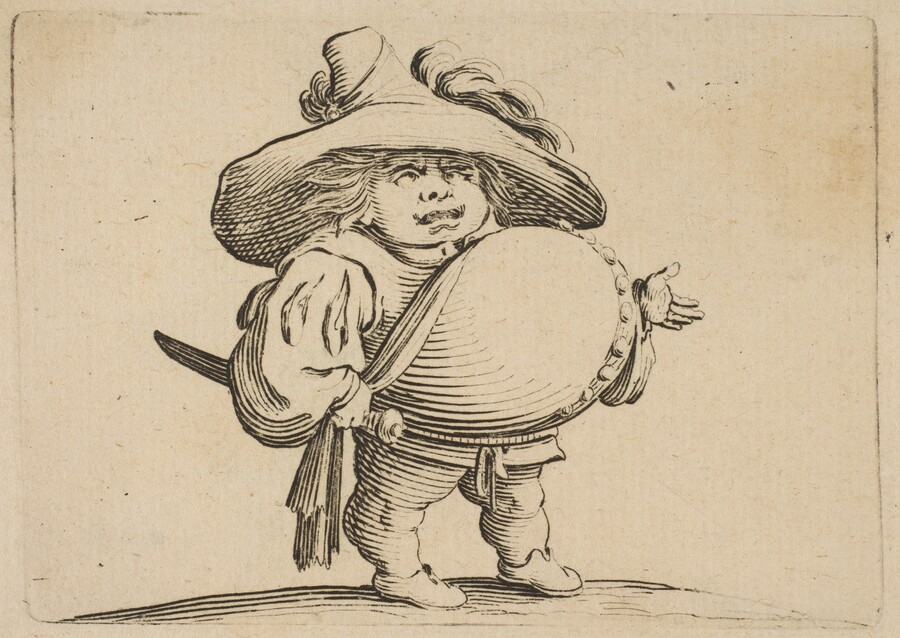
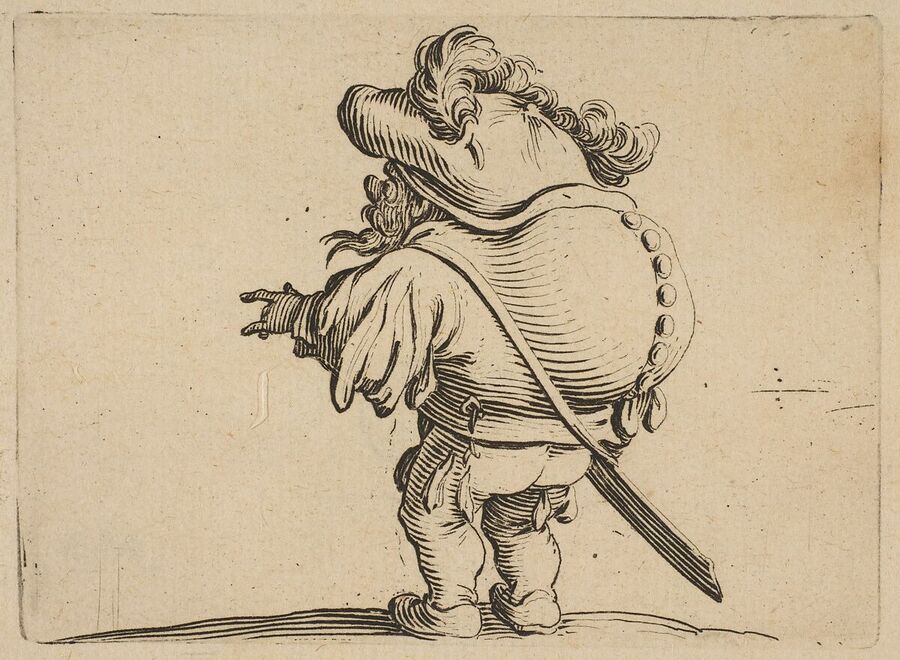
Jacques Callot. «The Fat Man with a Large Belly.» 1616. Jacques Callot. «The Hunchback in a Hat with Feathers on His Back.» 1616.
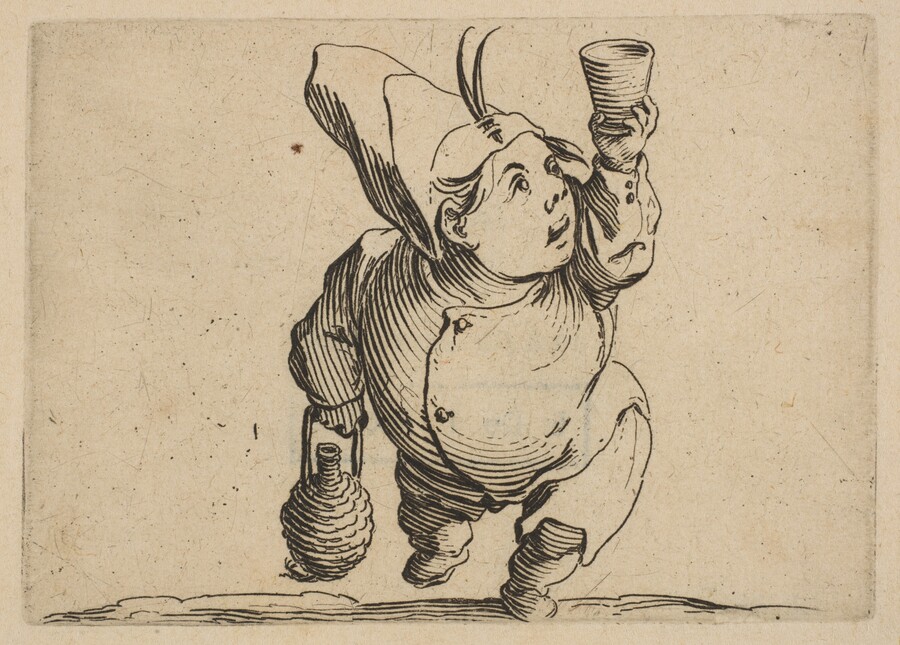
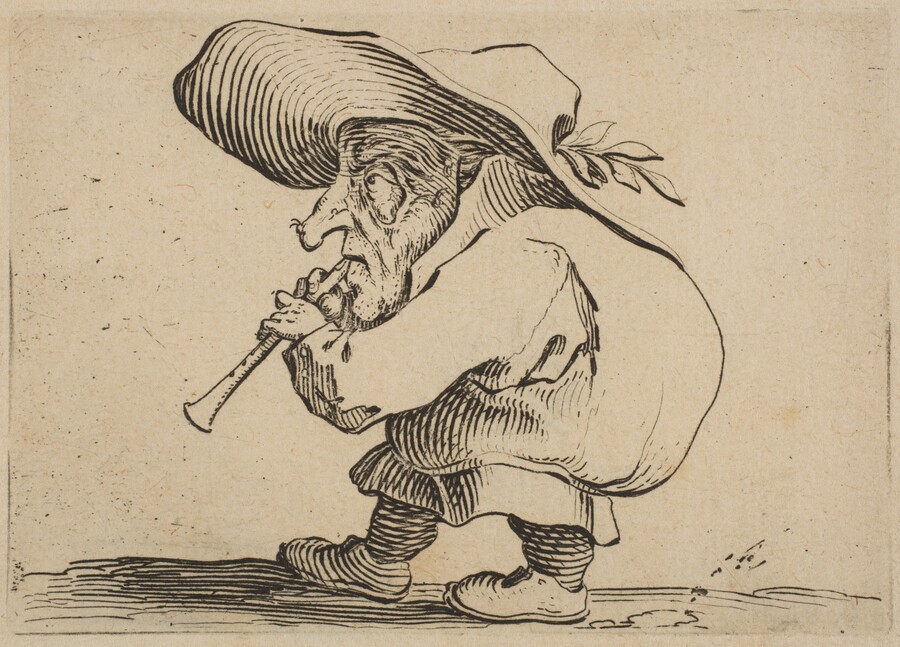
Jacques Callot. «A Drunk Man with a Cup and Canteen.» 1616. Jacques Callot. «Player on a Flageolet.» 1616.
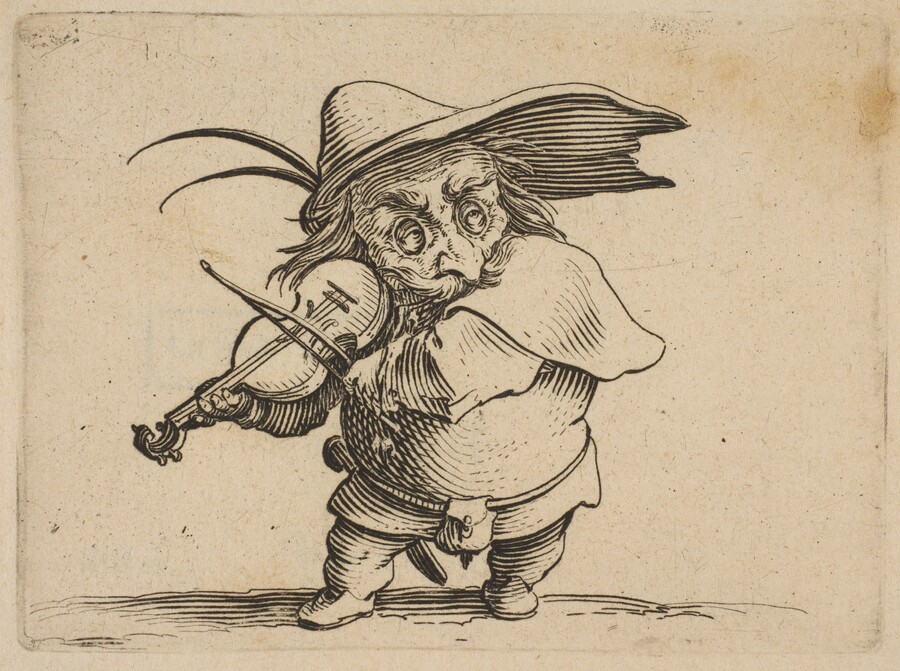
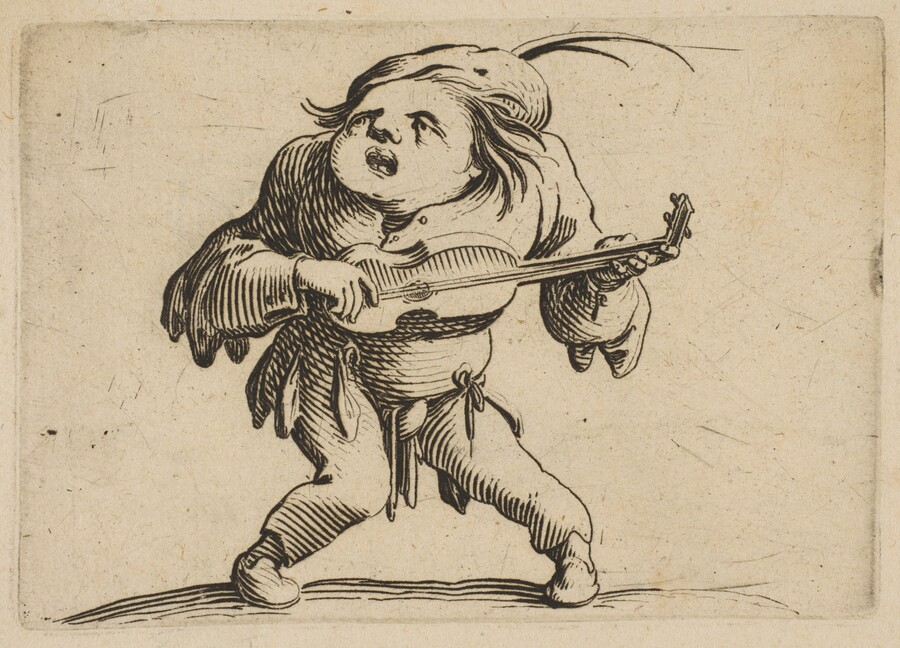
Jacques Callot. «The Violinist.» 1616. Jacques Callot. «The Guitarist.» 1616.
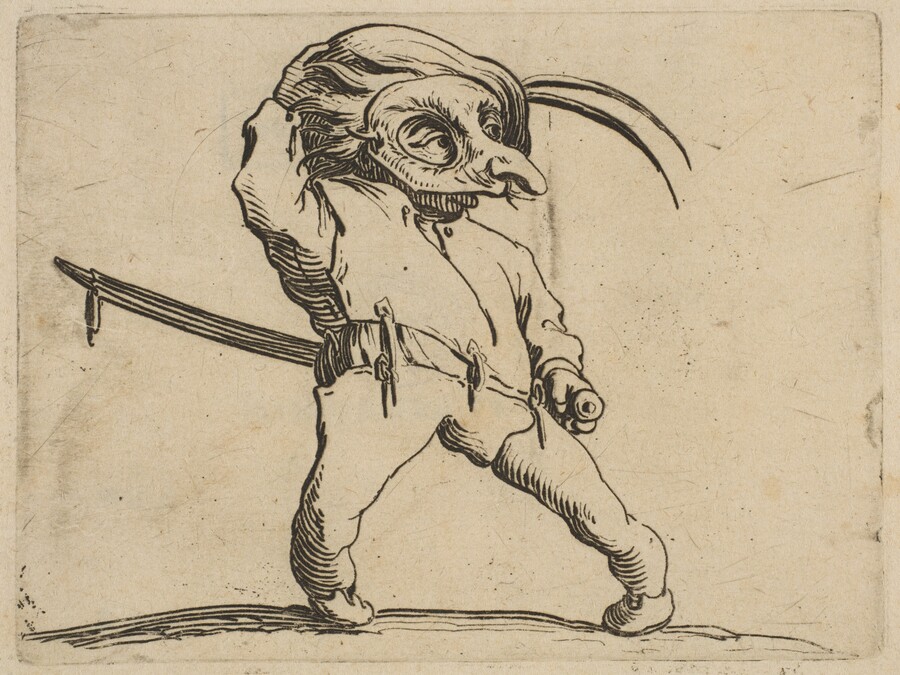
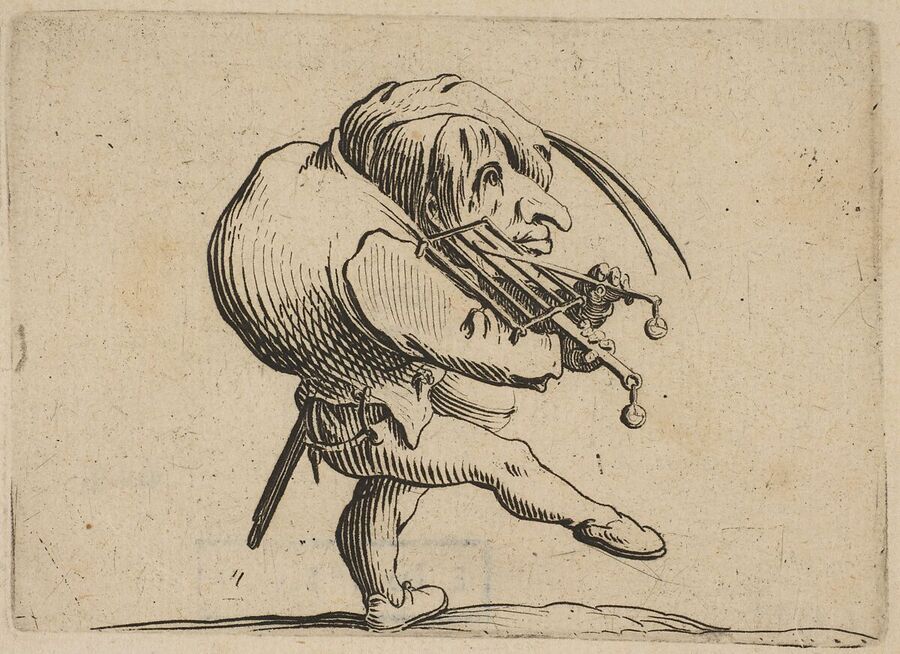
Jacques Callot. «Man in a Mask with Crooked Legs.» 1616. Jacques Callot. «Hunchback Scratching a Bar Like a Violin.» 1616.
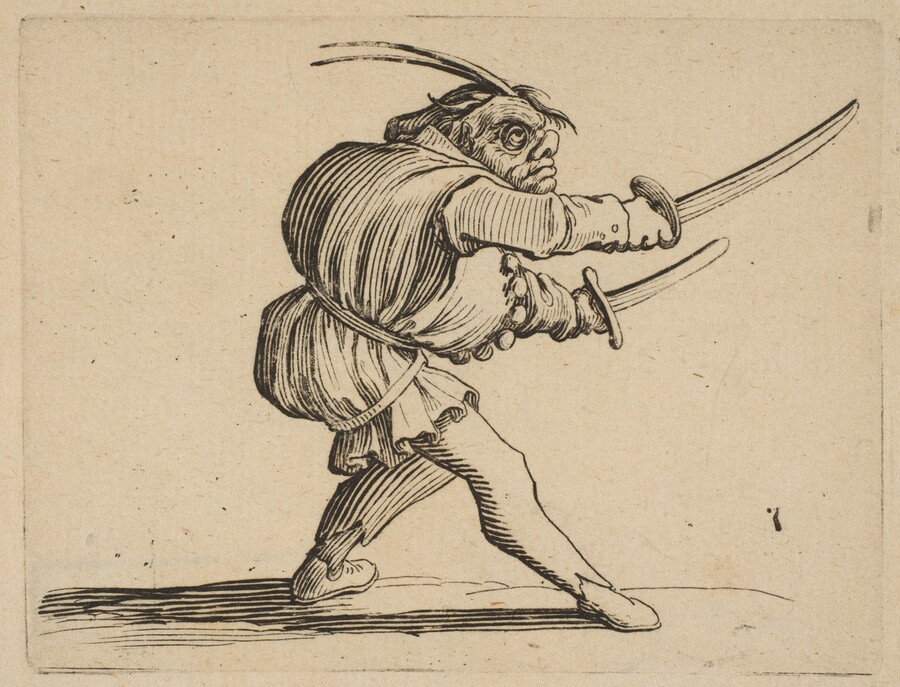
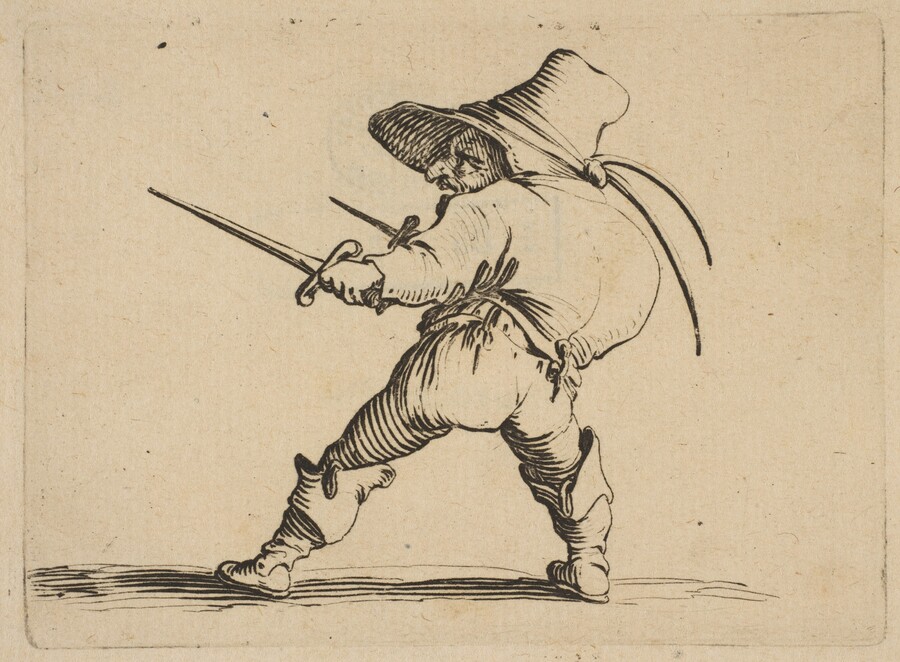
Jacques Callot. «Duelist with Two Swords.» 1616. Jacques Callot. «Duelist with Two Swords.» 1616.
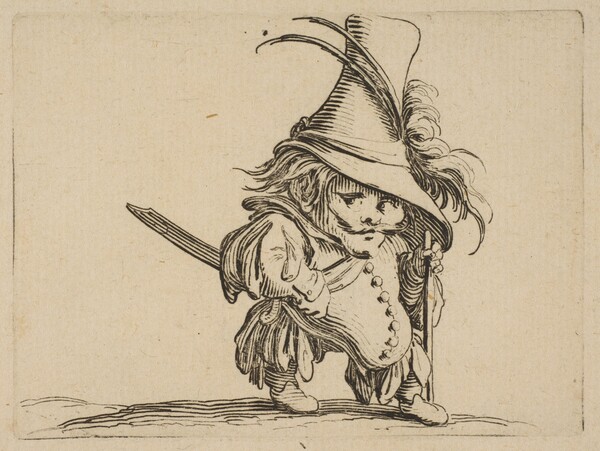
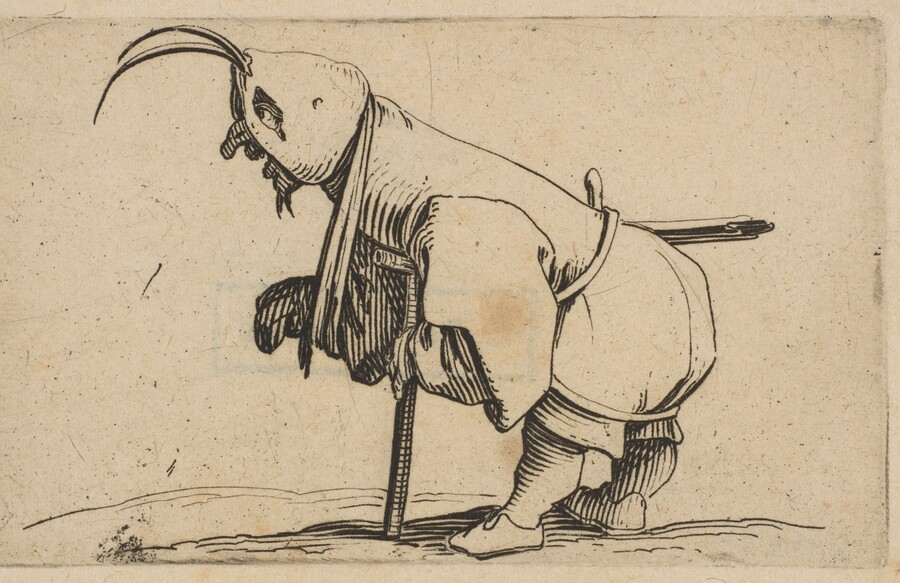
Jacques Callot. «Fat Man in a Tall Feathered Hat.» 1616. Jacques Callot. «Crippled Man in a Hood Leaning on a Crutch.» 1616.
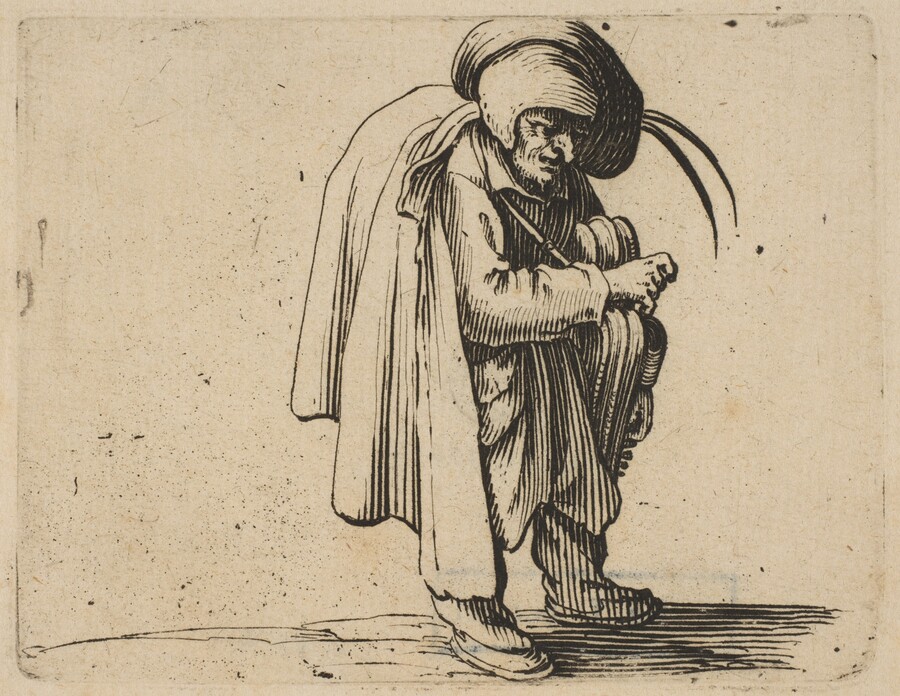
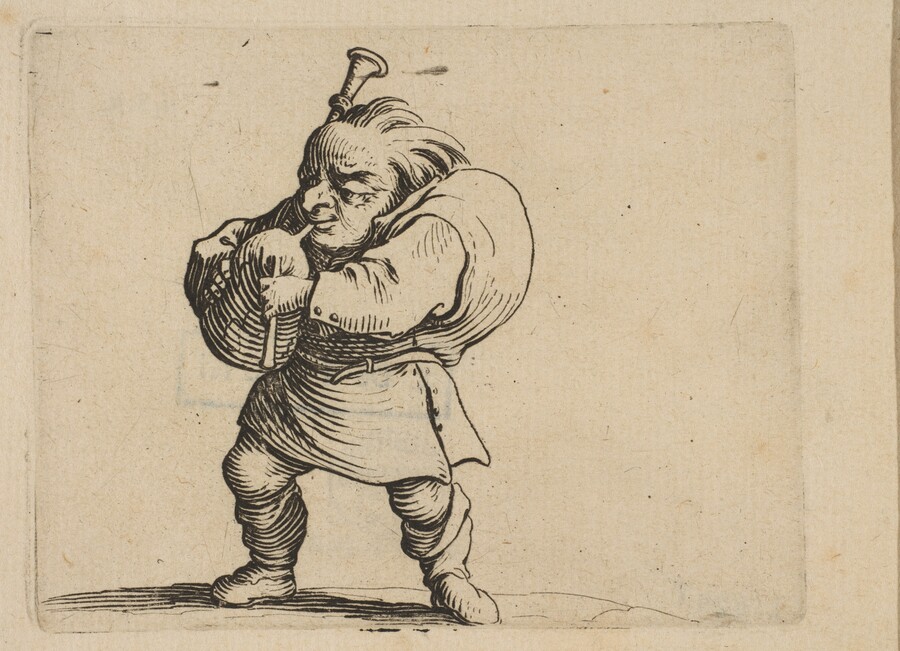
Jacques Callot. «Player on a Lyre.» 1616. Jacques Callot. «Fiddler.» 1616.
Diego Velázquez: «The Mockeries»
Diego Velázquez. «Self-Portrait.» c. 1643.