Navigation / Categories
[1] Concept [2] The Siren in Ancient Greek Art [3] The Evolution of the Siren Image in Medieval Western Europe [4] Comparative Analysis of Images [5] Conclusion
[1] Concept
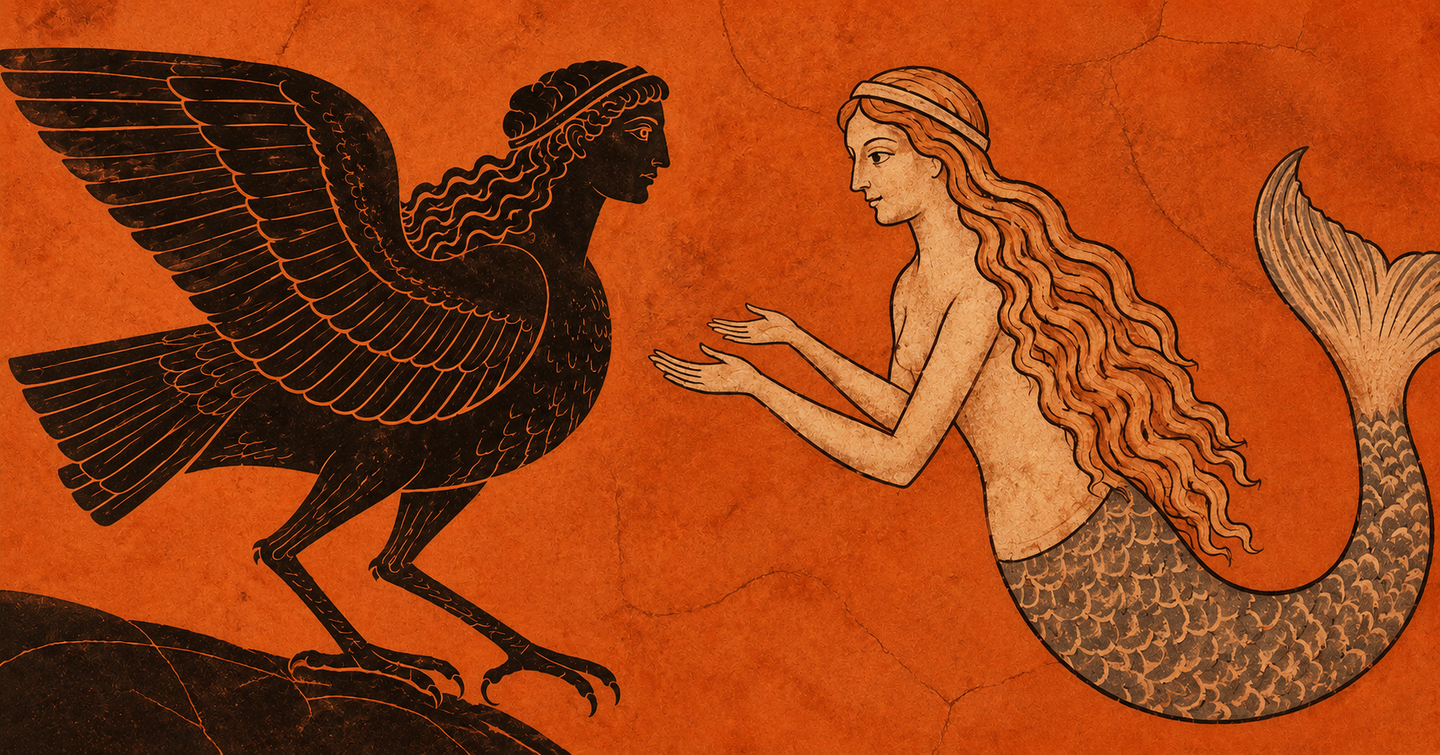
In the mythology of various eras, creatures appear whose forms blend human and animal characteristics. One such character is the siren. In ancient Greek art, she was depicted with the body of a bird, while in medieval Western Europe, she was increasingly represented as a woman with a fish tail. I was interested in why the same mythological character acquired such diverse visual forms and what features of her depiction have remained constant over time.
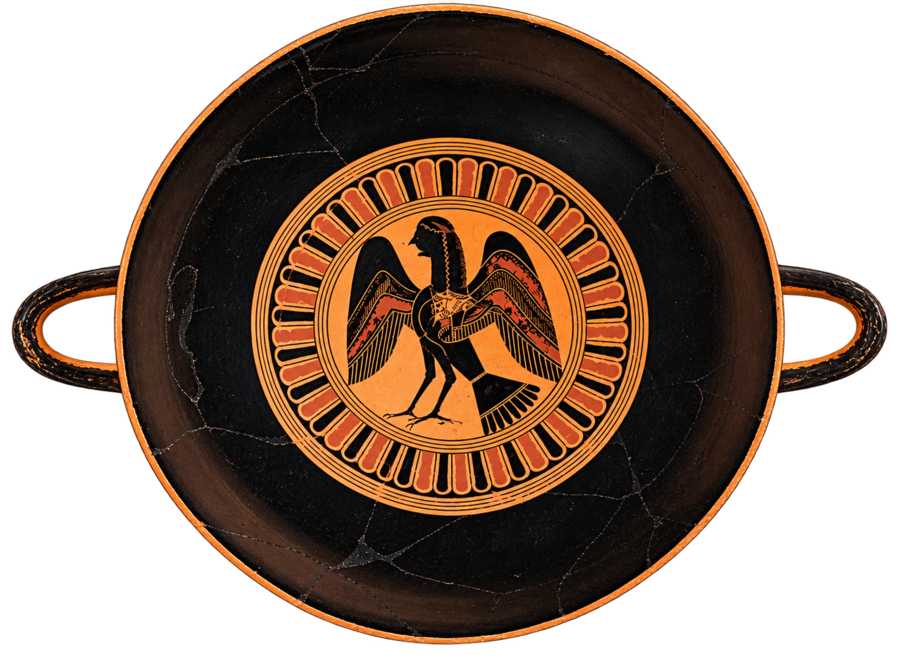
Knocker depicting a siren. Ancient Greece, circa 550–530 BCE.
For this research, I chose these two periods because they allow for tracking significant changes in the Siren’s portrayal. In Ancient Greece, the image of the bird-woman appears in vase painting, sculpture, and funerary monuments. In medieval Western Europe, the image of the fish-woman became prevalent, often associated with Christian concepts of temptation and sin.
The key research question is: which visual characteristics of the siren, formed in Ancient Greek art, were preserved and reinterpreted in medieval Western Europe?
I hypothesize that despite changes in human anatomy, commonalities can be found between ancient and medieval depictions. These might manifest in posture, body positioning, attributes, and the rendering of the human figure. For this research, I selected artworks from both periods. The collection includes pieces from various art forms, including vase painting, sculpture, and reliefs. This approach will allow me to examine the siren within different artistic contexts and trace the nuances of her portrayal.
Double capital featuring opposing sirens. France, circa 1140–1145.
The methodology is based on the visual analysis of artworks. Primary focus is placed on the silhouette and body structure, the position of wings or tail, posture, gestures, attributes, and the character’s interaction with other figures. Enlarged sections of images will be used for a more detailed examination of individual elements. The research is structured by moving from the study of individual periods to their comparison. The first chapter examines the siren in Ancient Greek art, while the second addresses its depiction in medieval Western Europe. The third chapter compares the most characteristic features of the images from these two eras. Textual sources are necessary to clarify the historical context and the meanings associated with the siren’s image. The foundation will consist of scholarly publications on the history of art and ancient mythology, as well as museum catalogs and descriptions of specific works. When selecting materials, I pay close attention to their authenticity and authority. They will supplement the visual analysis and help interpret the images discussed with greater precision.
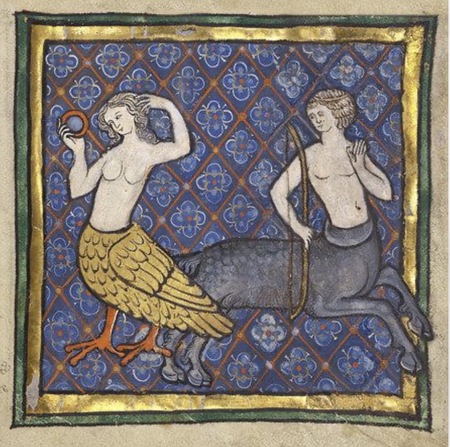
Through this research, I aim to determine which characteristics of the ancient Siren archetype found reflection in medieval art and which ones underwent transformation. This will allow for a deeper understanding of how the cultural and artistic representations of different eras influenced the depiction of a single mythological figure.
[2] The Siren in Ancient Greek Art
Zinchenko S. A. Could Siren-Ichthyomorphs Have Existed in Ancient Art? [Electronic resource]. — 2020. — URL: https://actual-art.org/stati/174-tezisy-2020/175-2020-art-of-the-ancient-world/1546-zinchenko-c-a-mogli-li-sushchestvovat-sireny-ikhtiomorfy-v-iskusstve-3.html (Accessed: November 1, 2026).
Terracotta Kylix: Lip-Cup (Drinking Cup) [Electronic Resource] // The Metropolitan Museum of Art. — URL: https://www.metmuseum.org/art/collection/search/255098 (Accessed: November 2, 2026).