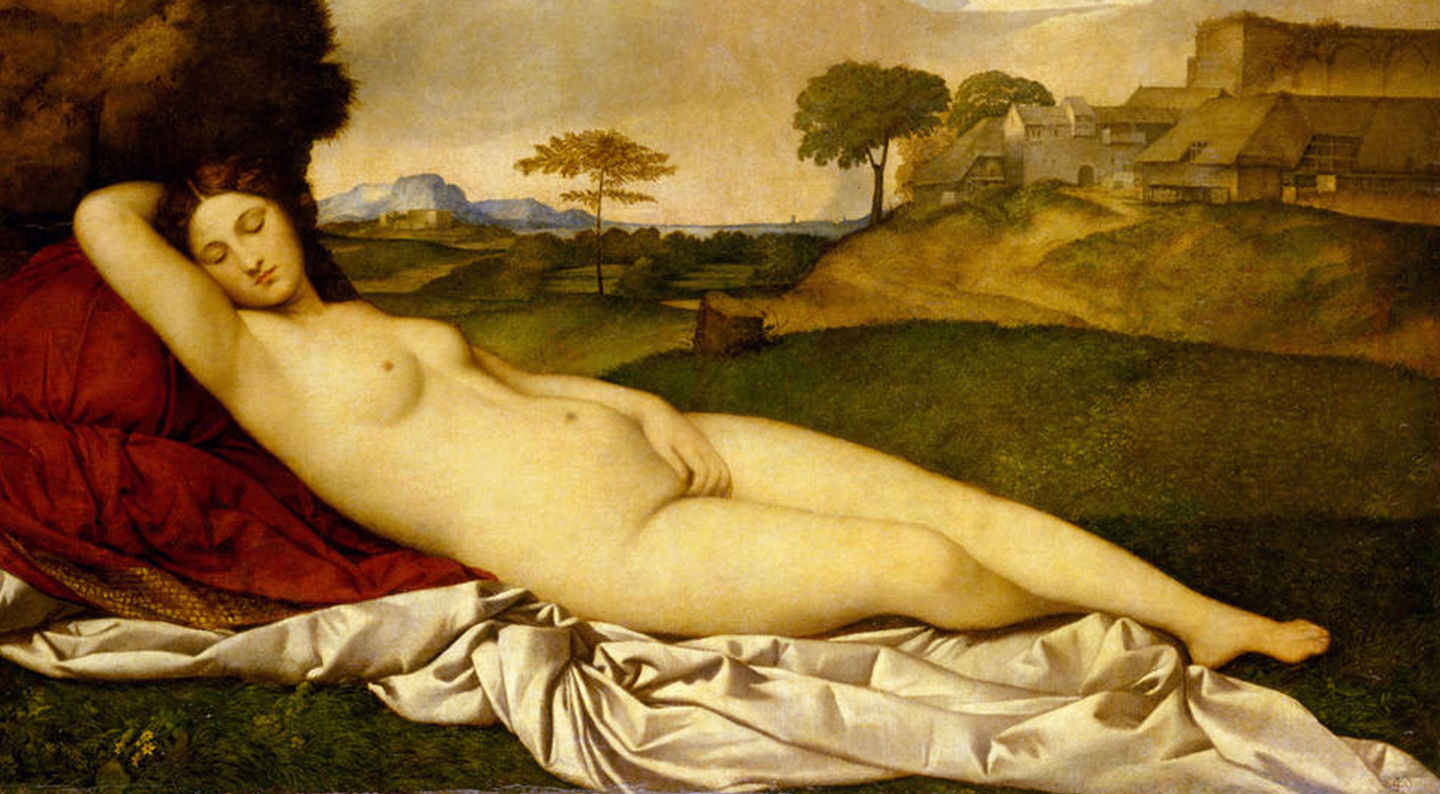
I. Concept and Topic Selection II. Nudity as Ideal: Gesture and Drapery III. Nudity as Innocence and Vulnerability: Narrative and Subject Matter IV. Nudity as Object of Gaze V. Conclusion and Bibliography
I. Concept
The nude female body is one of the enduring motifs in Western European painting. However, the physical exposure of a figure does not always equate to the exposure of its essence. An artist can depict the body almost entirely but obscure the face, avoid eye contact, or shift attention toward a gesture, an object, or the surrounding space. The study examines the tension between the visibility of the body and the heroine’s accessibility to the viewer. Nudity is understood not merely as the absence of clothing, but as an artistic concept whose meaning is determined by the composition, light, color, the figure’s plasticity, and the subject matter. Art historian Jill Burke, in her study The Italian Renaissance Nude, explores Renaissance depictions of the nude body in relation to cultural concepts of beauty, corporeality, and social norms [1]. Linda Mead, in The Female Nude: Art, Obscenity and Sexuality, investigates the cultural mechanisms through which the nude body is perceived as a work of art [2]. These approaches allow us to regard nudity not as a neutral motif, but as an artistic construct. Research question: How do gestures of covering, drapery, thematic objects, and the direction of gaze alter the perception of the female body in 15th–17th century Western European painting? Seven works from Italian, German, Dutch, and Spanish painting were selected for analysis. They share the depiction of a nude female figure, but they differ in their narratives, compositional solutions, and the relationship between the heroine and the viewer. The research is structured into three chapters. The first focuses on gesture and drapery in the portrayals of Venus by Lorenzo di Credi and Botticelli. The second compares Eve by Dürer and Lavinia Rembrandt, whose nudity gains meaning through biblical narrative. The third examines three reclining Venuses—by Giorgione, Titian, and Velázquez—as variations in organizing the viewer’s gaze. Hypothesis: The artistic exposure of a nude figure is not determined by the degree of physical visibility. Gesture, fabric, objects, light, composition, and the direction of the gaze are capable of simultaneously emphasizing the heroine’s physicality while maintaining a distance between her and the viewer.
The objective of this study is to determine how artistic techniques of depicting and concealing the female body shape different connotations of nudity in Western European painting from the 15th to the 17th centuries.
II. Nakedness as an Ideal: Gesture and Draping
«The revival of Greco-Roman culture during the Renaissance once again placed the nude body at the center of artistic creation» [3].
In the Italian Renaissance, a return to ancient tradition was accompanied by a renewed interest in the plasticity of the human body. As Jean Sorabella notes, Renaissance artistic culture once again made the nude figure an important subject for depiction [3]. However, the depiction of ideal beauty did not preclude the covering of the body. On the contrary, gesture and drapery could become means to emphasize its form.
Lorenzo di Credi. «Venus.» Circa 1490. Canvas, oil. Uffizi Gallery, Florence.
Venus by Lorenzo di Credi is presented in full length against a dark background. The vertical composition and the absence of secondary figures focus attention squarely on the figure. Light highlights the face, shoulders, abdomen, and legs, while the dark setting defines the contour of the body. The figure’s posture is based on a subtle shift of weight onto one leg. The curve of the torso and the varying height of the hips create a smooth silhouette line, which is connected to the ancient tradition of contrapposto. The drapery plays a crucial role. It flows across the upper body, crosses the chest, and gathers around the hips. The fabric covers specific parts of the figure but does not obscure its outline. Instead, the folds direct the viewer’s gaze toward the boundary between exposed skin and material.
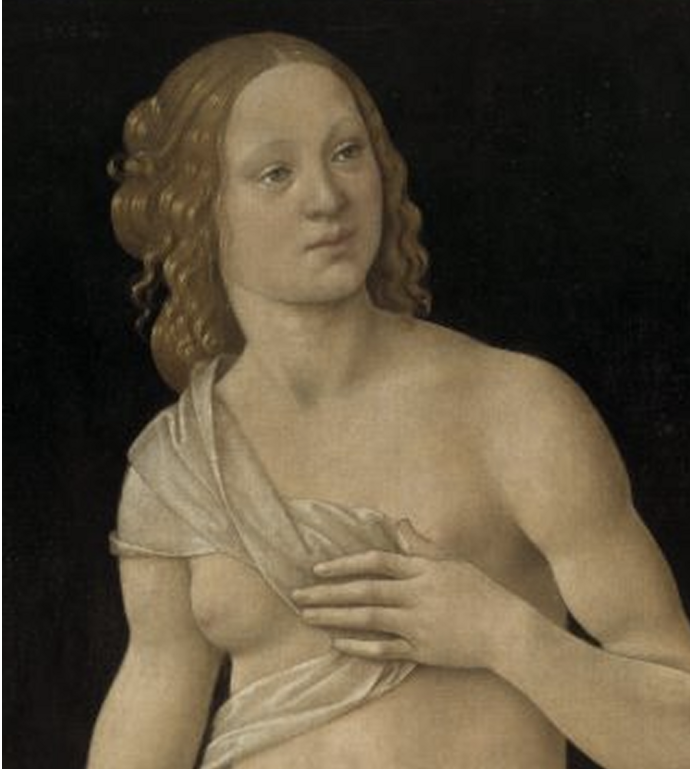
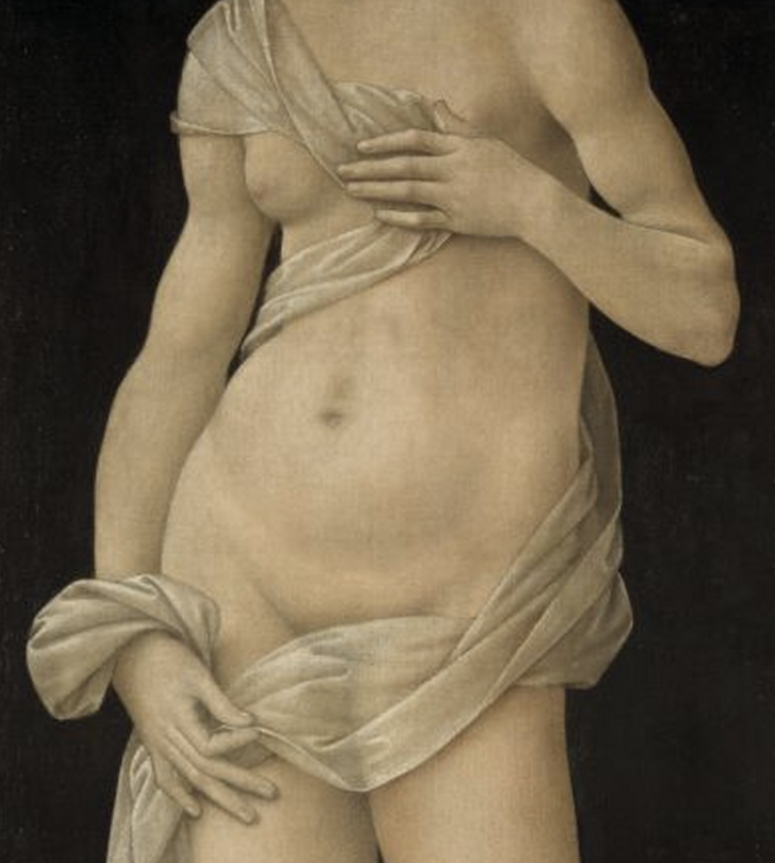
Fragments by Lorenzo di Credi. «Venus.»
Fragment Analysis. In the first fragment, a hand holds fabric against the chest, creating a diagonal that crosses the torso. In the lower section, the gathered drapery forms a dense knot of folds, contrasting with the smooth surface of the skin. In the second fragment, Venus’s face appears serene, and her gaze is directed to the side. Therefore, the covering here does not necessarily have to be interpreted as an expression of shame. Primarily, it organizes the perception of the plastic form. Conclusion: the drapery becomes not an impediment to viewing the body, but a means to accentuate its contours.
Sandro Botticelli. «The Birth of Venus.» Circa 1485. Canvas, tempera. Uffizi Gallery, Florence.
Botticelli depicts Venus standing on a scallop shell in the middle of the sea. To the left, Zephyrus and a female figure accompanying him guide the goddess toward the shore; on the right, Flora offers her a cloak adorned with flowers [4]. In contrast to the static composition of Lorenzo di Credi, Venus’s figure here is integrated into a system of movement. The blowing hair, flying flowers, and folds of the cloak create a unified rhythm directed toward the central figure. Despite this dynamism, Venus’s body remains almost motionless. Its elongated proportions and soft curve are subservient to the expressive silhouette rather than to an exact reproduction of anatomical balance. Venus covers her chest with one hand, and her lower body with long hair. The hair simultaneously replaces fabric and echoes the curves of her form. To the right, the cloak forms a large color plane that contrasts with her fair skin.
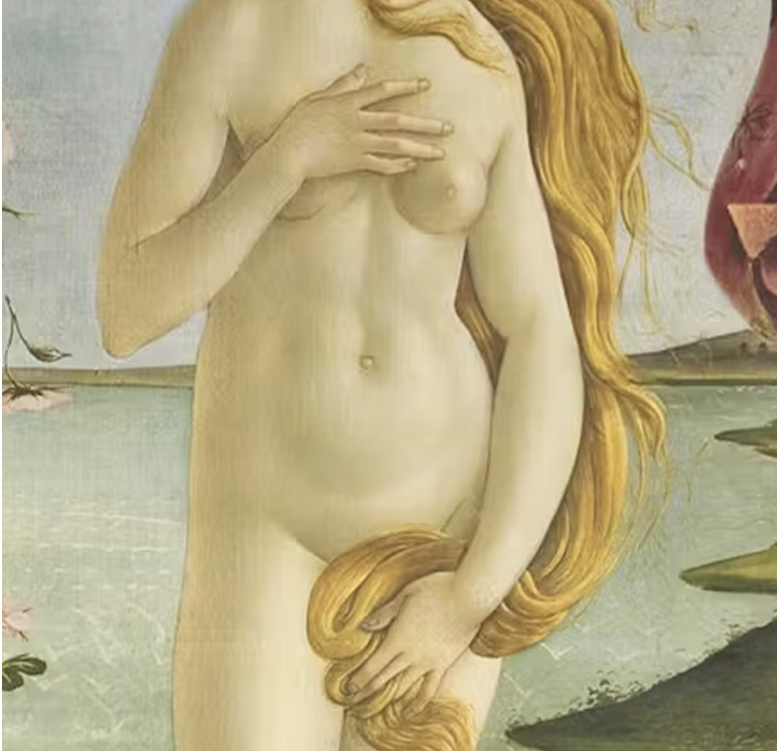
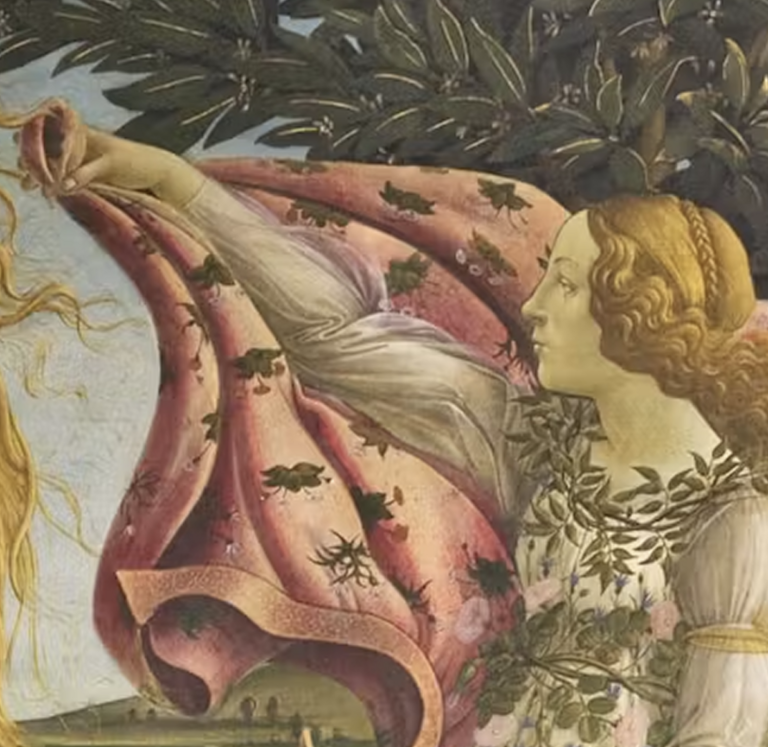
Fragments of Sandro Botticelli. «The Birth of Venus.»
Fragment Analysis. The gesture of the hand and the strand of hair define the boundaries of the visible body. The cloak Ora is about to drape over Venus continues this motif of concealment. However, its movement directs the viewer’s gaze toward the nude figure. Thus, the composition is built upon a contradiction: the surrounding elements seem to strive to cover the goddess, yet simultaneously make her the main object of attention.
Comparison of fragments from Sandro Botticelli’s «The Birth of Venus» (c. 1485) and Lorenzo di Credi’s «Venus» (c. 1490).
Comparing Two Venuses In both works, the nude body is tied to the ideal of beauty, and the drapery becomes an important part of the image. However, in Lorenzo di Credi’s piece, the drapery interacts directly with the body, emphasizing its volume and silhouette. In Botticelli’s, the hair, gesture, and cloak create a sequence of movements that organizes the entire composition. The commonality between the works is not just the image of Venus, but also the artistic principle: the boundary between the revealed and the concealed makes the body more noticeable.
The gesture that conceals the body simultaneously makes it more visible. Modesty becomes a part of the ideal image of beauty.
III. Nudity as Innocence and Vulnerability: Subject and Theme
«The weakness and vulnerability of the nude man and woman are emphasized in medieval art» [3].
In biblical painting, nudity can acquire a meaning distinct from the mythological image of Venus. It becomes connected to moral choice, the awareness of one’s own physicality, and human vulnerability. Furthermore, this meaning is not created solely by the depiction of the body. Objects, gestures, and compositional features play a vital role in linking the figure to a specific narrative.
Albrecht Dürer. «Eve» (from the pair of paintings «Adam and Eve»). 1507. Woodcut and oil. Museo del Prado, Madrid.
Dürer created «Eve» as a complementary work to «Adam.» Both figures are shown full-length, and the proportions of their construction are informed by the study of human anatomy and Renaissance ideals of the perfect body [5]. Eve is set against a dark background, which emphasizes the pale skin surface and the clarity of her silhouette. A slight shift in weight and a graceful curve in the torso give the figure stability. Her pose lacks sharp movement, and her facial expression remains restrained. Unlike Botticelli’s Venus, Eve does not cover her chest with her hand. The lower part of her body is covered by a branch with leaves. This covering does not disrupt the integrity of the figure but links it to the biblical narrative.
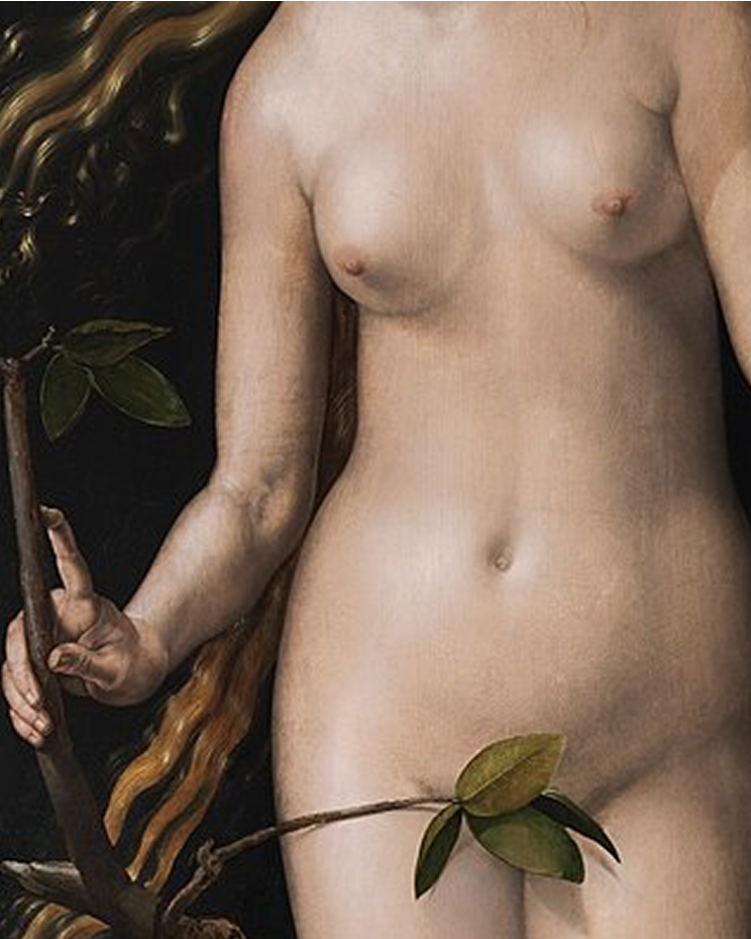
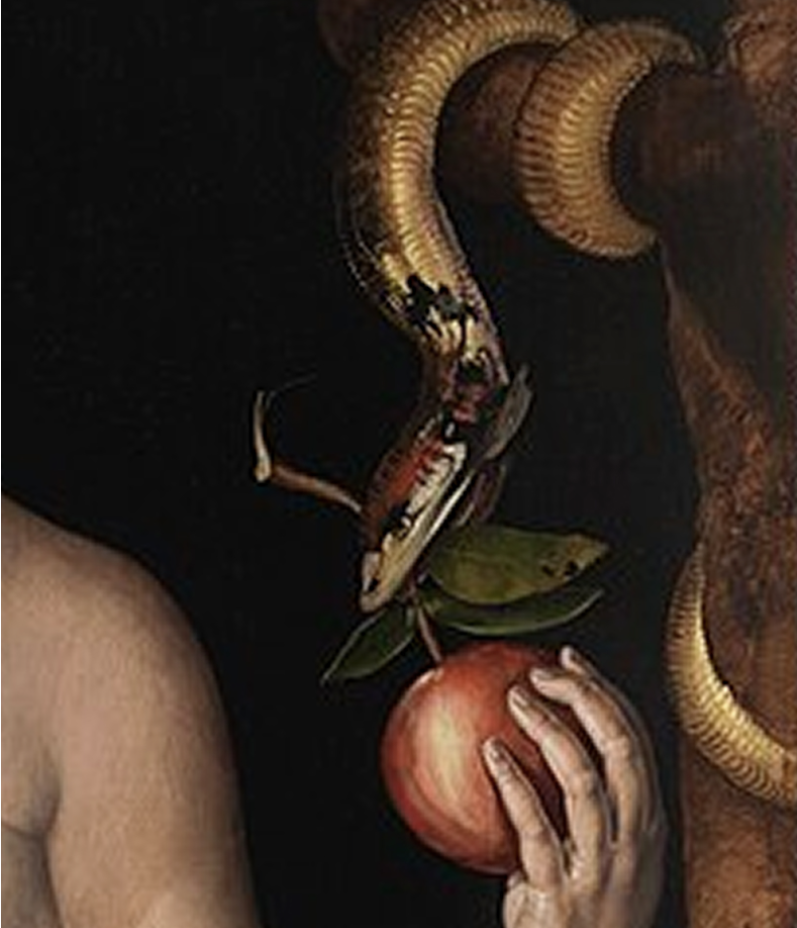
Fragments by Albrecht Dürer. «Eve.»
Fragment Analysis. In the first fragment, a branch crosses a light body, forming a small dark plane. In the second, the fruit and the serpent become the central narrative details. The red color of the fruit stands out against the subdued palette. Despite the figure’s tranquility, the presence of the snake and the fruit allows the viewer to recognize the moment of temptation. The dramatic weight of the scene stems not from pronounced facial expressions, but from the objects themselves and knowledge of Biblical history.
Rembrandt Harmenszoon van Rijn. «Warsaw with the Letter from King David.» 1654. Canvas, oil. Louvre, Paris.
Rembrandt’s painting is based on the story of Virsavia, who received a letter from King David. The artist does not depict the king himself, focusing instead on the seated woman. A small letter in her hand becomes the key to understanding the events [7]. Unlike the vertical and relatively symmetrical figure of Eve by Dürer, Virsavia is depicted seated. The tilt of her head, the positioning of her shoulders, and her bent legs create a complex, unbalanced rhythm. Light plays the main role in the composition. Virsavia’s body stands out against the darkened space, yet its forms are not idealized. The soft transitions between light and shadow, the natural characteristics of her skin, and the asymmetry of her pose lend the image a bodily individuality. Art historian Erik Jan Slooter devoted a separate chapter to Virsavia in his monograph, Rembrandt and the Female Nude. He examines Rembrandt’s female nudes within the context of artistic traditions, moral concerns, and the image’s effect on the viewer [6].
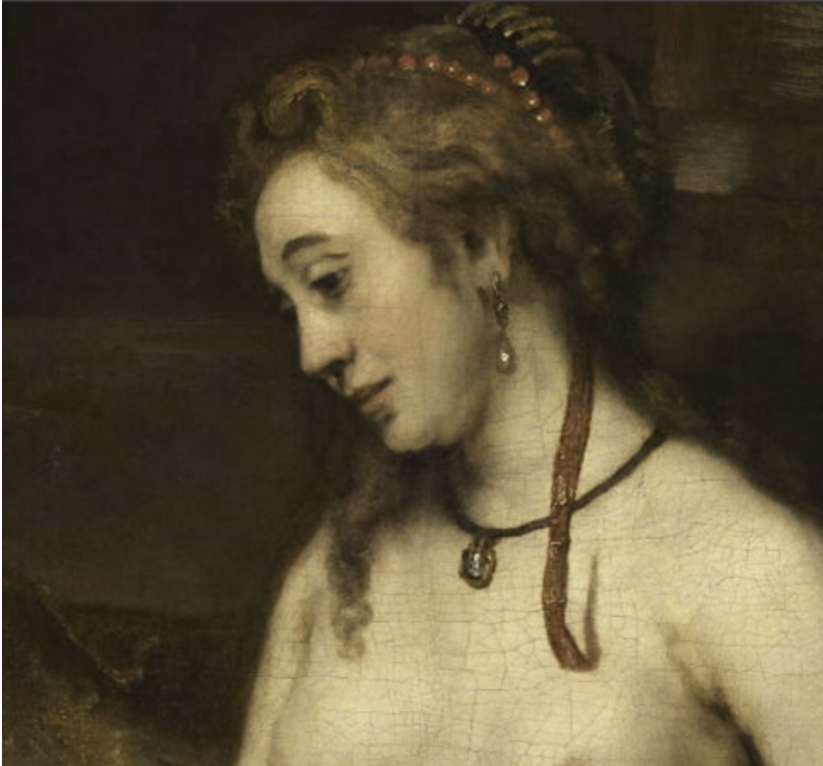
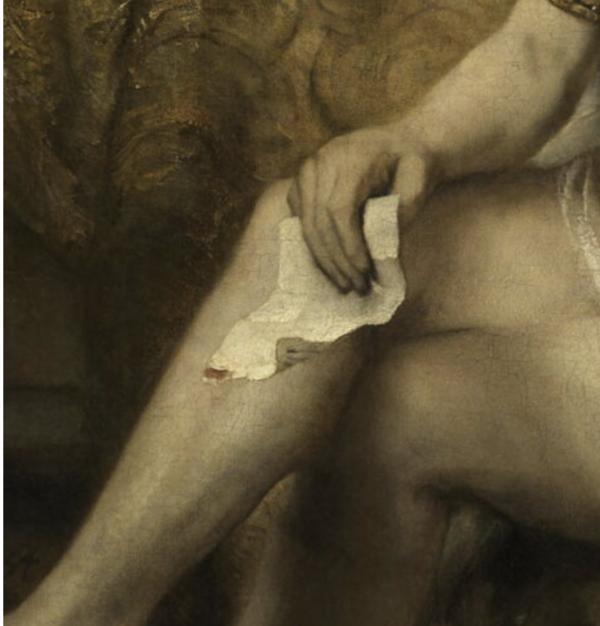
Fragments of Rembrandt Harmenszoon van Rijn. «Warsaw with the Letter from King David.»
Fragment Analysis. The letter held by Virsavia is a small, yet compositionally and narratively significant object. The light paper stands out against the body and fabric, directing attention toward an event that remains outside the frame. The heroine’s face does not express a pronounced dramatic emotion, but rather a restrained concentration. Her bowed head and gaze, averted from the viewer, allow for an interpretation of her state as internal reflection. Rembrandt creates a contradiction between the physical visibility of the body and the heroine’s psychological inaccessibility. The viewer sees her nude, but gains no direct access to her thoughts.