Визуализация наготы в немецкой гравюре Северного Возрождения
The image of the nude body in a German engraving from the turn of the 15th and 16th centuries is a point where age-old traditions of human depiction collided with new European conceptions of beauty.
The topic selection is driven by the unique conflict between two visual languages in German art at the turn of the 15th and 16th centuries. On one hand, under the influence of Albrecht Dürer, the Italian Renaissance canon—with its cult of anatomical accuracy, antique plasticity, and strict proportions—penetrated Germany. On the other hand, German masters remained faithful to the traditions of International Gothic—with its broken, expressive lines, decorative quality, and stylized representation of the human form. The collision of these opposing systems defines the distinctiveness of the Northern Renaissance.
Why did engraving become the suitable technique for depicting nudity during the Northern Renaissance?
Engraving became the dominant artistic language of the era, free from rigid ecclesiastical demands. It was through printmaking that artists could openly experiment with the depiction of the nude form. Investigating this theme reveals how the technical limitations of the burin and hatching became a tool for conceptualizing human nudity—ranging from perfect geometry to grotesque decay and physiological fragility.
Core research question: How did masters of German Renaissance engraving utilize skin plasticity, musculature, and the contrast of drapery to construct new meanings of nudity?
For this study, we selected only original graphic prints by three key masters of the German Renaissance: Albrecht Dürer, Lucas Cranach the Elder, and Hans Baldung Grien, created between the 1490s and 1510s. The selection focuses on works featuring full-figure depictions of the nude body (male and female) within the context of mythological, biblical, or allegorical narratives. For the catalog, micro-narratives are cropped from each work: fragments detailing the rendering of the torso and abdomen, the folds of skin at joint intersections, and the points where drapery meets the exposed body.
The research hypothesis is that the depiction of nudity in German engravings was not a uniform standard, but rather evolved through the debate between two opposing approaches to the body.
- Constructivist approach (Albrecht Dürer): musculature is subservient to strict geometry and proportion, and smooth drapery emphasizes the monumentality and beauty of the body.
- Expressive approach (Lucas Cranach the Elder and Hans Baldung Grien): chaotic fabrics, skin folds, and bodily deformations are used deliberately to convey themes of sin, witchcraft, and the aging of flesh.
Navigation
- Concept
- Main Body Chapter 1. The Anatomy of the Ideal Form: The Geometry of Line and Anatomical Canon Chapter 2. Folds of Deterioration: Nudity as a Marker of Sin and Magic Chapter 3. Fabric and Flesh: Draping as an Optical Separator
- Conclusion
- Bibliography
1. The Ideal Body Construction: Geometry of the Stroke and Anatomical Canon
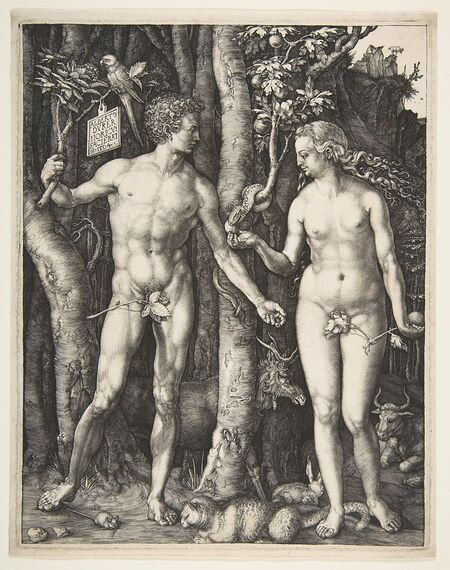
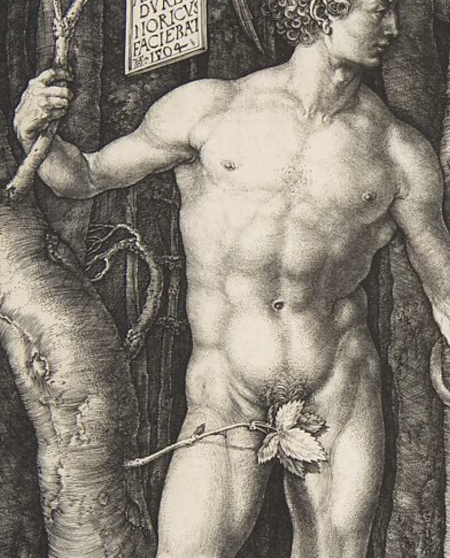
Albrecht Dürer, «Adam and Eve» (1504)
The Renaissance ideal and almost symmetrical poses. Dürer models Adam’s musculature, referencing the Belvedere Apollo. The line work here is fine and rounded, conveying the soft glow of smooth skin in contrast with the complex texture of tree bark and animal fur.
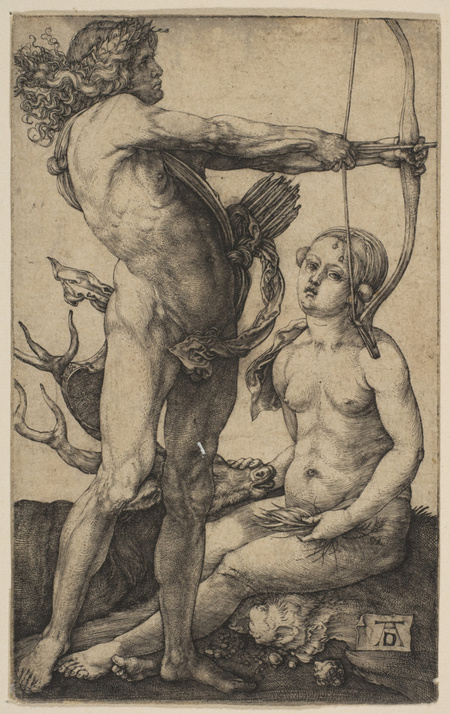
Albrecht Dürer, «Apollo and Diana» (1502–1503)
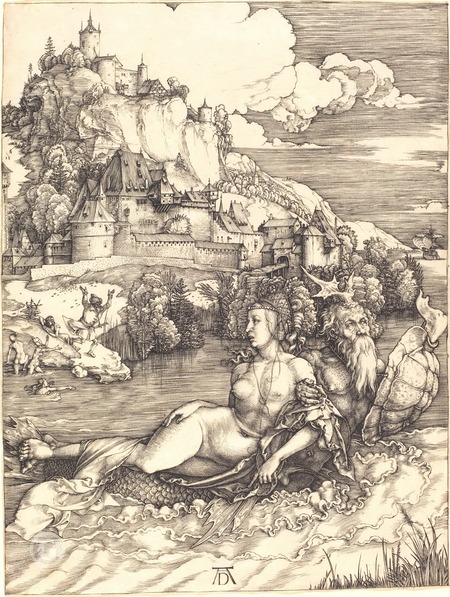
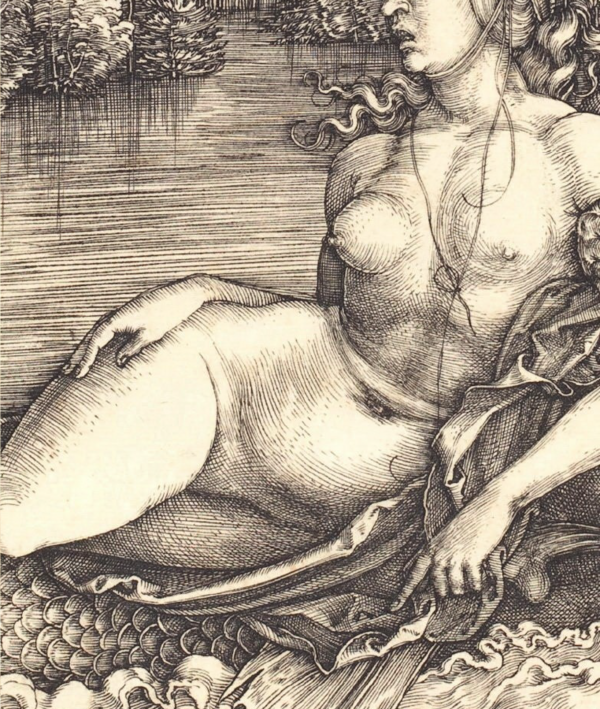
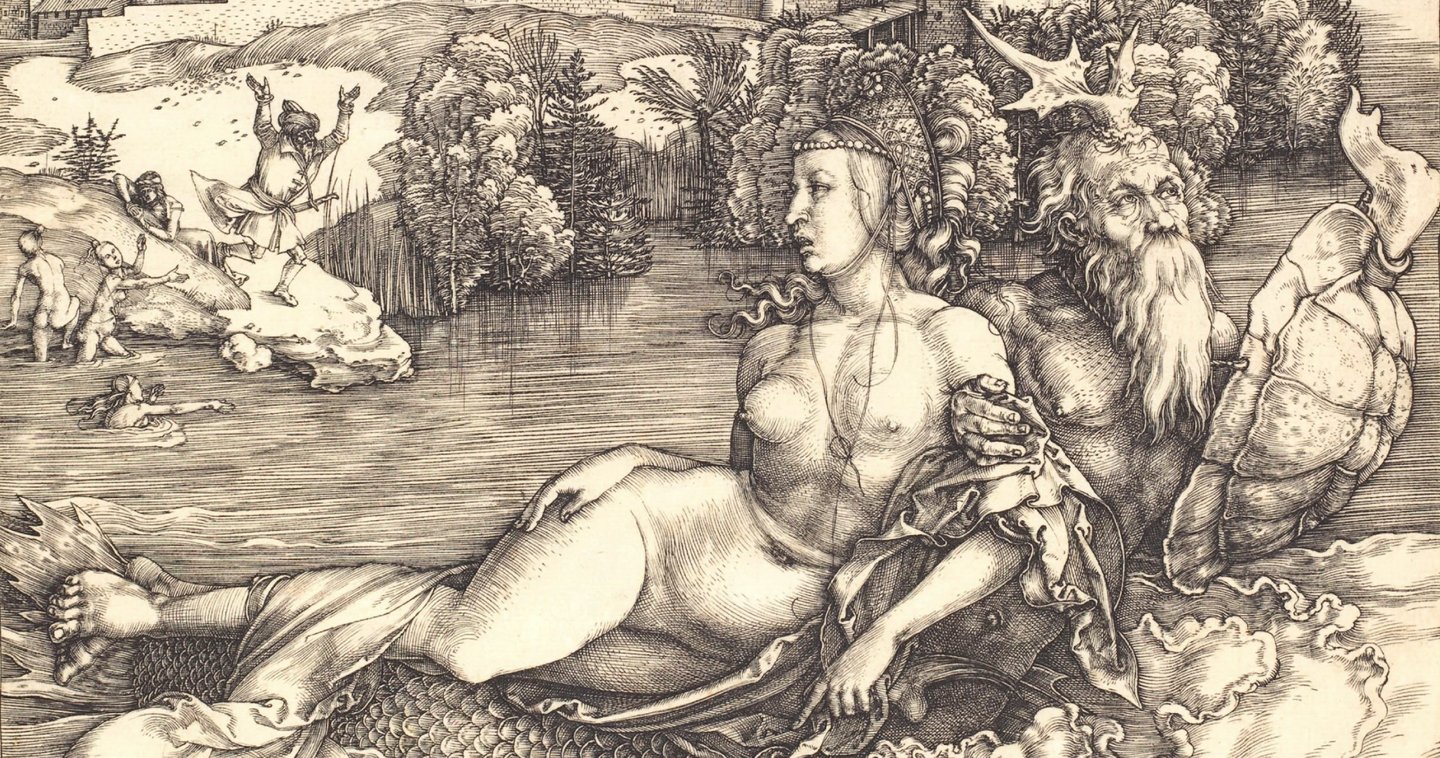
Albrecht Dürer, «Sea Monster» (1498)
The central element of the engraving is a completely nude, abducted woman reclining on the back of a monster. Her pose and proportions are the result of studying Dürer’s appreciation for ancient plasticity and the Italian canon of beauty.
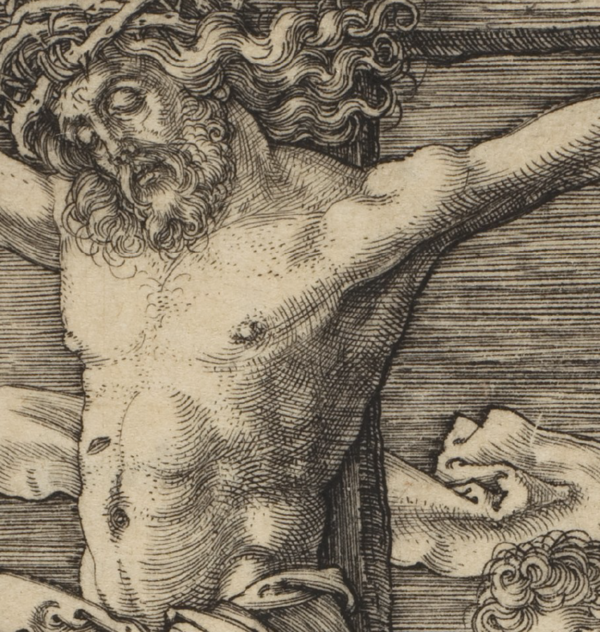
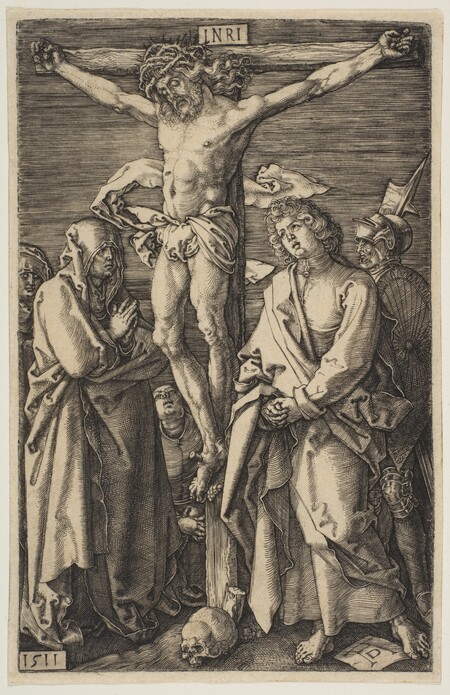
Albrecht Dürer, «Crucifixion» from the series «Passion of Christ» (1511)
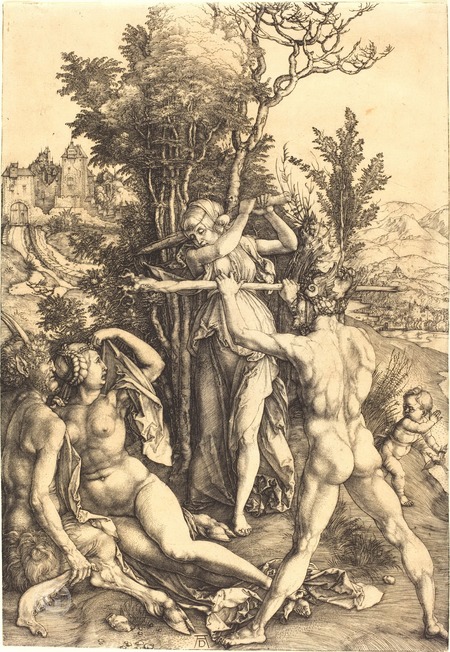
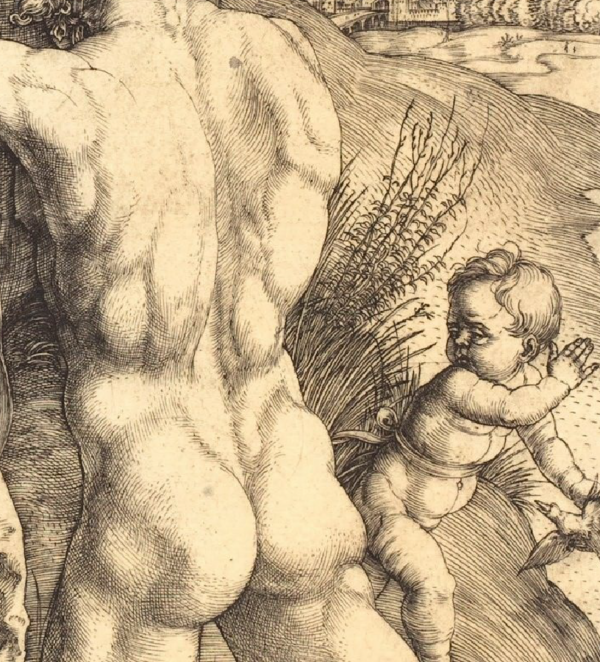
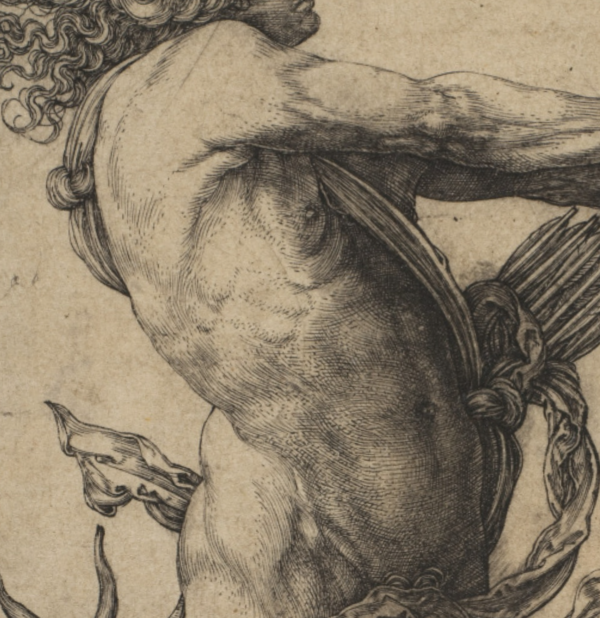
Albrecht Dürer. «Hercules at the Crossroads» (1498)
The depiction of Hercules' body is built upon emphasized athleticism and strength. Dürer portrays the powerful, hypertrophied musculature of the back, shoulders, and thighs during a moment of furious motion. Using cross-hatching, the artist meticulously renders every muscle knot, lending a monumental volume to the flesh. Thus, anatomical precision connects with the physical tension of the engraving’s hero.
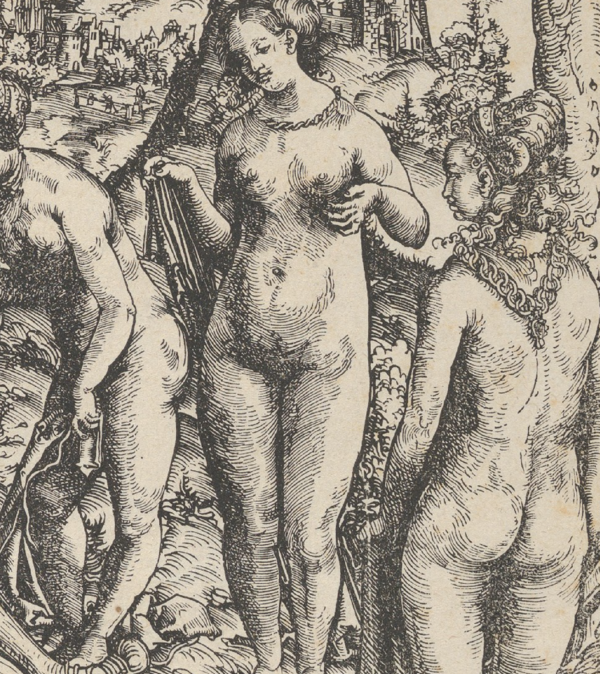
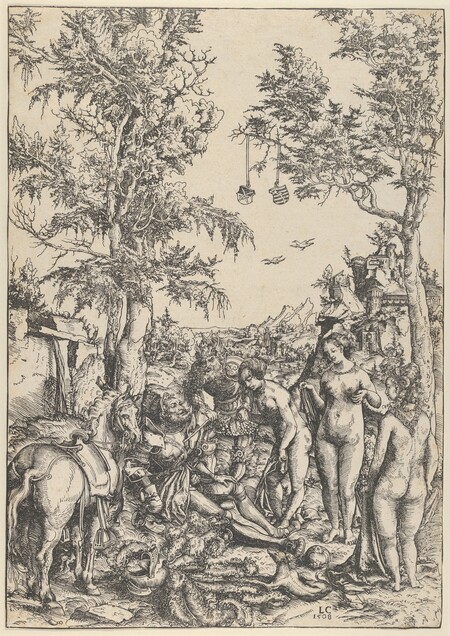
Lucas Cranach the Elder. «The Judgment of Paris» (1508)
The emergence of an elongated, fluid canon for the female body. The silhouettes of three goddesses are smooth, almost devoid of sharp muscular definition. Nudity transforms from an anatomical subject into an elegant ornamentation woven into the landscape.
2. Folds of Decay: Nudity as a Marker of Sin and Magic
Having mastered the depiction of ideal forms, Northern Renaissance artists immediately began using that knowledge in reverse. The same precise hatching in engravings that once conveyed beautiful musculature now meticulously renders wrinkles, sagging, and skin folds. Beauty gives way to realism: in an era of religious strife and witch hunts, nudity begins to be associated with sin and decay. Altering the depiction of the human body became a primary way to demonstrate human transience and to remind viewers of mortality.
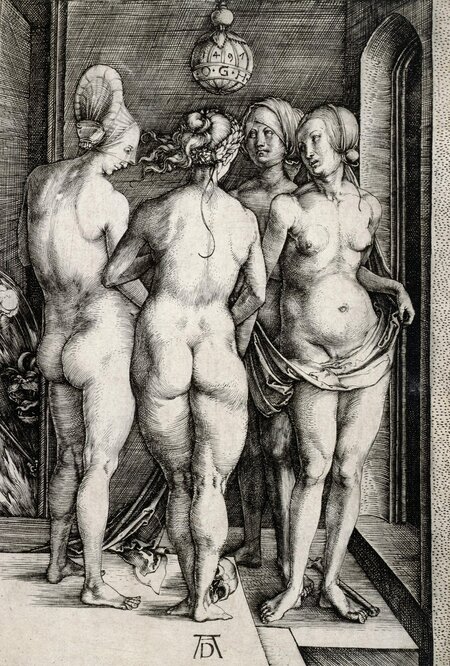
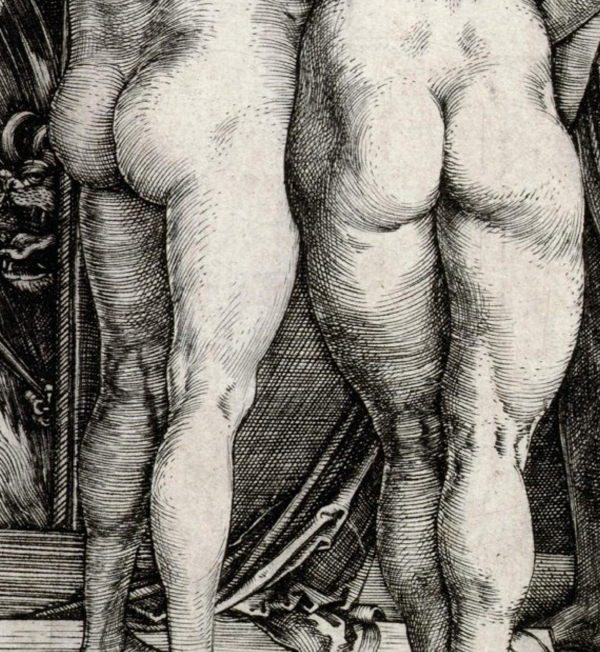
Albrecht Dürer, «Four Witches» (1497)
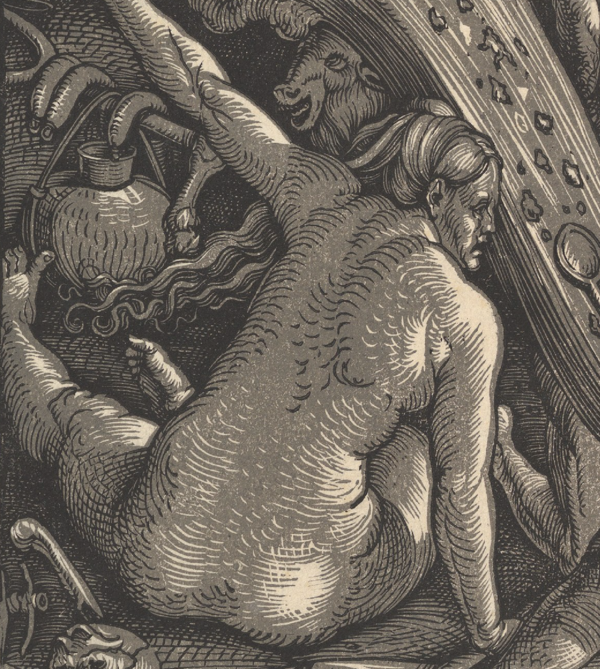
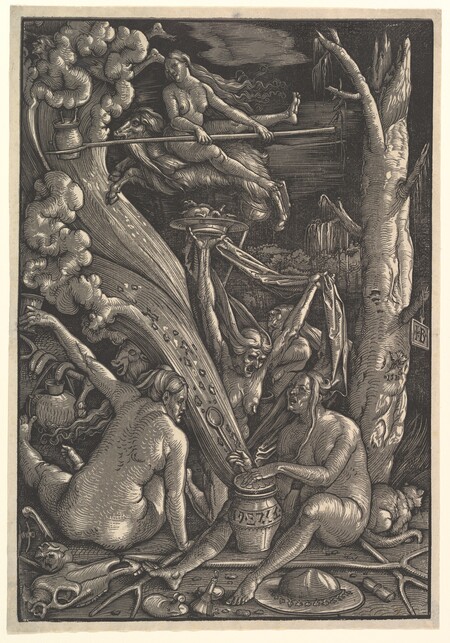
Hans Baldung Grien, «Witches' Sabbath» (1510)
Why did the witch archetype in 16th-century German engravings become the primary symbol of bodily decay?
- In the popular perception of that era, a sinful soul directly degraded the physical body. The wrinkled skin, deep lines, and sagging flesh of an old witch were visual proof of her connection to the devil and inherent moral corruption.
- The contrast with the ideal maiden. In Renaissance art, young nudity (Eve or Venus) symbolized the divine ideal. To counter this purity—with sin and decay—artists employed the figure of the witch, distorting proportions and breaking the lines of hatching.
- At the turn of the 15th and 16th centuries, mass witch hunts began in Germany. The engravings by Dürer and Baldung Grein functioned as a kind of «scientific» and didactic atlas, vividly demonstrating to the viewer how magic and vice strip a person of their human form, reducing the body to dust.
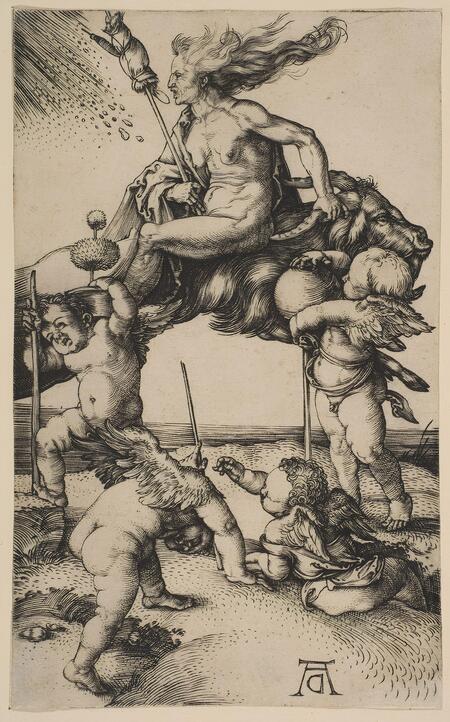
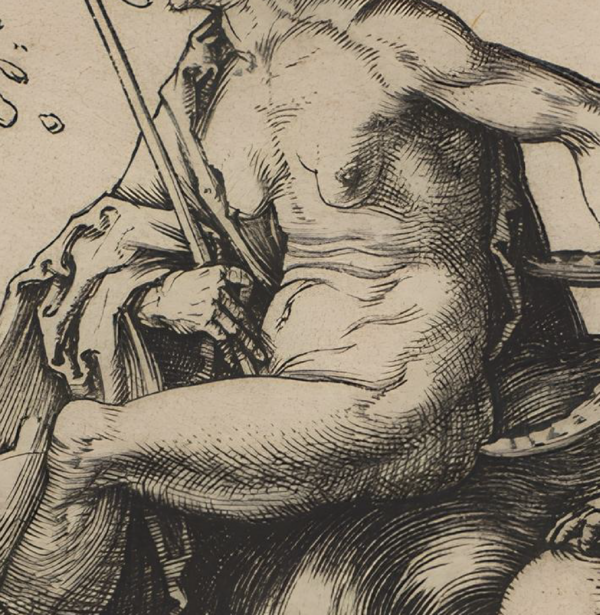
Albrecht Dürer, «The Witch Chasing Backward on a Donkey» (1500)
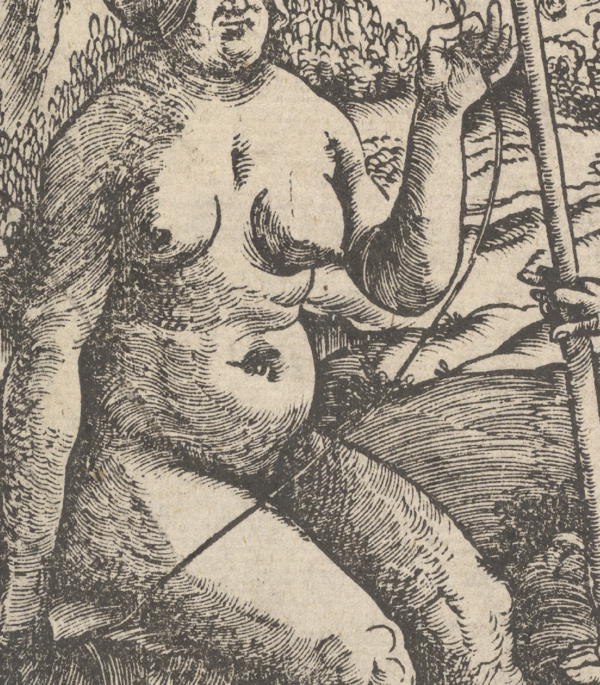
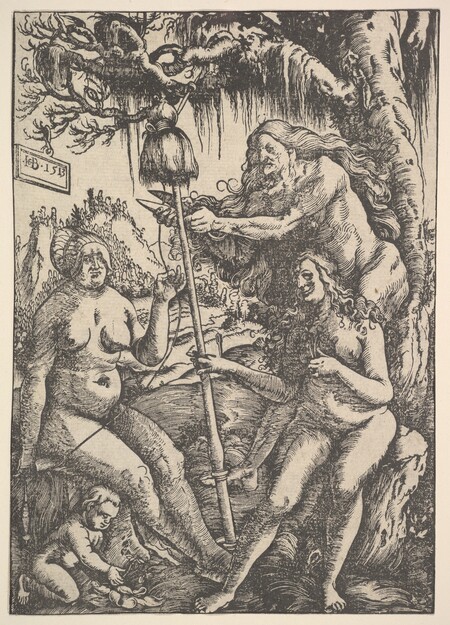
Hans Baldung Grien, «Three Parks: Lahesius, Atropos, and Clotho» (1513)