Categories
Concept
Since ancient times, humans have sought to understand what lies beyond Earth. By observing the Moon, the Sun, and twinkling stars, they attempted to unravel the secrets of the surrounding world and form their concepts of cosmic structure. For the people of Ancient Egypt, celestial bodies played a key role. They associated them with gods, the changing of natural cycles, the passage of time, and the afterlife. These ideas were reflected in the work of artists: cosmic space was conveyed not only through familiar heavenly bodies but also through symbolic elements, geometric figures, and mythological characters.
My research covers the art of the Ancient, Middle, and New Kingdoms, approximately from the 27th to the 11th century BCE. I chose this period to examine celestial and cosmic imagery across different phases of a single culture’s history, to trace the evolution of artistic techniques, and to determine which characteristics remained consistent throughout the centuries.
I wondered why ancient Egyptians depicted the same cosmos so differently. In some works, the sky is represented by numerous stars; in others, by complex charts and celestial figures; and sometimes it takes the form of gods altogether. What influenced the choice of these images, and why did the Egyptians use such diverse artistic representations to convey their understanding of the Universe?
As visual material, I selected images of monuments directly connected to concepts of the cosmos. These include the starry ceilings of pyramids and tombs, and the astronomical charts found on sarcophagi. It is important to me that each chosen object not only relates to the theme but also allows for a detailed study of its artistic features.
The research structure will combine chronological and thematic approaches. Initially, I will examine the celestial depictions of the Old Kingdom, paying attention to their form, color, and repetition. I will then move on to the star charts of the Middle Kingdom and the methods used to represent celestial bodies. Subsequent sections will focus on the astronomical compositions of the New Kingdom, constellations, the movement of the Sun, and the depictions of the deities through whom the Egyptians understood the structure of the Universe.
My primary focus will be on the visual components of these works. I am interested in comparing how artists utilized line, color, scale, and figure placement. For instance, how does the stellar pattern on a tomb ceiling differ from an astronomical chart? Why does the cosmos consist of numerous small symbols in some depictions, while a single large divine figure dominates the space in others? For the analysis, I will use magnified fragments, comparative studies, and my own graphical diagrams.
The sources for this research will include scientific publications on the history of art and the astronomy of Ancient Egypt, the works of Russian scholars, and museum collection catalogs.
My hypothesis is that the Egyptians depicted space not simply to illustrate what the starry sky looked like, but to create a semblance of it within the human environment. Perhaps it was important to them not just which celestial objects they illustrated, but where those illustrations were placed. The ceiling might symbolize the celestial dome, while the sarcophagus paintings could connect the individual to cosmic order. In this way, the Egyptians used art to construct a space in which the human became a part of it.
The Starry Ceiling of the Burial Chamber of the Pyramid of Teti. 24th Century BCE. Old Kingdom, 6th Dynasty. Saqqara, Egypt.
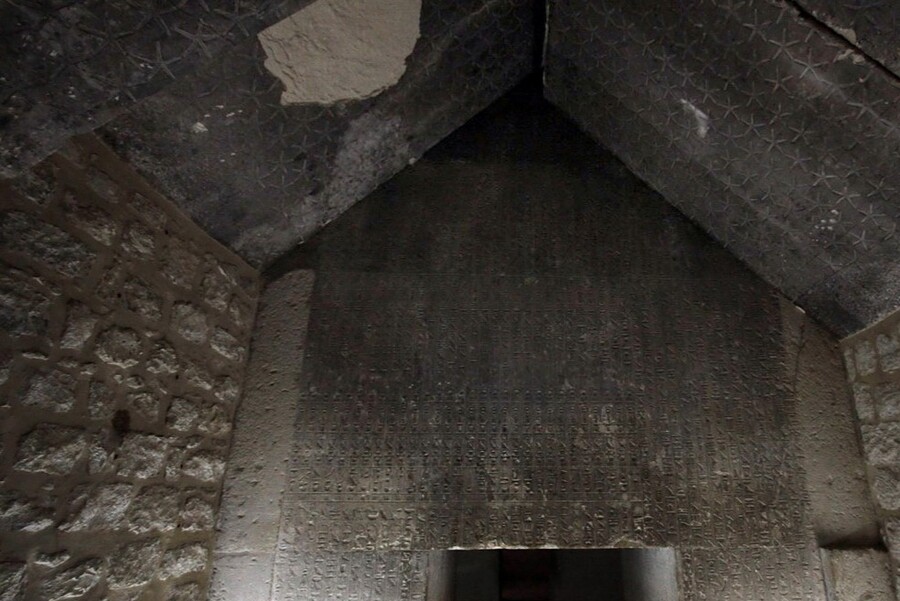
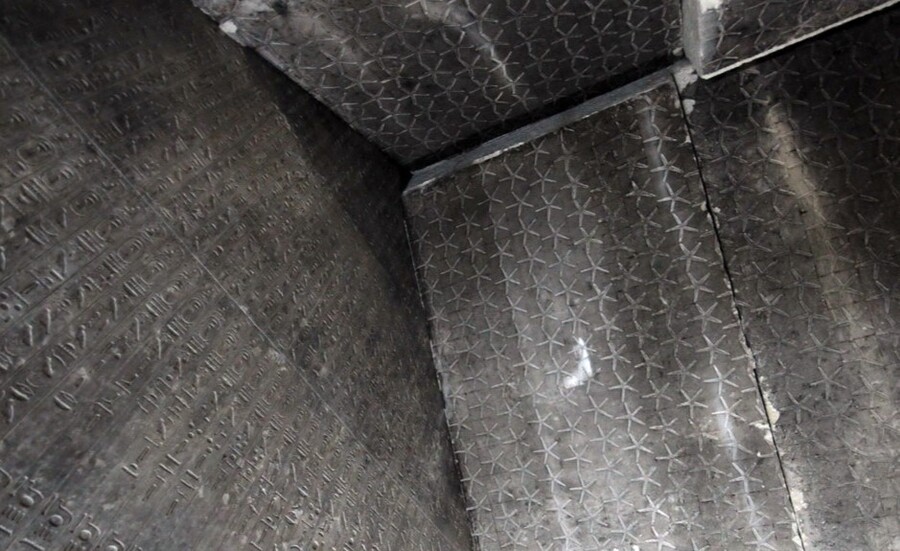
Starry ceiling of the burial chamber of the Pyramid of Teti. 24th century BCE. Old Kingdom, 6th Dynasty. Saqqara, Egypt.
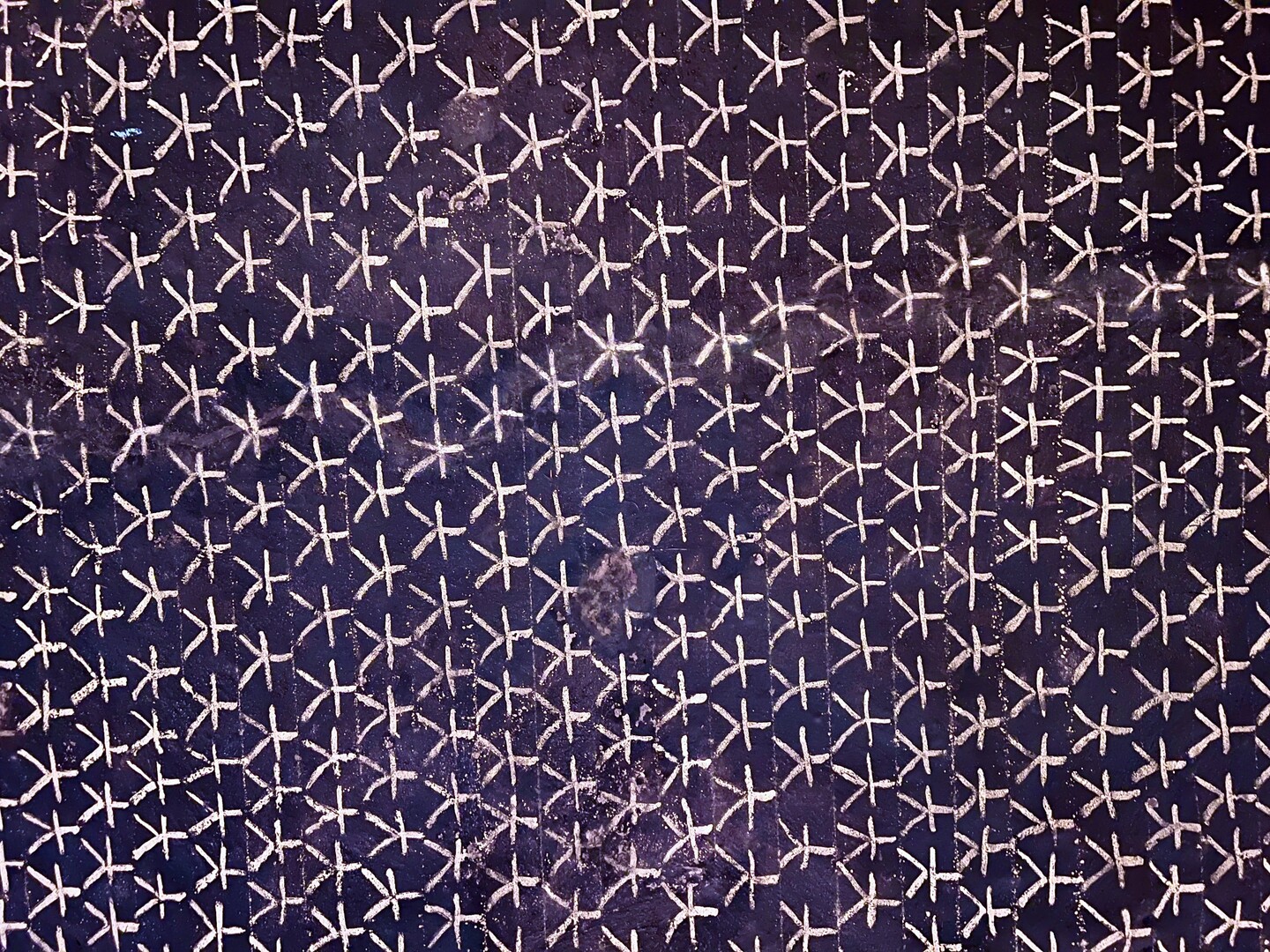
The starry ceiling of the Pyramid of Teti illustrates one of the early methods of depicting the night sky. Repetition serves as the key artistic device. The stars are not grouped into distinct constellations, nor is the precise arrangement of their placement conveyed. Instead, numerous identical symbols form a continuous pattern. This method of representation allows the celestial vault to be presented as a single, unified space. The emphasis is not on each individual object, but on the overall visual impression of the boundless starry sky.
Conclusion
https://isida-project.org/egypt_april_2019/teti.htm (accessed: Nov. 10, 2026)
https://isida-project.org/egypt_april_2019/teti/teti_10.jpg (Accessed: November 13, 2026)
https://isida-project.org/egypt_april_2019/teti/teti_14.jpg (Accessed: November 13, 2026)