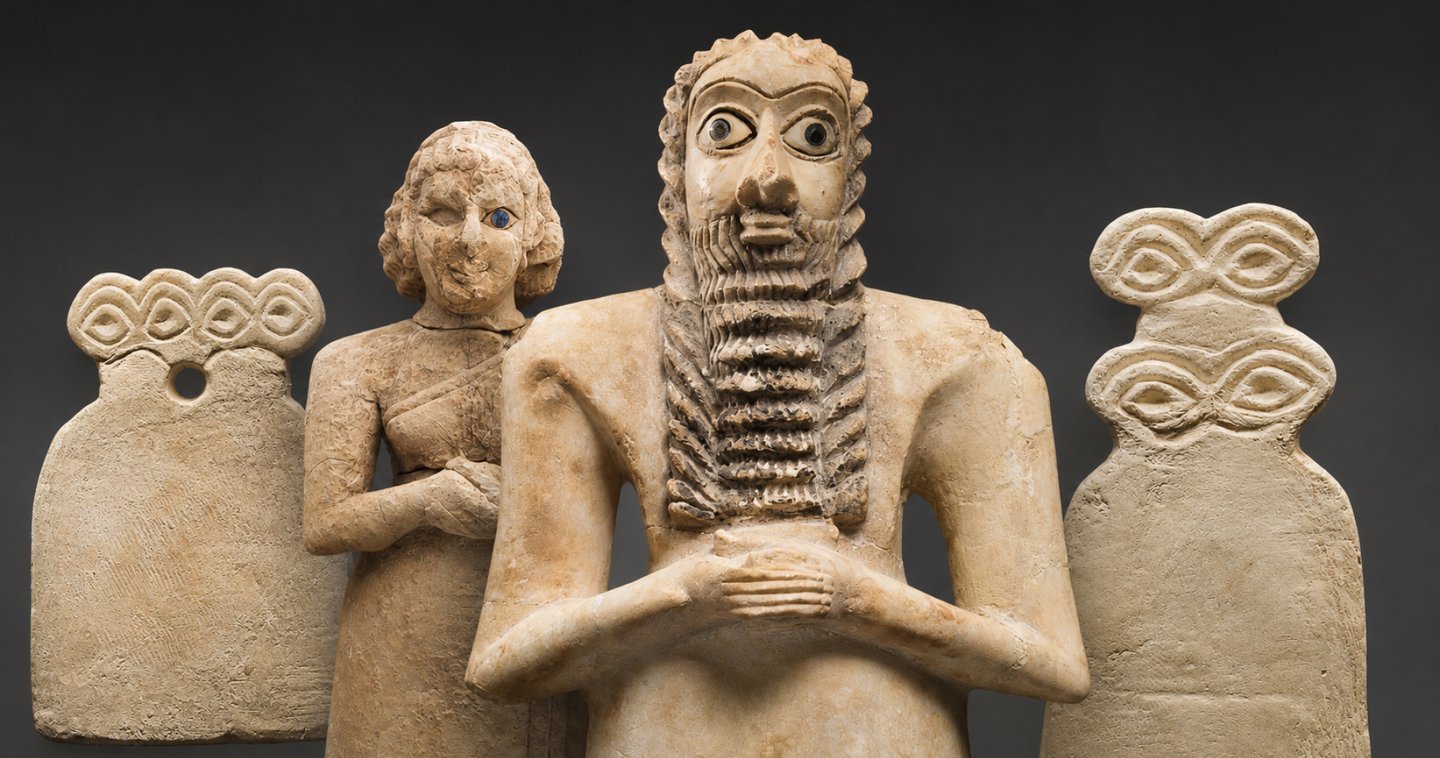
Взгляд, который не смотрит на зрителя: большие глаза в культовых изображениях древней Месопотамии
«Of course, he wasn’t looking at us—his attention should have been on the god whose incarnation stood before him» [1].
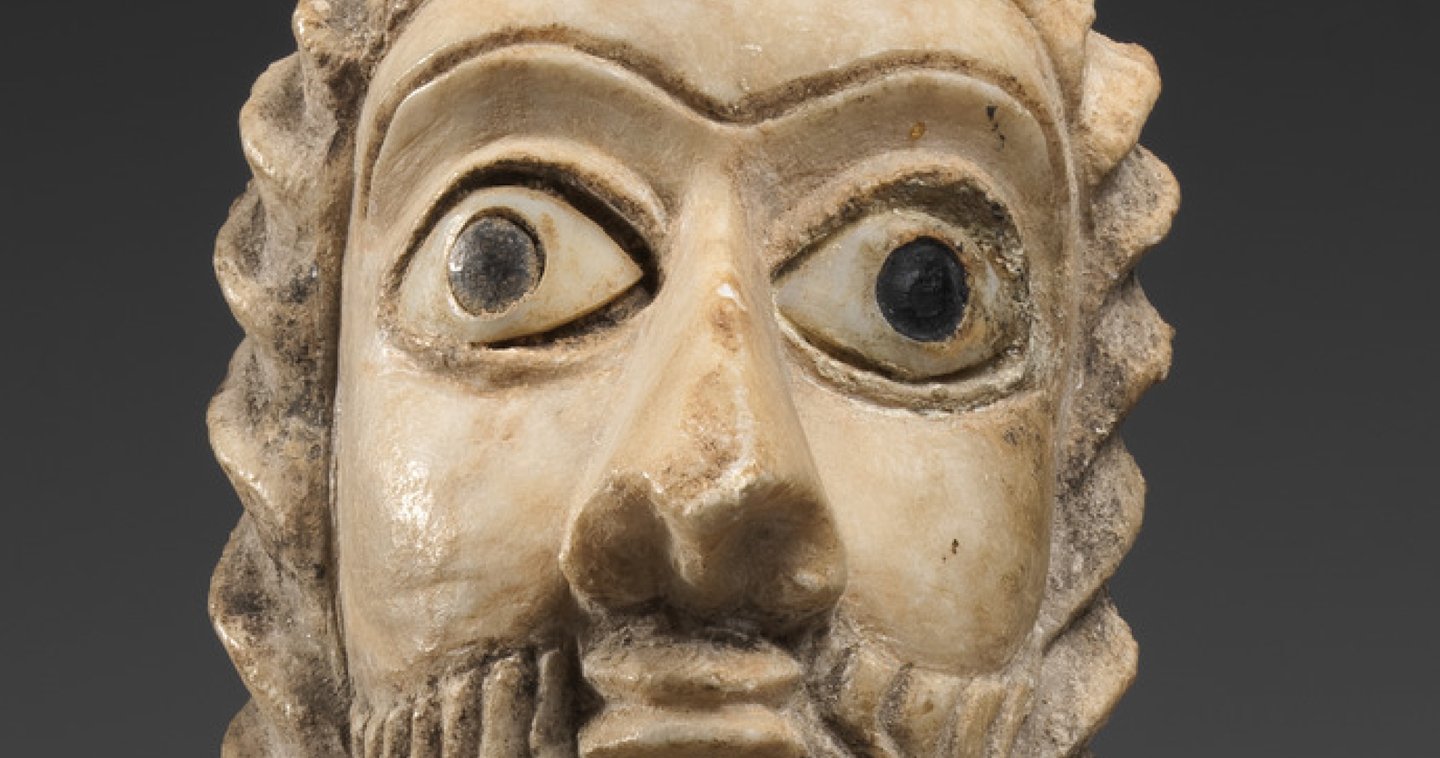
Standing male figure. Approx. 2900–2600 BCE. Eshnunna, modern Tell Asmar. Gypsum, shell, black limestone, bitumen. The Metropolitan Museum of Art, No. 40.156 [I1]
Concept
The starting point for this research was an observation of early dynastic Mesopotamian sculpture: in some depictions, the human eyes appear disproportionately prominent compared to the other features of the face. This is particularly evident in the figures of adorers—those who prayed within the temple space. Their wide-open eyes were often further highlighted with inlays of shell, limestone, or lapis lazuli [2; 3]. Against the backdrop of a rather conventional representation of the body and face, this emphasis seems intentional and compels the viewer to examine the gaze itself as a component of the image more closely.Meanwhile, the large eye appears in Mesopotamian art in a completely different form. At Tell Brak, small stone figurines from the 4th millennium BCE were discovered, in which the human figure is extremely minimized, and the eyes become almost the main element of the entire composition [4]. Some figurines have one pair of eyes, while others have several; the body outlines change, but the motif of the eye remains consistent. This similarity to later depictions of supplicants easily prompts an overly simplistic explanation, which is why it was important for me to examine these monuments not as links in one obvious tradition, but as two distinct approaches to making the gaze the central part of a cultic image.
The difference between the monuments cannot be grasped solely through a textual description; it becomes evident through direct comparison of the images. In the Tell Braq figures, the eye can virtually organize the entire form of the object. In the adorants, by contrast, it exists within the human body and interacts with other elements—the frontal posture of the figure, the folded arms, the clothing, and the overall stillness of the pose. Therefore, the research is structured around a progressive approach to the objects: from the general view to the details, from the individual monument to the series, from the eye to the face, and finally to the figure as a whole.
The material is also of particular significance. In some adorants, the inlay remains intact, while in others, only depressions or traces of bitumen are left [5–7]. This allows us to see that the eye was not simply carved into the stone alongside other facial features, but was often specifically accentuated with different materials and color contrast. This makes its visual prominence the result of several artistic decisions—scale, frontality, material, and repetition.
Statue of Satam. Circa 2400 BCE. Uruk. Limestone. The Louvre, Department of Near Eastern Antiquities, AO 5681 [I2]
The work gradually transitions from Tell Brak to early dynastic votive sculpture, then to an analysis of the gaze within the human figure, and finally to a comparison of two groups of monuments. My goal is not simply to collect images with similar eyes, but to show how their role changes depending on the overall composition of the image. Therefore, individual objects are examined not in isolation, but in series: repetition allows one to determine whether a visual feature is a chance trait of one monument or part of a more stable artistic type. Consequently, the research focuses not on finding a singular «symbolic meaning» of the eye, but on how the gaze becomes an active element in cult imagery and how it organizes the image differently in two historical contexts.
Selection Criteria
The research includes only those objects that meet three conditions:— the eyes are visually prominent; — the object is connected to a cultic or ritual context; — its dating, origin, and attribution can be verified through museum or scholarly sources.The primary sources are museum catalog cards, Russian-language publications, and academic texts. Fragmentary artifacts lacking a preserved head are additionally used as comparative material, which allows for the separation of the role of gesture and posture from the role of gaze.In this process, I distinguish between:fact — confirmed by a source; interpretation — proposed by the researcher or the museum; visual observation — what can be directly seen in the image.This approach prevents attributing meanings to ancient objects that are not supported by the sources.
Research Question
Why do eyes become so prominent in some iconic images of ancient Mesopotamia?
What might the magnification of the eyes suggest about the function of the image?
And can the large eye be considered a stable symbol with a single meaning?
Hypothesis
I propose that in Early Dynastic depictions, the large, often inlaid eyes of adorants do not function as a standalone symbol of prayer, but rather intensify the state of constant attention toward the deity, which is already established by the figure’s posture, gesture, and ritual function [1; 2; 8].
In the artifacts from Tell Brak, a similar visual emphasis may operate differently: here, the eye becomes the foundation of the image itself, though existing sources do not allow us to automatically ascribe a supplicating gaze function to it [4].
Comparing these two groups should demonstrate how one visual device alters its role depending on the context and function of the cult image.
Eye Idol. Circa 3700–3500 BCE. Tell Brak. The Metropolitan Museum of Art, No. 51.59.4 [I3]
Navigation
I. TELL-BRAKE: THE EYE AS AN INDEPENDENT IMAGE
II. ADORANTS: THE GLANCE WITHIN THE HUMAN FIGURE
III. THE GAZE AND THE FUNCTION OF IMAGE
IV. REPETITION AND SERIES
V. SIMILARITY AND DIFFERENCE
VI. CONCLUSION
I. TELL-BRAK: THE EYE AS AN INDEPENDENT IMAGE
Eye Idol. Circa 3700–3500 BCE. Tell Brak. The Metropolitan Museum of Art, No. 51.59.5 [I4]
The first difference between the Tell Brak figurines and conventional depictions of the human form is the degree of bodily compression. The figurines have little developed facial structure or anatomy; their small form primarily serves as a base for a pair of large eyes. Therefore, the eye is perceived here not as one of the facial features, but as an element around which the entire image is constructed. Such figurines date to approximately 3700–3500 BCE and were discovered in Tell Brak in modern-day Syria [4]. Thousands of these objects originate from a structure that modern archaeology has named the «Temple of the Eye» [4].
Eye Idols. Circa 3700–3500 BCE. Tell Brak. Gypsum alabaster. The Metropolitan Museum of Art: (1) No. 51.59.8 [I5]; (2) No. 51.59.11 [I6]; (3) No. 51.59.12 [I7].
The series suggests that we are looking at more than a single artistic decision. The figurines vary in proportion, body width, and the contours of the upper section. Some have a single pair of eyes, while others feature additional eyes or small figures [4]. Crucially, the motif of the eye remains constant despite the changes in the other elements. The recurrence across different objects allows us to view the enlarged eye as a consistent principle within this group of images, rather than a random detail of a single artifact. Researchers hypothesize that the figurines may have been left in the temple space as offerings, though the precise function of these objects has not been established [4]. Therefore, their form cannot be immediately explained using the same logic applied to the gazes of later adorants.
Eye idol with multiple pairs of eyes. Circa 3700–3500 BCE. Tell Brak. The Metropolitan Museum of Art, No. 51.59.10 [I8]
The autonomous role of the eye is particularly clear in figurines featuring multiple pairs of eyes. The form no longer adheres to the conventional anatomy of a human face: the same motif can be repeated several times on a single object [4]. Here, the eye begins to function not only as a part of the human image but also as a rhythm and a means of organizing the surface. At this stage, we can draw an initial intermediate conclusion: in Tell Brak, the human figure can be reduced almost to a single, stable visual motif of the eye. What precisely this motif signified cannot be definitively determined from the preserved evidence.
II. ADORANTS: A LOOK INSIDE THE HUMAN FIGURE
In the third millennium BCE, we encounter a different type of cult imagery. In the Early Dynastic Period, approximately 2900–2350 BCE, the temple was central to the life of a Mesopotamian city. Access to small inner sanctuaries was likely restricted, and the images may have depicted a worshipper before a deity in its physical absence [8]. It is in this context that votive figures of adorants—praying individuals—became widespread.
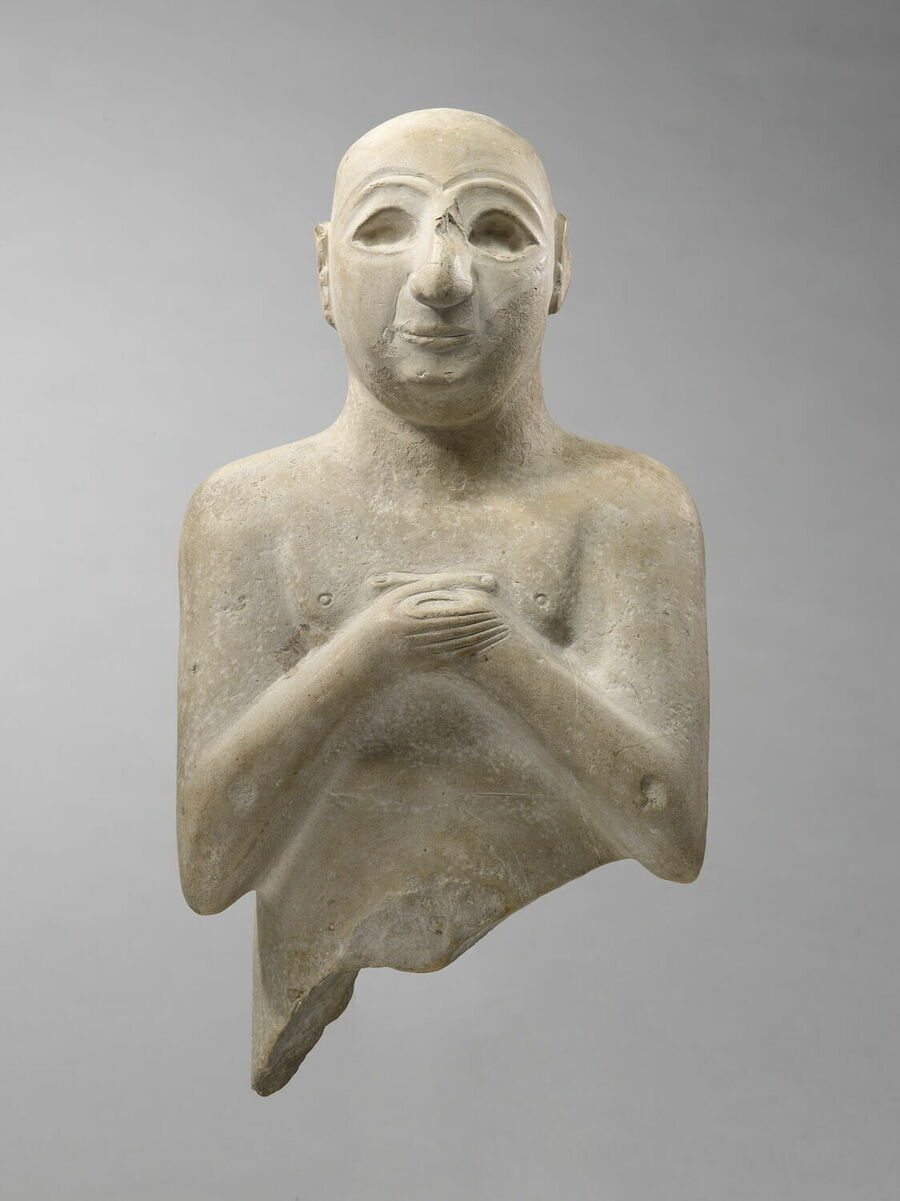
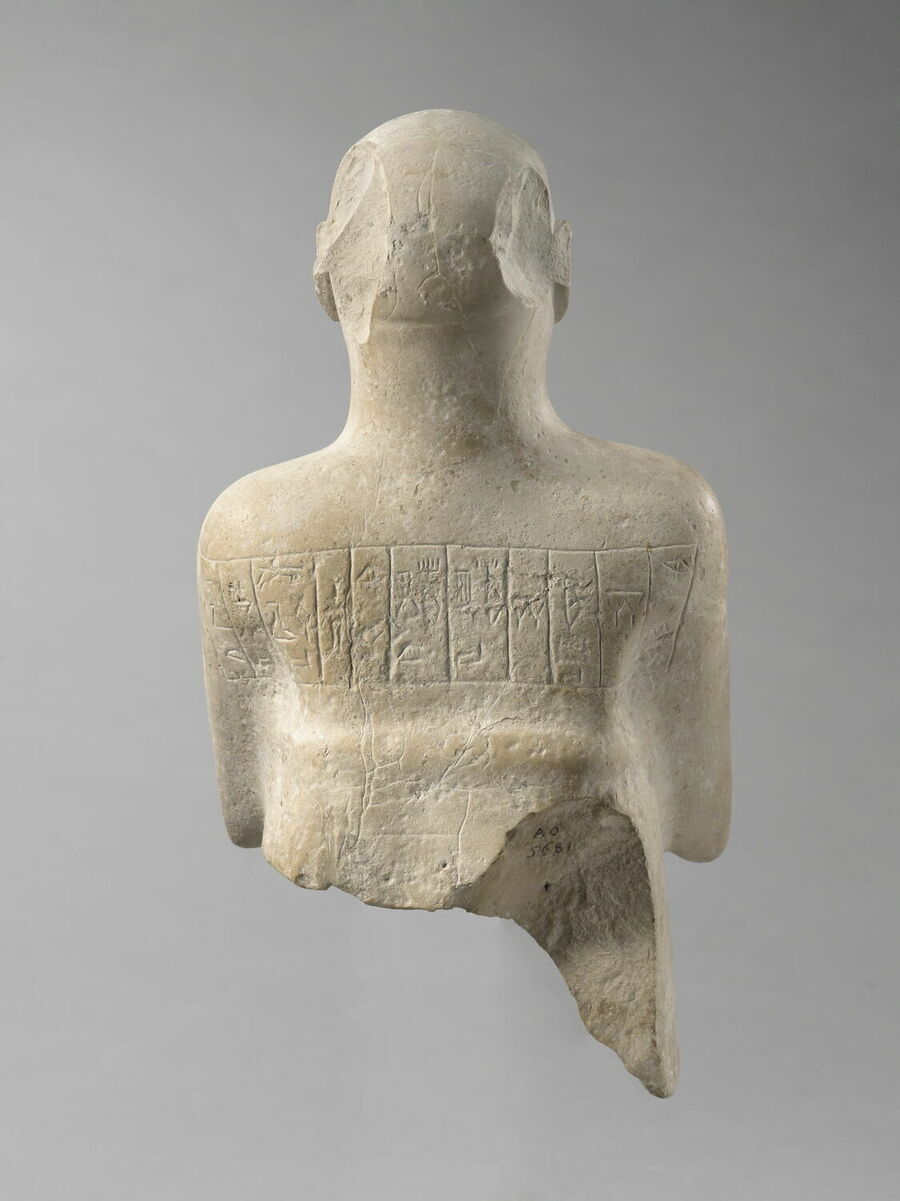
Statue of Satam. Circa 2400 BCE. Uruk. Limestone. Louvre, AO 5681 [I2]
In the adorant, the eye no longer exists separately from the human form. Satama’s statue depicts a supplicant with clasped hands; the Louvre notes that the figure’s eyes and eyebrows were originally inlaid [5]. Thus, the gaze was distinguished not only by size but also by other materials. This inlay enhanced the contrast within the face, making the eyes visually more prominent than other features.
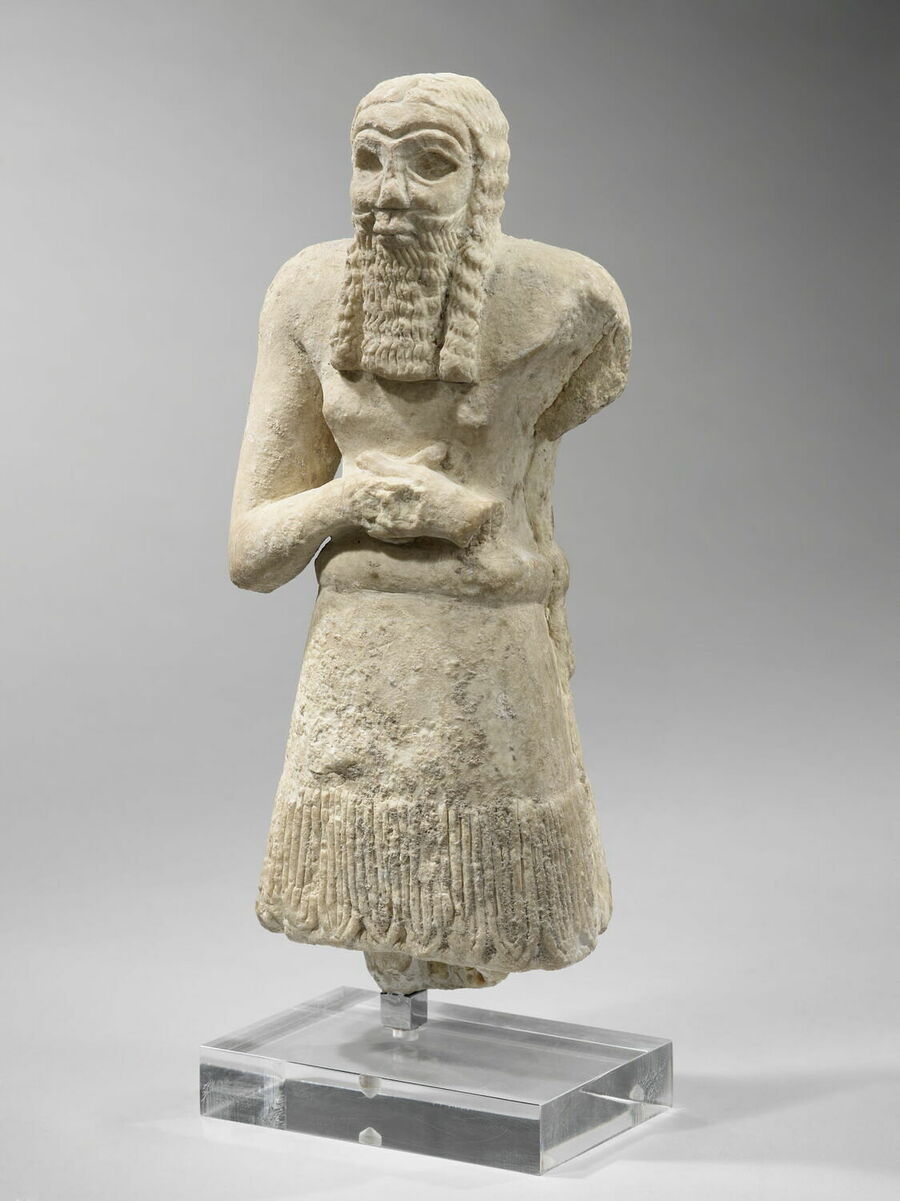
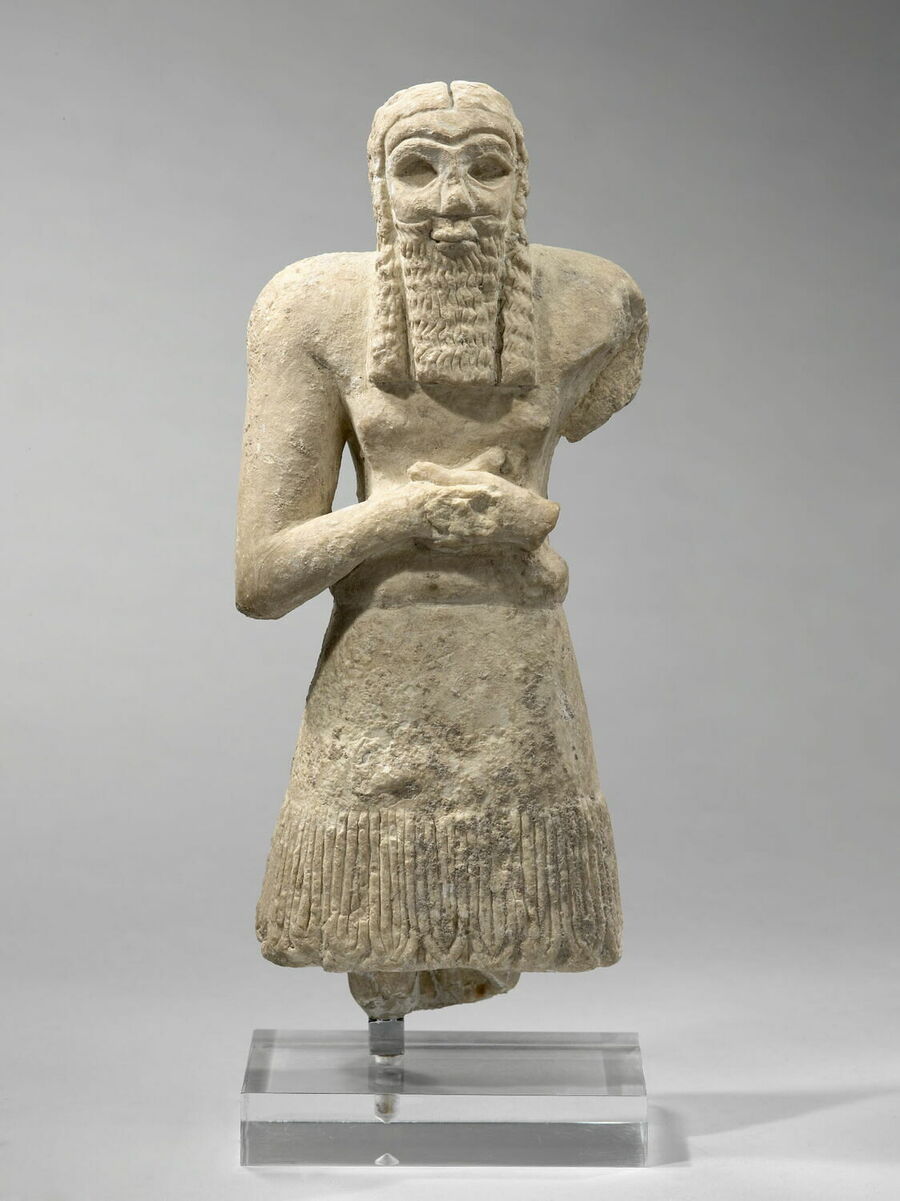
Adorant Statue dedicated to Prince Ginakh. Circa 2700–2600 BCE. Diyala Region. Limestone. Louvre, AO 20146 [I9]
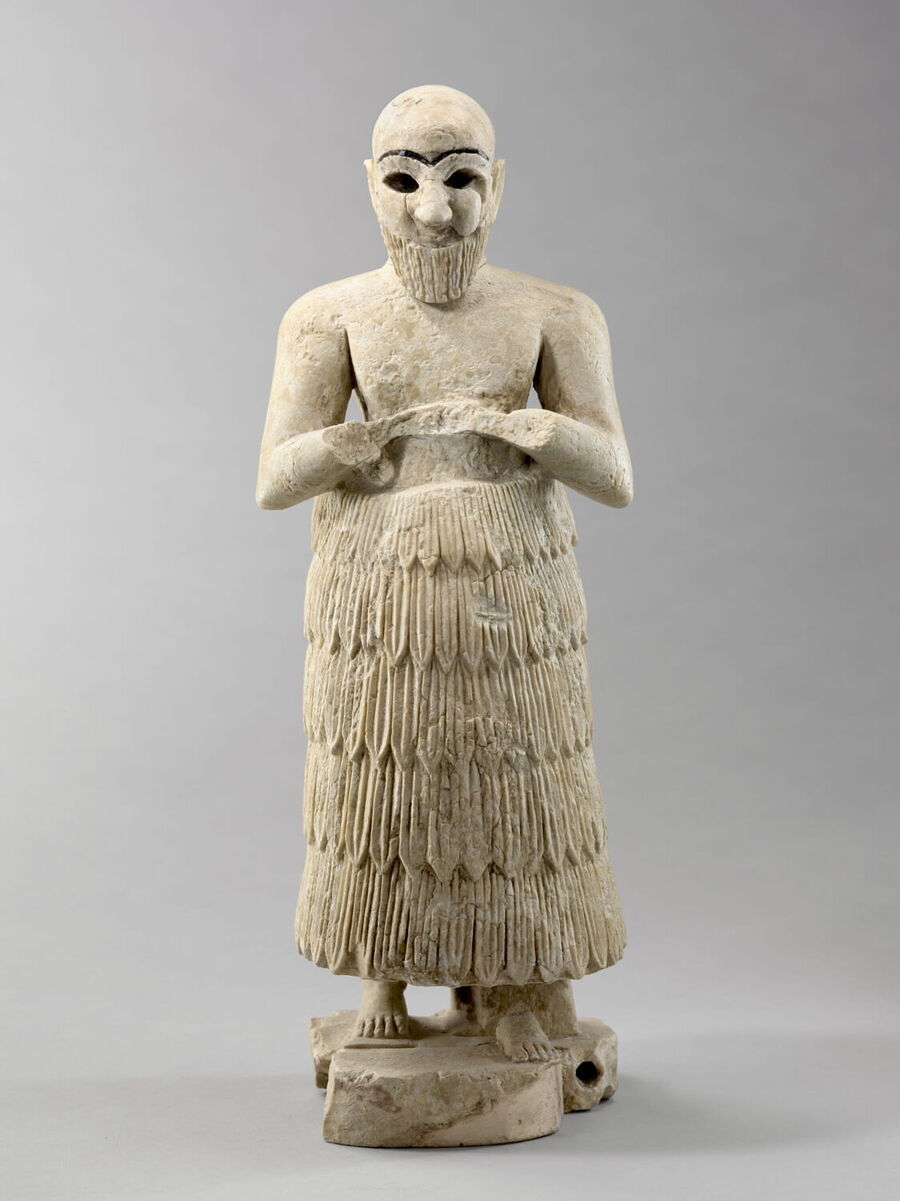
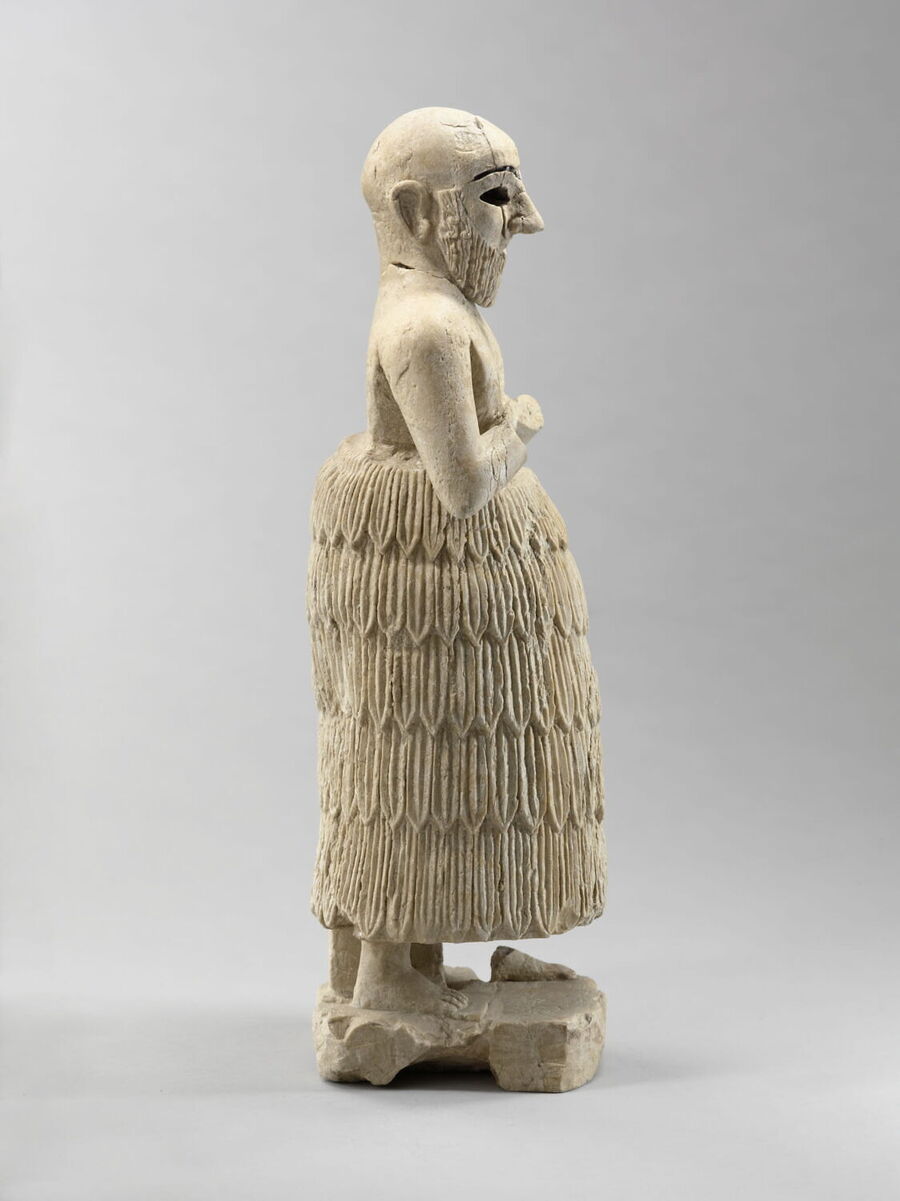
Adorant statuette. Circa 2500–2340 BCE. Mari, Temple of Ishtar. Gypsum, bitumen. Louvre, AO 17569 [I10]