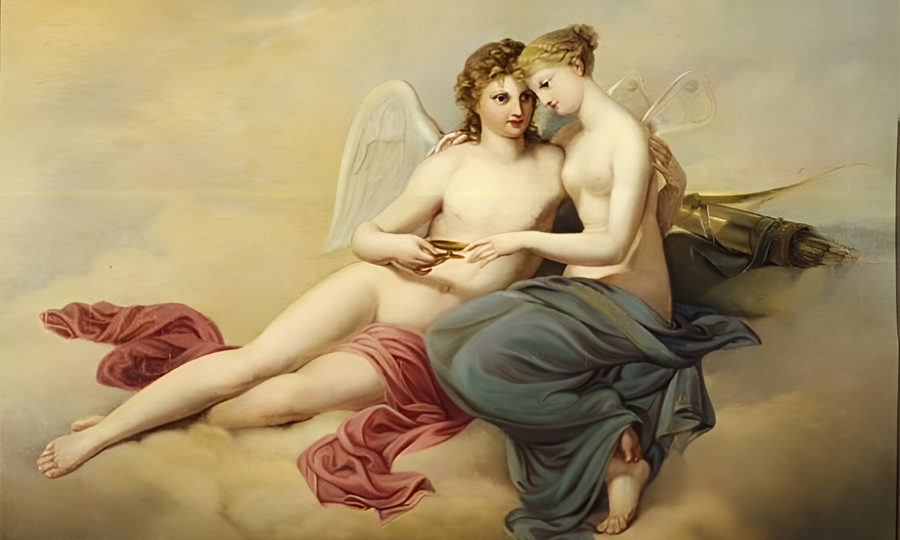
Эрот и Психея:
визуальная история любви в древнегреческом и древнеримском искусстве.
Concept
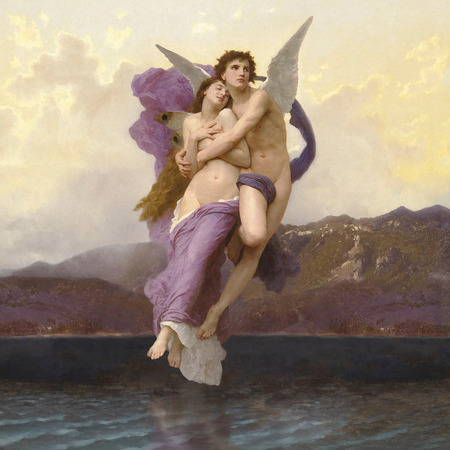
The visual study focuses on the story of Eros and Psyche—one of the most poignant tales in ancient mythology, which narrates love, mystery, separation, and the overcoming of trials. The unique aspect of this plot is that the relationship between the characters progresses from forbidden intimacy and mistrust to reunion and Psyche’s attainment of immortality.The primary goal of this research is to trace how the depiction of Eros and Psyche evolved in the art of two ancient cultures. By comparing sculptural groups, terracotta figurines, reliefs, frescoes, and mosaics, I aim to determine which artistic characteristics defined the Greek tradition, what changed in Roman art, and how these shifts reflected the portrayal of the relationship between the characters.Special attention will be paid to how artists conveyed the characters’ emotional connection through body language, touch, embraces, and other expressive means. The symbolism of Psyche’s figure and its connection to the concept of the human soul will also be examined.The interest in this subject stems from a desire to understand how a specific mythological story found embodiment in different art forms and how the artistic traditions of one culture were transformed in another. Comparing these works will not only trace the development of the figures of Eros and Psyche but also offer a deeper understanding of the peculiarities of ancient Greek and ancient Roman art—their similarities, differences, and methods of conveying mythological content.[1] «The Abduction of Psyche» (1895)
Part I
Описание исследования
Subject of Study — works of ancient Greek and ancient Roman art that depict Eros and Psyche, including individual scenes and compositions featuring both characters.
Object of Study — the artistic methods of depicting Eros and Psyche, the specifics of their plasticity, compositional interaction, gestures, attributes, materials, and symbolic content.
Research Goal — to trace the evolution of the visual image of Eros and Psyche in ancient Greek and ancient Roman art and to determine the characteristics of artistic continuity between the two traditions.
Research Question:
How did the depiction of the Eros and Psyche relationship evolve when transitioning from the Greek artistic tradition to the Roman one?
Hypothesis:
The Roman tradition retained the core motifs of Greek compositions but adapted them to different materials, formats, and artistic contexts.
[2] «Amur and Psyche»
Chronological Scope:
The research covers the period of the 4th–3rd centuries BCE.
Why was this period chosen?
It allows for a comparison between early Greek representations of couples and Roman works, enabling an examination of artistic continuity.
The focus of the research is not mythology of love in general, but a specific pair of characters: the ancient Greek god Eros, known in Roman tradition as Amor or Cupid, and Psyche, who personifies the human soul.
The object of study is the works of ancient Greek and ancient Roman art that depict these characters. The subject of study is the specifics of their visual embodiment: their outward appearance, poses, gestures, figure interaction, composition, and the symbolic meaning of the imagery.
PART II
Миф, как основа художественного образа
The research includes works that:
1. Have museum or scholarly attribution to Eros and Psyche; 2. Possess confirmed dating; 3. Allow for the examination of compositional and plastic features; 4. Have accessible imagery; 5. Contain information regarding the material and place of storage.
Individual images of Eros or winged female figures are used solely for iconographic analysis and are not presented as scenes from myth.
Who is Eros?
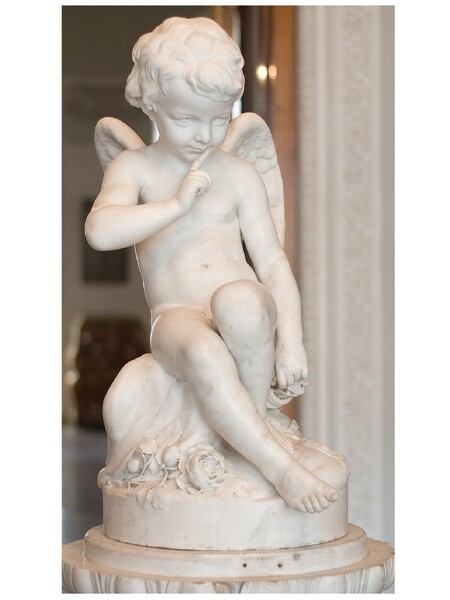
Eros—an ancient Greek deity of love and desire. In mythological tradition, he is connected to the genesis of romantic feeling and the force of attraction.In ancient art, he was depicted in various ways: as a winged youth, a child, or an independent deity. Visual characteristic: wings are one of the character’s most recognizable features.[3] «Eros in the form of a child»
Who is Psyche?
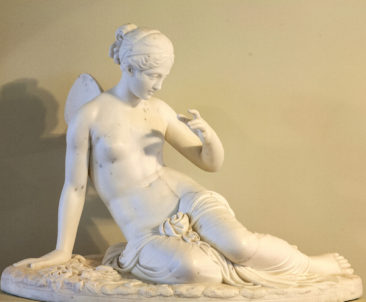
Psyche—a mortal girl, the beloved of Eros. Her name is derived from the ancient Greek word psychē, which signifies the soul or vital breath.In classical iconography, Psyche is often depicted with butterfly wings. This connection stems from the association between the word «psyche, ” the soul, and the butterfly.Visual Feature: the wings help distinguish the heroine from a typical human figure, though they do not inherently prove her mythological origin.[4] „Psyche“
The Myth of Psyche and Eros
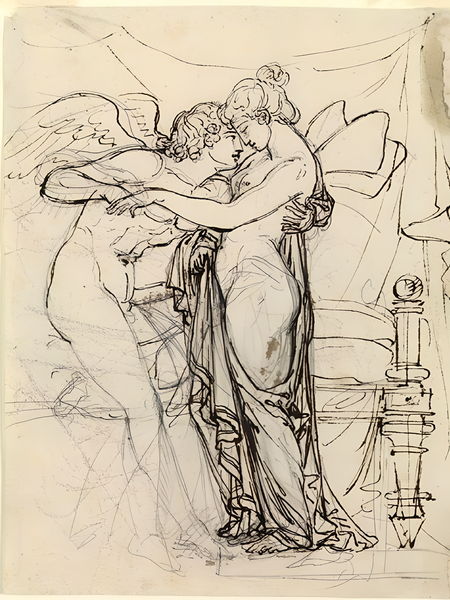
Psychē was an exceptionally beautiful maiden. Her beauty provoked the envy of Aphrodite, who commanded her son Eros to punish the mortal. However, Eros himself fell in love with Psychē.He moved the maiden to a magnificent palace and visited her at night, keeping his identity hidden. Psychē did not know who her beloved was.One day, she decided to see his face under the lamplight. Upon learning that her husband was the god of love, she accidentally burned him with hot oil. Eros abandoned her.After their separation, Psychē endured Aphrodite’s trials and eventually reunited with her beloved. Zeus granted her immortality.[5] Fragment of the faces from the painting «Cupid and Psyche» (front side)
Why is it important to compare ancient Greek and ancient Roman works?
The comparison allows us to see not only the similarity of subjects but also the differences in artistic approaches. Instead of a general discussion on how ancient people understood love, the study focuses on what has actually survived: sculptures, terracotta groups, and reliefs.
[6] «Psyche, Awakened by Cupid’s Kiss»
Why is this subject interesting to artists?
In history, there are several moments that are best conveyed visually:
- first meetings;
- clandestine intimacy;
- self-revelation;
- separation;
- reunion.
However, the most enduring and recognizable artistic motif is the shared portrayal of a couple.
Literary Basis
The most well-known surviving literary version of the myth is found in the work of the Roman writer Apuleius, «Metamorphoses, ” Books IV–VI.
The story was recorded in the 2nd century CE.
It is important to note that the literary version and the visual tradition are not the same.
Roman artists may have utilized existing artistic motifs without literally reproducing Apuleius’s text.
Transition from narrative to image
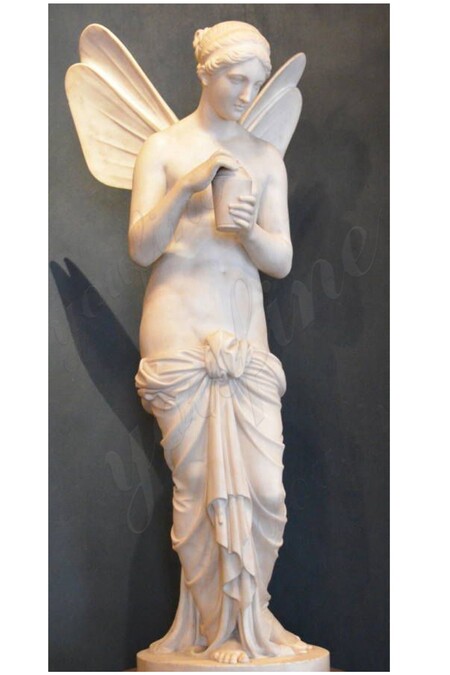
For further research, it is more important not to retell all of Psyche’s trials, but to understand how artists depicted character relationships. Therefore, the main focus will not be on the sequence of events, but on the visual motifs: the joint positioning of figures, embraces, kisses, and the variation of attributes. [7] «Psyche and the Jar of Beauty»
Part III
Древнегреческое искусство
Древняя Греция: первые художественные решения
In Greek art, Eros and Psyche are depicted in various forms of sculpture. The terracotta figurines and sculptural groups are of particular interest. It is in these pieces that we can see how artists gradually shaped the visual image of the couple. To begin, let us examine a specific work: a Boeotian figurine from the Metropolitan Museum.
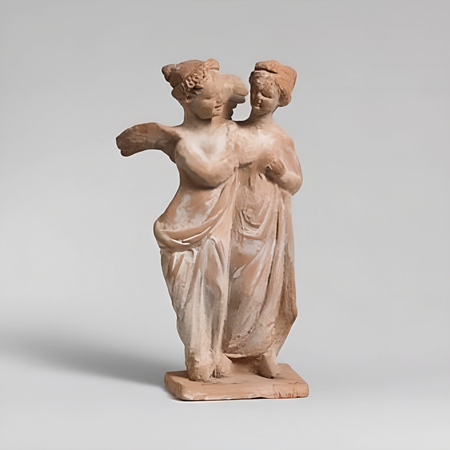
Boeotian figurine. Origin and dating: Greece, Boeotia, IV–III centuries BCE (Classical or Hellenistic period).
Material and size: Terracotta, total height 11.5 cm—this is a small, intimate piece intended for domestic or funerary contexts.
Iconography: Both figures are clad in long, draped garments and crowned with wreaths, which distinguishes them from later erotic depictions of nude Eros.
[8] Terracotta figurine of Eros and Psyche. Greek, Boeotian 4th–3rd century BCE
Overall, this small sculpture is a brilliant example of how a Greek master managed to convey a grand story of love in a miniature form—where the essential element is not external beauty, but the harmony between two souls.