Многофигурная композиция и распределение внимания зрителя в живописи Питера Брейгеля Старшего
Как художник организовывал десятки персонажей, бытовых сцен и мелких деталей внутри одного полотна.
Bruegel—the intelligent apple. He just knows everything about the roots deep down… It is his ability to generalize, to see the world as a whole in all its complexity, while simultaneously keeping the details and particularities in focus, that elevates him to this height.
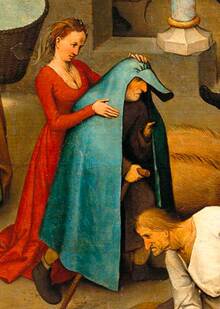
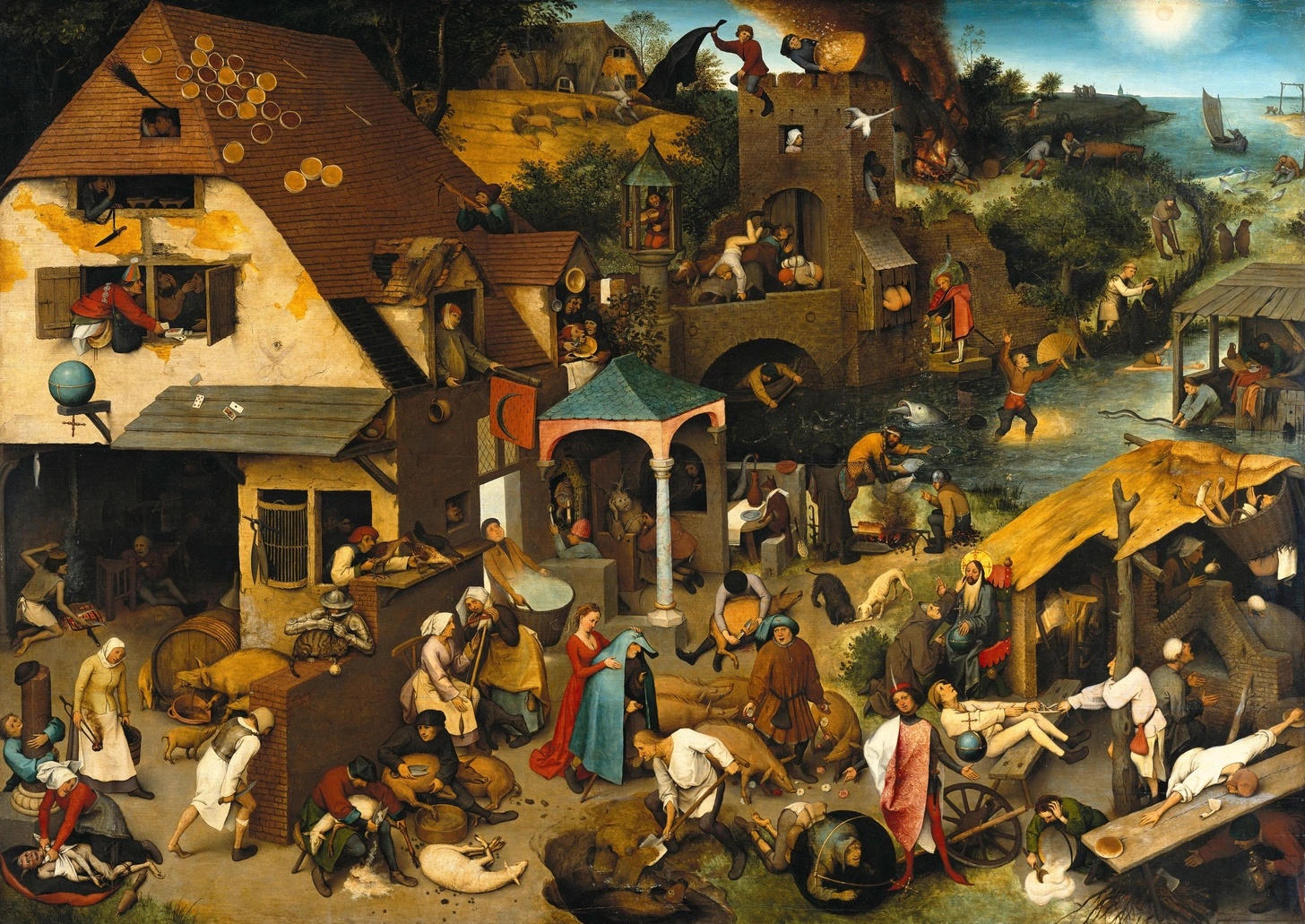
Pieter Bruegel the Elder, also known by the nickname «The Peasant,» was a Dutch painter and one of the most renowned figures of the Northern Renaissance. He is considered the founder of the «peasant genre,» a genius in landscape painting, and master of genre scenes.
Pieter Bruegel the Elder. «Flemish Proverbs.» 1559.
I. CONCEPT AND THEME SELECTION
A traditional composition is built upon specific principles. There is a main character or a central event around which the rest of the narrative is formed. Peter Bruegel the Elder’s composition is structured differently. Before the viewer opens up a vast world where dozens of stories are unfolding simultaneously.
Research Goal: To understand how an artist manages to hold the viewer’s attention in a space filled with numerous events that appear equally important at first glance.
INDEX
I. Concept and Topic Selection II. Diversity of Subjects III. Space IV. Scale and Detail V. Movement and Rhythm VI. Conclusion VII. Bibliography and Image Sources
I chose this structure to delve into every visual technique Bruegel employed in his work.
II. DIVERSITY OF THEMES
Pieter Bruegel the Elder. «Children’s Games,» 1560.
The painting depicts over two hundred children engaged in approximately eighty different games. Instead of showing a single action, the artist portrays numerous parallel events. A major street cuts across the pictorial space diagonally, connecting the foreground to the distant part of the city.
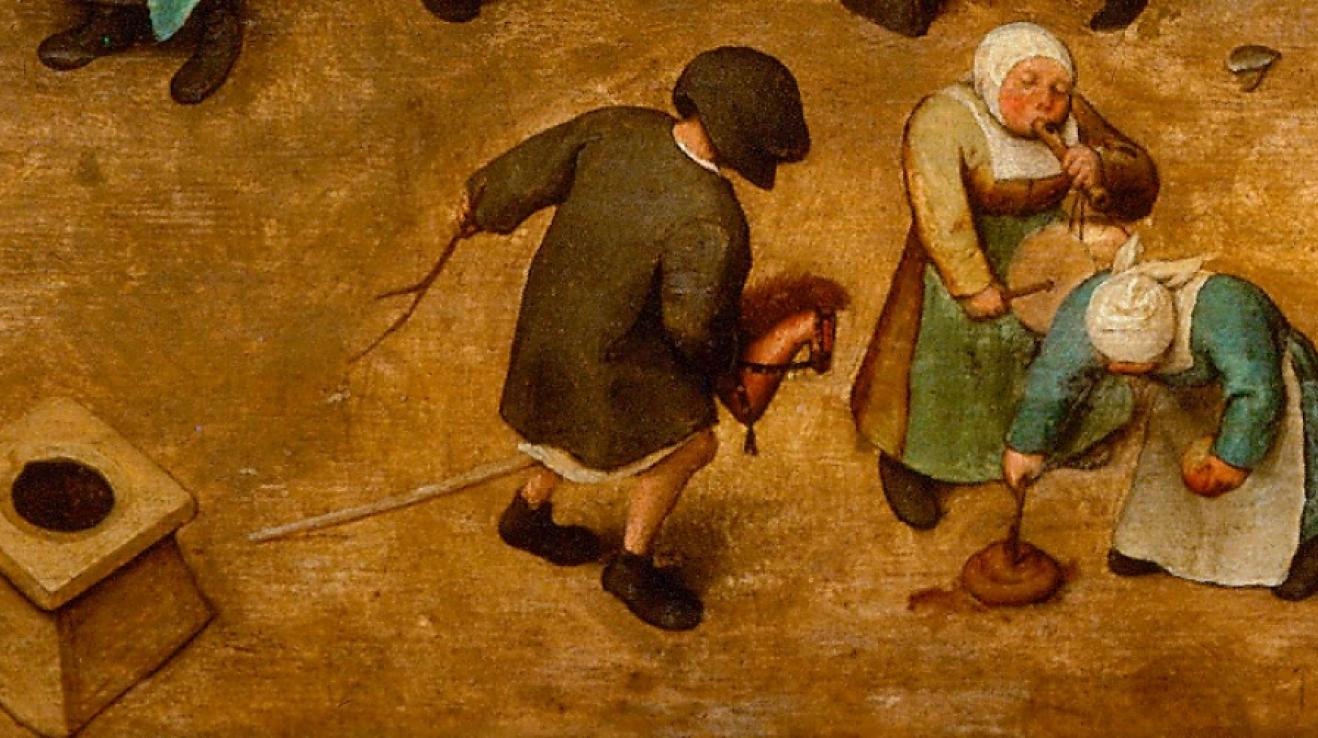
The uniform scale across many character groups creates a sense of equality among the events. The viewer’s gaze does not linger long on any single action but continues to explore the space.
Pieter Bruegel the Elder. «The Battle of Maslenitsa and Lent, ” 1559.
Bruegel depicts the confrontation between two traditions—the boisterous celebration of Maslenitsa and the ascetic period of Great Lent—dividing the space into two semantic zones. The left side is filled with festive activity, while the right side features religious and everyday life. The central square becomes the site where these two worlds collide.
The viewer perceives the contrast through the characters' props, colors, gestures, and behavior. The division into two sides helps navigate the dense composition.
Pieter Bruegel the Elder. «The Census in Bethlehem, ” 1566.
The biblical narrative of the census is transposed into a recognizable 16th-century Dutch village. The sacred event becomes part of everyday life.
Compositional device: the narrative is subtly hidden amidst domestic activities.
Joseph and Mary are positioned in the right foreground, but they do not immediately become the focal point. At first, the viewer perceives the snow-covered village, the multitude of people, and their daily routines.
The artist does not distinguish the main characters through size or bright color. Finding them requires careful study of the painting. Here, the viewer’s attention becomes part of the narrative: to locate the biblical heroes, one must first examine the surrounding world.
III. Space
Pieter Bruegel the Elder. «The Way to Calvary, ” 1564.
A massive crowd fills the landscape, and Christ with the cross appears as a small figure amidst the multitude. The viewer initially perceives the scale of the event and only then discovers the central protagonist.
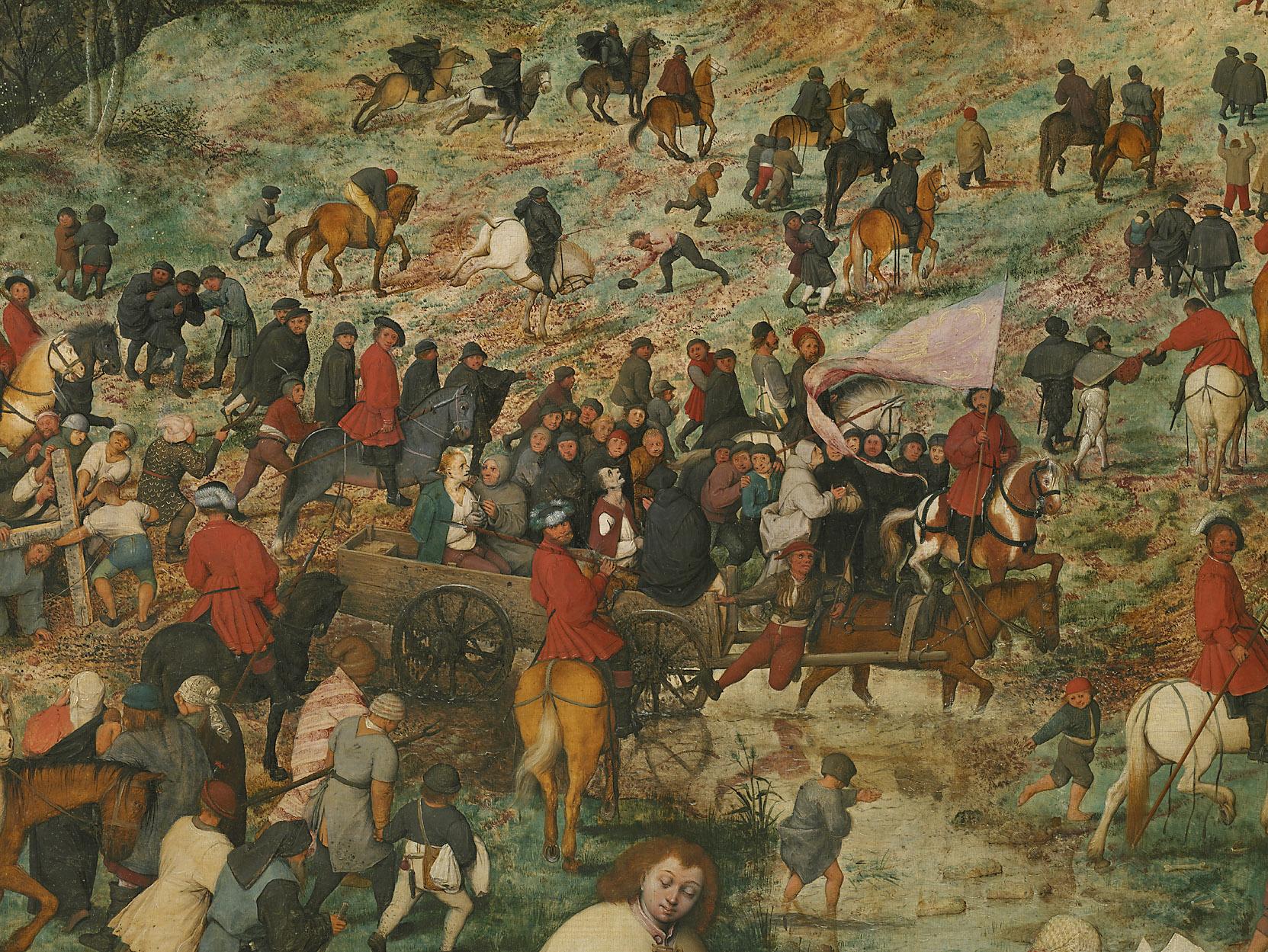
Foreground: individual groups of people and domestic actions.
Middle ground: the movement of the procession and the main mass of characters.
Background: the landscape, the hill, and the site of the crucifixion.
The depth of the space allows for the integration of numerous events into one grand scene.
Pieter Bruegel the Elder. «The Tower of Babel,» 1563.
A massive architectural structure dominates nearly the entire canvas. Construction activity bustles around it.
Compositional technique: The architectural dominant unites numerous small episodes.
The tower draws the eye with its scale, but upon closer inspection, the viewer begins to notice the numerous construction workers, machinery, staircases, and building sites.