Navigation Menu
• Concept
• Technique as a Means of Presence
• Gaze
• Face Between Life and Death
• Fashion and Time
• Conclusion
• Bibliography of Textual Sources
• Bibliography of Image Sources
Fayum Portrait — Articles pomni.by
Concept
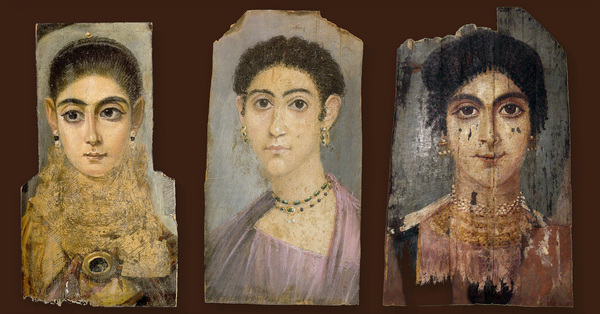
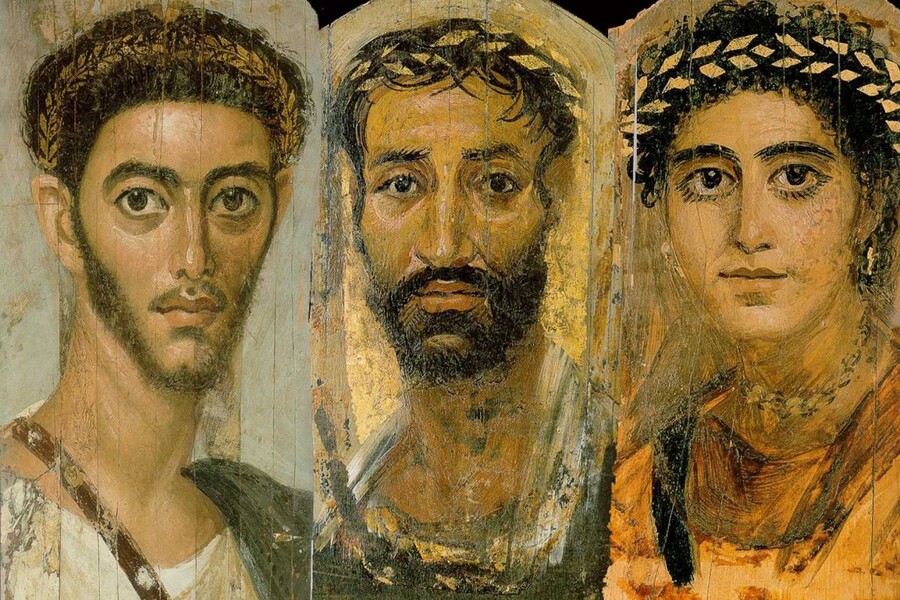
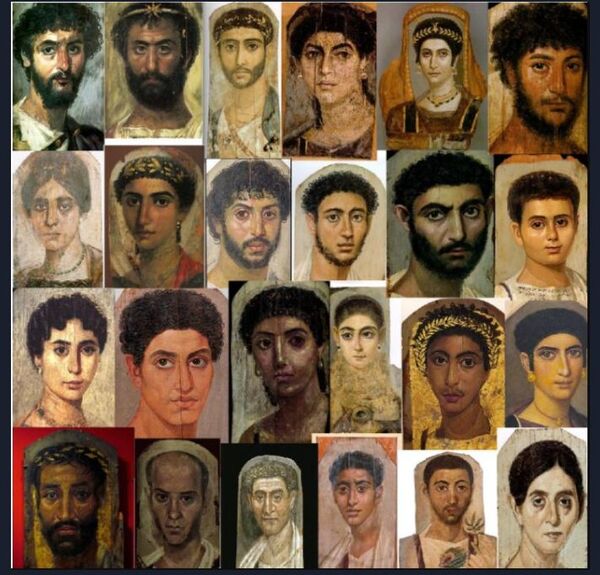
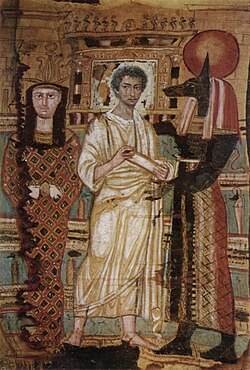
Fayum portraits are one of the most unusual phenomena in ancient art. Created in Roman Egypt during the 1st–4th centuries CE, they merge the Greco-Roman painting tradition with Egyptian funerary cult. Unlike the traditional Egyptian mask, which covered the face and created an ideal, timeless image, the Fayum portrait instead brings the deceased as closely as possible to the viewer. It looks at us.
Fayum Portraits — Wikipedia
It is a strange, dual sensation. On one hand, we understand that before us is a funerary image once laid upon a mummy. On the other, the person in the portrait looks so «present» that it is difficult to perceive him merely as an object of cult. This feeling is particularly strong because of the eyes. They are often large, dark, with finely rendered whites and pupils, and are almost always directed at the viewer or slightly to the side, creating an effect of direct contact.
Key Research Question:
By what visual means does the Fayum portrait create the effect of the deceased person’s presence?
Structure.
I focused only on the portraits where the face, and especially the eyes, are clearly legible. I compared works from the 1st–2nd centuries with pieces from the 3rd–4th centuries to observe how the conveyance of presence evolves as technique and style change. In both instances, the emphasis on the gaze remains, even if it is realized differently. The research structure moves from the specific to the general: first, the technique, then the gaze itself, then the face as a whole, and finally, external markers of the period (hairstyles, jewelry, clothing). This approach makes it easier to trace what remains constant and what changes. While the technique and manner of brushwork change noticeably, as do trends in hairstyles and ornamentation, the way the gaze is organized proves to be more enduring. I used minimal written sources—relying primarily on catalogs and scholarly works. In this study, observing the images is more crucial than recounting others' conclusions. The visual material plays the primary role in this research: it is through the comparison of portraits that the mechanism of presence becomes visible.Hypothesis.
The main role in creating this effect is played not so much by the realistic rendering of individual features, but by a particular organization of the gaze. Large, dark, and often slightly exaggerated eyes, directed toward the viewer, function as a tool of connection. The Greco-Roman technique of volume, chiaroscuro, and impasto brushwork serves not to portrait a «living» person, but to create the sensation that the deceased continues to be present and to look upon us. It is precisely the gaze that becomes the element that «animates» the image more strongly than the accuracy of facial features or the quality of execution.Chapter 1. Technique as a Means of Creating Presence
The Fayum portraits were painted using two main techniques—encaustic and tempera. The difference between them is quite noticeable and directly influences how we perceive the face.