Concept
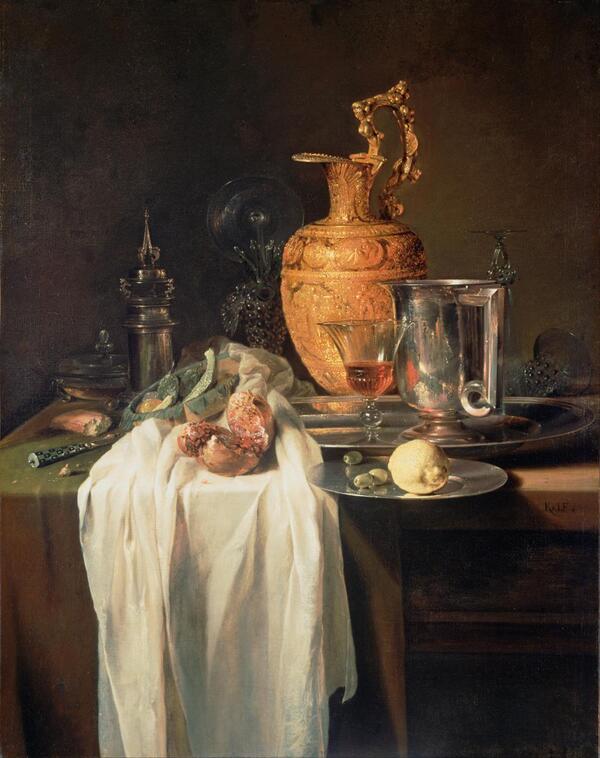
Food is one of the most familiar and necessary components of human life. However, in art, it has never been limited to merely depicting everyday life. Throughout history, food has become a symbol of wealth and social status, religious beliefs, human vices, sensual pleasure, and the fleeting nature of life.
This theme developed with particular interest in the painting of the Netherlands and Flanders during the 16th and 17th centuries. It was here that depictions of food gradually transformed from secondary details in religious and domestic compositions into a standalone art genre—still life. Artists began to pay increasing attention to foodstuffs: they depicted markets, kitchens, set tables, luxurious feasts, and humble breakfasts. At the same time, the abundance of food could carry vastly different meanings—from blessing and prosperity to temptation, gluttony, and a reminder of the inevitability of death.
A notable feature of Dutch painting was the coexistence of opposing meanings. Food could demonstrate material prosperity while simultaneously reminding the viewer of its temporariness; it could represent the beauty of the earthly world while also hinting at the danger of excessive attachment to material pleasures.
The development of still life painting is connected to the growth of urban culture, commerce, domestic interior design, and a rising interest in the material world. In the 17th century, depictions of food gained particular popularity among affluent patrons, for whom paintings could serve not only as home décor but also as a way to display their status and taste.
Research Question: How did the symbolic meaning of food in 16th–17th-century painting change, and why could identical depictions of abundance be perceived in vastly different ways?
The selection of a theme is driven by an interest in how everyday objects acquire additional meaning within art. Food is a universal element of human existence, yet its depiction in painting can convey far more than simply representing sustenance. Through foodstuffs, artists have communicated social stratification, religious beliefs, notions of morality, material prosperity, and the human condition.
This research investigates how artists expressed human attitudes toward the material world through the depiction of food. Comparing the works allows us to trace the shift from moralizing representations of earthly pleasures to an autonomous appreciation of their beauty and abundance, while also showing how motifs of transience and spiritual transcendence continued to permeate even the most opulent still lifes.
Research
Topic 1. Food as earthly pleasure versus the sublime.
«Meat Shop with the Holy Family Giving Alms, ” Pieter Artssen (1551)
The foreground of the painting features a vast array of provisions: meat, fowl, sausages, fish, butter, and cheese. The artist meticulously renders the texture of each object, creating an almost tangible sense of the food’s presence. In the background is a much less conspicuous scene: the Holy Family distributing alms to those in need. The composition is built on the juxtaposition of two planes. The foreground occupies the material world associated with food and the fulfillment of physical needs, whereas the background depicts a scene of Christian charity.
The contrast between the two planes directly indicates a dichotomy between food for the body and food for the spirit. This is precisely what makes the painting one of the most important works for study. The detailed, somewhat repulsive depiction of food prompts reflection on how heavily a person is focused on the material world and whether they notice spiritual values.
«The Market Scene with Christ and the Woman Caught in Adultery, ” Pieter Bruegel the Elder (1559)
The painting depicts a bustling market, filled with diverse goods and products. Deep within the composition is a scene featuring Christ and a woman accused of adultery. At first glance, the religious subject is almost lost amidst the depictions of merchants and market abundance.
However, it is the arrangement of figures and products that creates a semantic contrast. The foreground is occupied by the material world and everyday desires, whereas the religious scene demands moral contemplation from the viewer regarding what is taking place.
The image serves as a warning to the viewer against the sensual temptations of the earthly world. Thus, the marketplace becomes not merely a space for commerce, but an icon of human desires. Food and the abundance of choice represent the allure of material existence, which can distract individuals from moral and spiritual principles.
«The Supper at Emmaus, ” Joachim Beukeler (c. 1560–1565)
The composition depicts a large kitchen overflowing with ingredients prepared for a lavish feast. On the tables and shelves are vegetables, fruits, nuts, fowl, and a substantial cut of meat. In the background, there is a biblical scene of Christ meeting with his disciples.
The artist deliberately shifts the viewer’s focus from the religious narrative to the kitchen space. The food itself thus becomes the primary visual content of the painting.
Beuys brought secondary elements to the forefront, relegating religious history to the background. This can be seen as a crucial stage in the evolution of artistic language: material life gradually becomes an independent subject for representation. To perceive the religious narrative, one must scrutinize the painting closely—the earthly pleasures are rendered so vividly and on such a grand scale.
«The Frivolous Family» Jan Steen, (c. 1663–1664)
The painting depicts a chaotic domestic scene where established norms of behavior are disregarded. The characters are engaged in entertainment, wine, and other pleasures. The composition includes broken dishes, animals, and numerous objects that evoke a sense of disarray.Food and drink become part of a broader image of indulgence. The focus is not on the meal itself, but on the behavior of people unable to control their own desires.
Here, food does not distract the viewer from their spiritual path, but rather becomes part of the system of human vices reflected in the faces on the canvas, among which intoxication, promiscuity, and chaos stand out. As a result, material abundance transforms into an image of moral decay.
«Kitchen Scene,» Pyotr Vitevael (1620s)
The painting depicts a kitchen overflowing with foodstuffs and household items. At the center, a maid and a young messenger are engaged in flirting. Among the produce, the raw meat and dead animals on the table are particularly striking.
Here, food takes on a distinctly sensual meaning. The composition contains erotic undertones, and the abundance of food is linked to corporeal pleasures.
The artist merges food and human desire into a single composition. Unlike the more religious paintings of Artse, cautionary imagery yields to something more immediate—though the core message uniting animal flesh and earthly delights remains the same.
Conclusion
In these works, food functions as a symbol of humanity’s reliance on earthly pleasures. The artists depict various forms of this dependence: frivolous entertainment, excessive consumption, drunkenness, and sensual temptations. A particular contrast between the material and the spiritual is especially noticeable. Food can dominate the entire canvas, obscuring a religious narrative or becoming part of condemned behavior. Thus, the depiction of food transforms into a meditation on human desires and the yielding to them.
Topic 2. Food as a demonstration of abundance and prosperity.
«Still Life with Cheeses, Almonds, and Pretzels, ” Clara Peters (1615)
The table displays various cheeses, almonds, pretzels, figs, and luxurious tableware. Among these, the Chinese porcelain and a gilded goblet are particularly striking. The artist renders the texture of each product and the shine of the objects with exceptional precision. The light and colors of the ingredients are depicted in such a way that everything in the still life seems to emanate a golden glow.
In this painting, material prosperity is demonstrated through the combination of foodstuffs and luxury items. What matters is not just the quantity of food, but its variety, origin, and presentation. The presence of «foreign» items testifies to the development of international trade and the opportunities afforded to wealthy owners.
The unique quality of the work lies in the artist’s transformation of a common meal into a carefully orchestrated composition worthy of close examination. Food becomes not just a necessity, but an object of aesthetic pleasure.
«Banquet Still Life,» Adriaen van Ostade (1644)