Art in Motion
The human body is capable of movement, but how does one translate that movement onto motionless stone or the surface of an earthen vessel? Ancient Greek artists searched for the answer to this question for several generations. They gradually moved from conventional poses to sculptures in which one could feel the body’s weight, the direction of a gesture, and the tension of the muscles.
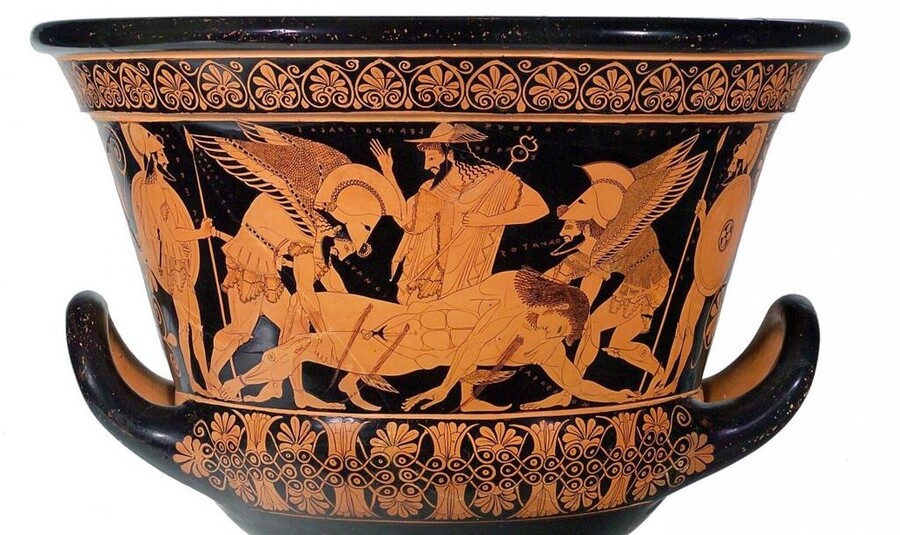
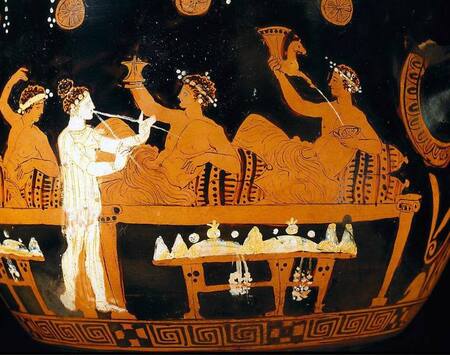
Euphronia Crater. (c. 515 BCE. Photo: Jaime Ardiles-Arce.)
The main question: how does a static image create motion?
We will attempt to discover the artistic means by which the Greeks learned to depict the body in states of repose, exertion, falling, and dancing.
When a step was still just an imprint
In Archaic Greek sculpture, the kouros—a nude male figure standing upright with arms at the side and one leg slightly forward—was a common depiction of a young man.Although the leg positioning suggests a stride, the body barely reacts to it. The shoulders and pelvis maintain symmetry, and weight is not shifted from one leg to the other.
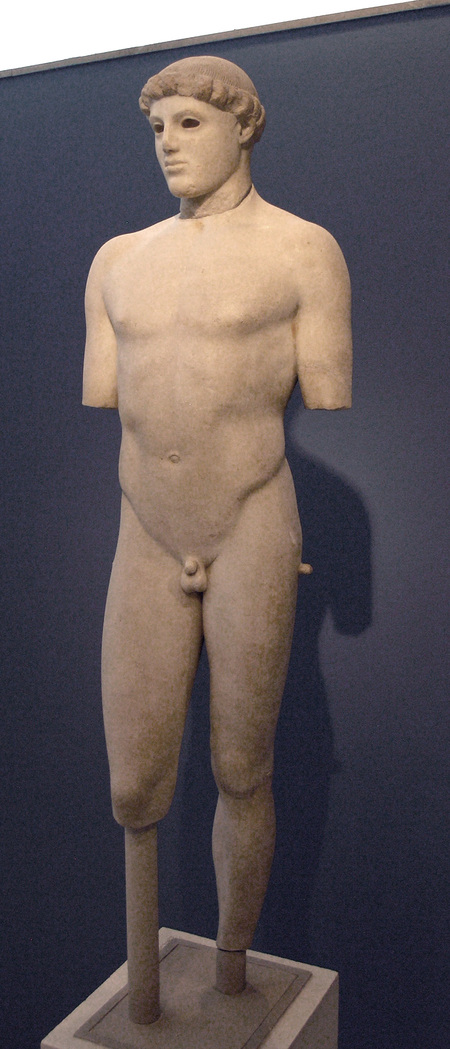
Критийский отрок
Курос из Анависсоса
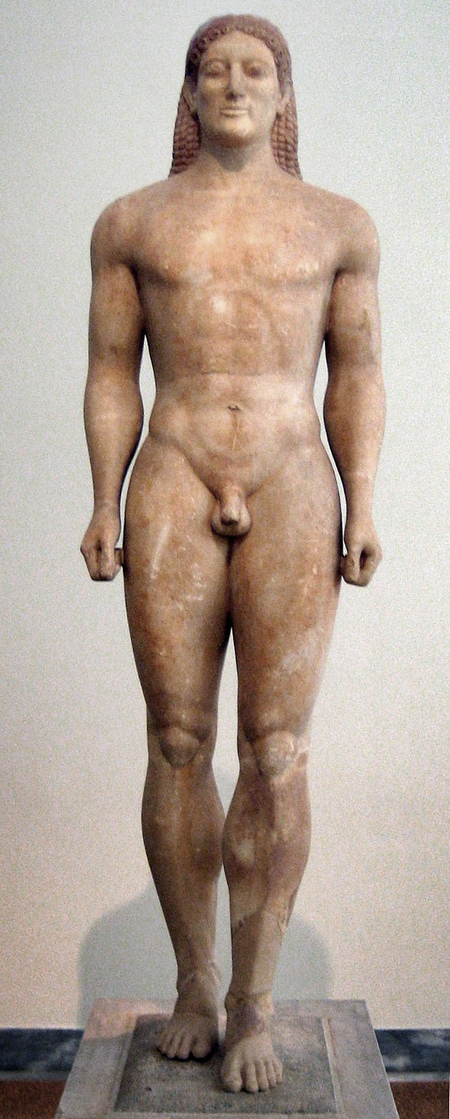
1. Approx. 480–470 BCE. Photo: Marsyas. 2. Approx. 530 BCE. Photo: Mountain.
Between the two statues, separated by about half a century. In the statue by Kouros, the extended leg signifies movement, yet the torso maintains a straight axis. In the statue by Kritios, the youthful body becomes asymmetrical: the weight shifts predominantly onto one leg, the pelvis tilts, and the shoulders respond to the change in support. Even without the preserved feet, it is evident that the figure no longer adheres to a strictly frontal schema.
The fundamental difference lies not in the fact that one statue is standing and the other is walking. Both are static.
Curus depicts an idealized posture of the legs, whereas the Kritios Boy conveys the physical consequences of weight shift. It is this quality that makes the viewer perceive his body as animate.
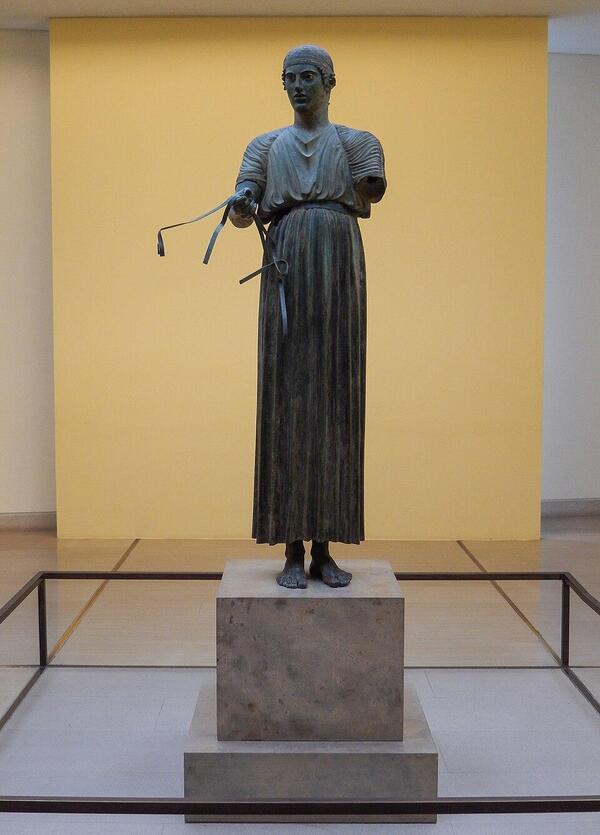
Дельфийский возничий
Критийский отрок
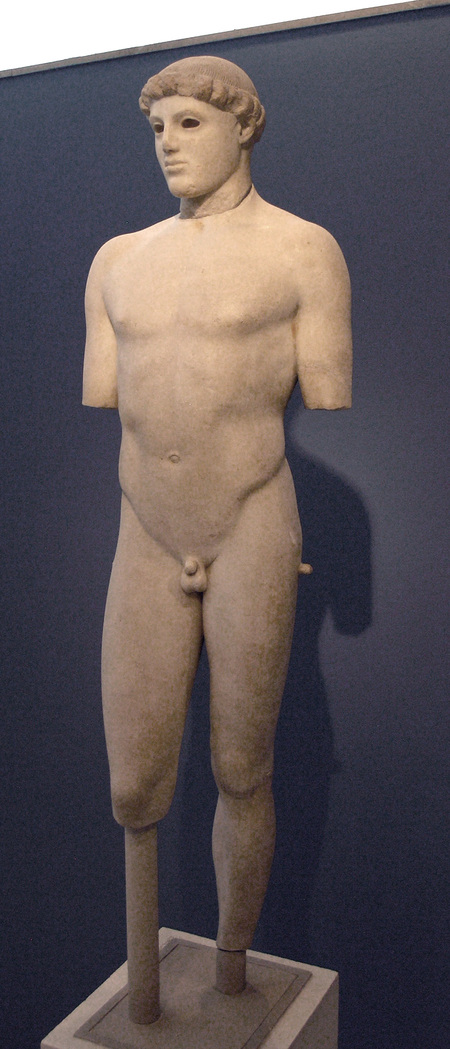
1. c. 470 BCE. Photo: Yair Haklai. 2. c. 480–470 BCE. Photo: Marsyas.
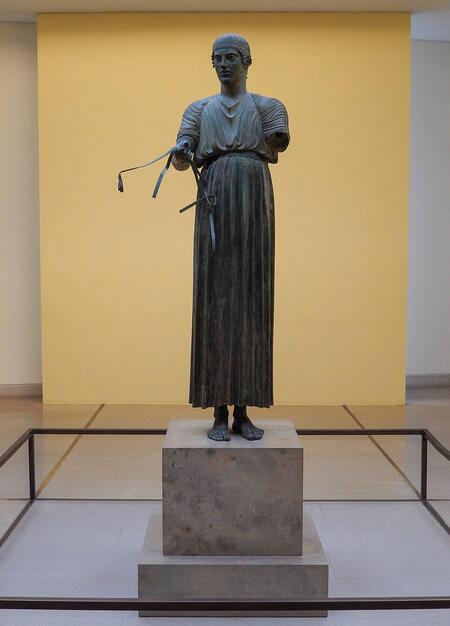
The Delphic Charioteer, created around 470 BCE, is almost motionless. Its body is stretched vertically, and the long folds of the drapery emphasize its stability. However, the head, hands, and posture create a feeling of focused presence. Unlike the youth, this stillness does not seem mechanical.
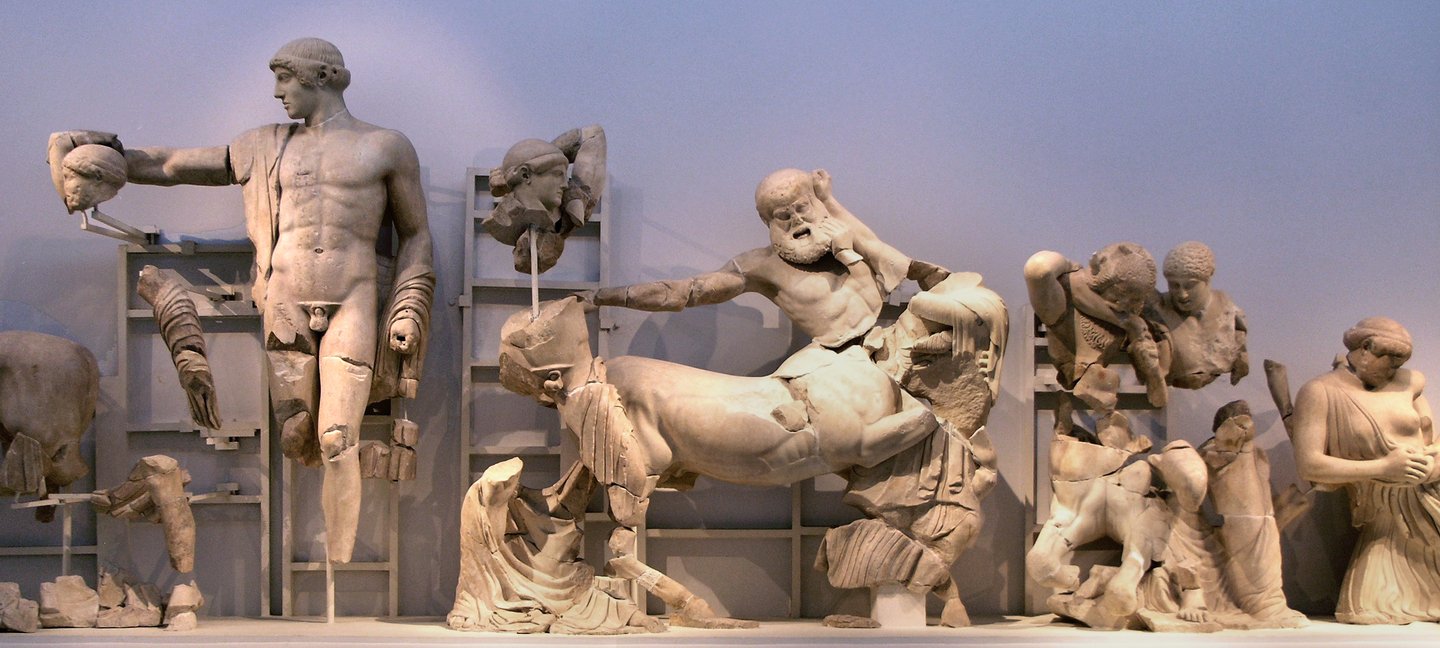
Fallen warrior of the western facade of the Temple of Aphai c. 505–500 BCE Photo: Bibi Saint-Pol.
In sculpture around 505–500 BCE, movement was already becoming an independent concern. The falling warrior attempts to remain on the ground, but his posture is still governed by a rather conventional compositional scheme. The body is stretched along the lower boundary of the pediment, and the nature of the movement is determined by the need to fill the triangular space.
Fading Warrior on the East Facade of the Temple of Aphai c. 485–480 BCE Photo: Bibi Saint-Pol.
The eastern tympanum, created somewhat later, displays a more convincing physical reaction to the fall. The warrior is leaning on his remaining strength; his limbs and torso form an interconnected system. Comparing the two tympanums demonstrates a shift from a schematic depiction of the fall to a more realistic representation of movement.
The Body as a System of Movement
Early classicism develops a new understanding of the human body. Now, the sculptor strives to depict not only the anatomical structure but also the interconnectedness of all the figure’s parts. The twist of the torso influences the position of the shoulders, the movement of an arm relates to the support of the legs, and balance is achieved through the distribution of tension.
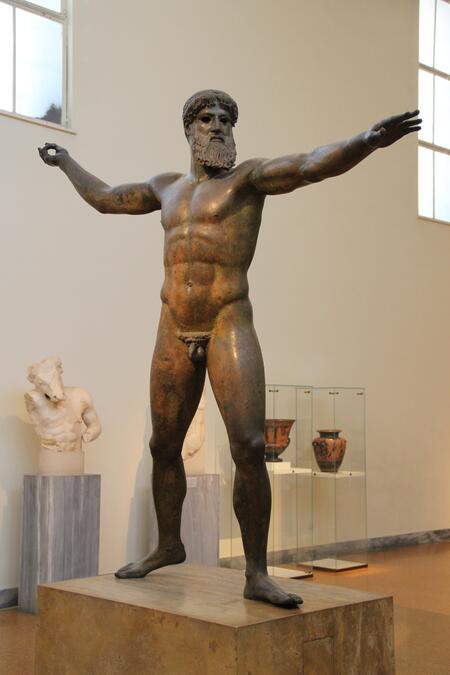
Бог с мыса Артемисион
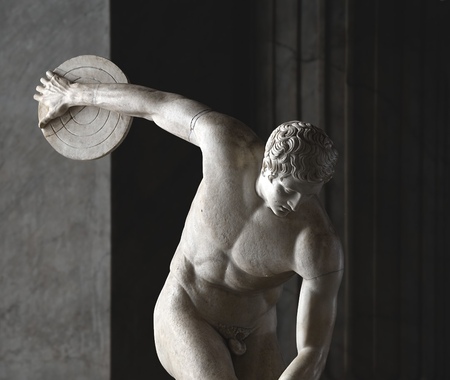
Мирон. Дискобол
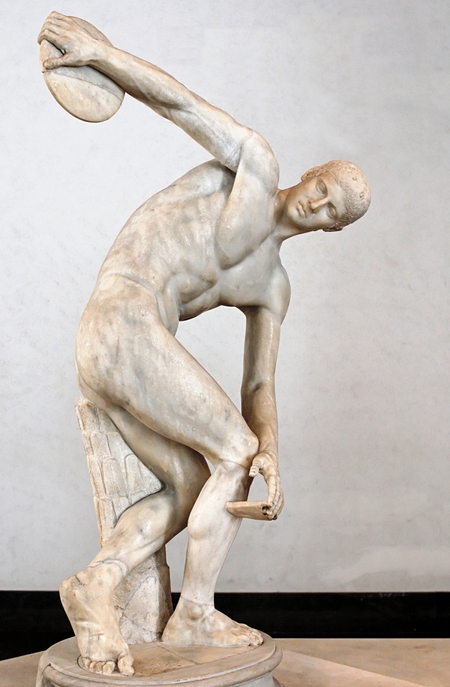
1. Approx. 460 BCE. Photo: George E. Koronaios. 2. Original circa 450 BCE; Roman copy. Photo: Jastrow.
Both sculptures depict the body immediately before a powerful movement.
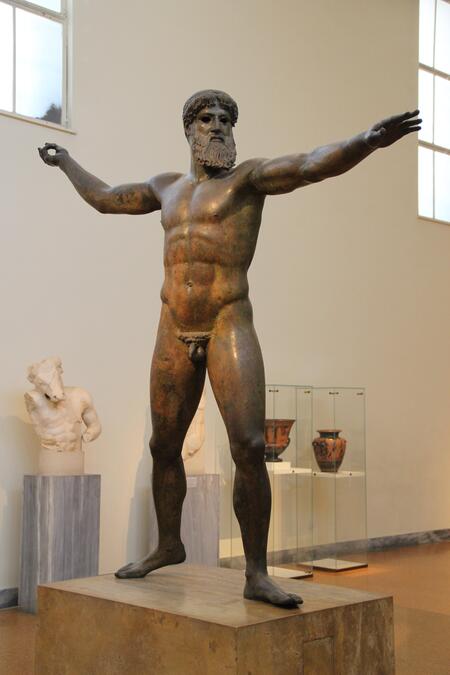
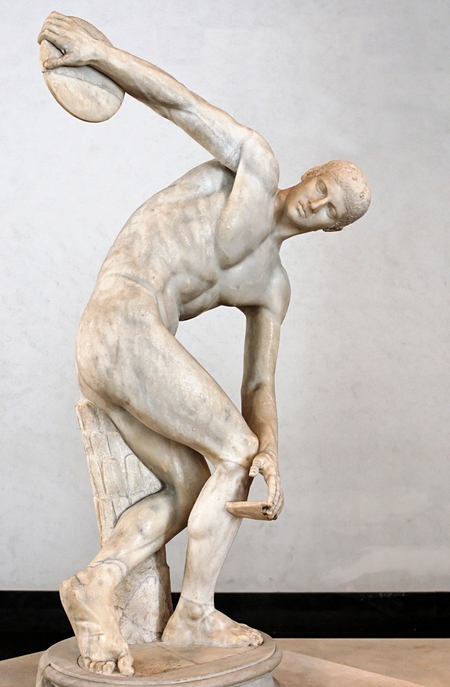
The discus thrower turns his torso, preparing for the throw. The god on the Cape of Artemis spreads his legs wide and raises his arm to hurl an unknown object—perhaps lightning or a trident. In both cases, we mentally continue the action that the statue itself cannot perform.
Бог с мыса Артемисион
Дельфийский возничий
1. c. 460 BCE. Photo: George E. Koronaios. 2. c. 470 BCE. Photo: Yair Haklai.
These sculptures are nearly opposite in the nature of their poses. The Rider is built around a vertical axis, conveying movement through minimal deviations. The God with Artemision utilizes maximum silhouette expansion. However, both figures adhere to the principle of balance: the expressiveness of movement arises from the coordination of body parts.
Bronze Warriors from Riace 5th Century BCE. Photo: AlMare. Source: Wikimedia Commons.
The bronze warriors from Riace, dating to the mid-5th century BCE, demonstrate another form of motion—potential motion. Their bodies do not perform a sharp action, but the weight, the turns of the heads, and the positioning of the arms create a sense of readiness to change posture. It is as if they could begin to move in the next moment.
Мирон. Дискобол
Гармодий и Аристогитон
1. Original circa 450 BCE; Roman copy. Photo: Jastrow. 2. Original 477–476 BCE; Roman copies. Photo: Ismoon.
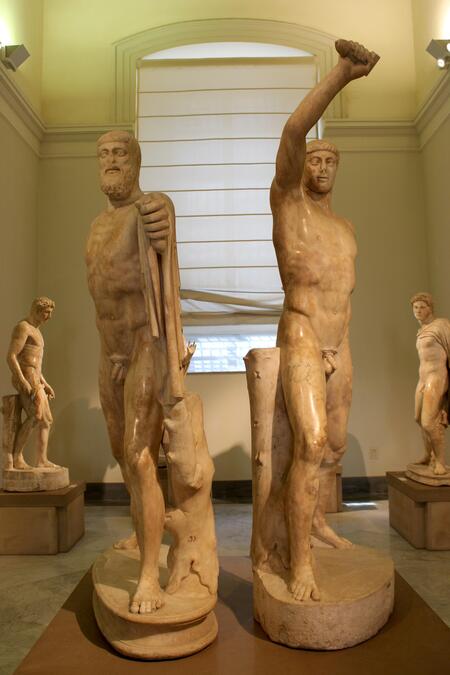
In the Tyrant-Fighter group, the movement is structured as the interaction of two figures: directed arms and steps create a shared impulse. In Discobolus, the action is concentrated in a single body. This allows for two ways of representing movement: through the relationship between figures and through the tension within one figure.
The Discobolus by Myron is known from Roman copies of the lost Greek original; the bronze sculpture from the Artemision promontory is among the few surviving originals of the Early Classical period.