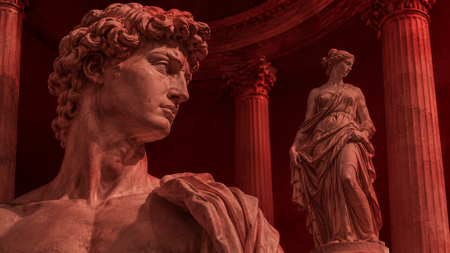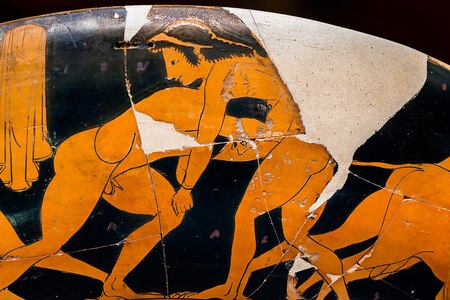
«Ancient Greek Sculpture: Emotion Cast in Stone»
The Greeks were the first in Europe to sculpt not the «statue of a man,» but a man in motion—and they interpreted this movement differently across various eras. I am selecting six monuments, spanning from the Archaic period to Hellenism, and asking the same question of each: how does this body move, and what does that movement communicate about emotion?
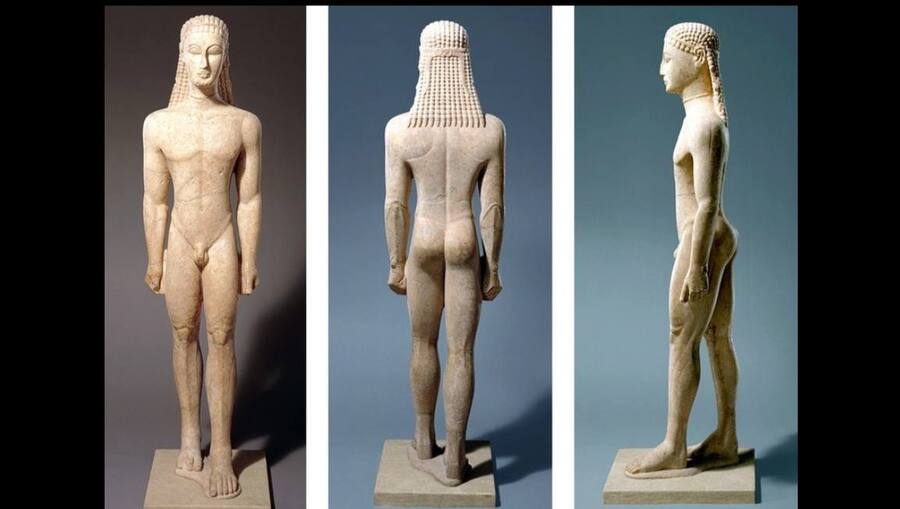
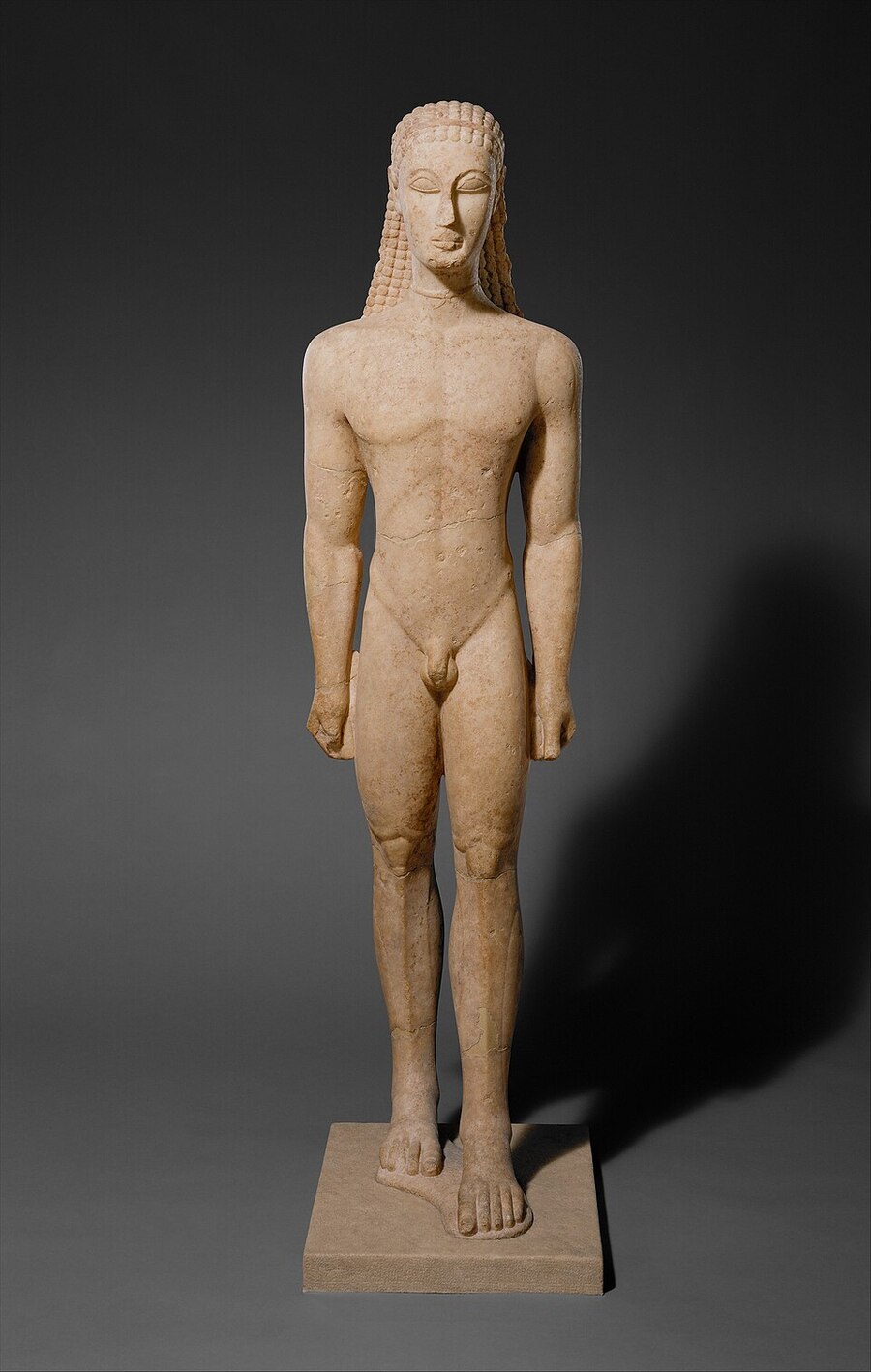
Kuros. 600 BCE. Marble. The Met Museum, New York.
Movement is not a pose. A static figure with one leg extended has not yet moved. Movement begins where the body is active: weight shifts from foot to foot, hips and shoulders rotate in different directions, and the gesture pulls the torso along. I am not looking at whether it is «beautiful or ugly,» but rather at the body’s mechanics and what those mechanics reveal about the sculptor’s intent.
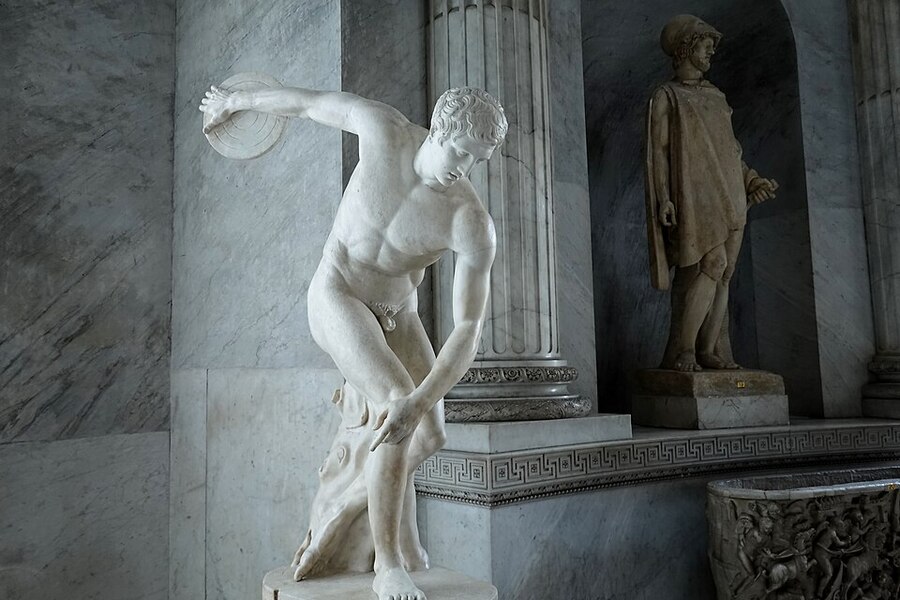
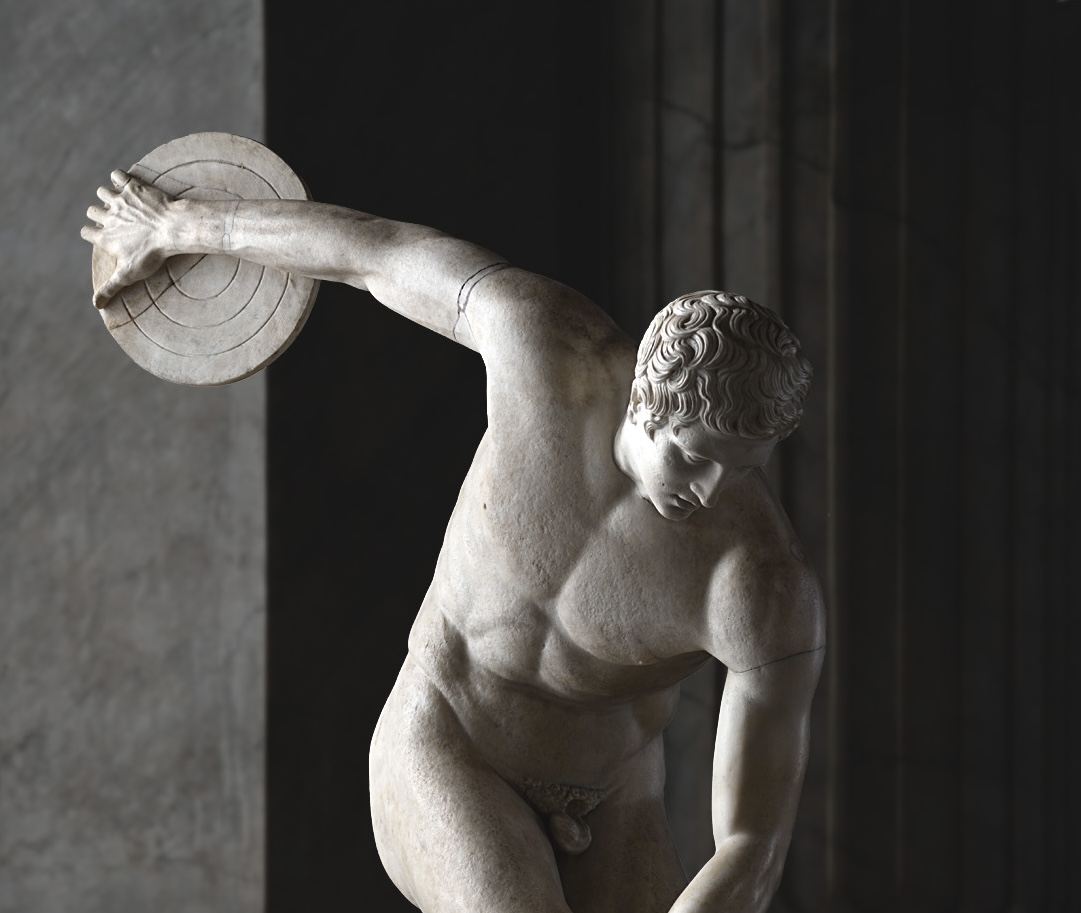
Discobolus. Roman copy from bronze by Myron, c. 450 BCE. Marble. British Museum, London.
Four characteristics I use to compare monuments. Weight transfer—whether the figure stands on two legs or one. Cross-turning—whether the hips and shoulders are in different planes or in the same one. Gesture—whether the arm and head drive the movement or are subordinate to the torso. Drapery—whether the fabric follows the body or lives independently. Finally, I will synthesize all six sculptures into one diagram based on these points.
Stone is the most challenging medium for depicting movement. Marble is heavy and fragile: without hidden support, a figure in mid-stride would simply break. Therefore, every «movement» in Greek sculpture is also a technical solution and a precise calculation. The Greeks embraced this risk consciously—movement came at a high cost, but it was that movement that made the statue come alive.
Marble—the material sculptors worked with (stone)
Scope: Greece only, up to the 14th century. I am not comparing the Greeks with Egypt or the Renaissance—that would detract from the question. All comparisons remain within the tradition: archaic versus classical, classical versus Hellenistic. The 14th century is the formal upper limit—after antiquity, the Greek understanding of movement remains a benchmark for European plasticity right up to the Gothic period.
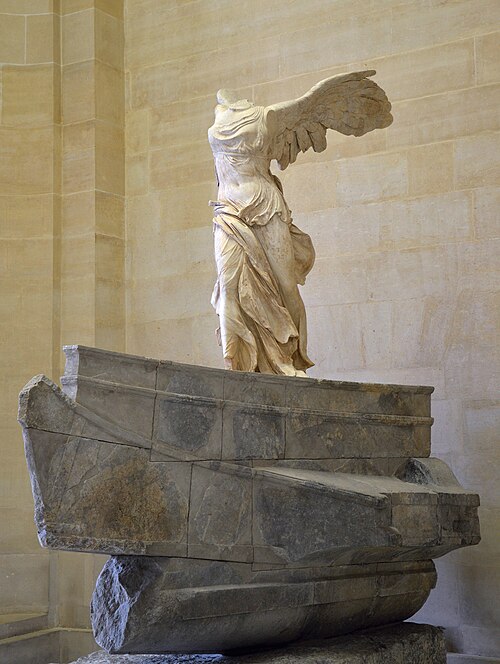
Six monuments—three periods. The Kouros represents Archaic style. The Discobolos and Dorphoros represent Classical style. The Nike of Samothrace, the Laocoön Group, and the Dying Gall represent Hellenistic style. I continue along this line, asking the same question at every stop: how is the body moving—and what does that movement convey about emotion?