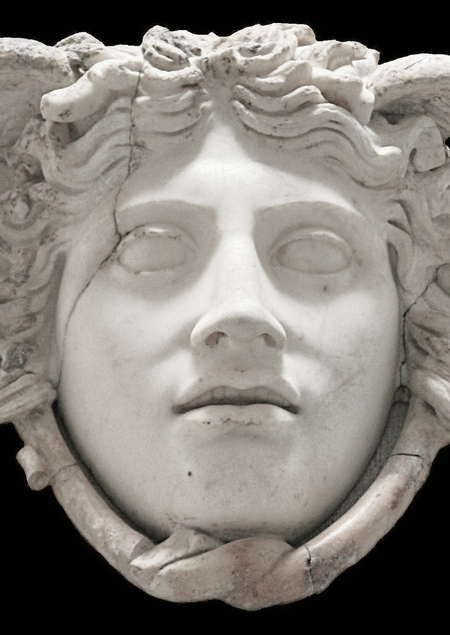
Concept
Mythological themes have held a significant place in visual arts for many centuries. Artists have turned to the figures of ancient Greek gods, heroes, and fantastic creatures, reinterpreting them and presenting them in diverse ways depending on the era.Medusa the Gorgon is one such character—a mythological being known for her unusual appearance and the ability to turn to stone anyone who meets her gaze. Her image has gained widespread traction in art and has accrued numerous artistic interpretations over time.Comparing works from different epochs will allow one to trace how the Gorgon’s terrifying visage gradually acquires human characteristics, while also revealing the features that persist throughout this transformation.
Where did the Gorgon originate and how did it become a symbol of ancient art?
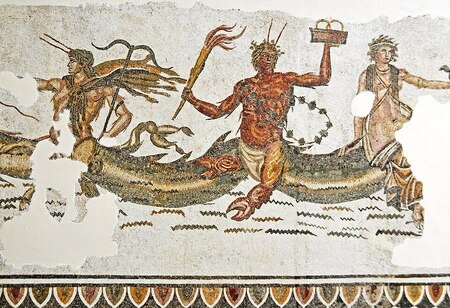
Among the characters of ancient Greek mythology, Medusa occupies a unique place. She was one of the three Gorgon sisters, daughters of the sea deities Phorcys and Ceto, and the only one of them who was mortal. Her appearance combined human and monstrous traits, as snakes writhed instead of hair, and her gaze possessed the ability to turn living beings to stone.According to the version of the myth presented by Ovid in the Metamorphoses, Medusa was once a beautiful young woman, but Athena later transformed her into a Gorgon.(Phorcys and Ceto. Illustration of an ancient mythological scene. Image by Dennis G. Jarvis)
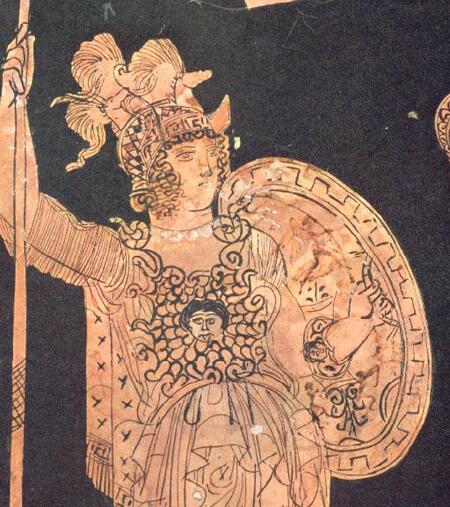
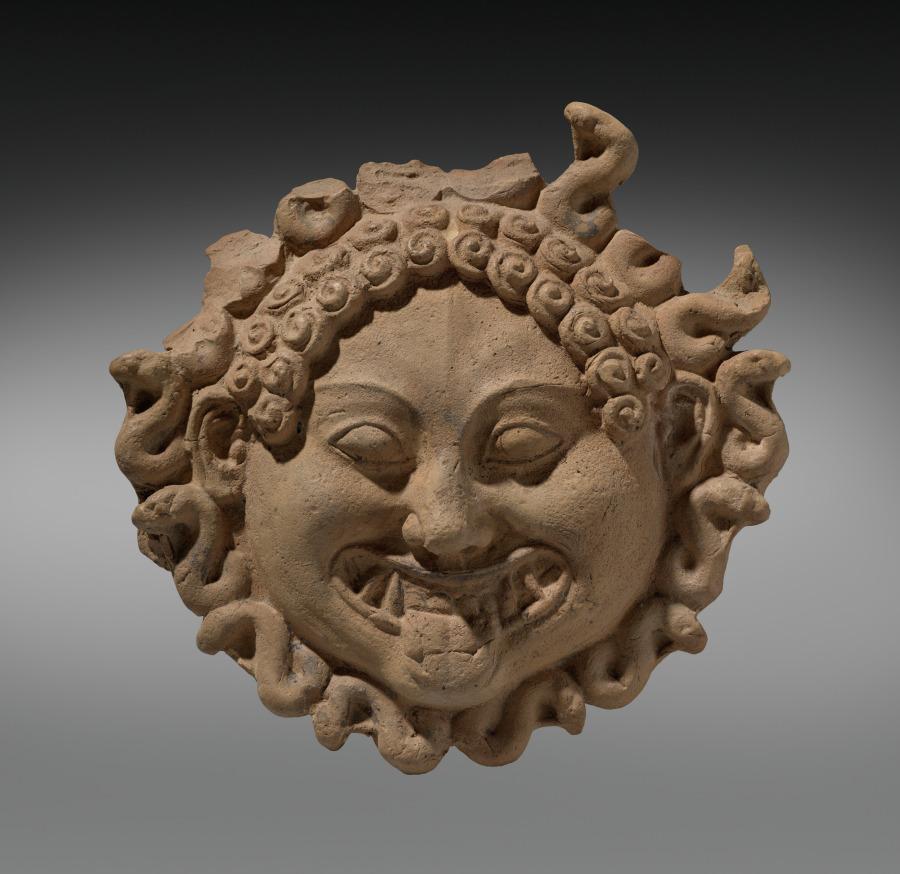
After Perseus beheaded her, the Gorgon’s head retained the ability to turn all living things to stone. It was this characteristic that elevated her image beyond a mere illustration of a mythological tale. The Medusa head, which became known as a gorgoneion, transformed into one of the recognizable protective symbols of antiquity. It was placed on temples and shields, utilizing the terrifying appearance of the Gorgon to ward off evil.
Thus, an image that initially inspired fear became a means of defense.
(In the image: Athena in military attire bearing a gorgoneion on her aegis. Fragment of ancient Greek vase painting.)
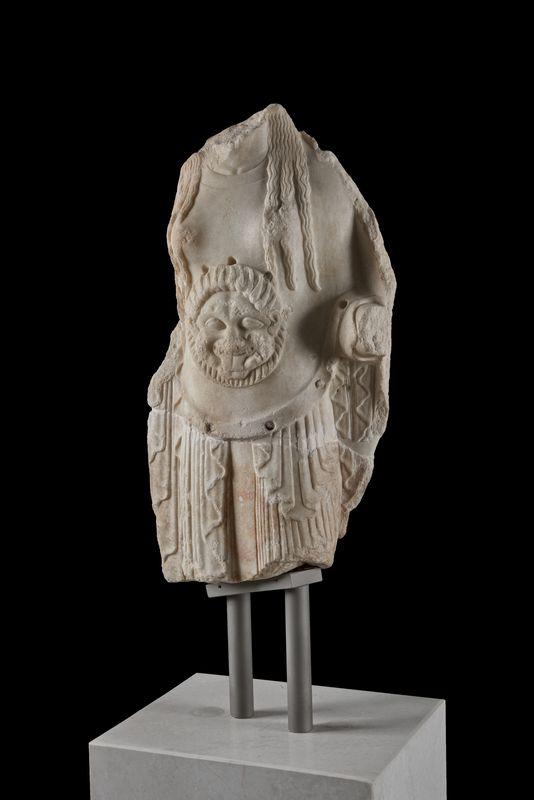
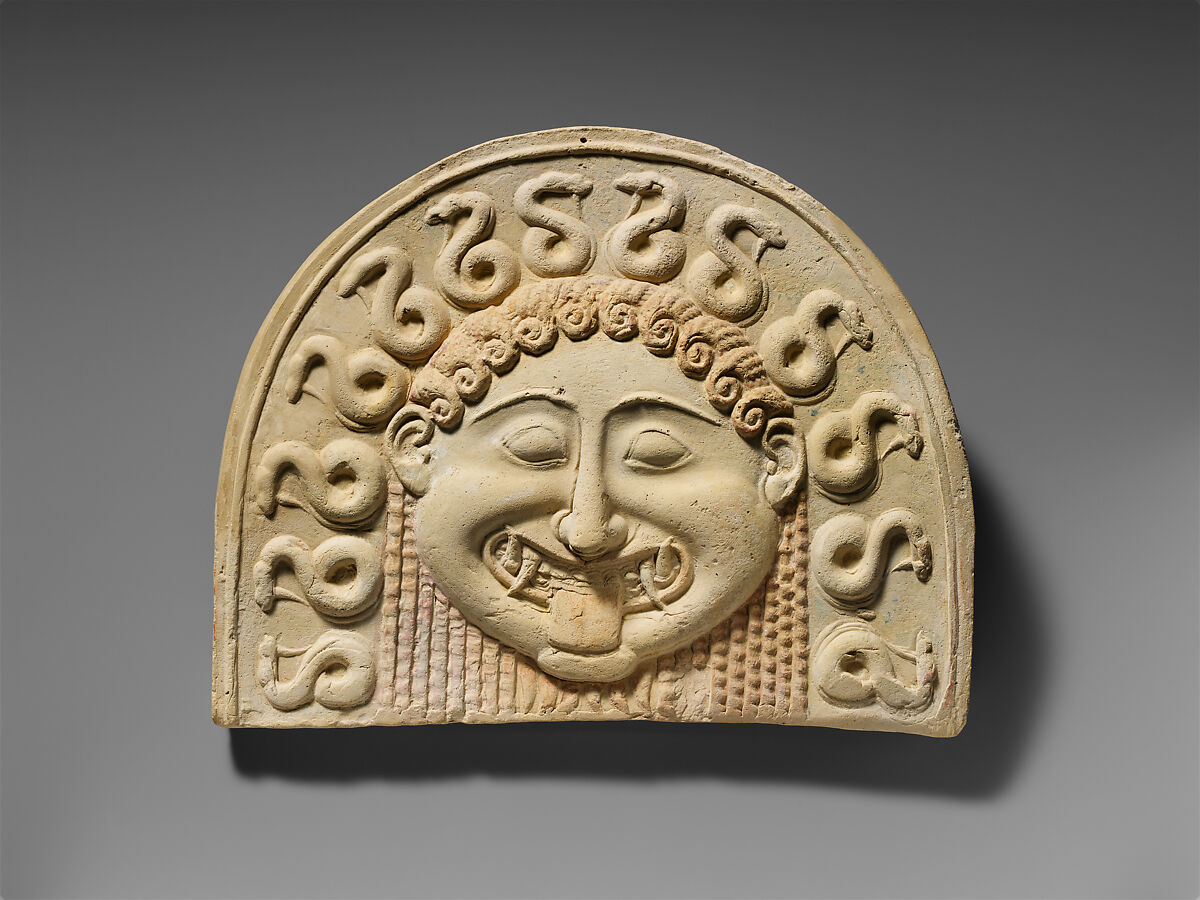
Mosaic from the 1st century BCE depicting Alexander the Great with the Gorgon’s head on a breastplate.
The Alexandrov mosaic, created around 100 BCE, serves as a particularly telling example of the Gorgon image in use. On the cuirass of Alexander the Great, you can see an image of Medusa’s head, which indicates that the Gorgon motif extended far beyond mythological narratives. In turn, the mosaic itself—one of the outstanding monuments of ancient art—demonstrates the widespread circulation of the Medusa motif within the artistic culture of that era.