Особенности древнегреческих античных масок и их отличие от римских
Navigator:
1. Concept
2. The Emergence of Ancient Masks
3. Ancient Theatrical Masks of Ancient Greece
4. Typology of Ancient Masks
5. Conclusion
6. Sources
Concept
Topic Selection and Relevance
The renowned symbols of comedy and tragedy trace their history back to antiquity, where performances were presented in grand amphitheatres using technologies that have undergone numerous transformations. In this study, I aim to delve into the history and typology of specifically ancient Greek masks, as they differ from those of ancient Rome. The relevance of this perspective stems from the fact that in ancient Greece, masks were also an integral part of many rituals, not solely theatrical performances. The objective of this work is to trace the evolution of classical masks specifically within the region of ancient Greece and to examine how the mask transitioned from a ritual object to a theatrical element while retaining its sacred functions.
Material Selection for Analysis
The material for this visual investigation will be based on archaeological findings from the 6th–1st centuries BCE, such as ceramic artifacts and mosaics depicting masks. I also intend to examine artifacts related to the cult of Dionysus to demonstrate the connection between masks, rituals, and their function in transformation. In the first part of the work, I will explore masks from periods before they were used in theatrical contexts, alongside the rituals associated with them. In the second part, I will focus on the masks most frequently found in ancient Greece—what imagery often appeared on them and why—and what informs those designs. The final section will address the typology and types of theatrical masks, examining what unites them and what distinguishes them, and then grouping them into smaller categories based on specific characteristics. In the conclusion, I aim to synthesize findings regarding how ancient Greek masks transitioned from ritual use to amphitheaters, and what specifically differentiates them from Roman masks. For textual analysis, I will utilize sources from publicly accessible electronic articles and pages containing research on the selected topic.
Key Question and Hypothesis
Key Question: How did ancient Greek theatrical masks, which originated from ritual and funerary practices, become a visual tool, and what is their main difference from Roman masks?
Hypothesis: The main difference between Greek and Roman masks lies in their connection to rituals. It can be postulated that Roman masks were more focused on portraiture and displaying a specific social archetype—such as slaves or servants—whereas Greek masks, despite evolving, retained their sacred function and aimed to transform the performer into a mythological figure. This distinction can also be observed in pre-theatrical periods when masks were just emerging and were used in funerary rites.
The Genesis of Ancient Masks
The earliest ancient masks were funerary. They were created to preserve facial features and to protect the deceased from evil spirits. During burials, these masks were placed on the dead, an act accompanied by rituals and ceremonies.
Mask of Agamemnon, 16th Century BCE
Smiling funerary mask, 16th century BCE
Mask from Mycenae, 16th century BCE
It is worth noting that ancient Greek burial masks were primarily intended to protect the deceased from evil spirits; consequently, the facial features could be inaccurate or distorted. While these masks offered protection from malevolent spirits, ancient Rome had a tradition of preserving wax effigies of ancestors, especially prominent figures.
Ancient Masks of Ancient Greece
Ancient Greek masks are closely associated with the cult of the god Dionysus. During festivals, participants would paint their faces and wear masks, effectively «transforming» into the deity. These rituals were intended to magically influence nature, thereby increasing fertility. In addition to the masks, coins and other artifacts honoring this god were created.
Mask of Dionysus, 2nd or 1st Century BCE
Dionysus Coin, 405–367 BCE
It can be presumed that ancient Greek masks were crafted using terracotta and linen soaked in plaster. Terracotta masks were sometimes used to decorate interiors because they were more durable than masks made from lighter materials.
Terracotta Mask of Dionysus, 24th century BCE
Terracotta Mask of Dionysus, 1st Century BCE
Like other ancient theatrical masks, the masks in ancient Greece served as an amplification device for the audience. The uniquely shaped mouth cutout allowed the performers to project their voices more loudly. They conveyed the character’s state through distinctive features and details, sometimes shifting between different masks to advance the narrative. Ancient Greek masks depicted mythological creatures—such as the Gorgon Medusa—much more frequently than Roman ones.
Medusa Mask, 4th Century BCE
Medusa Gorgon, one of the three sisters, was a very famous character in Greek mythology. Her masks could also be used as a talisman against evil spirits.
Terracotta antefix with Gorgon head, 5th century BCE.
Mask Typology
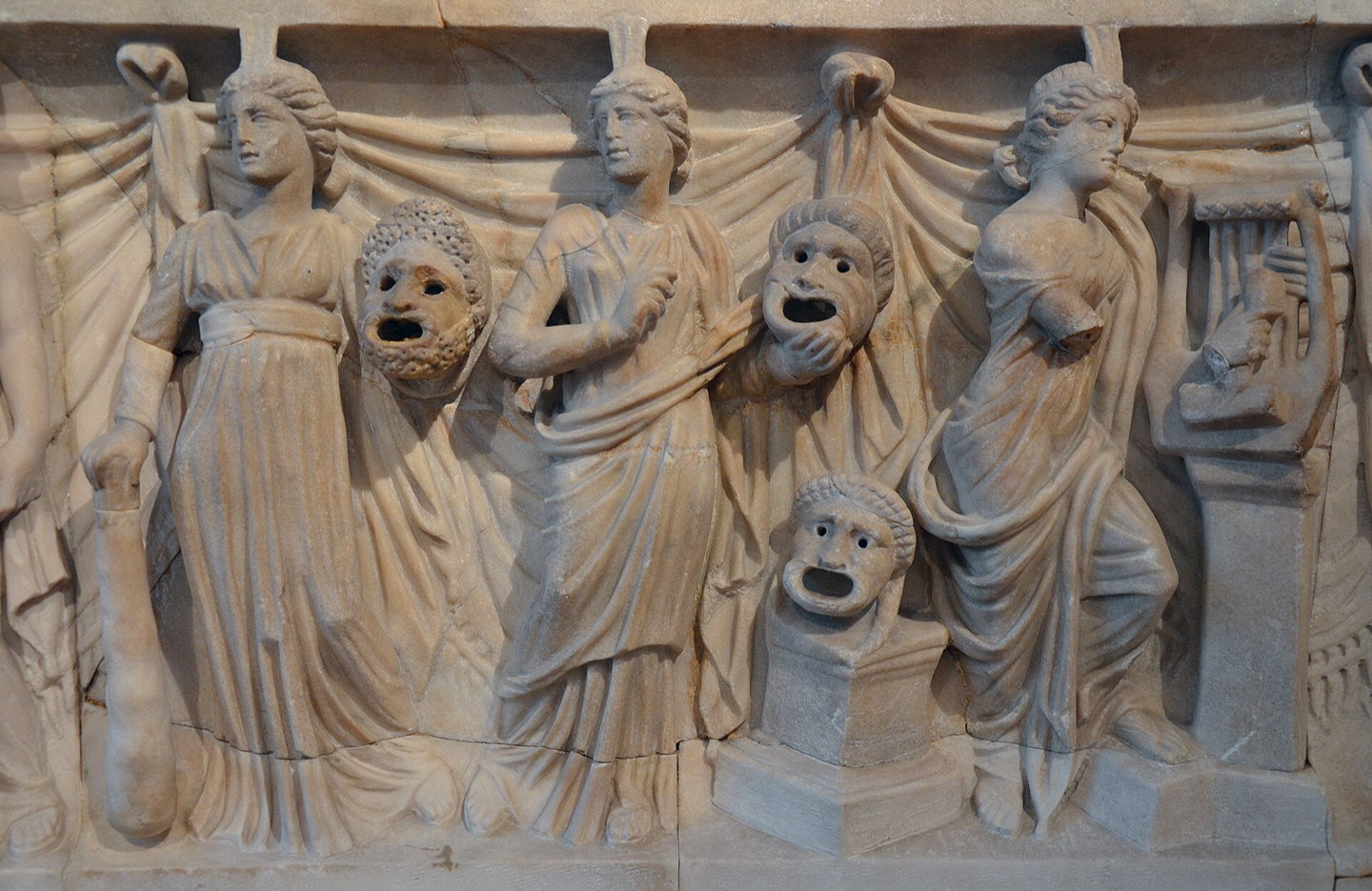
Primarily, ancient theatrical masks were divided into comedic and tragic types. These masks remain a potent symbol of theater and carry strong associations, depicting highly exaggerated representations of emotions like sorrow and joy—wide-open mouths, expressive eyes.
Ancient masks from ancient Greece across different periods
Terracotta Mask of Tragedy, 4th Century BCE