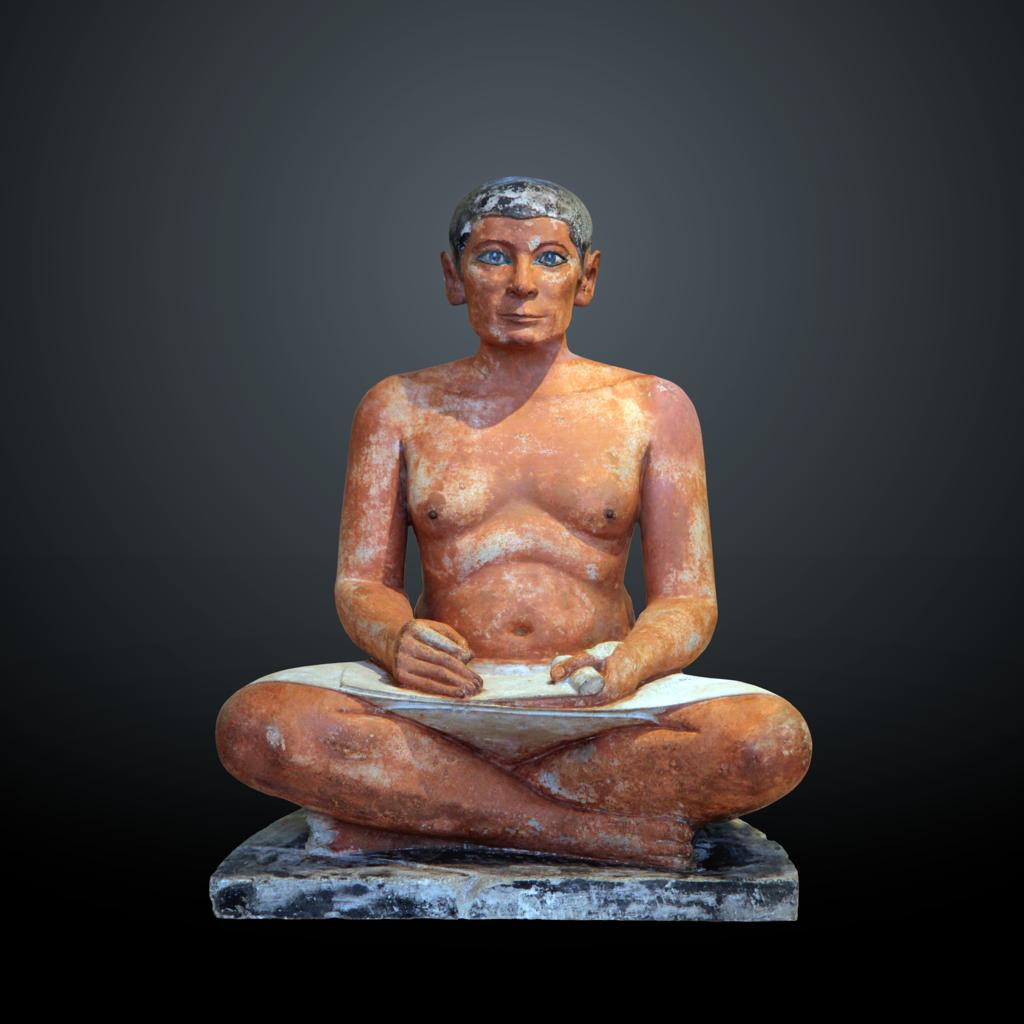
Тело как идеал и личность: образ человека в искусстве Древней Греции и Древнего Рима
Introduction
In ancient art, the human body became one of the primary means of expressing concepts of beauty, harmony, and individuality.
In Ancient Greece, the body was depicted as the ideal of perfection, whereas in Ancient Rome, particular attention was given to the individual’s uniqueness and social status.
Goal
Compare the depiction of the human body in art across two cultures.
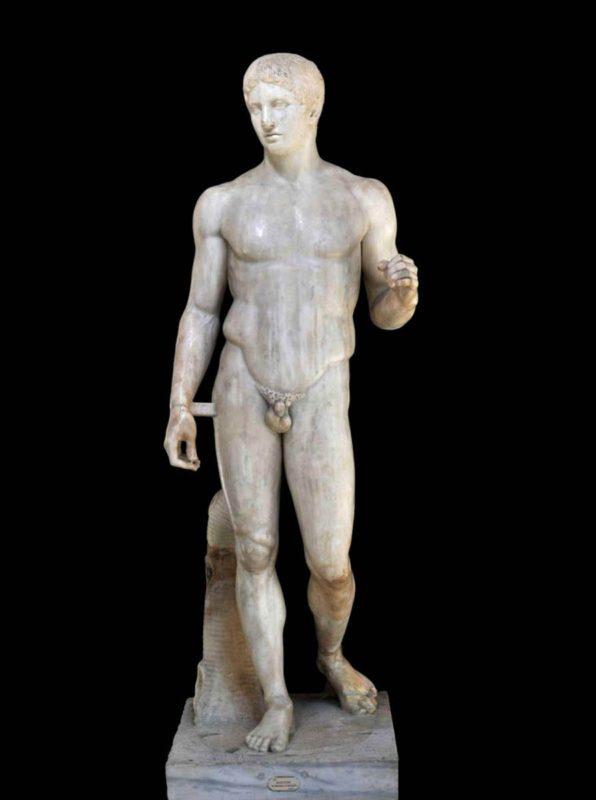
«Дорифор» — Поликлет, около 450–440 гг. до н. э. Бронзовый оригинал, римская копия из мрамора.
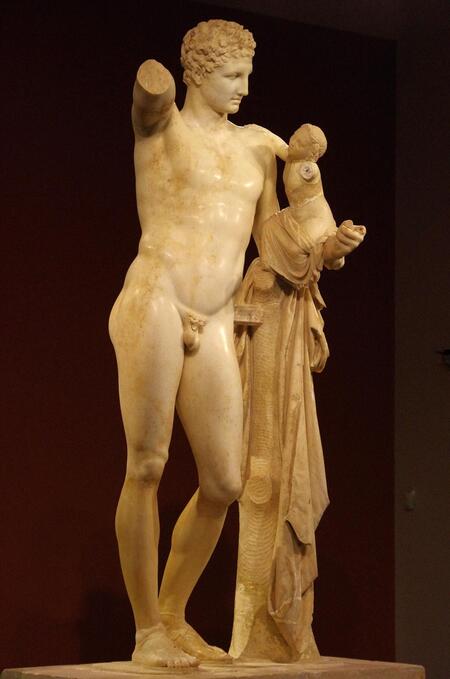
«Гермес с младенцем Дионисом» — Пракситель (традиционная атрибуция), IV век до н. э. Мрамор.
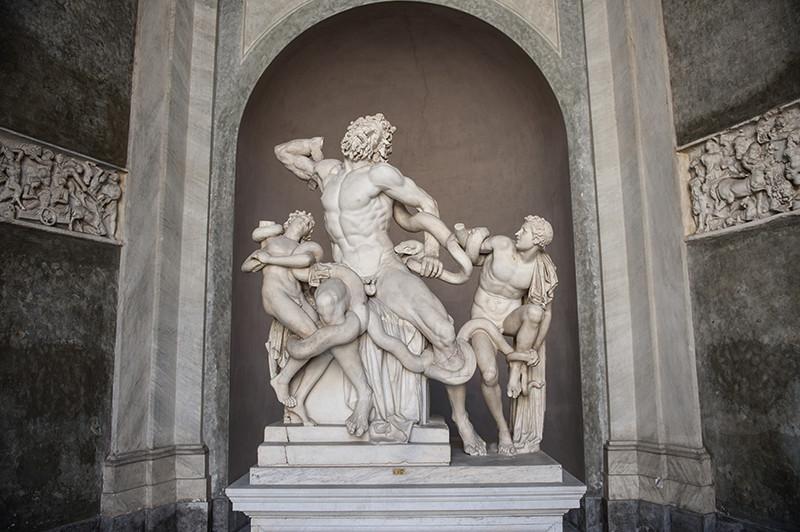
«Laocoön and His Sons”—Agesandros, Afinodoros, and Polydoros from Rhodes, 1st century BCE–1st century CE. Marble.
1. Ancient Greece
Archaic Period — The Body as a Symbol of Youth and Strength
In Ancient Greece, the human body held a central place in art. Greek artists and sculptors strove to depict the human figure as beautiful, strong, and harmonious.
Particular attention was paid to proportion, anatomy, and the naturalness of movement. The human body was perceived as a reflection of the order and perfection of the surrounding world.
Over time, Greek sculpture evolved from conventional and static figures to more natural and expressive representations.
1.1 Archaic Period: The Body as a Symbol of Youth and Power
During the archaic period (7th–6th centuries BCE), statues of kouroi—depictions of nude young men—and korai—dressed young women—became prevalent in Greek art.
The kouroi figures were usually depicted standing straight, with one leg slightly advanced. Their arms were held close to their bodies, and their faces bore a stylized expression.
Such images did not yet convey the naturalness of human movement; however, sculptors were already striving to depict the body’s structure, its main parts, and its proportions.During this period, the human body symbolized youth, physical strength, and beauty.
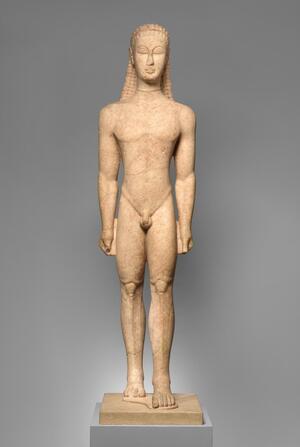
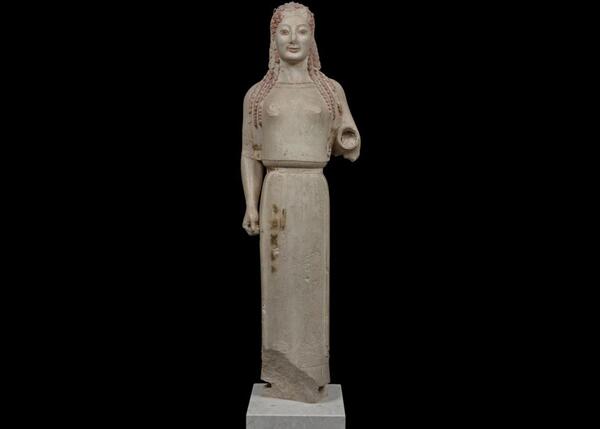
Fig. 1. Kouros
c. 590–580 BCE. Unknown artist. Marble. Fig. 2. Peplos-korai
c. 530 BCE. Unknown artist. Marble.
Male figures emphasized physical strength, while female figures highlighted the beauty of clothing and silhouette. The poses remained static, and anatomy was represented schematically.
1.2. Classical Period: The Body as an Ideal of Perfection
During the Classical period (5th–4th centuries BCE), Greek sculpture reached a high level of development. Artists began to render the anatomy, proportions, and natural movements of the human body with greater precision.
A primary principle became the pursuit of harmony. Sculptors studied the structure of the body, seeking the perfect proportion among its parts.
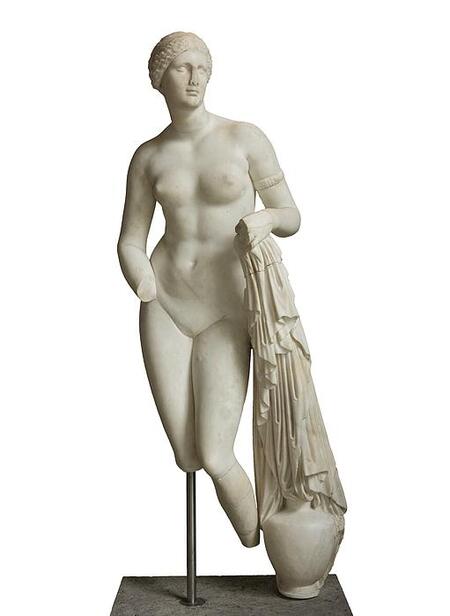
Aphrodite of Knidos by Praxiteles. 4th century BCE. Roman copy.The contrapposto principle acquired particular significance—a posture where the body’s weight is shifted onto one leg, leaving the other free. This gives the pose a more natural appearance.Polycleitus was one of the renowned sculptors of this period, who developed the concept of ideal human proportions.
Doriphor depicts the ideal of masculine beauty and balance. Aphrodite Knidskaya presents a new image of feminine beauty, grounded in naturalism and soft forms.
1.3. The Hellenistic Period: The Body as an Expression of Emotion and Movement
During the Hellenistic period (late 4th–1st century BCE), the depiction of the human body became more varied. While harmony was the primary ideal in Classical art, artists increasingly focused on human emotional states, movement, and expression. Sculpture began featuring complex poses, tense movements, and more individualized features. The human body evolved into a vehicle for conveying not only physical beauty but also profound experiences.
Laocoön and His Sons. Agesandr, Afinodor, and Polydorus of Rhodes (traditional attribution). c. 40–20 BCE. Marble. Vatican Museums, Rome.
In this sculptural group, the figures intertwine with one another, creating a complex composition. Taut muscles, twisting torsos, and expressive faces convey the drama of the scene.
Unlike the serene figures of the classical period, the body here is in constant motion.
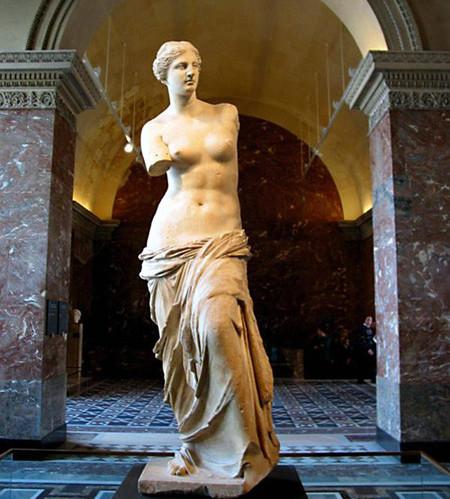
Venus de Milo. Artist unknown. Circa 130–100 BCE. Marble. Louvre, Paris.The Venus de Milo embodies the ideals of classical beauty, yet its pose and the torsion of the torso lend the composition a greater sense of vitality and expression.The figure balances stillness with motion, and its smooth lines create an impression of natural grace.
Conclusion:
In Hellenistic art, the depiction of the human body became more emotional and dynamic. Sculptors sought to convey the complexity of human experience through movement, posture, and anatomy.
2. Ancient Rome: The Body as an Image of Personality and Power
Roman art developed significantly under the influence of Greek culture. The Romans adopted Greek artistic techniques, showed an interest in classical sculpture, and incorporated it into their own art.
2.1. The Roman Republic: The Body as a Reflection of Individuality
During the Roman Republic (5th–1st centuries BCE), realistic portraiture gained particular prominence. Romans strove to capture individual physical characteristics: wrinkles, facial features, signs of aging, and the expression in the eyes.