Navigation Menu
1. Concept 2. Geographical and Temporal Scope 3. Material Selection Principle 4. Hypothesis 5. Analysis of Combrel Cave Drawings I 6. Analysis of Font-de-Gom Cave Drawings 7. Analysis of Ruffignac Cave Drawings 8. Bernifal Cave Analysis 9. Analysis of Commarque Cave Drawings 10. Thoroughness in Research 11. Nuances of Photography 12. Conclusion 13. Sources
Concept
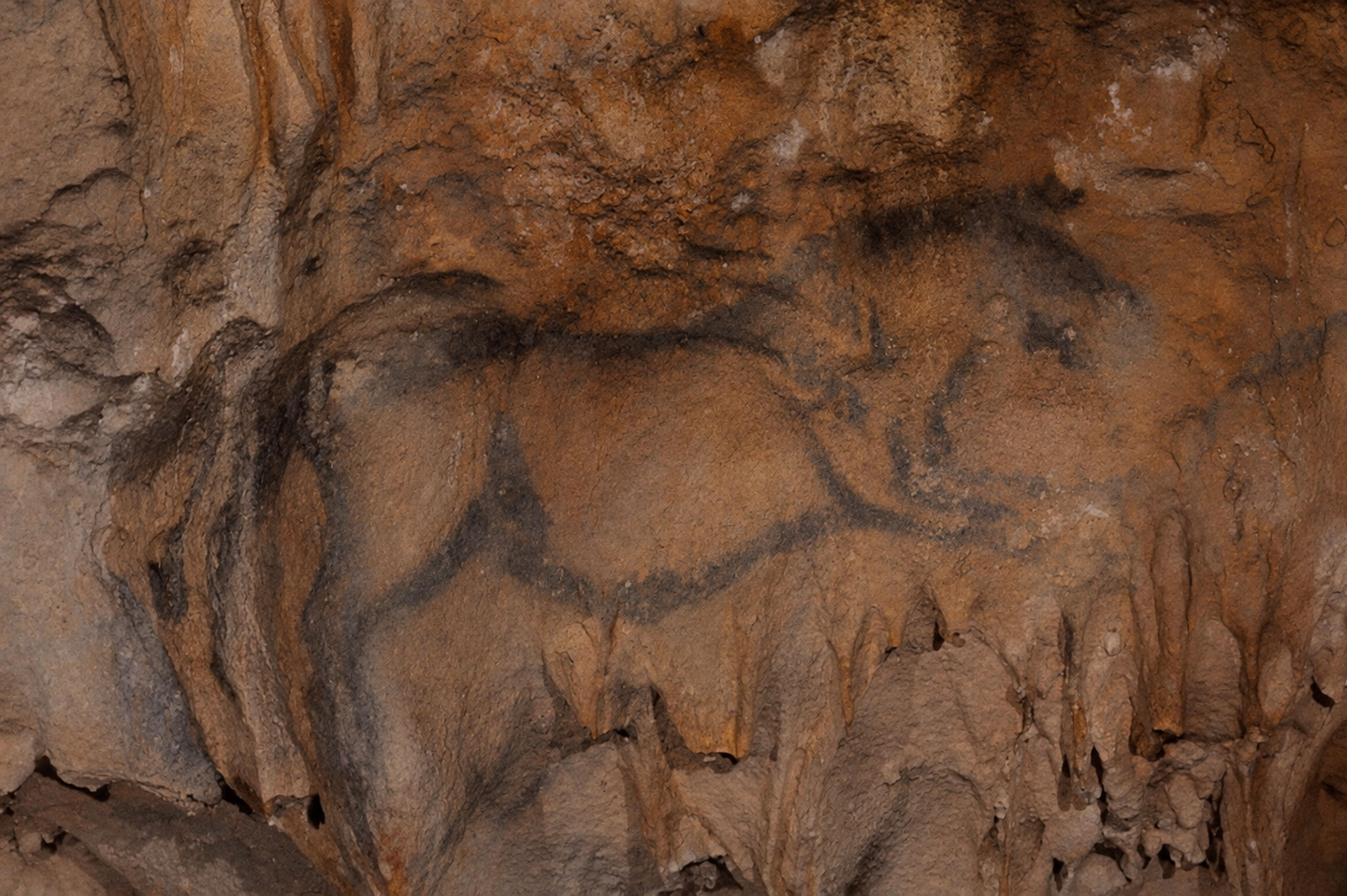
A cave painting is difficult to interpret when viewed as a drawing on a flat surface. What is immediately apparent in the photograph are lines and patches of color, while the protrusions, indentations, and curves of the wall can remain almost invisible. Yet, it is precisely these features that sometimes form the head, back, or body of an animal. This study investigates this interaction: how does the natural surface gain representational function through the artist’s intervention?
Geographical and Temporal Scope
The geographical scope of the work is the Périgord region, which corresponds to the modern Dordogne department in France. The chronological framework is the Magdalenian period of the Upper Paleolithic. The analysis will cover cave paintings from: Font-de-Gaume, Rouffignac, Combe-l’Incarnache I, Bernifal, and Commarque.
Image Selection Criteria
The inclusion criterion for the study is a documented relationship between the image and the wall’s form. Especially significant are cases where the applied line continues with the natural edge of a stone, a small protrusion occupies an anatomically defined location, or a convexity participates in the construction of the entire body.
Hypothesis
The working hypothesis is that aligning the animal’s anatomy with the characteristics of the wall—as evidenced by inscribed lines or surface treatment—allows the relief to be considered a consciously employed means of shaping form. Repeating similar solutions across different figures may reinforce this interpretation. Several ways the stone participates will be examined: substituting parts of the contour, creating a separate anatomical detail, forming the body’s volume, and combining a natural protrusion with its artificial refinement.
Combarel I: Merging Engraving and Natural Relief
Combarelles I is a long cave corridor. Its depictions are predominantly engraved, and many figures overlap one another. It features horses, mammoths, bison, deer, and other animals.
Combarelles is particularly valuable for its diversity of solutions in research. The relief may be incorporated into an animal’s silhouette, used to highlight a body part, or form a small anatomical detail.
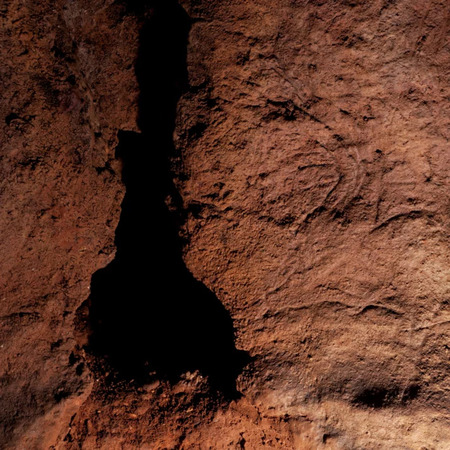
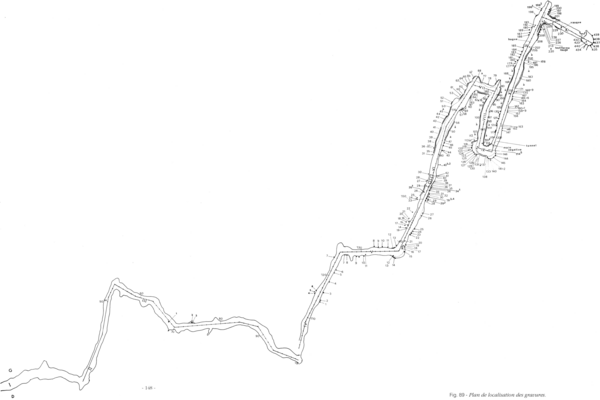
On the left is the head of a «drinking» reindeer by Comballet I. Photo: Olivier Huard / Centre des monuments nationaux. On the right is the layout plan of the engravings by Claude Barrer.
The Horse from Combarel
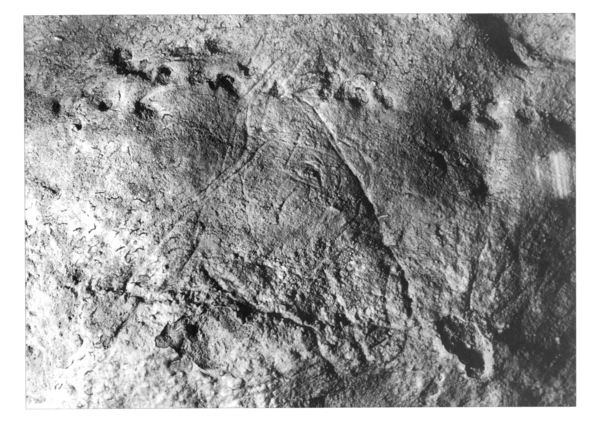
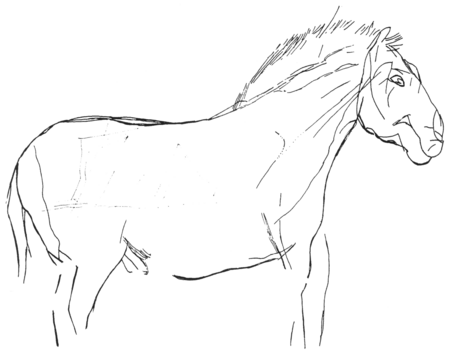
Horse, Comballe I. Head photograph and rendering from Claude Barrère’s monograph
In this figure, the natural surface contributes to the depiction of a small detail. According to Claude Barrère’s description, the horse’s eye is marked in the natural, concave hollow surrounding the opening. Its circumference is lightly suggested by the rubbing of the surface [2, p. 193]. Here, the relief helps create a specific anatomical detail.
Mammoth from Combarel
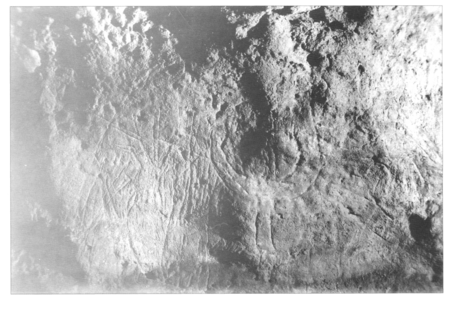
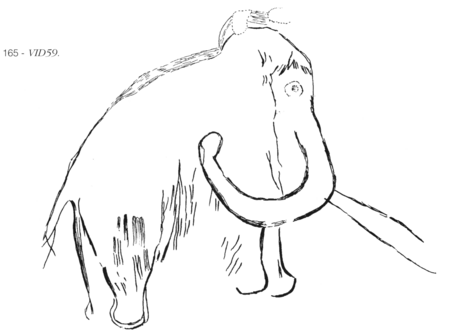
Mammoth, Comballe I. Photography and illustration from Claude Barrère’s monograph
The depiction of the mammoth combines engraving with the natural indentations of the wall, in which case a small surface feature takes on a specific role within the animal’s structure.
Font-de-Gom: How an Artist Interacts with Formations in a Cave
This cavern allows for an examination of the interaction between color and the material volume of the wall. The main example is the horse from the Pratt Gallery, where several surface characteristics are incorporated into a single figure.
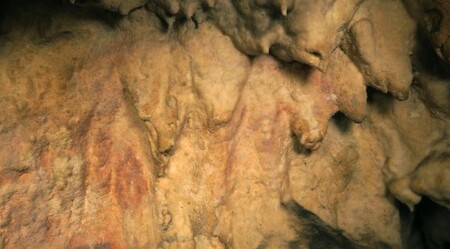
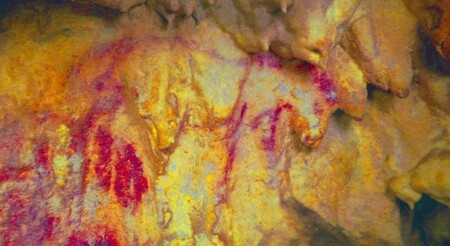
Horse on natural terrain, Pratte Gallery, Fond-de-Gomme. On the left is a photograph, on the right is a DStretch digital processing. Photo and processing: Elena and Patrick Paie
The calcite formations become significant in the context of this drawing, creating volume and contrast in the horse’s legs and head.
Fons de Gom: Black Horse.
Black horse from the side gallery of the Fond-de-Gom. Photo: Olivier Huard / Centre des monuments nationaux
Based on this photograph, it can also be concluded that the natural form suggested to the artist where best to place the drawing.
Ruffignac and Compositional Solutions
The Ruffignac Cave is distinguished by its extensive system of galleries and numerous mammoth depictions. Among the main techniques featured are engraving and line drawing.
Fragment of a frieze featuring two groups of mammoths, Ruffignac. Photo: Marie-Odile and Jean Plassard.