Concept
Prehistoric stone structures are typically viewed as relics of ancient architecture, but they can also be studied from the perspective of spatial organization. In cromlechs, the placement of individual stones, the repetition of elements, passages, and the overall form create a specific spatial structure. This structure not only unifies the monument into a single composition but also distinguishes it from the surrounding landscape.
In this research, I am interested in understanding how the geometry of cromlechs might have influenced the perception of space and the organization of ritual actions. I am less concerned with the precise function of each element and more interested in how people might have perceived the structure, where its main spatial focal points were located, and how the connection between individual parts was organized.
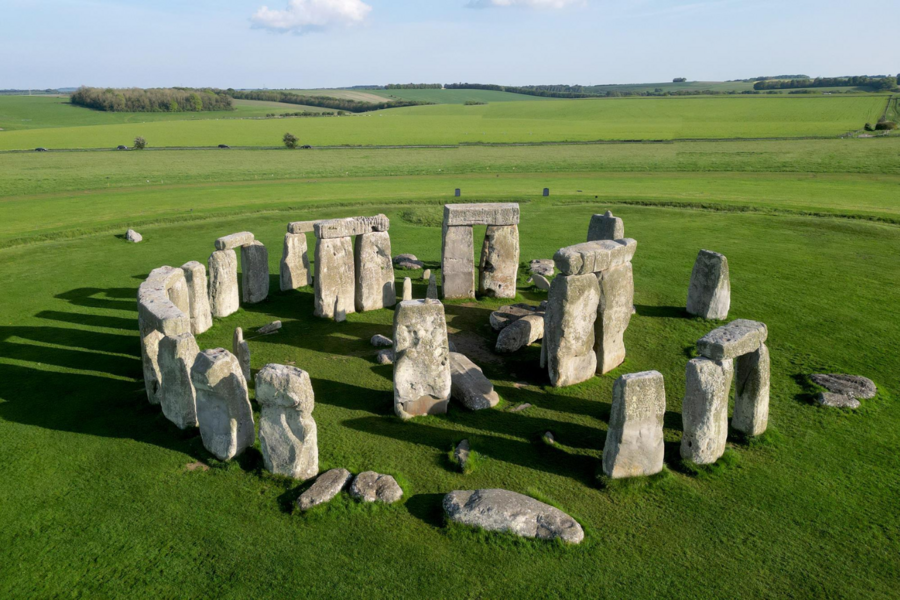
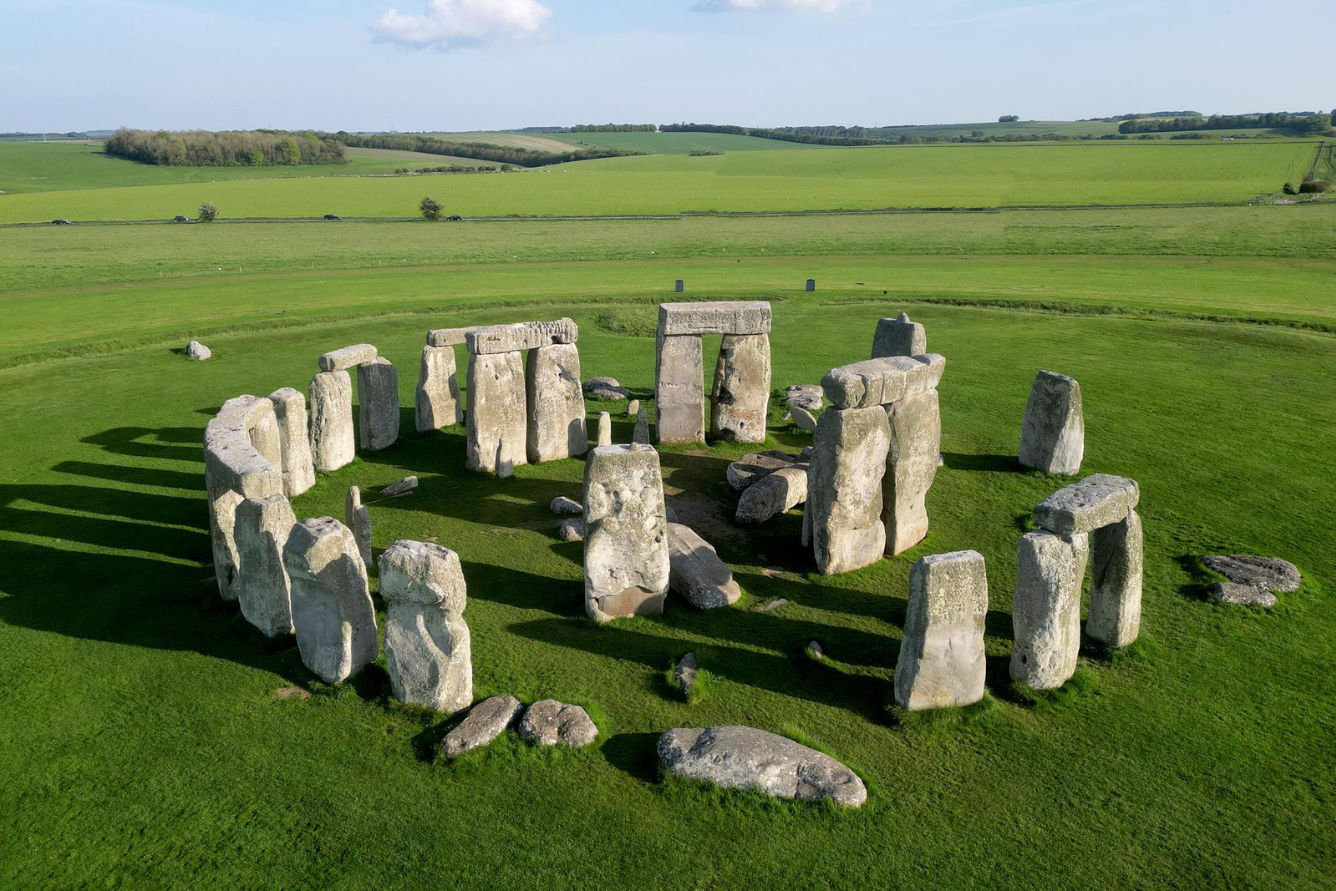
Stonehenge (United Kingdom)
The choice of this topic stems from an interest in how architectural form can influence the perception of surrounding space. The cromlechs are interesting because their structure is based on simple geometric principles yet creates a complex spatial composition. It is particularly fascinating to trace how the same circular form can function differently in structures of various scales and designs. Therefore, Stonehenge and Avebury were selected for the research, as they allow for the examination of two different approaches to organizing megalithic space.
How did the geometry of the Khromlekhs help organize sacred space?
The research hypothesis is that the geometry of Stonehenge was not merely a method for arranging large stones, but also a means of organizing sacred space. The circular composition delineated a specific territory, the repetition of stone elements created rhythm, and the placement of passages and internal structures likely dictated lines of movement. Consequently, the monument was perceived not as a random pile of stones, but as a unified spatial system.
Boundary—Center—Movement.
Stonehenge and Avebury are presented as prime examples—two renowned megalithic complexes located in modern-day Great Britain. While they differ in scale and structure, both illustrate how stone elements and the surrounding landscape coalesce into a unified composition.
Стоунхендж
Эйвбери
Photographs, archaeological plans, and reconstructions of Stonehenge and Avebury are used for analysis. Visual material is selected based on its relevance to the research question: each image must help examine a specific feature of the monument’s spatial organization. The main source of information for the study was most often the CyberLeninka Scientific Electronic Library. The plans are used to analyze the general geometry, boundaries, and layout of internal elements; the photographs are used to study the scale, rhythm of the stones, and the human-level perception of the structures; and the reconstructions help illustrate the original arrangement of the monuments. This selection not only helps demonstrate the appearance of the henge monuments but also gradually explains the central ideas of the research.
Research Logic
The research proceeds from the general structure to the specific features of the spatial organization of the stone circles. First, the circular form is examined and how it helps to define the territory of the structure. Attention is then shifted to the repetition of stone elements, the spaces between them, and the formation of a visual rhythm.
The following sections are dedicated to the direction and orientation of the structures, as well as the layout of their interior spaces. Finally, the possible human perception of these spaces is considered—how the arrangement of stones, pathways, and surrounding elements might have influenced movement and interaction with the monument. This progression allows for the stone circle to be viewed not only as a singular architectural object but also as an organized environment.
Stonehenge (United Kingdom). Internal structure of the stone circle
Working with Sources
The research utilized textual materials pertaining to the archaeology, history, and structure of Neolithic stone monuments. During the analysis, particular attention was paid to details regarding layout, stone placement, orientation, and the interconnection of individual elements within the monuments. Information from various publications was cross-referenced and correlated with visual materials—including plans, photographs, and reconstructions. This process allowed for the isolation of confirmed archaeological data, distinguishing it from hypotheses concerning the potential function and specific usage patterns of these structures.
Chapter 1. The Circle and its Boundary
The Circle as a Foundation of Composition
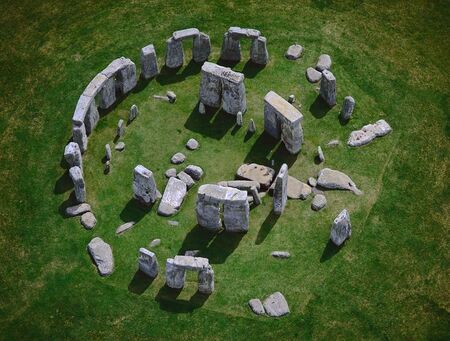
The circle is one of the most striking features of the Cromlech compositions. When viewed from above, it is evident that the arrangement of the stones adheres to a specific order: they form a closed or nearly closed shape. This delineates a distinct internal area that visually contrasts with the surrounding space. However, the circle here is significant beyond its geometric form. It helps the viewer perceive the structure as a unified whole and establishes the relationship between its interior and external environment. Thus, shape becomes one of the primary means of organizing space.
Stonehenge (United Kingdom). Overhead view
Several boundaries of Stonehenge
In Stonehenge, the spatial boundary is formed by several elements. An outer ditch and earth bank demarcate the monument’s territory, while inside, stone structures are organized around a central area. These elements vary in scale and material, but together they form a sequence of spatial boundaries.
Therefore, Stonehenge cannot be viewed merely as a circle of upright stones. Its layout constitutes a more complex composition where earthen and stone elements interact with one another. When viewed from above, it is particularly clear how the individual parts of the structure relate to each other.
Stonehenge (United Kingdom). Outer ditch and earthen bank. Aerial view.
Everbury: Scale and Structure
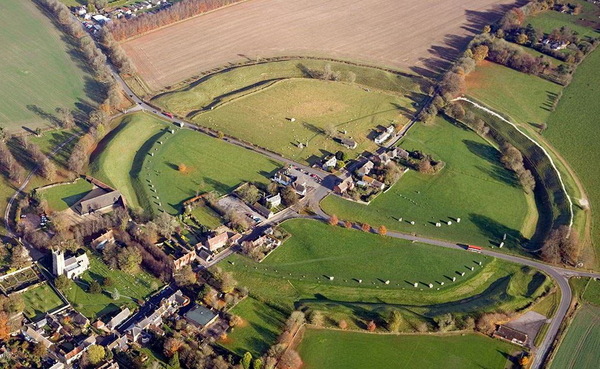
At Avebury, the principle of spatial organization manifests on a much larger scale. The stone circle is surrounded by a wide moat and an earthen rampart, and inside it are additional stone compositions. Unlike Stonehenge, the boundary here does not restrict only a small central area; it encompasses a vast territory containing independent spatial elements. Because of this, Avebury is perceived not as one isolated object, but as an entire complex of interconnected zones. Its layout allows one to examine how the circular form can be used to organize space on a significantly larger scale.
Eyebury (United Kingdom). Top view
Comparison of Two Monuments
A comparison between Stonehenge and Avebury reveals that the same geometric principle can create entirely different spatial impressions. In Stonehenge, the composition is more compact: the main elements are focused around a central area, and the sequence of stone structures forms a pronounced internal structure. Avebury, however, encompasses a much larger territory with several distinct compositions within its circle. Consequently, attention is distributed not just to a single center, but also to the interconnectedness of multiple spatial zones. In both cases, the circle helps define the structure’s boundaries, but the scale and placement of the internal elements determine how the space within those boundaries is perceived.
Stonehenge and Avebury (United Kingdom). A Comparative Study of Spatial Organization
However, we cannot confidently assert that the circular form held the same meaning for all similar structures. Archaeological data does not allow for a definitive reconstruction of the views of people from that time or the precise determination of each element’s function. Nevertheless, from a visual organization perspective, one clear characteristic stands out: the circle unifies individual elements into a single composition and designates a territory where specific activities may have taken place. Thus, the outer boundary becomes not merely an outline of the structure, but a vital component of its spatial structure.