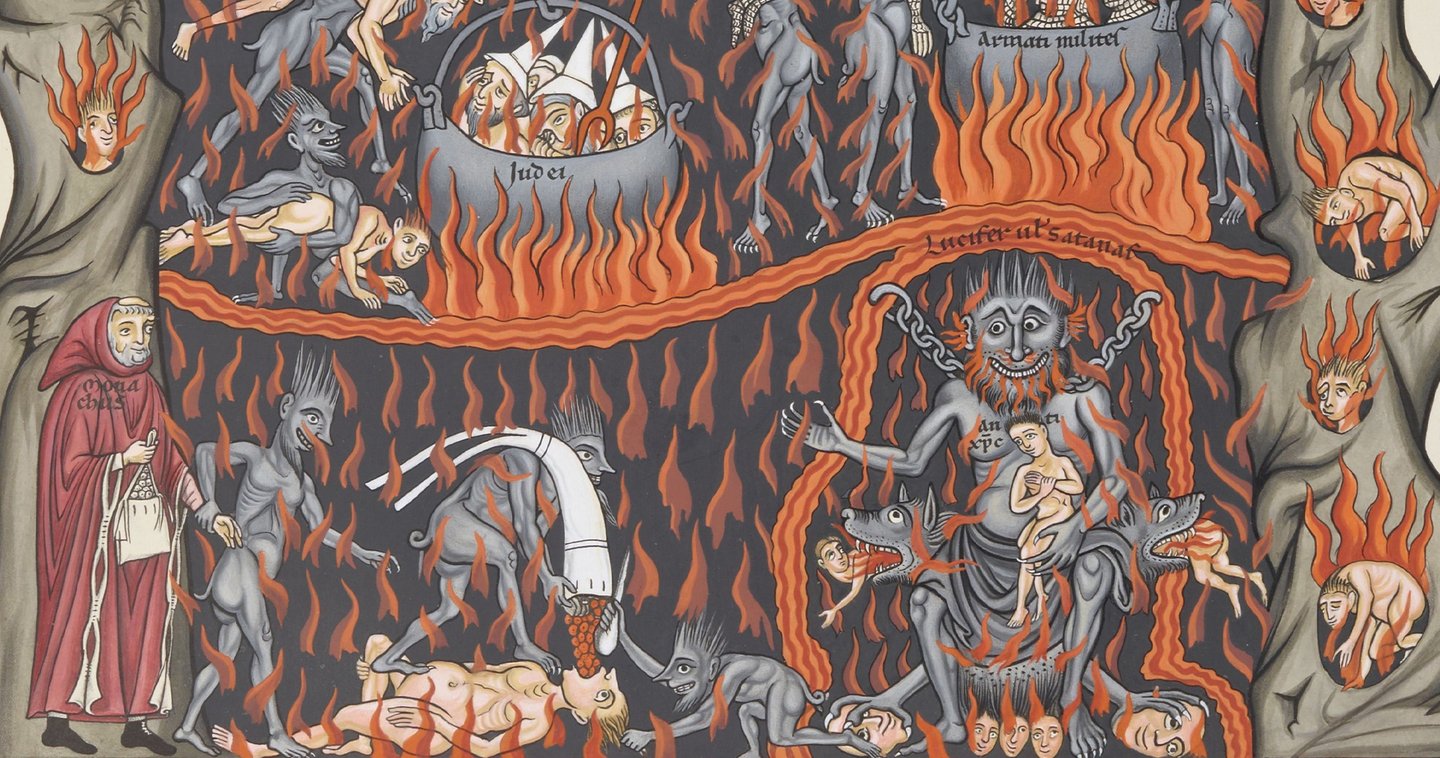
Трансформация пространства Ада от романского искусства к готике
Research Concept
The depiction of Hell in medieval art is becoming increasingly significant. The research focuses on comparing the visualization of the underworld in the Romanesque and Gothic periods. The study’s focus is to identify how the image of Hell evolves from a simple concept of antithesis to Paradise in the Early Middle Ages to a narrative scene in later periods. Among the works of art, one can find the evolution of imagery and the differences between them, which illustrate the increasing complexity of the Hell’s representation and the formation of a terrifying space, rather than merely the visualization of sinners' torment.The images of death and suffering in Hell that sinners would experience gradually develop into the Early and High Middle Ages, characterized by Romanesque art. The concept of a terrifying afterlife continues to evolve and coalesce into the period of the Late Middle Ages and Gothic. Following the trend of Catholic worldviews, the «horrifying image of death» forms, leading the depiction of Hell and its space in art to become an independent, narrative subject.
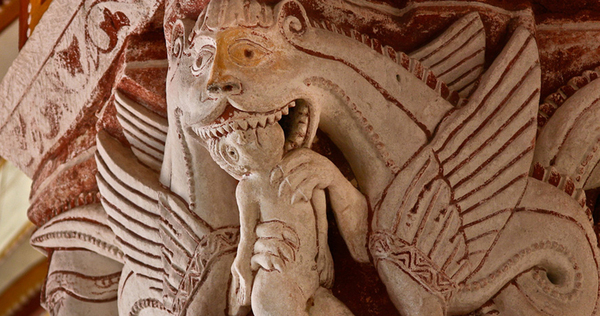
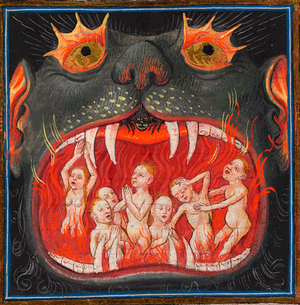
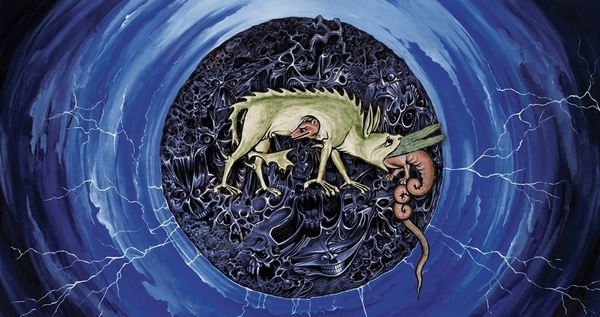
1. Capital in St. Peter’s Church. Chauvinny. Romanesque period. 2. «Souls Tormented in Purgatory» — fragment. «Garden of Earthly Delights.» Late Gothic.
For this research, the Romanesque and Gothic periods were selected to demonstrate the transitional phase in conceptualizing the concept of Hell and in the formation of leitmotifs in visual imagery. Using the typological logic of chapter segmentation, it is possible to analyze how the evolution of depictions of the underworld was traced across various art forms—such as monumental sculpture, freestanding sculpture, and illuminated manuscripts—during these periods.
In my research, I relied on authoritative sources and academic articles concerning the formation of the medieval concept of Hell and its development in art.
Key Question: How are the methods of depicting Hell transforming—from cautionary and didactic scenes to narrative and spatially complex compositions? (Alternatively: How are the methods of depicting Hell transforming on compositional, figurative, and spatial levels?)
Research Hypothesis: The difference between Romanesque and Gothic depictions of Hell manifests in an intensification of compositional expressiveness, the complication of the roles of infernal creatures, and a more integrated spatial organization of the underworld.
Main Goal
Research Sections
- Research Concept2. Comparison of Images of Hell on Cathedral Tympana3. Comparison of Depictions of Infernal Creatures in Sculpture4. The Space of Hell in Illuminated Manuscripts5. Conclusion6. Bibliography7. List of Image Sources
Chapter 1. A Comparison of the Overall Composition of Dante in Cathedral Tympana
Cathedral tympana— Mini-Thesis Chapter content—analysis of characteristics, schemata, and comparison
When comparing Romanesque and Gothic art, one can turn to the most prevalent art form of the era—the cathedral. During the Romanesque period, depictions of Hell carried a more cautionary function, serving as a «tool of terror» for sinners. In the Gothic period, the representation of the underworld is notable for its use of narrative motifs, such as the development of Hell’s space and the frightening visual presentation.
Tympanum of the St. Foy Basilica in Conques (first half of the 12th century). Romanesque art
Church of St. Foye Abbey in Conques. Tympan of the «Last Judgment”—fragment, 1107–1125.
Line The depiction of Hell is particularly characteristic on the tympanum of the portal of Saint-Ouen Basilica in Rouen. We see a scene beneath Christ’s feet: here the division between the broad passage leading to Heaven and the terrifying «Mouth of Hell, ” which opens the way to the underworld, is clearly discernible. In this strict composition, Hell presents itself as a contrast to Heaven, distinguished by the dynamism of the scenes of punishment and a high density of figures.
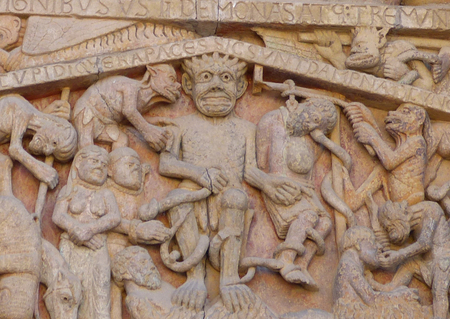
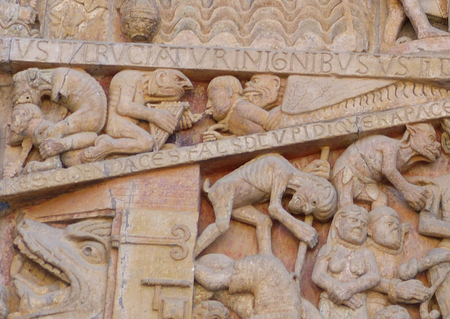
St. Foy Abbey Church in Conques. Tympanum of the «Last Judgment”—fragments, 1107–1125.
Saint-Foy Abbey Church in Conques. Tympanum «The Last Judgment”—fragment, 1107–1125.
The image of the Devil is central and underscores the primary goal of contrasting Hell with Heaven during the Romanesque period: his main function is to depict the punishments that follow specific sins. Therefore, the visual imagery is built upon different degrees of torment for sinners.
Saint-Lazare Cathedral in Otyon (1130–1146). Romanesque Art
Saint-Lazare Cathedral in Autun. Tympan of the «Last Judgment.» 1130–1140.
Saint-Lazare Cathedral in Autun. Tympan of the «Last Judgment”—fragment. 1130–1140.
Line Drawing A rigid image, divided into registers, depicts the scene of the «Last Judgment.» The most expressive motif is the «Weighing of Souls, ” overseen by the Archangel Michael and the Devil. The images of sinners are also integrated into a unified system of terror: they are devoid of hope for salvation and are shown in unnatural, elongated poses. Emphasis is placed on monstrousness and physical torment.
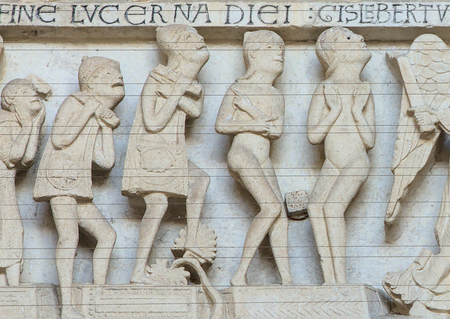
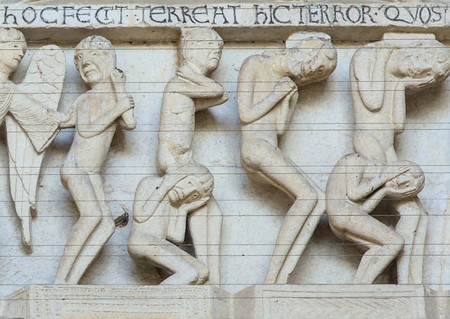
St. Lazarus Cathedral in Otyon. Tympanum «Last Judgment”—fragments. 1130–1140.
Although images of Hell already existed, they were connected to the inevitability of the «Last Judgment.» Thus, during the Romanesque art period, these depictions were more fundamentally constructive; they used vivid imagery of sinners and infernal creatures to convey the theme of punishment, but they had not yet developed into a self-contained narrative.
Notre-Dame de Paris (1163–1345). High Gothic
Notre-Dame Cathedral, Paris, France. The Portal of Judgment. 1220–1230s.
lintThe central portal of the cathedral depicts the scene of the «Last Judgment, ” creating a solemn impression. The Gothic depiction does not abandon the Romanesque scheme; instead, it enhances the visual imagery, organizes Hell, and thereby significantly strengthens the narrative character. In the cathedral tympana, the imagery continues to focus on the figure of Christ the Judge and occupies only the right side of the relief.
Notre-Dame Cathedral, Paris, France. Last Judgment Portal — fragment. 1220–1230s.
The demonic figures are particularly expressive, adopting greater grotesque plasticity and hybridity in comparison to the Romanesque period. They strive to tip the scales of sinners, while those bound in chains cannot find a path to purification.
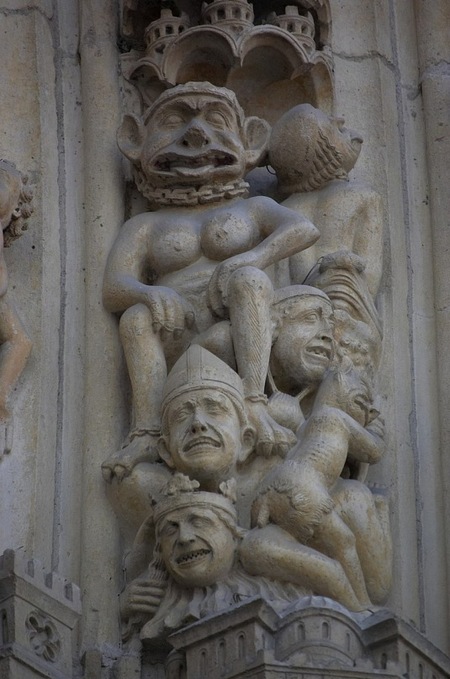
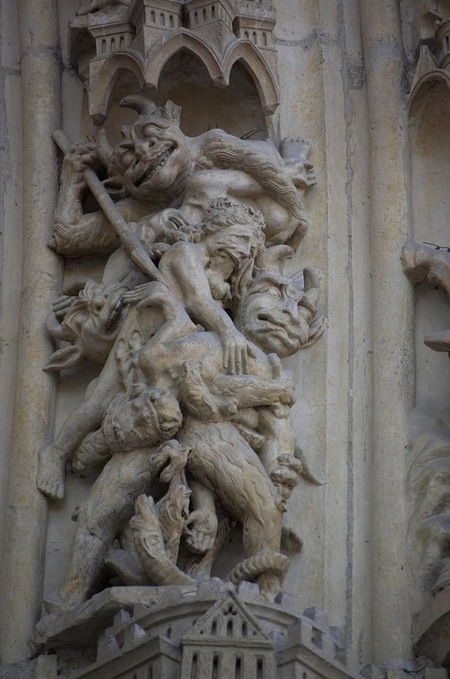
Notre-Dame Cathedral, Paris, France. Facade bas-reliefs.
Compared to the strictness of the Romanesque period, the depictions of hellish creatures display a greater variety of bestial features. Gradually, the torments of the afterlife become increasingly emotive in their representation.
Amiens Cathedral (1220–1269). High Gothic