This project is a student or faculty research or coursework from HSE and does not pursue commercial objectives.
Contents
Concept
Concepts of demonic entities exist in many cultures, yet their appearance and meaning vary significantly depending on religion, mythology, and historical context. In Japanese culture, supernatural beings hold a special place: they can represent natural forces and human vices, as well as sickness, fear, and punishment for sins. Their depictions became a means of comprehending the unseen world and conveying notions about forces beyond human understanding.
In the 12th century, Japanese art was heavily influenced by Buddhism. Beliefs about the afterlife and other worlds were reflected in paintings, particularly in illustrated scrolls. In these works, demonic figures became participants in scenes of hell, tormentors of sinners, and embodiments of supernatural power. Artists endowed them with unusual proportions, distorted facial features, inhuman plasticity, and other fearsome attributes, creating a visual language capable of conveying the nature of the otherworld.
What is particularly fascinating is the diversity of how these demonic figures could be portrayed. Some beings adopted almost human characteristics, while others featured grotesque appearances and distinctly non-human anatomy. It is also important to note that Japanese culture distinguished several categories of supernatural entities, including oni (鬼), hellish tormentors, and gaki (hungry ghosts). Despite the superficial resemblance of certain characters, their origins, functions, and significance could vary greatly.
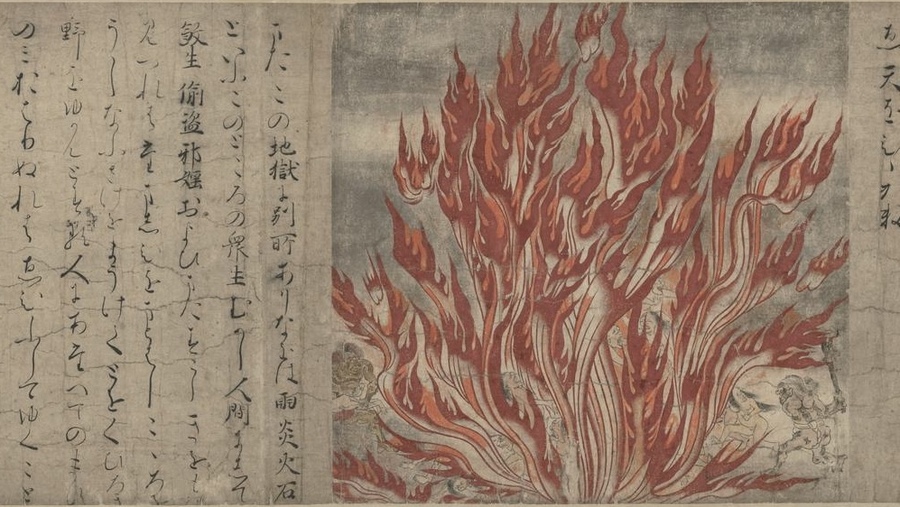
Fig. 1. Fragment of Jigoku Zōshi («Scroll of Hell»). Unknown artist. Heian period, 12th century. Paper, ink, and pigments. Tokyo National Museum, Inv. No. A-10942.
How was the image of a demonic creature formed in 12th-century Japanese art?
I am interested in how Japanese artists of the 12th century depicted and represented beings that could not be seen in the real world. How was their external appearance formed? What features made a character recognizable as a demonic entity? To what extent did the depictions depend on religious beliefs and existing artistic traditions? Is it possible to trace general patterns in the depiction of demons by examining different works?
The core material
For this research, illustrated scrolls from this period will be used, specifically the «Scroll of Hell» (Jigoku Zōshi) and «Exorcism of Evil Spirits» (Hekija-e). Comparing them will allow us to examine various depictions of supernatural beings and identify the commonalities and distinguishing characteristics of their artistic representation.
Goals
The study aims to determine which visual characteristics shaped the perception of the demonic in 12th-century Japanese art and how artists used the depiction of supernatural beings to convey their era’s concepts of evil, fear, and the otherworldly.
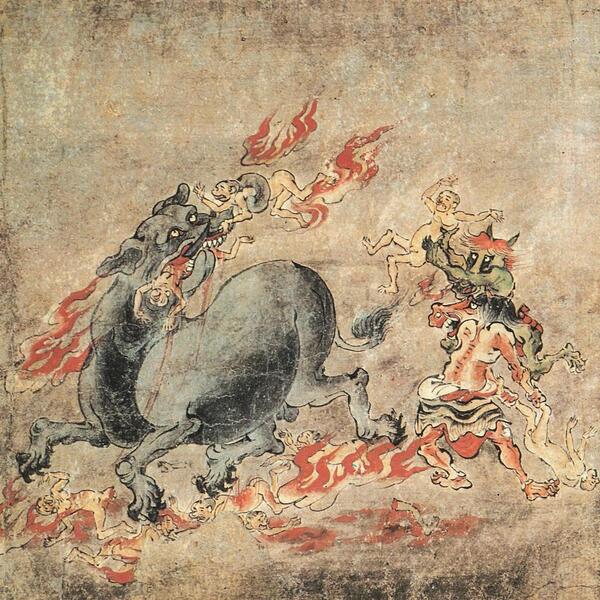
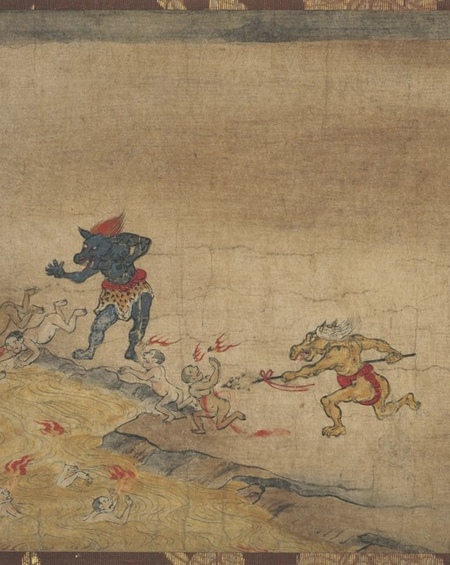
Fig. 2. Fragment of Jigoku Zōshi (Hell Grass Manuscript), «Scroll of Hell, ” unknown artist, 12th century, Heian period. Paper, ink, and pigments. Nara National Museum, Inventory No. 644-0.
Fig. 3. Fragment of Shamon Jigoku Zōshi (Monk’s Hell Grass Manuscript)—“Scroll of Hell for Monks.» Unknown Japanese artist. 12th century, Heian period. Paper and pigments. Nara National Museum, Inventory No. 1357-0.
Fig. 5. Jigoku Zōshi (地獄草紙) — «Scroll of Hell.» A fragment depicting infernal tormentors and suffering sinners. Unknown Japanese artist. 12th century, late Heian period—early Kamakura period. Paper, ink, and pigments. Nara National Museum, Japan, Inv. No. 644-0.
The Anatomy of the Demonic Image
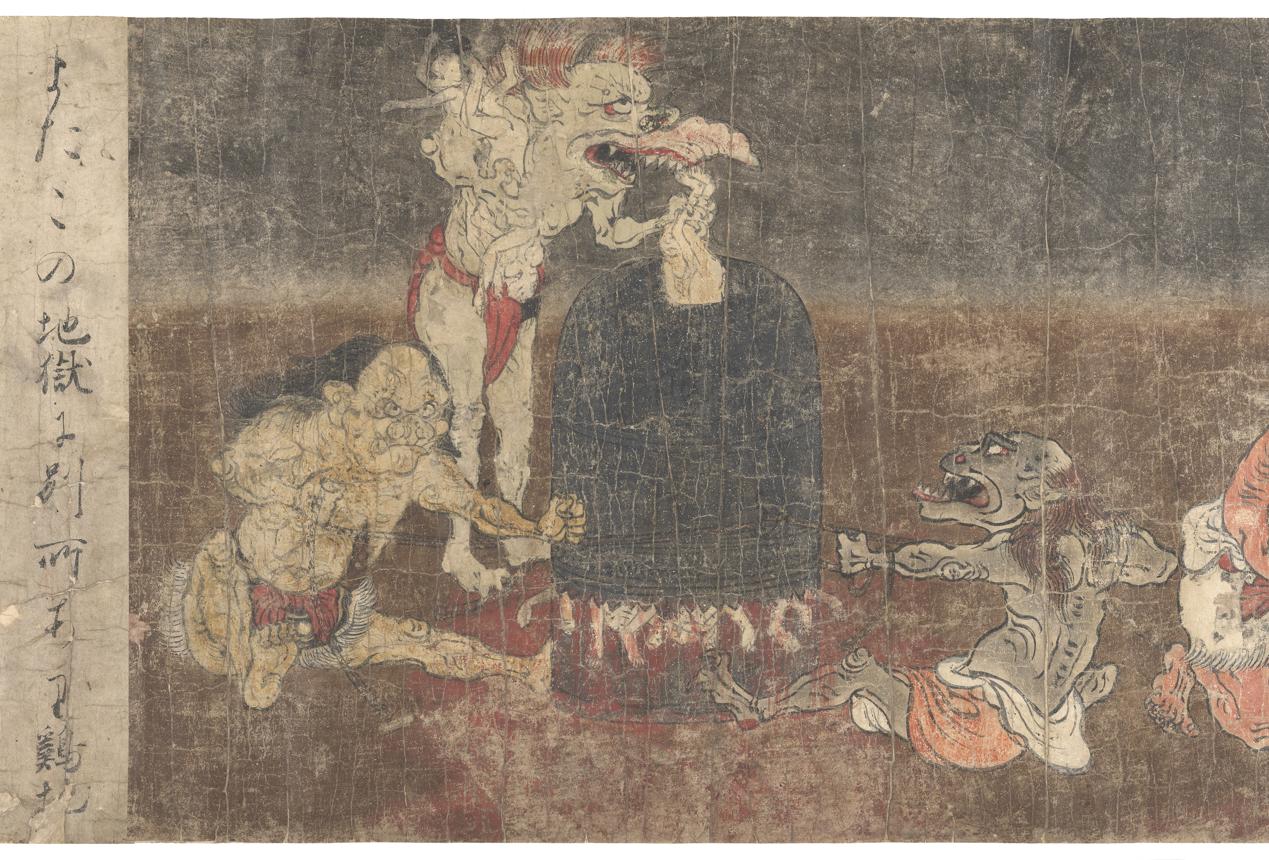
When examining depictions of 12th-century hellish tormentors, one can notice that their appearance is rarely entirely detached from human anatomy. Artists maintain a recognizable structure for the torso, arms, and legs, but they alter specific body parts—for example, by combining human features with animalistic traits or by changing skin color to red, blue, or yellow. It is important to note that there was no singular, unified physical type for demonic or other supernatural beings. Japanese culture endowed these entities with an incredibly diverse array of forms and features.
Fig. 6. Jigoku Zōshi (地獄草紙) — «Scroll of Hell.» Fragment of a scene depicting infernal torments, featuring demonic creatures, sinners, and a cauldron. Unknown Japanese artist. 12th century, late Heian period. Paper, ink, and pigments. Nara National Museum, Japan, Inv. No. 644-0.
This is particularly noticeable in the images of Gozu and Medzu—the guardians of hell. Despite their animalistic heads, their bodies resemble human forms, and their movements and gestures allow the characters to be perceived as active participants in the scene. While in some cases the demon could almost entirely resemble an animal with only small inclusions of human anatomy. This combination of the familiar and the unusual becomes a method for creating a terrifying image. The demonic creature retains a resemblance to a human, but specific anatomical alterations underscore its belonging to another world.
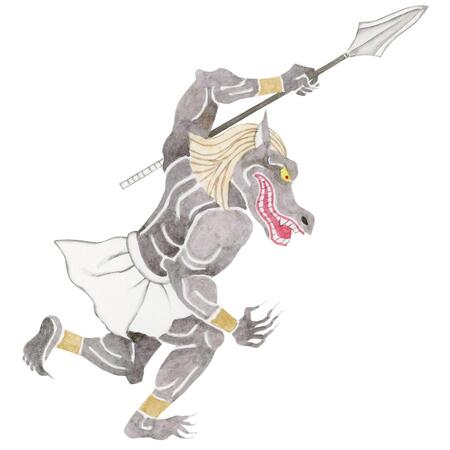
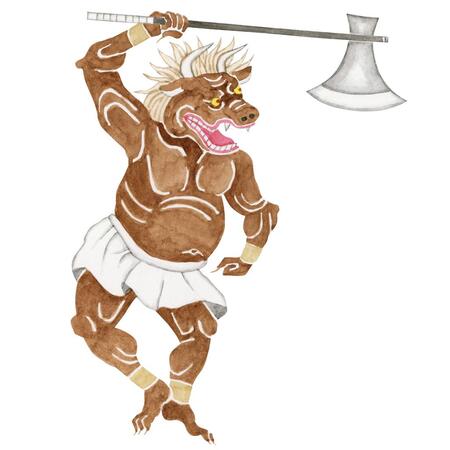
Fig. 7. Mezu (馬頭) — the horse-headed guardian of hell. A contemporary watercolor illustration by Japanese artist tada, created as part of a series depicting Buddhist hell guardians. PIXTA, Illustration #130401015.
Fig. 8. Gozu (牛頭) — the ox-headed guardian of hell. A contemporary watercolor illustration by Japanese artist tada, created as part of a series depicting Buddhist hell guardians. PIXTA, Illustration #130
These images of Gozu and Medzu belong to a contemporary artist, but they were created according to the conventions of 12th-century depictions of demonic creatures, so they are used as supplementary material in the work.
Fig. 9. Jigoku Zōshi (Hell Grass Scroll), «Scroll of Hell.» Fragment «Hell of the Fiery Rooster» (Ni-jigoku). Unknown artist. 12th century, late Heian period—early Kamakura period. Paper, ink, and pigments. Nara National Museum, Inv. No. 644-0.
Demonic creatures were also often depicted based purely on human anatomy, but with significant deformations of their parts in relation to one another: enlarged heads, short limbs, and bloated abdomens. The techniques varied, yet recurring characteristics included sharp teeth, claws, and distorted facial features.
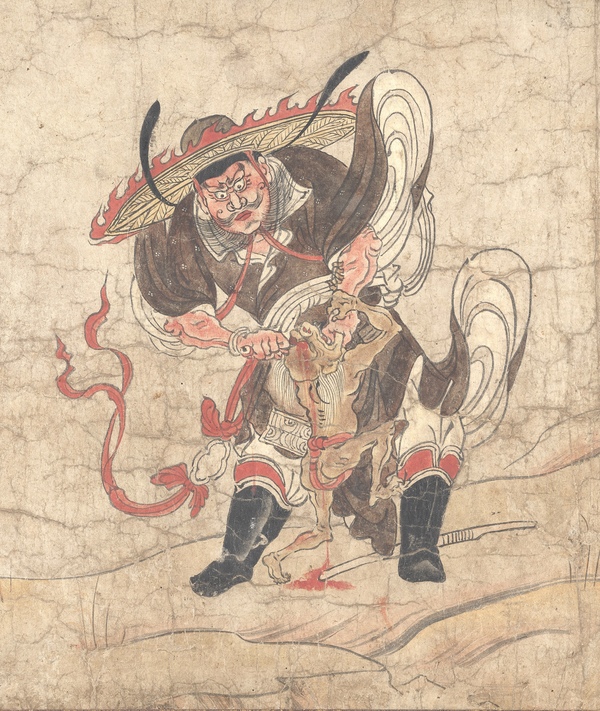
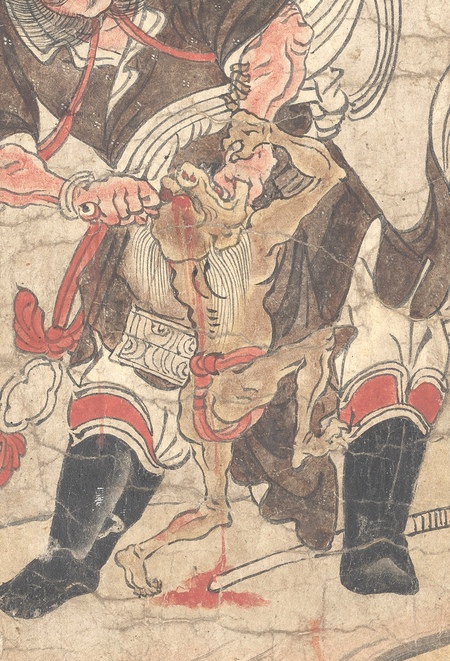
Fig. 10. Fragment of a Hekija-e (辟邪絵), «Exorcising Evil Spirits.» Shōki—the demon vanquisher (鍾馗, Shōki). Unknown artist. 12th century, Heian period—early Kamakura period. Paper, ink, and pigments. Nara National Museum, Inv. No. 1106-4.
Another important feature of the depiction of malevolent spirits in 12th-century Japanese culture was the contrast in body types: the emaciated, skeletal forms of starving spirits emphasized suffering and deprivation, whereas the developed musculature of the hellish tormentors conveyed physical strength and the capacity to inflict pain.
Fig. 11. Shamon Jigoku Zōshi (Scroll of Monk’s Hell). «Scroll of Hell for Monks.» Fragment depicting a horse-headed infernal torturer. Unknown artist. 12th century, late Heian period—early Kamakura period. Paper, ink, and pigments. Nara National Museum, Inv. No. 1357-0.
Fig. 12. Gaki Zōshi, «Scroll of Hungry Spirits.» Fragment depicting a hungry spirit and a menacing, armed figure. Unknown artist. 12th century, late Heian period. Paper, ink, and pigments. Tokyo National Museum, Inv. No. A-10476.
Fig. 13. Gaki Zōshi (Hungry Spirit Scroll), «Scroll of the Hungry Spirits.» Fragment of the first scene depicting hungry spirits tormented by thirst. Unknown artist. 12th century, late Heian period. Paper, ink, and pigments. Kyoto National Museum, Inv. No. AK229.
Based on the images provided, it is clear that the demonic figures of the 12th century could have appeared vastly different. Some resembled humans, while others combined human and animal traits. Artists manipulated body proportions, emphasized musculature, or conversely, depicted the creatures as thin and gaunt. This allowed each depiction to acquire its own unique character and distinct qualities.
The Face as a Device for Creating a Demonic Image
In depictions of demonic figures from the 12th century, facial features held particular importance. The condition of the hair was equally significant: either it was excessively dishevelled and tousled, or it was styled in a uniform direction. While unusual body proportions could distinguish a supernatural being from a human, the expression in the eyes, the shape of the mouth, and the arrangement of the teeth helped convey its character and role within the scene.Examining Japanese illustrated scrolls reveals that artists employed various methods to portray frightening facial expressions. Moreover, similar features might belong to creatures serving completely different functions.