Navigation Menu
- Research Concept
- Baptistery of San Giovanni
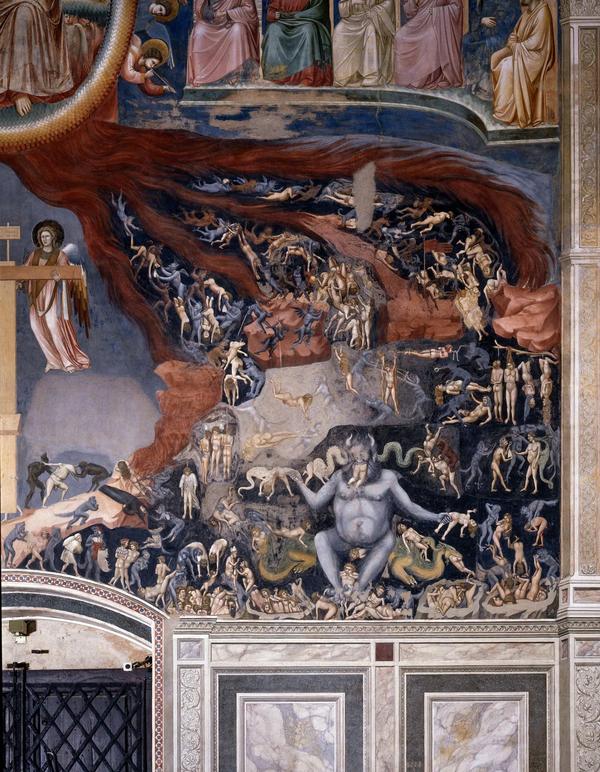
- Giotto: Torturing Demons in the «Last Judgment»
- Buonamico Buffalmacco: Hell as a Space of Punishment
- Nardo di Cione: The Order of Paradise and the Chaos of Hell
- Taddeo di Bartolo: The Demon and the System of Sins
- Giovanni de Modena, «Hell»
- Comparison of Depiction Methods
- Conclusion
- Bibliography
- Image Sources
Concept: Rationale for Theme Selection
The Last Judgment and Hell were significant themes in medieval art. They were depicted on the walls of churches and chapels, allowing the viewer to see these scenes right before them.I am investigating how artists from the 13th to the early 15th centuries portrayed demons. They could possess animalistic features, wings, tails, and unusual bodies. Furthermore, these demons did not merely create the terrifying image of Hell; they tormented sinners, moved, and helped structure the composition’s space.I am interested in how the appearance, gestures, size, and placement of the demons affect the perception of the scene.
Concept: principle of material selection
I selected six works from the 13th to early 15th centuries from Italy: the Baptistery of San Giovanni mosaic and the frescoes by Giotto, Buonamico Buffalmacco, Nardo di Cone, Taddeo di Bartolo, and Giovanni da Modena. These works allow for a comparison of different ways demons are depicted—from the large central figure of Satan to numerous demons torturing sinners and filling the space of hell.
Concept: the principle of rubrication
I analyze the demons based on several criteria: appearance, actions, size, and placement within the composition. First, I examine their body and physical details, then their gestures and interaction with the damned. After that, I observe how the demons help organize the space of hell. Finally, I compare all the works and highlight the primary ways demons are depicted.
Concept: The principle of source selection and analysis
To verify dates, authorship, and technique, I utilize the official websites of the monuments, museum catalogs, and scholarly research on medieval art. The main conclusions are drawn from the artworks themselves: their forms, gestures, scale, color, and figure placement.
The central hypothesis of my work is to demonstrate that the demonic archetype was constructed not solely upon terrifying appearance. Artists employed bodily hybridity, the grotesque, dynamic gestures, and a specific spatial positioning within the inferno. Consequently, the demon could simultaneously function as a signifier of evil—an active tormentor of sinners—and as an organizing element for the entire composition of punishment.
Mosaic of the Baptistery of San Giovanni in Florence
Tuscan Masters. «The Last Judgment.» c. 1260–1275. Mosaic. Baptistery of San Giovanni, Florence
In the Apocalypse mosaic at the Florentine Baptistery, the demon transforms into the central image of hell. The artist positions Satan in the lower portion of the composition: his enormous dark figure stands in contrast to Christ the Judge, who is situated in the center of the dome. Christ, with a gesture, separates the saved from the condemned, while Satan receives those on his left side.
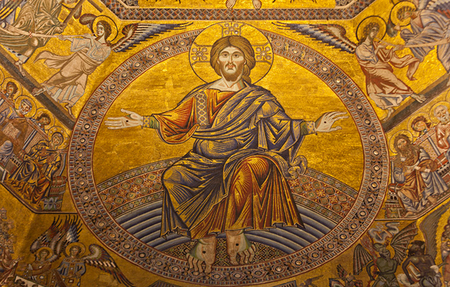
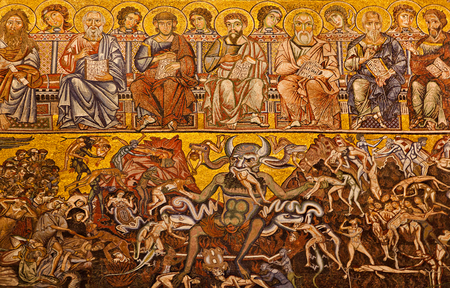
The demon’s imagery here is built on exaggeration: its scale overwhelms the sinners, its heavy body is motionless, and its open maw symbolizes insatiability and doom.
«Imagine this throne, this dreadful arrival, this endless punishment… May the image of judgment always stand before your eyes, so that fear deters you from sin.» © John Chrysostom
Tormenting Demons: Giotto, «The Last Judgment»
In Giotto’s «Last Judgment,» the composition is no longer centered around a single, static figure of Satan. Here, the demons are active: they seize sinners, drag them downward, overturn bodies, and participate in the punishment. Their movements are sharp and directional, resulting in the lower portion of the fresco giving the impression of a continuous descent.
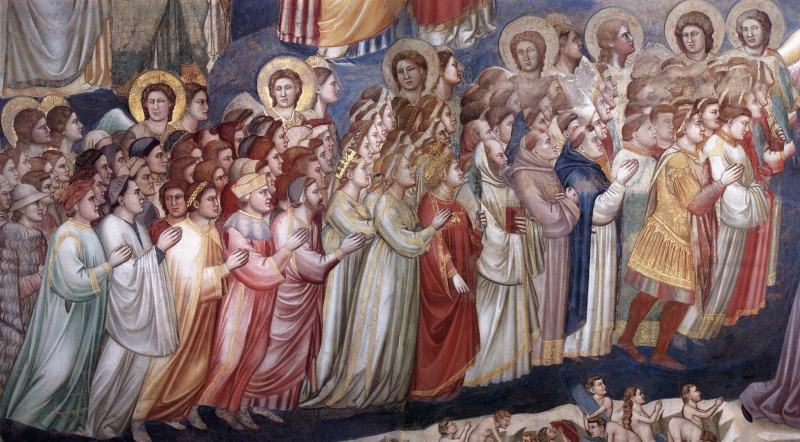
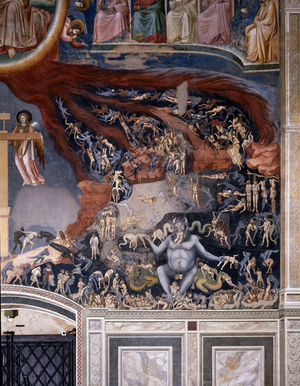
Giotto contrasts the space of Hell with that of Heaven. To the right of Christ, the saved figures stand calmly, forming an orderly group. In Hell, bodies are entwined, postures become unnatural, and demons literally invade human space. For Giotto, the demon is not merely a symbol of evil, but an active enforcer of punishment. Through gesture, movement, and physical contact, the artist renders the terror of the Last Judgment physically palpable.
«It is human nature to forget death and judgment in the hustle of earthly life, but the sight of coming punishment can pierce even the most hardened heart.» © Giovanni Boccaccio
Ad as a system of punishment: Buonavicco Buffalmacco, Campo Santo in Pisa
In this fresco, we see not a single place of torment, but numerous distinct episodes: before the viewer, various groups of sinners are presented, diverse methods of punishment, and many demonic figures controlling the events. Lucifer holds a special place in this composition—his monstrous figure appears not as an isolated character, but as the center around which the entire hell is organized.
However, what is more important here is not just the image of the ruler of the underworld, but the executioner demons themselves. They are directly tied to sin and punishment: they restrain bodies, torture them, and transform hell into a space of continuous action, where the Last Judgment becomes a detailed visual map of human transgressions' consequences.
Ad as the antithesis of paradise: Nardo di Cione, Strozzi Chapel
Attach Card The frescoes by Nardo di Cione in the Strozzi Chapel are constructed as a unified program: «The Last Judgment» occupies the central wall, while «Heaven» and «Hell» are positioned opposite each other. This arrangement ensures that the demon is not depicted in isolation but through contrast with the world of the saved. Heaven is filled with light, serenity, and symmetry. Hell, conversely, is cramped, dark, and tumultuous.
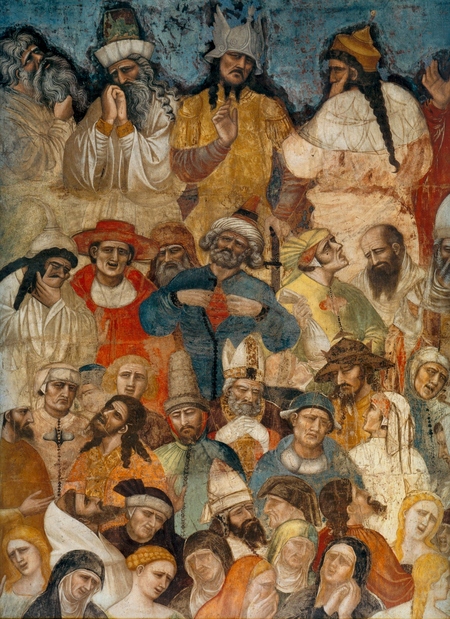
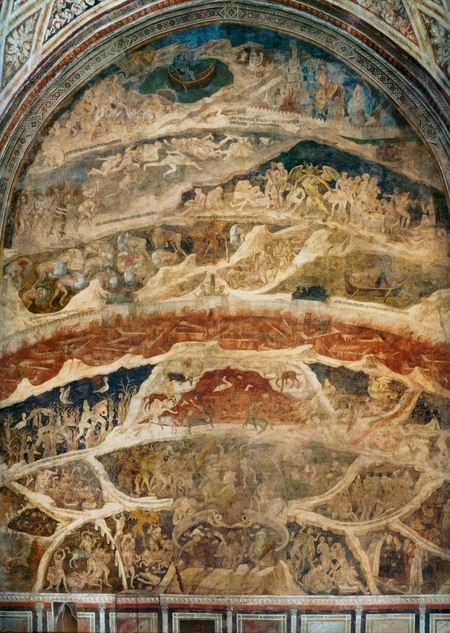
Nardo di Cione. Frescoes in the Strozzi Chapel: «The Last Judgment, ” „Paradise, ” and „Hell.“ 1354–1357. Fresco. Santa Maria Novella, Florence