Navigation Menu
Concept
- Space and Time
- Symbolism
- Embodiment and Dance
Conclusion Sources
Concept
Maya Deren’s creativity occupies a unique place not only in the history of mid-20th-century avant-garde but also in cinema as a whole. In her work, she explores the nature of time and space, offering new ways of perceiving reality through a distinctive visual language that transcends conventional narrative forms. However, to analyze the specifics of Deren’s cinematic language, it is important to examine her biography—many aspects of which profoundly influenced her artistic vision.
Maya Deren (1917–1961), born Eleonora Solomonovna Derenkovskaya, was born in Kyiv to a psychiatrist and an actress. This upbringing significantly influenced her professional development and fostered her interest in human psychology and anthropology—elements that became foundational to her innovative approach in cinema. At the age of five, following the events of the Civil War, her family emigrated to the United States, where Deren subsequently pursued education in literature and journalism. Furthermore, through her collaboration with dancer Catherine Dane, Maya Deren became fascinated with «dance, Haitian culture, and Vodou mythology» [1]. This involvement nurtured her interest in movement as a means of artistic expression, which is vividly depicted in the rhythm of the frame and the plasticity of the characters. Embodiment becomes a crucial facet of her work; dance in her art is not merely part of a visual language but also a significant element of ritual practice.
Maya Deren, in her book An Anagram of Ideas on Art, Form and Film (1946), introduces the concept of the emergent image, in which art generates «new properties or behaviors not characteristic of its individual components» [2], thereby forming a new, unique image.
«I distinguish between a whole, which is the sum of its parts, and an emergent whole, in which the parts are arranged in such a dynamic correspondence that they are capable of producing something new, something not foreseen by the initial knowledge of the individual particles. The artist’s effort must be applied to creating such a logic, where two plus two can yield five or fifteen» («An Anagram of Ideas on Art, Form and Film, ” Maia Duran, 1946)
Although Maya Deren’s artistic language offers endless possibilities for study, this visual investigation will focus on just a few key aspects of the director’s work. The study is divided into three sections: embodiment and dance, space and time, and symbolism, and it examines the most striking examples from Maya Deren’s cinema, touching upon films such as Meshes of the Afternoon, 1943; On the Land, 1944; Reflections on Violence, 1948; The Constant Watch of Night, 1958; and The Witch’s Cradle, 1938. Throughout the investigation, the author will attempt to analyze Deren’s influence not only on the development of avant-garde cinema but also on the artistic style of later masters.
Space and Time
In her films, Maya Deren frequently disrupts linear temporal sequence, allowing her to experiment with the perception of reality and create space for the discovery of new meanings. Editing enables her to connect scenes and images based on their symbolic and functional relationships. We often observe shifts in camera angles, perspectives, and camera movements within a single shot—a dynamic that impacts the viewer and transfers the protagonist’s psychological state onto them.
Meshes of the Afternoon, dir. Maya Deren, 1943
Meshes of the Afternoon, dir. Maya Deren, 1943
«The length of the staircase increases tremendously when three different frames featuring a person climbing it (shot from various angles so that the repetition of the same section is imperceptible) are edited together to create a continuous action, accumulating into an image of sustained effort directed toward a sublime goal.» (Maya Deren, «Cinema: The Creative Application of Reality.»)
Meshes of the Afternoon, dir. Maya Deren, 1943
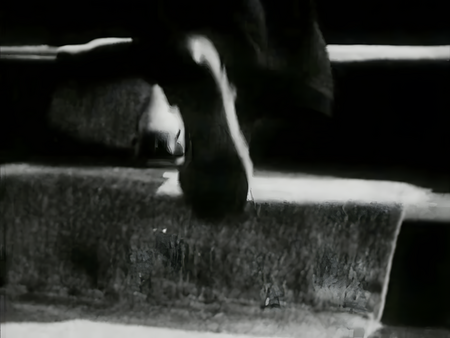
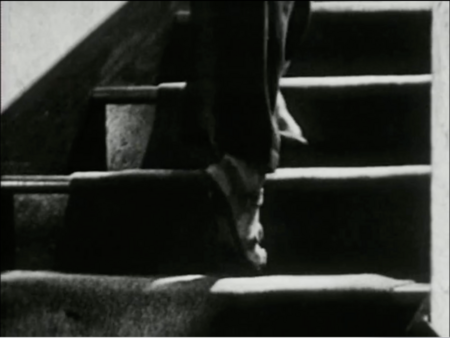
Meshes of the Afternoon, dir. Maya Deren, 1943
In Deren’s works, the space often appears to shift from a real dimension to an ephemeral, abstract one—as if traversing between reality and a prolonged dream.
Meshes of the Afternoon, dir. Maya Deren, 1943
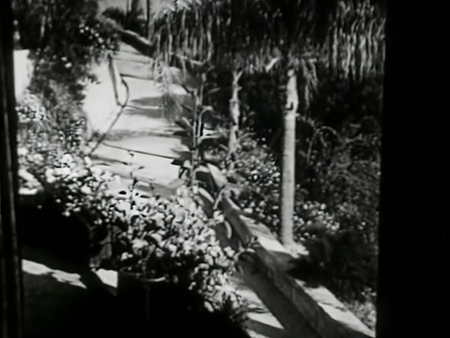
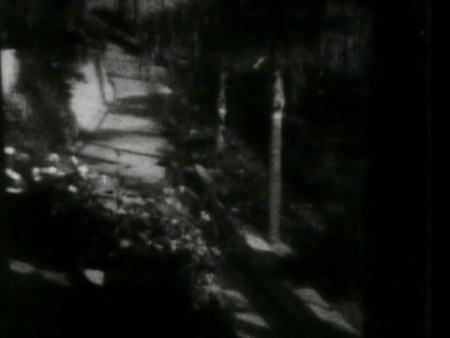
Meshes of the Afternoon, dir. Maya Deren, 1943
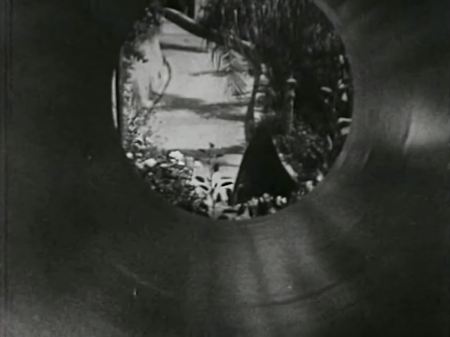
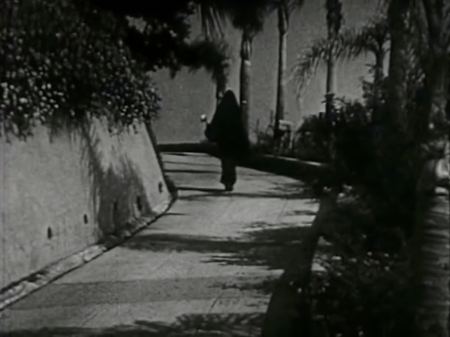
Meshes of the Afternoon, dir. Maya Deren, 1943
Maya Deren from the 1944 experimental short At Land [fig. 1]
In the painting «On Earth, ” the heroine, struggling to climb a tree on the seashore, suddenly finds herself in a banquet hall, making her way along a table toward the man seated at the head of the table. The location shifts again, and now she is among thick foliage.
This example vividly demonstrates how De Kooning employs transitions between locations—which are often unexpected, and sometimes absurd—but which impart a distinct dynamic and a sense of surrealism.
On Land, Dir. Maya Deren, 1944
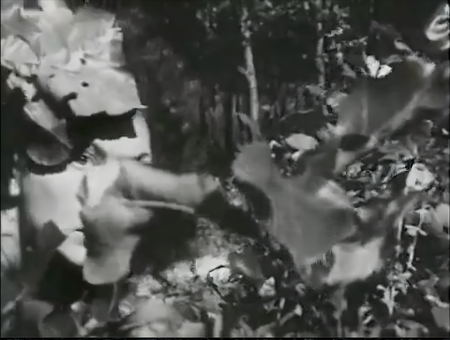
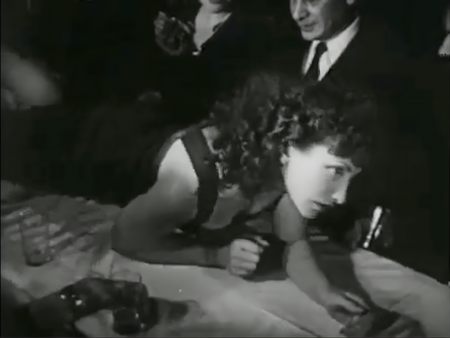
At Land, dir. Maya Deren, 1944
«Remote spaces can be not only connected to each other, but also transformed into a single whole through the unity and identity of movement—such as when a gesture begun in one scene continues and concludes with a gesture in another.» (Maya Deren, «Cinematography: A Creative Application of Reality.»)
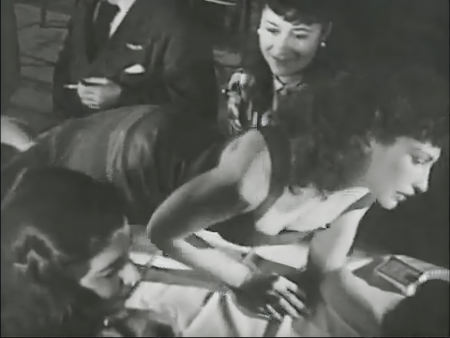
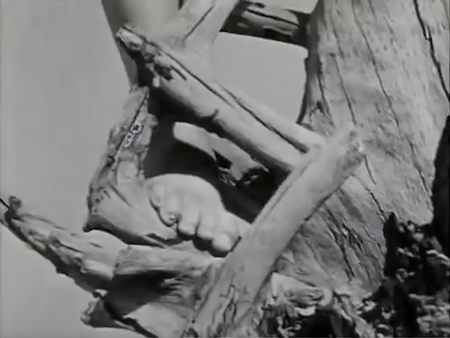
On the Land, Maya Deren, 1944
Ritual in Transfigured Time, dir. Maya Deren, 1946
A scene from the film «Ritual in Transformed Time» is a vivid example of how frames interact with real-time and slow-motion movement. This contrast emphasizes not only the plasticity of the motion but also the ritualistic element of the scene.
Ritual in Transfigured Time, directed by Maya Deren, 1946
Symbolism
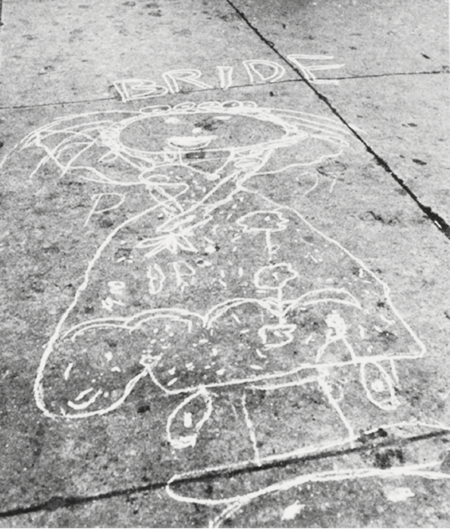
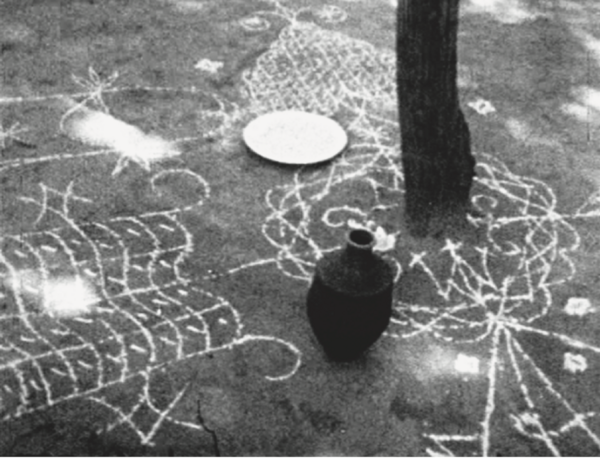
Maya Deren, «From the Notebook of Maya Deren, ” October 14 (Fall 1980), p. 2. [fig. 2]