Navigation Menu
I. Concept
II. The Three «Factories» as Stages of Brand Formation
- 1963–1967: Silver Factory
- 1968–1973: Union Square
- 1974–1984: Broadway
III. Art as a Product
- Assembly-line production
- Revenue diversification
IV. Marketing and Branding: Creating Myth and Recognizable Image
V. Conclusion
Concept
The art market is a complex system of economic, cultural, and social relations that encompasses production, marketing strategies, institutional connections, and the organization of the creative process itself. It should be noted that the art market is not purely pragmatic. Because artworks are rooted in intangible values, their worth is often determined by cultural and ideological context, the underlying idea, aesthetic characteristics, symbolic content, and the ability of these aspects to substantiate artistic merit [1].
Within this structure, the artist’s workshop or studio holds particular interest. Traditionally, this is understood as a space where the master works alongside a group of assistants, students, or apprentices. Essentially, it is a space for collective creation, knowledge transfer, task distribution, and the formation of artistic output [2]. Such workshops are far from a modern phenomenon. For instance, in the 15th century, in major Italian cities, art workshops effectively functioned as full-fledged production centers, allowing the master to handle a large volume of commissions. The artist, along with their students, executed painting, sculpture, and decorative works, bringing in craftspeople as needed [3].
In the era of globalized art markets, the artist’s studio ceases to be solely a means of organizing labor; it becomes a crucial element in constructing artistic identity and commercial success. In this visual study, the author will examine the phenomenon of the artist’s studio as a successful business venture and a model for commercializing creativity, using Andy Warhol’s Factory as a case study.
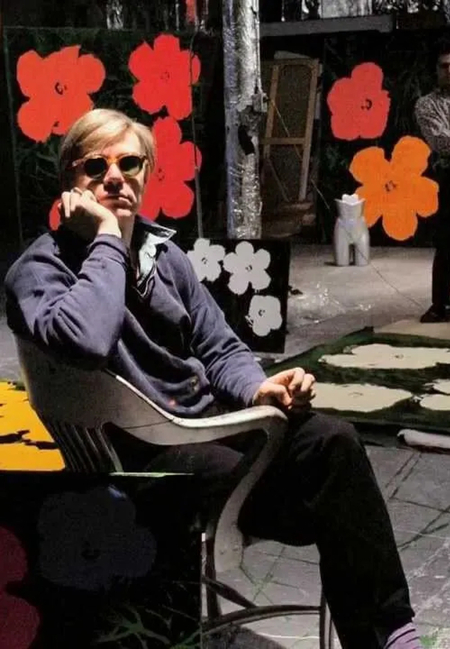
The underground New York scene of the 1960s was the environment in which Warhol forged his unique style and artistic strategy—one consciously oriented toward mass culture, seriality, and the reproducibility of art objects.
1. Andy Warhol and friends, circa 1964, printed later
«The name 'Factory' was not just catchy—it reflected Warhol’s artistic philosophy and working methods. Inspired by the industrialization of mass production, Warhol compared his studio to a factory where art was created almost on an assembly line» [4]
The research is based on sources describing the activities of the Warhol Factory, including archival documents and photographs, monographs, and articles, as well as an analysis of the artworks created in the studio from the perspective of the production process and collective participation. The structure of the research includes several key aspects: the stages of the Factory’s formation, covering the period from 1963 to 1984, with the aim of tracing the evolution of the studio’s scaling; the organization’s functions and core activities; and the Factory’s positioning strategy in the international market through the media landscape.
Three «Factories» as Stages of Brand Formation
1963–1967: Silver Factory
2. The Silver Factory at 231 East 47th Street, 1963–1968
Urrhol’s first studio was located in the center of Manhattan at 231 East 47th Street. In 1963, Warhol found a vacant space there, leased an entire floor, and invited artists who shared his vision. The space, covered in aluminum foil and silver paint, became a hub for radical experimentation. This is where Warhol created his first screen prints, filmed experimental movies, and hosted bohemian parties. [5] It was in this moment that the model of collective production was formed, a permanent group of assistants, friends, and artists emerged, transforming the Factory into a cultural and social underground center.
1968–1973: Union Square
3. The Union Building (originally Decker Building) The Architect: John Edelmann, 33 Union Square West. Photo: Carl Forster
In 1968, The Factory moved to the Decker Building at 33 Union Square West, marking the second phase of its life. This phase was characterized by greater structure and a shift «toward a more business-oriented focus» [6]. Its objectives expanded beyond creating art objects and films to include publishing the magazine Interview, which focused on popular culture. During this time, Warhol established Factory Additions—a publishing and graphic enterprise—with the goal of systematizing and scaling silkscreen production.
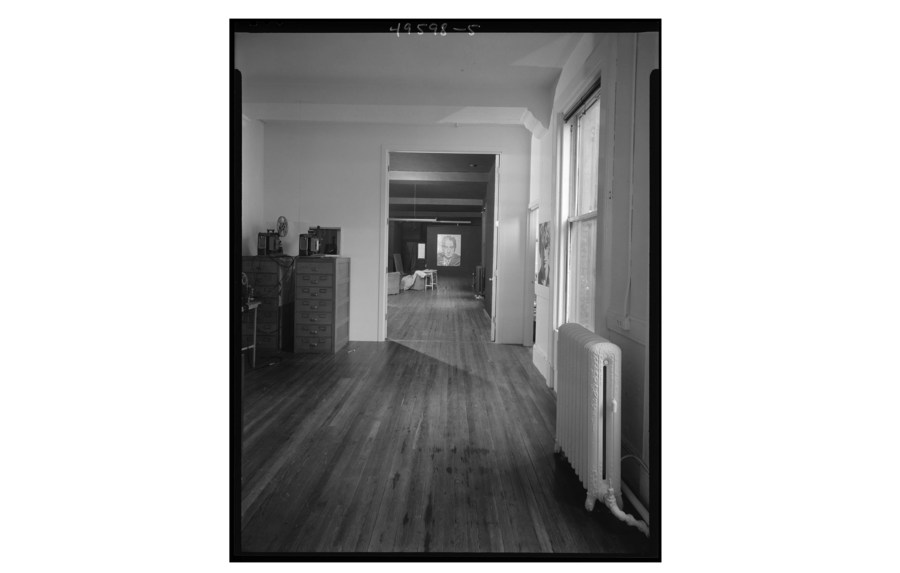
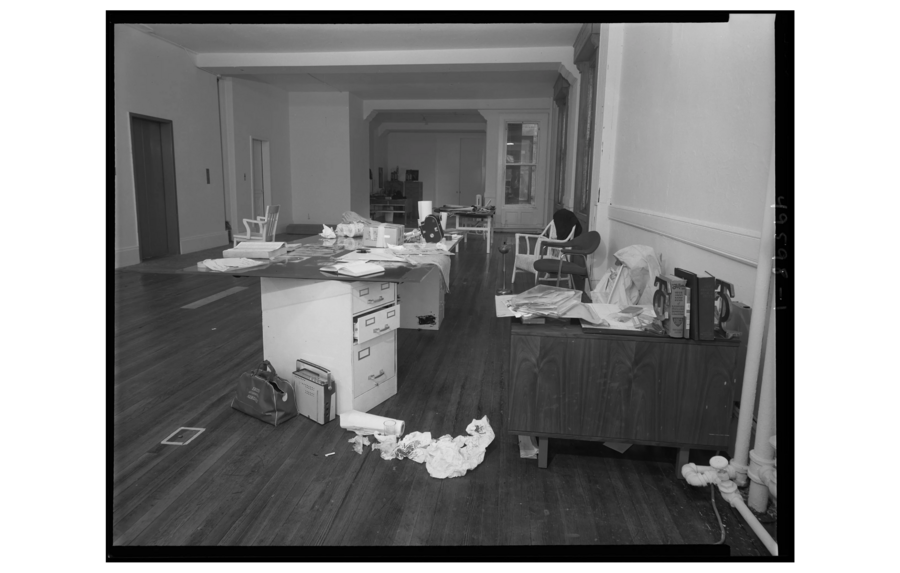
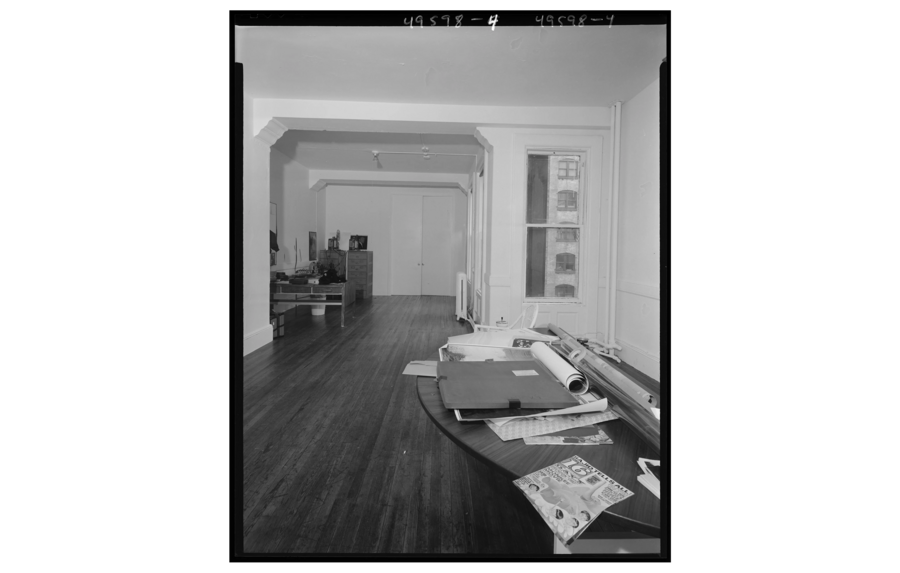
4, 5, 6. Felonious assault scene at 33 Union Square where Andy Warhol and Mario Amaya were shot by Valerie Solanas, June 4, 1968
The Union Square era was also marked by tragic events: Warhol survived a shooting attempt by Valerie Solanas in 1968, after which he tightened the studio’s security system.
7. 33 Union Square West, approx. 1985
1974–1984: Broadway
8. Andy Warhol, View from The Factory at 860 Broadway Looking Down at Union Square West, 1970s
In 1974, The Factory moved into a spacious floor on Broadway. The new loft was converted and divided into zones, becoming a more structured workspace. This is where its television activities began to develop actively. Warhol launched his cable channel and broadcast the show Andy Warhol’s TV from 1980 to 1983.
9. 860 Broadway, Union Square, 1986. Photo: Meredith Marciano
«Each factory location served as a backdrop for different stages of Warhol’s evolving creative vision. These spaces witnessed the transformation of the factory from a bustling social hub into a more introspective, guarded studio…» [7]
Art as a Product
As previously mentioned, within the activity of the Andy Warhol Factory, art became not only the result of a creative act but also a fully realized commercial product, produced, distributed, and consumed according to market laws. Seriality and reproducibility transformed into a form of artistic statement.
«Assembly-line» production
10. Andy Warhol and assistant Gérard Malanga blocking a silkscreen with glue, 1960
Andy Warhol’s engravings, which became some of the most recognizable works of contemporary art, were created using the silkscreen technique. This method allowed images to be reproduced in large editions. Every stage of the process was standardized and repeatable. Symbols of popular culture could be modified through color schemes and combined into series. The same image—whether it was a portrait of Marilyn Monroe or Campbell’s soup cans—could be printed by dozens of hands in a single day. In such a collective process, Warhol’s signature tended to function more as a brand logo than as a guarantee of authenticity.
11. Andy Warhol and assistant Gérard Malanga blocking a silk screen with glue, 1960
12. Photos from inside the Factory, circa 1960s